Photo: Wikipedia
Demographics of Pecos County
Affluence Level in Pecos County
A middle-class area roughly in line with national averages across income, home values, education, and employment.
People of Pecos County
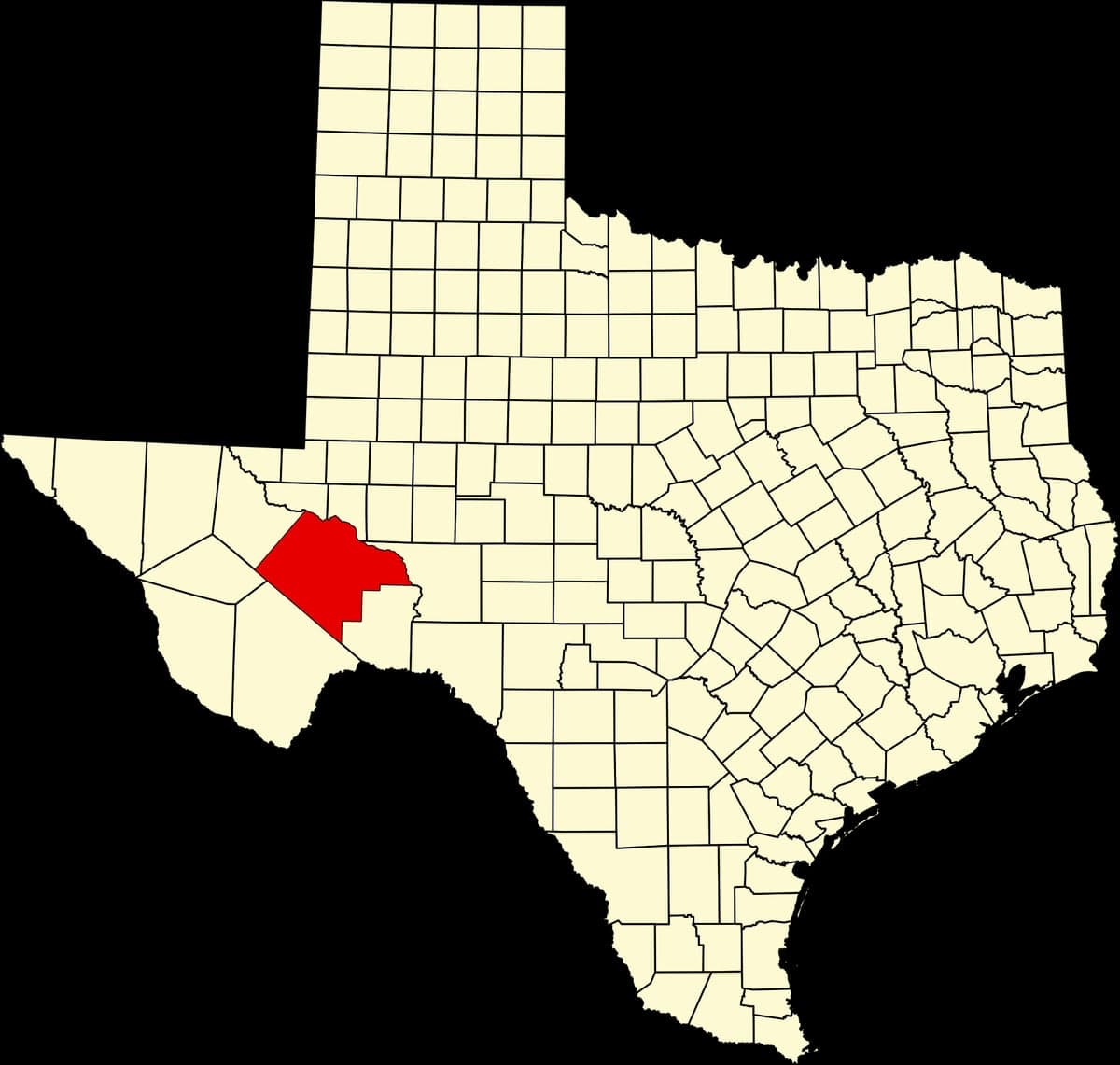
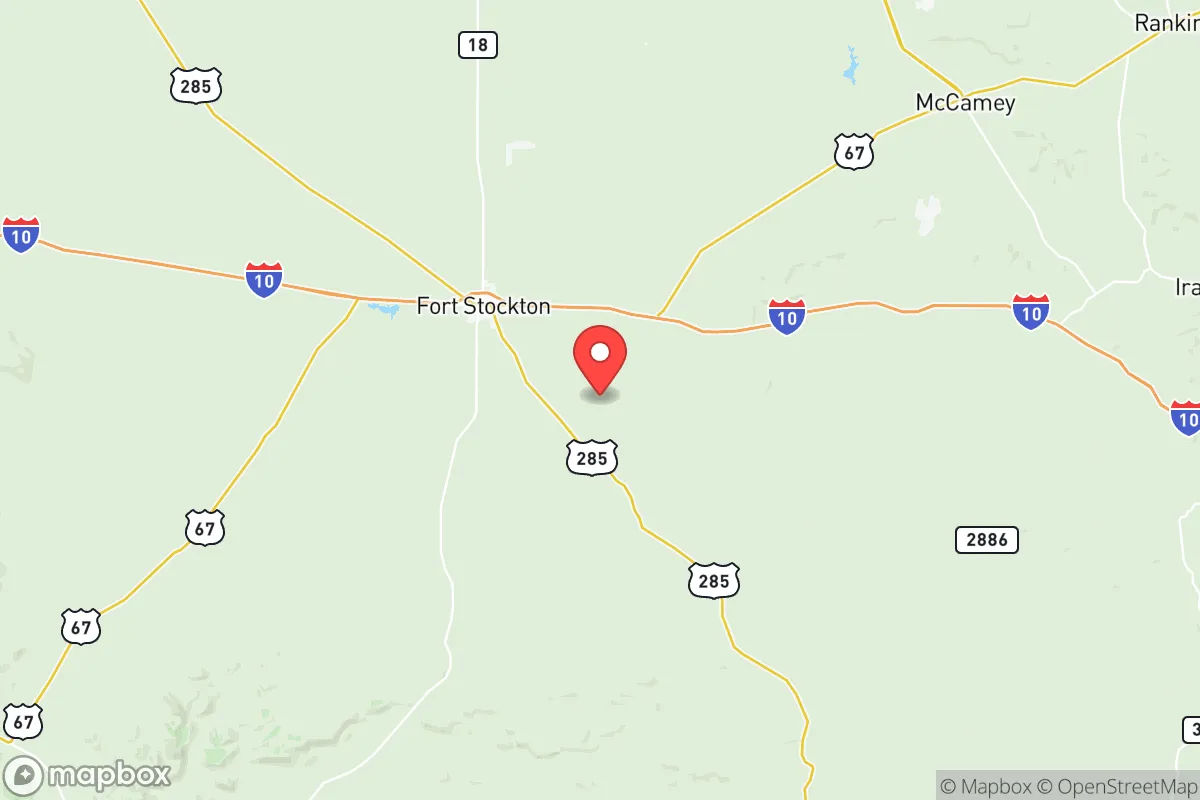
Pecos County, Texas, is a vast, sparsely populated region in the Trans-Pecos where the population today is overwhelmingly Hispanic (71.2%) and native-born, with a small but established White (22.6%) and Black (3.6%) presence. The county seat, Fort Stockton, anchors most of the county's 14,983 residents, creating a distinct character rooted in ranching, oil, and borderland culture. Unlike many Texas counties that have seen explosive suburban growth, Pecos County remains a rural, working-class community with a low college attainment rate (13.4%) and a foreign-born population of just 6.8%, reflecting a long-settled rather than newly immigrant population.
Settlement & growth (pre-1960)
Before American settlement, the Pecos County region was home to nomadic bands of the Lipan Apache and Comanche, who used the area's springs and river valleys for hunting and raiding. Spanish explorers and missionaries passed through as early as the 16th century, but no permanent Spanish settlements took root due to the harsh, arid environment and hostile Native resistance. The area remained a contested frontier until the mid-19th century.
American settlement began in earnest after the 1848 Treaty of Guadalupe Hidalgo, which brought the region under U.S. control. The U.S. Army established Fort Stockton in 1859 at Comanche Springs, a critical water source on the San Antonio-El Paso Road. The fort attracted a small population of Anglo-American soldiers, traders, and ranchers, but the area remained thinly populated through the Civil War and Reconstruction. The real demographic shift came with the arrival of the railroad. The Southern Pacific Railroad reached Fort Stockton in 1882, connecting the county to national markets and spurring a ranching boom. Anglo-American cattle ranchers, many from the Deep South and Midwest, moved in to claim vast acreages, driving the county's first significant population growth. The town of Fort Stockton became the commercial hub, while smaller settlements like Sheffield and Bakersfield sprang up along the rail line as shipping points for wool, mohair, and cattle.
Mexican-American settlement predated the Anglo influx but expanded dramatically during the early 20th century. The Mexican Revolution (1910-1920) pushed refugees north, and many found work on the region's ranches and farms. These families settled in colonias and barrios on the outskirts of Fort Stockton and in the unincorporated community of Coyanosa, established in the 1920s as a farming settlement. The discovery of oil in the Permian Basin in the 1920s and 1930s brought a new wave of domestic migrants—Anglo roughnecks and roustabouts from Oklahoma, Arkansas, and East Texas—who settled in Fort Stockton and the now-vanished oil camp of Girvin. By 1950, the county's population had reached roughly 8,000, split between a White ranching and oil elite and a Mexican-American working class.
Modern era (post-1965)
The 1965 Hart-Cellar Act had a limited direct impact on Pecos County, as the region never attracted the large-scale post-1965 immigrant flows seen in Houston or Dallas. Instead, the county's demographic evolution since the 1970s has been driven by domestic migration and natural increase. The oil boom of the 1970s and early 1980s brought a temporary influx of White and Black workers from other parts of Texas and the Rust Belt, swelling Fort Stockton's population. However, the bust that followed in the mid-1980s triggered an out-migration of many Anglo families, accelerating the county's shift toward a Hispanic majority. By 1990, Hispanics had become the largest ethnic group, a trend that has continued through natural increase and the return migration of Mexican-American families from other parts of Texas.
Today, the Hispanic population is overwhelmingly native-born and English-fluent, with deep roots stretching back generations. The White population, concentrated in Fort Stockton and the rural ranching areas, is older and shrinking, while the Black population (3.6%) is small but stable, largely descended from families who arrived during the oil booms. The East/Southeast Asian population (0.8%) and Indian-subcontinent population (1.4%) are tiny and recent, consisting primarily of professionals working in the oil and gas industry or healthcare, with no distinct ethnic enclave. The foreign-born share (6.8%) is below the national average, and most immigrants are Mexican nationals who have lived in the county for decades. The unincorporated community of Imperial, once a railroad stop, has seen its population dwindle as younger residents move to Fort Stockton or leave the county entirely.
The future
Pecos County's population is projected to remain stable or decline slightly over the next decade, as the county lacks the job growth and amenities to attract significant in-migration. The Hispanic majority will continue to grow through natural increase, while the White population will likely shrink further due to aging and out-migration. The county is not tribalizing into distinct enclaves; rather, it is becoming more uniformly Hispanic, with a small, aging Anglo minority concentrated in the ranching sector. The East/Southeast Asian and Indian populations are unlikely to grow substantially unless the oil and gas industry experiences a sustained boom that draws specialized workers. The county's low college attainment rate and limited economic diversification suggest that out-migration of young adults will continue, keeping the population flat or slightly negative.
For a conservative-leaning individual or family considering relocation, Pecos County offers a stable, rural, and culturally traditional environment where the population is overwhelmingly native-born, English-speaking, and rooted in ranching and energy work. The county is not experiencing the rapid demographic change seen in urban Texas; instead, it is slowly homogenizing into a Hispanic-majority community with a fading Anglo presence. New arrivals will find a place where community ties are strong, but economic opportunities are limited to oil, agriculture, and local services. The bottom line: Pecos County is a quiet, slow-changing corner of Texas where the population is becoming more uniformly Hispanic and native-born, and where someone moving in now should expect a close-knit, working-class community with little of the cultural or demographic flux reshaping the rest of the state.

* Values derived from national, state, county, city and local statistics and may differ in a specific area. Last updated: 2026-10-10T16:29:27.000Z
Narrative content on this page is AI-generated and may contain mistakes. Verify any details that matter before acting on them.
ReloMaps may earn a commission from affiliate links at no extra cost to you.

