Photo: Wikipedia
Political ClimatePolitical Climate in Pecos County
Showing district-level results — no local-only data available.
Local Political AnalysisPolitical Analysis of Pecos County
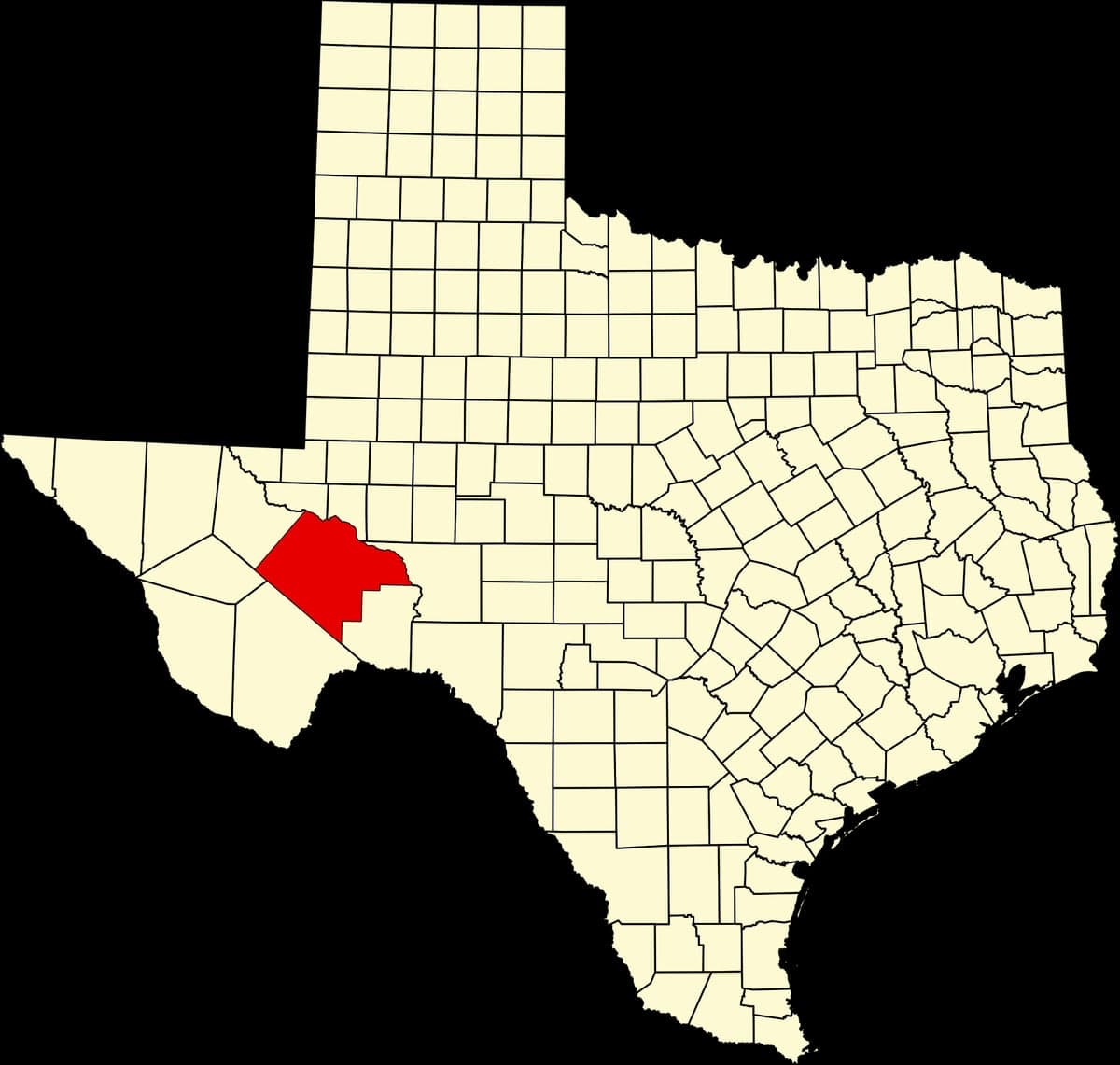
Pecos County has long been a reliably conservative stronghold in West Texas, with a Cook PVI of R+7 that reflects its deep-rooted Republican lean. The county has voted for GOP presidential candidates by comfortable margins for decades, and while there's been some demographic shift in recent years, the overall political trajectory remains firmly red. You won't find many yard signs for the other side here, especially in the county seat of Fort Stockton, where local elections are dominated by conservative candidates who prioritize limited government and personal freedoms.
How it compares
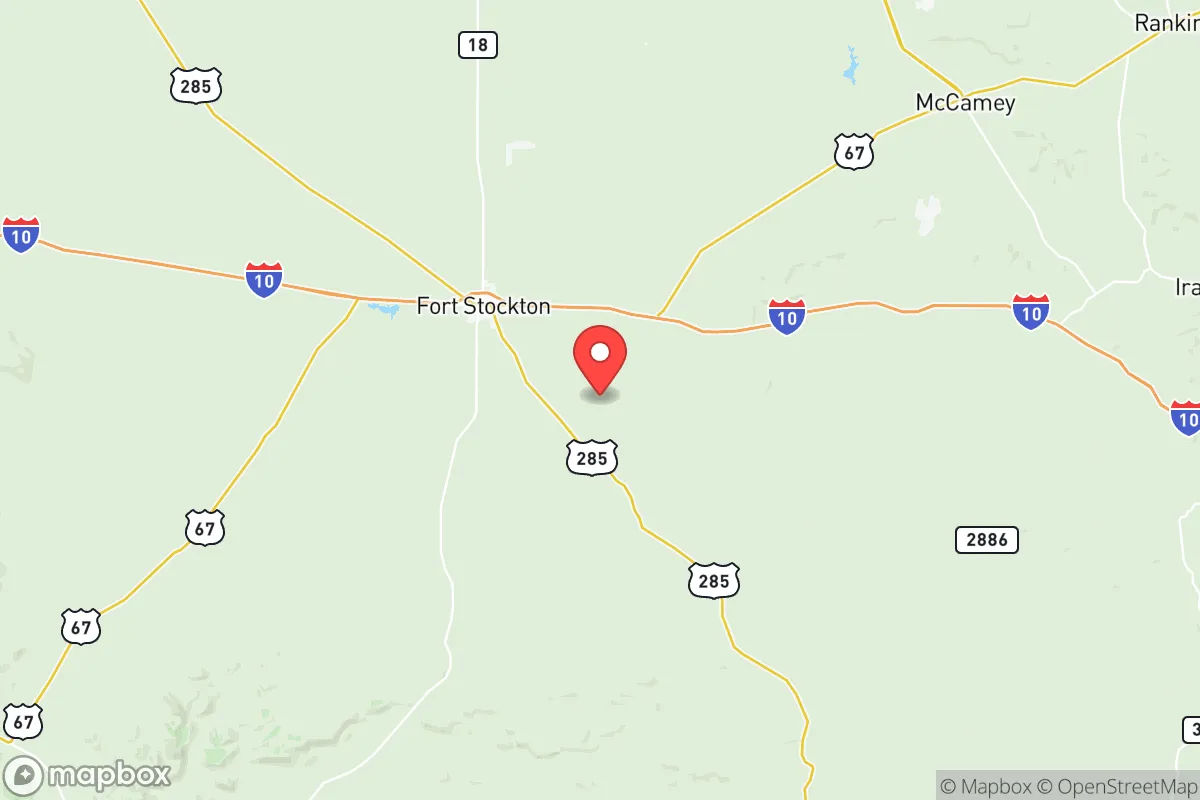
When you look at the political map of Pecos County, the real story is in the variation between its communities. Fort Stockton, the largest town and economic hub, is the most reliably Republican area—precincts there routinely deliver 65-70% of the vote for GOP candidates. The smaller town of Iraan, with its oil-and-gas roots, leans even further right, often hitting 75% or more for conservative candidates. On the other hand, the rural precincts around Bakersfield and the southern part of the county near the border show a slightly more mixed picture, with some precincts swinging closer to 55-60% Republican. These areas have seen a modest uptick in Democratic votes over the past decade, driven largely by newer residents and some agricultural workers, but they're still solidly red. The swing precincts are really in the unincorporated areas along I-10, where transient oilfield workers and truckers can tip a local race by a few points, but even there, conservative values hold strong.
What this means for residents
For folks living here, the conservative tilt means local government generally stays out of your business. You won't see the kind of overreach you hear about in Austin or Dallas—no heavy-handed mandates on how you run your property or what you can do with your land. Property taxes are a concern, as they are everywhere in Texas, but the county commission has kept them relatively low compared to neighboring counties like Crane or Upton. The school board in Fort Stockton has resisted progressive curriculum changes, and the sheriff's office maintains a tough-on-crime stance without the woke policing reforms that have plagued larger cities. That said, there's been a creeping concern among long-time residents about the influence of outside money and new arrivals from California and Colorado, who sometimes bring progressive ideas about zoning and environmental regulations that don't fit the local way of life.
One cultural distinction that sets Pecos County apart is its strong tradition of self-reliance and community policing. The annual Fort Stockton Cowboy Gathering and the county's rodeo culture aren't just entertainment—they're a reflection of a mindset that values individual responsibility over government solutions. You'll also notice that the county has resisted the push for sanctuary city policies, with local law enforcement cooperating fully with federal immigration authorities. The recent push for wind and solar projects has sparked some debate, with many residents wary of federal subsidies and land-use restrictions that could infringe on private property rights. Looking ahead, the biggest threat to the county's conservative character isn't from within—it's from the slow creep of state and federal mandates that try to override local control. If you're looking for a place where your vote still counts and your freedoms are respected, Pecos County is holding the line, but it takes vigilance to keep it that way.

State Political ClimatePolitical Climate in Texas
State Political AnalysisPolitical Environment in the State
Texas remains a solidly Republican state at the statewide level, but the coalition that keeps it red has shifted dramatically over the past 20 years. The GOP still holds every statewide office and both legislative chambers, but the margin of victory has tightened from double digits in the 2000s to roughly 5-6 points in recent presidential cycles. The dominant coalition is now a mix of rural conservatives, suburban fiscal conservatives, and a growing number of Hispanic voters in the Rio Grande Valley who have drifted rightward. The 10-20 year trajectory shows a state that is becoming more competitive, not because Democrats are winning over rural areas, but because massive in-migration from California and the Northeast is slowly diluting the native conservative base in the suburbs of Dallas, Houston, and San Antonio.
Urban vs. rural divide
The political map of Texas is a tale of two worlds. The major metros — Austin, Dallas, Houston, San Antonio, and El Paso — are the Democratic strongholds, with Austin and El Paso being the bluest. Austin's Travis County voted +51 points for Biden in 2020, while El Paso's county went +37. But the real story is the suburban ring around these cities. Places like Collin County (north of Dallas) and Fort Bend County (southwest of Houston) have flipped from reliably red to purple or even blue in recent cycles. Collin County went from +27 R in 2012 to +5 R in 2020. Meanwhile, rural West Texas, the Panhandle, and East Texas remain deeply red. Lubbock and Amarillo are GOP anchors, with Lubbock County voting +37 R in 2020. The Rio Grande Valley, once a Democratic firewall, is now a battleground — Zapata County flipped from +40 D in 2012 to +5 R in 2020, a seismic shift that has national implications.
Policy environment
Texas has no state income tax, which is the single biggest policy draw for conservatives and businesses alike. Property taxes are high — averaging about 1.7% of assessed value — but there is no tax on wages or salaries. The regulatory posture is famously business-friendly: no state-level occupational licensing for many trades, right-to-work laws, and a tort reform system that caps non-economic damages in medical malpractice cases. On education, the state has a robust school choice movement, with the 2023 passage of a universal Education Savings Account (ESA) program that gives parents roughly $8,000 per child for private school or homeschooling expenses. Healthcare policy is mixed: Texas did not expand Medicaid under the ACA, which keeps state costs low but leaves roughly 18% of residents uninsured, the highest rate in the nation. Election laws have tightened since 2021 with SB 1, which banned 24-hour and drive-through voting, added ID requirements for mail ballots, and empowered poll watchers. The state also has a constitutional carry law (permitless carry for handguns) since 2021, and a near-total abortion ban (SB 8 and trigger law) since 2022.
Trajectory & freedom
On balance, Texas has moved more free on several key fronts over the past five years, but there are warning signs. The 2021 permitless carry law (HB 1927) expanded gun rights significantly, allowing any law-abiding adult to carry a handgun without a license. The 2023 ESA program (SB 8) gave parents unprecedented control over their children's education, bypassing public school districts entirely. The state also passed a law (SB 14) banning gender transition procedures for minors in 2023, which conservatives view as protecting children from medical experimentation. However, there are concerning trends. The 2021 election law (SB 1) was sold as election integrity but added bureaucratic hurdles that some conservatives worry could disenfranchise rural voters. Property taxes remain a persistent burden, with no serious effort to cap assessment increases at the state level. And the state's power grid, managed by ERCOT, remains a vulnerability — the 2021 winter storm blackout exposed a lack of federal oversight that some see as a freedom issue (no federal interference) and others as a safety failure. The trajectory is toward more parental rights and gun rights, but also more state-level bureaucracy in elections and energy.
Civil unrest & political movements
Texas has seen its share of political flashpoints. The 2020 Black Lives Matter protests in Austin were among the largest in the country, with the city council later defunding the police by $150 million — a move that was partially reversed after a crime spike. The "Trump Train" convoys in 2020, where vehicles surrounded a Biden campaign bus on I-35 near San Marcos, became a national symbol of aggressive political activism on the right. Immigration politics are a constant pressure point. The state has bused over 100,000 migrants to sanctuary cities like New York and Chicago since 2022, and Governor Abbott's Operation Lone Star has deployed state troopers and National Guard to the border, including the installation of razor wire and buoys in the Rio Grande near Eagle Pass. Secession rhetoric, while fringe, has a real presence — the Texas Nationalist Movement (TEXIT) has pushed for a 2024 referendum on independence, though it has no legal path forward. Election integrity remains a hot-button issue: the 2020 election saw no major fraud cases in Texas, but the 2022 primary in Harris County (Houston) was marred by ballot paper shortages and machine malfunctions, leading to a state takeover of the county's elections in 2023. A new resident would notice the "Keep Texas Red" signs in rural areas and the "Defund the Police" graffiti in Austin — the divide is visible and real.
Projection
Over the next 5-10 years, Texas is likely to become more politically competitive, but not necessarily more liberal. The in-migration from blue states is slowing as housing costs rise — Austin's median home price has dropped from $550k to $475k in 2024, but it's still high. The Hispanic shift rightward, especially in the Valley, could offset some suburban losses. The state's Republican supermajority in the legislature is likely to hold through 2030 due to gerrymandering, but the governor's race in 2026 will be a bellwether. If a Democrat wins a statewide office, expect a rapid push for Medicaid expansion and a state income tax referendum. The biggest wildcard is the power grid: if another major blackout occurs, it could trigger a populist backlash against deregulation that cuts across party lines. A new resident moving in now should expect a state that remains conservative on guns, taxes, and parental rights, but with growing cultural friction in the suburbs. The rural areas will stay red, the cities will stay blue, and the fight will be over the exurbs and the Valley.
For a new resident, the bottom line is this: Texas offers a low-tax, high-freedom environment for those who value gun rights, school choice, and limited government. But the political landscape is not static — the suburbs are shifting, the border is a constant pressure point, and the power grid is a real vulnerability. If you're moving here for the politics, you'll find a state that is still conservative but increasingly contested. If you're moving here for the lifestyle, you'll get warm weather, no state income tax, and a culture that values self-reliance. Just keep an eye on the property tax bill and the ERCOT app.
* Values derived from national, state, county, city and local statistics and may differ in a specific area. Last updated: 2026-10-10T16:29:27.000Z
Narrative content on this page is AI-generated and may contain mistakes. Verify any details that matter before acting on them.
ReloMaps may earn a commission from affiliate links at no extra cost to you.

