Photo: Wikipedia
Quality of Life in Llano County
A livable area that tracks near national norms for affordability, walkability, and neighborhood health.
What does Quality of Life tell us?
Quality of Life measures an area by evaluating factors like cost of living, nearby amenities, country club access, airport proximity, socioeconomic signals and neighborhood character. For large states, this is a general average — quality of life can vary dramatically between metro areas, suburbs, and rural communities within the same state.
What does this tell us?
Quality of Life measures an area by evaluating factors like cost of living, nearby amenities, country club access, airport proximity, socioeconomic signals and neighborhood character. For large states, this is a general average — quality of life can vary dramatically between metro areas, suburbs, and rural communities within the same state.
Cost of Living
3% below national average
71%
The Real Cost of Living in Llano County for 2026
| Tier | Individual | Family (4) |
|---|---|---|
| Survival | $16k | $30k |
| Comfortable | $63k | $92k |
| Luxury | $119k+ | $184k+ |
| Elite (Top 5%) | $208k+ | $323k+ |
Quality-of-Life Analysis
Llano County, Texas, offers a quality-of-life spectrum that ranges from the walkable, amenity-rich county seat of Llano to the quiet, off-grid solitude of unincorporated communities like Tow and Valley Spring, attracting everyone from lakefront retirees and weekenders to ranchers and remote workers seeking low property taxes and wide-open spaces. The county’s character is defined by the Llano River, the sprawling arms of Lake Buchanan, and a rolling granite landscape that supports a mix of tourism-driven commerce, hunting leases, and working cattle operations. People drawn here typically value privacy, outdoor recreation, and a slower pace, but they choose very different parts of the county depending on whether they want a downtown coffee shop or a 50-acre tract with no neighbors in sight.
Largest town(s) & population centers
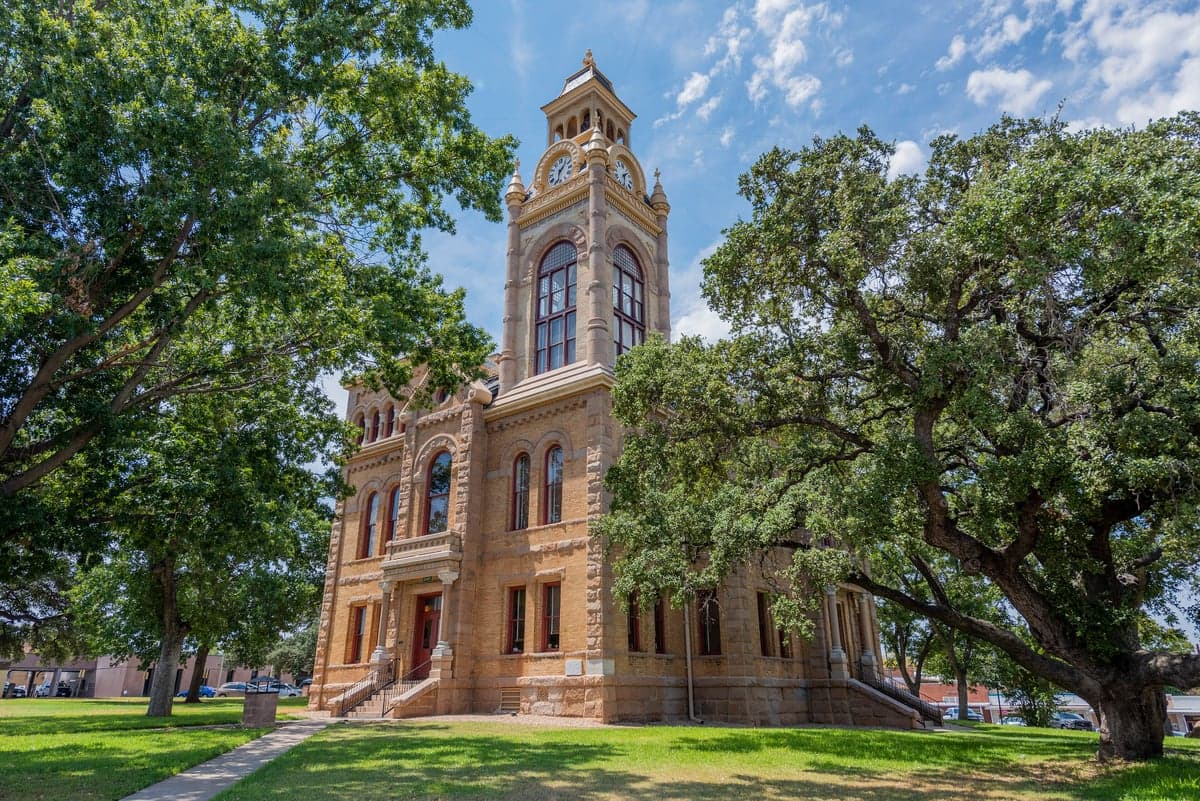
The county’s primary population center is the city of Llano (pop. ~3,300), which functions as the commercial and governmental hub. Daily life here revolves around the historic courthouse square, where locals shop at the Llano Fine Foods grocery, grab breakfast at Cooper’s Old Time Pit Bar-B-Que, and attend events like the Llano Earth Art Festival. The town offers a walkable core, a public library, a hospital (Llano Memorial Hospital), and a handful of locally owned shops and restaurants. Kingsland (pop. ~6,000), straddling the Llano-Burnet county line along the Colorado River arm of Lake LBJ, is the county’s second-largest population center and feels more suburban and lake-oriented, with chain hotels, marinas, and a higher concentration of second homes. Kingsland’s daily life is heavily shaped by boating, fishing, and the seasonal influx of tourists, and it has a wider range of dining and retail options than Llano proper, including a Walmart Supercenter and several RV parks. Both towns serve as bedroom communities for commuters to Marble Falls (Burnet County) and Austin, with the average commute across the county clocking in at 27.7 minutes.
Smaller towns & rural pockets
Beyond the two main towns, Llano County contains several unincorporated communities that offer a markedly different lifestyle. Buchanan Dam (pop. ~1,500) sits on the southern shore of Lake Buchanan and is a quiet retirement and fishing community with a handful of convenience stores, a post office, and the popular Buchanan Dam Cafe. Tow, a tiny crossroads about 15 miles north of Llano, consists of a few dozen homes, a volunteer fire department, and little else — residents here drive 20 minutes for groceries. Valley Spring (pop. ~200) is even more remote, with no commercial services and a landscape of live oaks and granite outcrops that appeals to homesteaders and artists seeking absolute quiet. Castell, on the Llano River west of Llano, is a historic ranching community that has become a weekend destination for fly-fishing and river tubing, but it lacks year-round retail. These rural pockets are characterized by unpaved roads, well water, and septic systems, and they attract people who prioritize land and privacy over convenience.
Cost & lifestyle range
The cost of living across Llano County is consistently below the national average, with a composite index of 97 (100 = U.S. average), but the trade-offs between affordability and access vary dramatically by location. At the higher end of the spectrum, Kingsland and the Lake Buchanan shoreline command median home values around $322,300 — in line with the countywide figure — but lakefront lots and custom homes can push well above $500,000. Renters in Kingsland and Llano pay a median of $995 per month, often for small houses or duplexes. At the lower end, rural properties in Tow, Valley Spring, and Castell can be found for under $200,000, especially if they lack water rights or require significant renovation. The lifestyle trade-off is stark: a Kingsland resident can walk to a marina and a pizza place, while a Valley Spring resident may drive 30 minutes to the nearest gas station. Property taxes in Llano County are relatively low compared to the Austin metro (roughly 1.2–1.4% of assessed value), which keeps carrying costs down for landowners but also means fewer public services — no countywide public transit, limited rural broadband, and volunteer EMS in many areas.
Who thrives in Llano County? Retirees and second-home buyers who want lake access without the crowds of the Highland Lakes corridor; remote workers who can tolerate spotty internet in exchange for acreage; and ranchers or hunters who need large tracts of land for livestock or leases. Families with school-age children typically gravitate to Llano or Kingsland, where the Llano Independent School District and the Kingsland-area schools (part of Burnet CISD) offer sports, fine arts, and special education programs. Those seeking urban amenities, nightlife, or diverse employment options will find the county too quiet — the nearest major job center is Austin, 65 miles east via TX-71. For anyone whose priority is space, water, and a low cost of living, Llano County delivers a genuine spectrum of rural and small-town options, each with a distinct trade-off between solitude and convenience.

Crime in Llano County
Crime rates similar to the national median for U.S. locations.
Violent CrimeViolent Crime Analysis
Property CrimeProperty Crime Analysis
Crime Analysis
Llano County, Texas, presents a mixed safety profile for prospective residents, with violent crime rates slightly below the national average but property crime rates that exceed both state and national benchmarks. The county's 2024 violent crime rate of 345.5 per 100,000 residents is lower than the U.S. average of 380 per 100,000, yet property crime at 1,795.5 per 100,000 runs significantly higher than the Texas average of 1,450 per 100,000. This data, drawn from the Texas Department of Public Safety's Uniform Crime Reporting program, suggests that while violent incidents are less common here than in many parts of the state, theft and burglary remain persistent concerns, particularly in unincorporated areas and smaller communities like Buchanan Dam and Kingsland.
Crime in context
When compared to the broader Texas landscape, Llano County's violent crime rate is roughly 15% lower than the state average of 406 per 100,000, placing it in a safer tier than major urban centers like Houston and Dallas, where violent crime rates exceed 500 per 100,000. However, the property crime rate of 1,795.5 per 100,000 is about 24% higher than the Texas average, driven largely by thefts from vehicles and residential burglaries in rural subdivisions. The county's location along the Llano River and its proximity to the Highland Lakes—popular with tourists—creates seasonal spikes in property crime, particularly in Llano (the county seat) and Sunrise Beach Village, where vacation homes are frequent targets. By contrast, Tow and Castell, smaller unincorporated communities with fewer transient populations, report lower incident rates, though official data for these areas is limited due to small sample sizes.
What residents experience
Residents of Llano County generally report feeling safe in their daily routines, but the property crime rate creates tangible frustrations. The Llano County Sheriff's Office, which covers most unincorporated areas, responds to an average of 4.9 property crimes per day countywide, with larceny-theft accounting for nearly 70% of those incidents. In the city of Llano, the police department handles a disproportionate share of calls, with a property crime rate of approximately 2,100 per 100,000—higher than the county average—due to its role as a commercial hub. Violent crime, while less frequent, is not absent: the county recorded 12 aggravated assaults and 2 robberies in 2024, with most incidents concentrated in the Llano city limits. The 33rd Judicial District, which covers Llano County along with Burnet and San Saba counties, is overseen by a district attorney who has maintained a conservative approach to prosecution, emphasizing mandatory minimum sentences for repeat offenders. This contrasts sharply with the progressive policies seen in larger metro areas like Austin (Travis County), where district attorneys have implemented cash bail reform and reduced prosecution of low-level property crimes—policies that critics argue embolden criminals and increase recidivism. In Llano County, the DA's office reports a conviction rate above 90% for felony property crimes, and judges in the 33rd District routinely impose jail time for thefts over $2,500, a deterrent that helps keep violent crime in check but does not fully address the property crime volume.
Neighborhood-level variation
Safety varies noticeably across Llano County's 966 square miles. The city of Llano itself, with a population of about 3,300, has a violent crime rate of 420 per 100,000—higher than the county average—driven by a handful of bars and the downtown area near the courthouse. In contrast, the gated lakefront communities of Kingsland and Sunrise Beach Village report violent crime rates below 200 per 100,000, though property crime in these areas spikes during summer months when vacation homes are vacant. The unincorporated areas around Buchanan Dam see the highest property crime rates in the county, at roughly 2,300 per 100,000, due to easy highway access (Texas 29) and limited sheriff patrols. For families seeking the safest environments, the rural subdivisions near Castell and Tow offer the lowest crime rates, with violent incidents virtually absent and property crime limited to occasional thefts from unlocked vehicles. Prospective residents should also note that the county's proximity to Austin (about 75 miles southeast) means that some property crime is linked to offenders traveling from the metro area, where progressive district attorneys have deprioritized theft prosecutions—a dynamic that underscores the importance of local law enforcement's conservative stance in maintaining public safety.
* Values derived from national, state, county, city and local statistics and may differ in a specific area. Last updated: 2026-07-17T02:25:36.000Z
Narrative content on this page is AI-generated and may contain mistakes. Verify any details that matter before acting on them.
ReloMaps may earn a commission from affiliate links at no extra cost to you.

