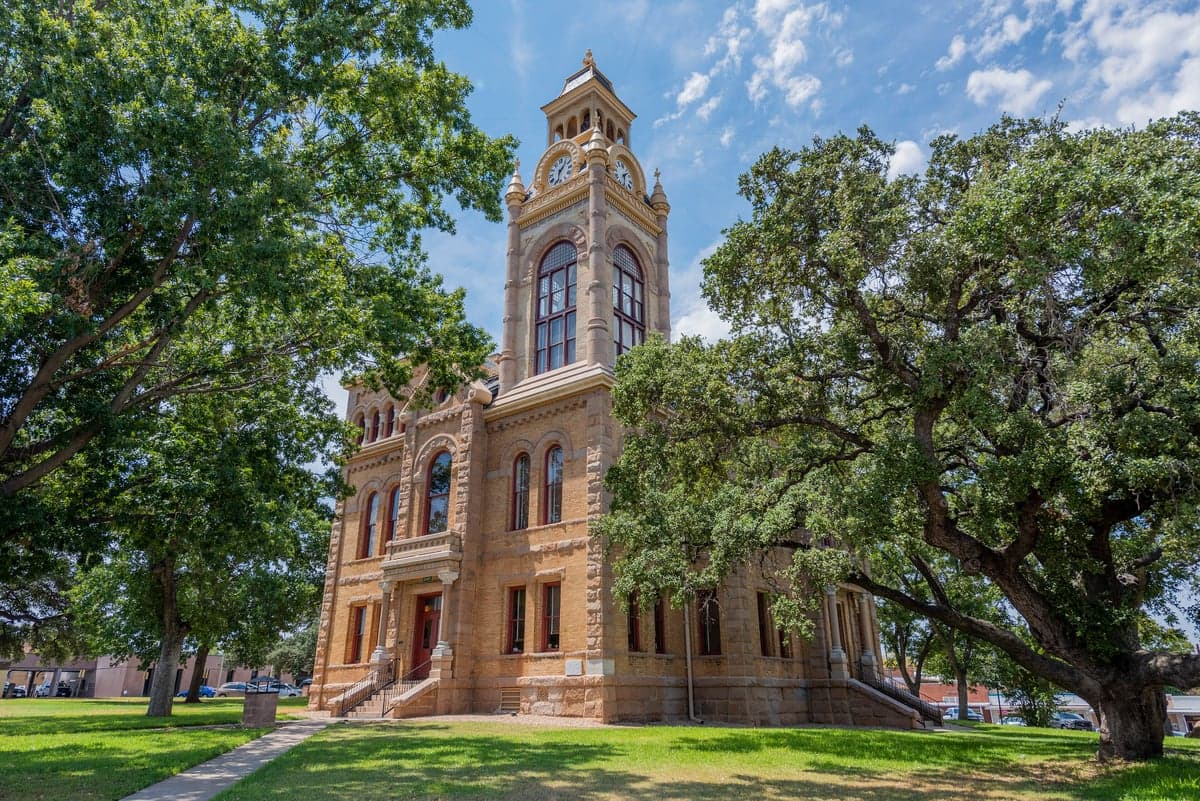
Photo: Wikipedia
Personal Sovereignty in Llano County
Strong independent fundamentals that actively favor personal liberty and low regulation.
What does Personal Sovereignty tell us?
Personal Sovereignty measures your capacity for self-reliance and independence with minimal government friction. Higher scores mean fewer barriers between you and the way you want to live... but it assumes you have the space you need and good neighbors.
What does this tell us?
Personal Sovereignty measures your capacity for self-reliance and independence with minimal government friction. Higher scores mean fewer barriers between you and the way you want to live... but it assumes you have the space you need and good neighbors.
State Policy
Energy independence: Net exporter (220% of energy produced in-state)
Personal Liberty
Homesteading

Personal Liberty Analysis
Llano County, Texas, offers a notably high degree of personal sovereignty, grounded in Texas’s broad preemption of local regulations and a deeply ingrained culture of self-reliance. Unlike the increasingly restrictive environments found in Austin or Travis County, Llano County’s rural character and limited government footprint mean residents face fewer layers of bureaucracy in their daily lives. For individuals and families prioritizing autonomy over convenience, the trade-off is clear: less government intervention in exchange for greater personal responsibility, particularly in areas like property use, self-defense, and tax burden.
Tax burden and regulatory posture in Llano County
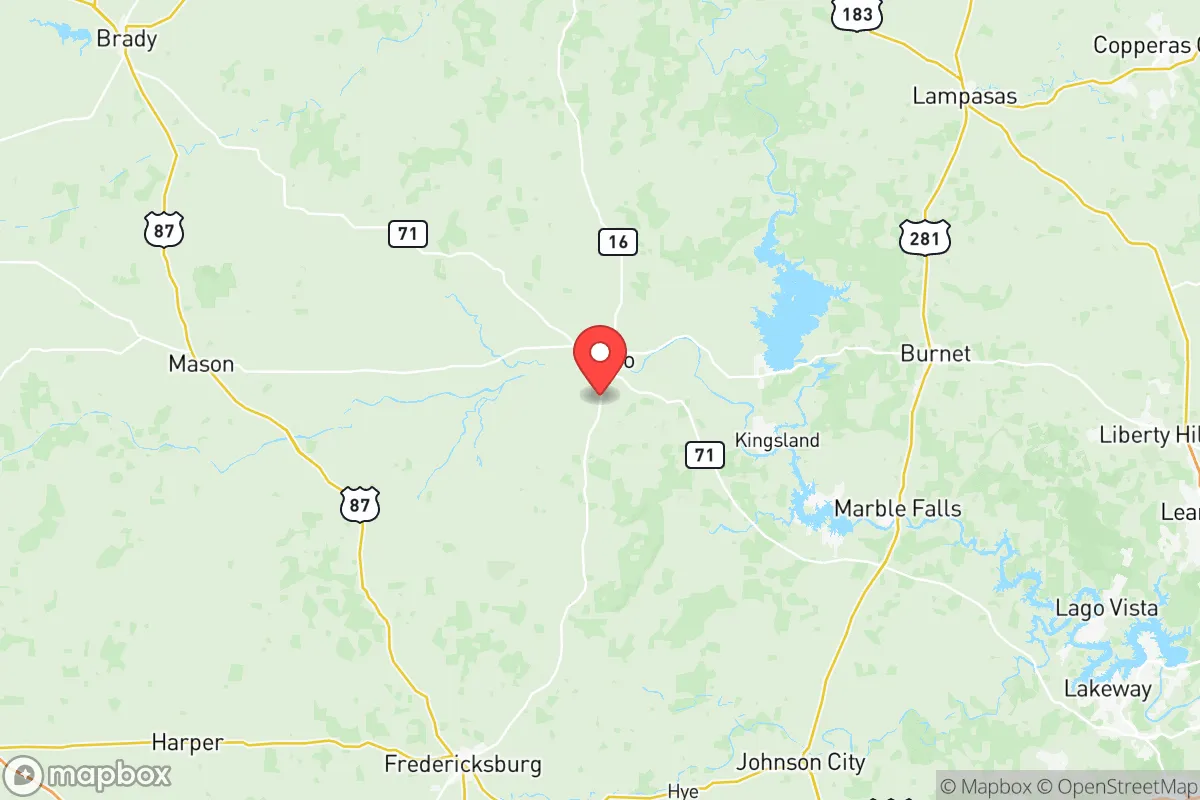
Llano County’s tax and regulatory environment is among the lightest in Central Texas, a direct contrast to the high-tax, high-regulation climate of nearby Austin. The county’s property tax rate is relatively low, and there is no city property tax in unincorporated areas like Tow or Valley Spring, where residents rely on county services alone. The county’s regulatory posture is permissive: there are no county-wide zoning ordinances in unincorporated areas, meaning property owners in places like Bluffton or Castell can build, fence, or operate a home business without seeking a county permit. The city of Llano itself has minimal zoning, and the city of Kingsland maintains a light touch, focusing on basic health and safety codes rather than aesthetic or land-use restrictions. This stands in stark contrast to the Austin city limits, where a simple fence replacement can require a permit and inspection. The overall tax burden is kept low by a limited county budget and a reliance on sales tax from tourism and the Llano River recreation economy, not on property tax hikes.
Self-defense and gun law specifics in the Hill Country
Texas law provides a strong foundation for self-defense rights, and Llano County’s culture and law enforcement posture reinforce that. The county is a “Second Amendment sanctuary” in practice, with local sheriffs historically refusing to enforce any state or federal gun control measures they deem unconstitutional. Open carry of handguns is legal without a permit for anyone 21 or older who can legally possess a firearm, and permitless carry (constitutional carry) applies to both open and concealed carry. The sheriff’s office in Llano County is known for a pro-2A stance, and there are no local ordinances restricting magazine capacity, firearm storage, or carrying in public parks. In towns like Llano and Kingsland, gun ranges and firearm retailers are common, and the culture is one of responsible, armed self-reliance. This is a stark departure from the Austin city limits, where city council has passed resolutions supporting state-level gun restrictions and where local police have a more complex relationship with gun owners. For a family moving from a restrictive state, Llano County offers a legal environment where the right to self-defense is not subject to local political whims.
Self-reliance and homesteading viability: lot sizes, zoning, and off-grid feasibility
Homesteading and off-grid living are not just possible in Llano County—they are a defining feature of the area’s identity. In unincorporated areas, there are no minimum lot size requirements for single-family homes, and properties as small as one acre can be used for a homestead. The county does not require building permits for structures under 200 square feet, making it feasible to build a small cabin, workshop, or tiny house without government approval. Off-grid systems are legal: rainwater collection is encouraged, and there are no county restrictions on solar panels, composting toilets, or private wells. The city of Llano does have building codes for structures within city limits, but they are minimal compared to suburban jurisdictions. In Kingsland, the city requires permits for new construction but does not prohibit off-grid water or power systems. The most permissive areas are the unincorporated communities like Tow, Valley Spring, and Castell, where residents can live entirely off-grid without any county interference. This is a world away from the Austin city limits, where off-grid systems are effectively illegal due to strict building codes and utility connection requirements. For a family wanting to raise livestock, grow food, and generate their own power, Llano County offers a regulatory environment that supports, rather than hinders, that goal.
Personal liberties: parental rights, medical autonomy, speech, and property
Llano County’s approach to personal liberties is rooted in a general distrust of government overreach, which aligns with the broader Texas political culture. Parental rights are strongly protected: the county school district, Llano Independent School District, has a policy of notifying parents of any changes in a student’s mental, emotional, or physical health, and it does not promote curricula that conflict with parental values. Medical autonomy is respected in the sense that the county does not impose local vaccine mandates or health orders beyond state requirements. During the COVID-19 pandemic, Llano County was one of the few jurisdictions in Texas that did not issue a mask mandate or business closure order, reflecting a hands-off approach to personal health decisions. Free speech is protected by the Texas Constitution, and the county does not have any local ordinances restricting political signage, public assembly, or expressive conduct. Property rights are the bedrock of the county’s identity: there is no county-wide property tax on personal property (like vehicles or business inventory), and the county does not enforce any form of rent control or landlord licensing. In Bluffton and Castell, property owners can use their land for any legal purpose without seeking a conditional use permit, a freedom that is increasingly rare in urban Texas. This combination of protections makes Llano County one of the most liberty-respecting areas in Central Texas for those who value personal choice over collective mandates.
Overall, Llano County ranks among the most sovereign areas in Texas for individuals and families who prioritize personal freedom. The combination of low taxes, minimal regulation, strong self-defense laws, and a culture that supports off-grid living and parental rights creates an environment where government is a background presence, not a daily obstacle. While the trade-off is a lack of urban amenities and a reliance on personal responsibility, for the right resident, Llano County offers a level of autonomy that is increasingly hard to find in the state’s growing cities. Compared to the Austin city limits, where every aspect of life is subject to city council oversight, Llano County represents a deliberate choice for a life with fewer rules and more personal accountability.

* Values derived from national, state, county, city and local statistics and may differ in a specific area. Last updated: 2026-07-17T02:25:36.000Z
Narrative content on this page is AI-generated and may contain mistakes. Verify any details that matter before acting on them.
ReloMaps may earn a commission from affiliate links at no extra cost to you.

