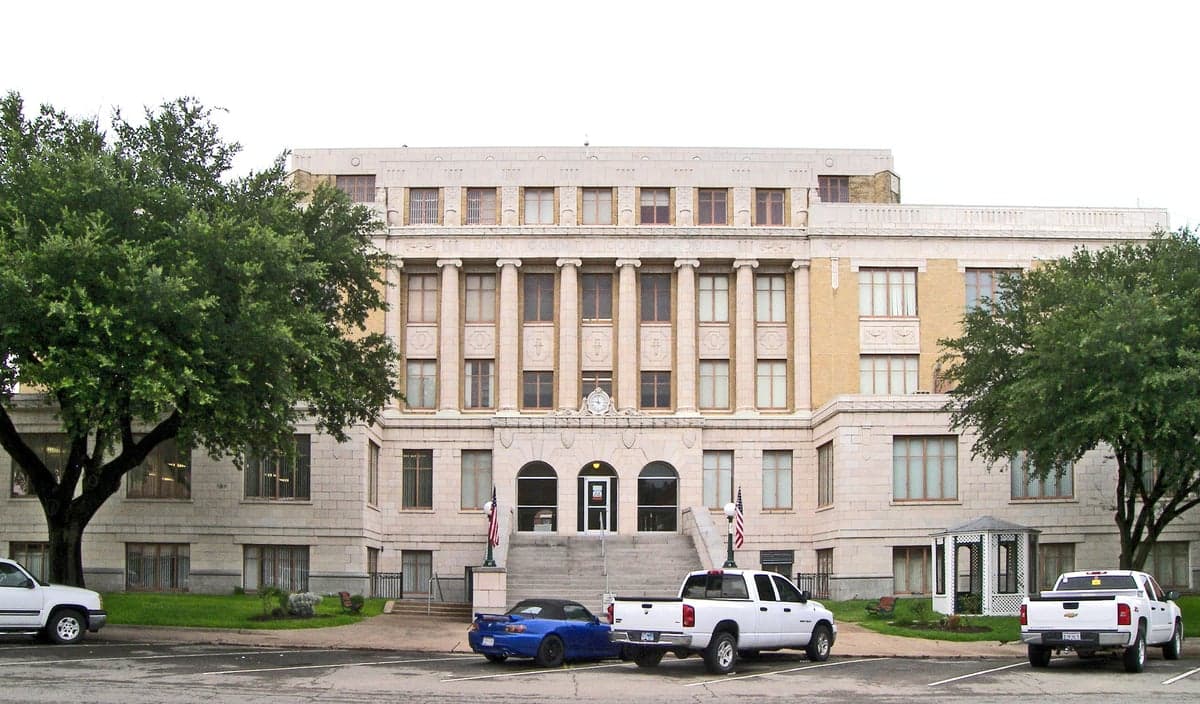
Photo: Wikipedia
Quality of Life in Hunt County
A livable area that tracks near national norms for affordability, walkability, and neighborhood health.
What does Quality of Life tell us?
Quality of Life measures an area by evaluating factors like cost of living, nearby amenities, country club access, airport proximity, socioeconomic signals and neighborhood character. For large states, this is a general average — quality of life can vary dramatically between metro areas, suburbs, and rural communities within the same state.
What does this tell us?
Quality of Life measures an area by evaluating factors like cost of living, nearby amenities, country club access, airport proximity, socioeconomic signals and neighborhood character. For large states, this is a general average — quality of life can vary dramatically between metro areas, suburbs, and rural communities within the same state.
Cost of Living
9% below national average
116%
The Real Cost of Living in Hunt County for 2026
| Tier | Individual | Family (4) |
|---|---|---|
| Survival | $19k | $36k |
| Comfortable | $41k | $60k |
| Luxury | $114k+ | $177k+ |
| Elite (Top 5%) | $134k+ | $208k+ |
Quality-of-Life Analysis
Hunt County, Texas, offers a broad spectrum of quality-of-life options, from the bustling college town of Commerce to the quiet, unincorporated crossroads of Caddo Mills, attracting everyone from students and young professionals to retirees and rural homesteaders. The county’s overall cost of living index sits at 91 (100 = U.S. average), with a median home value of $210,900 and median rent of $1,184, making it significantly more affordable than the Dallas-Fort Worth metroplex it borders. The average commute of 32.2 minutes reflects the reality that many residents trade a longer drive for lower housing costs and a slower pace of life.
Largest town(s) & population centers
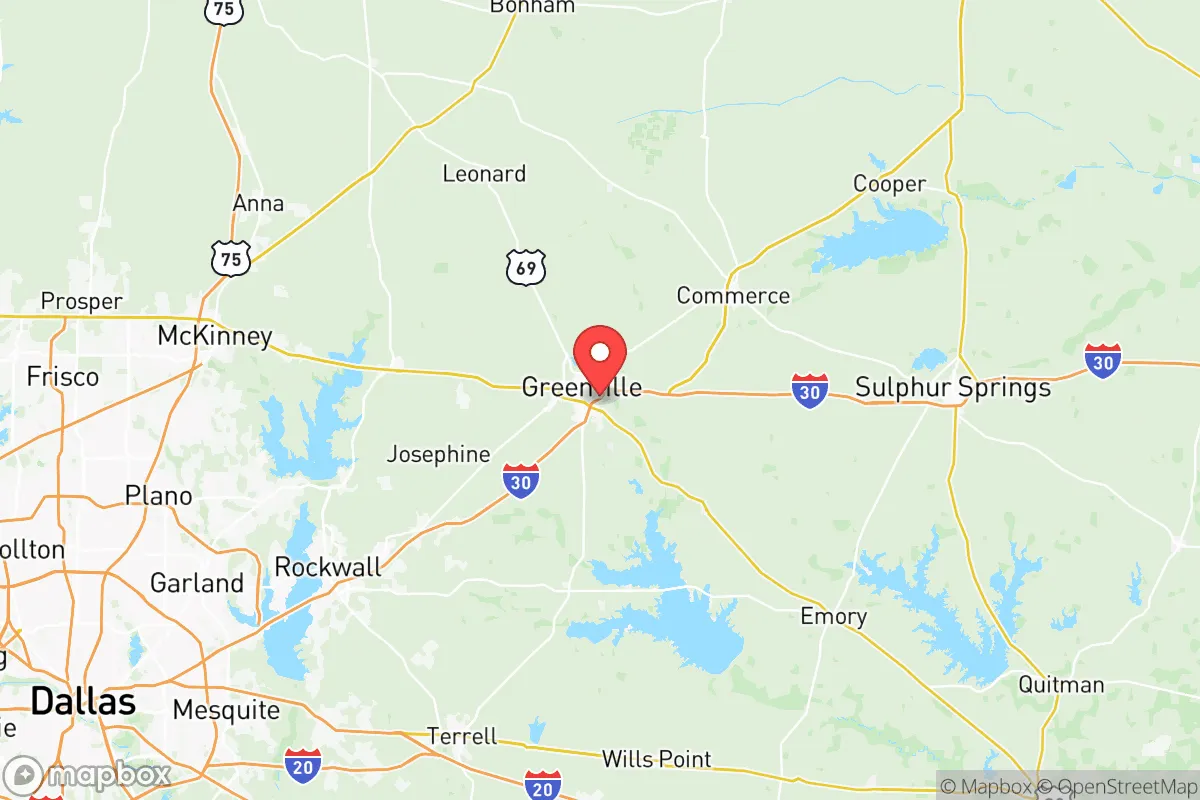
The county’s two primary population centers are Greenville (the county seat, pop. ~28,000) and Commerce (pop. ~9,000). Greenville functions as the commercial and governmental hub, with a historic downtown square, a Walmart Supercenter, and major employers like L3Harris Technologies and the Hunt Regional Medical Center. Daily life here is typical of a small city: chain restaurants, local diners, and a mix of older homes and new subdivisions. Commerce, home to Texas A&M University-Commerce (enrollment ~12,000), has a distinctly younger, more transient feel, with rental properties dominating the housing stock and a calendar shaped by the academic year. Both towns offer basic amenities like grocery stores and parks, but residents often drive to Rockwall or Dallas for major shopping, entertainment, or specialized healthcare.
Smaller towns & rural pockets
Beyond the two main towns, Hunt County is dotted with smaller communities that offer a markedly different lifestyle. Quinlan (pop. ~1,400) sits on Lake Tawakoni’s northern shore, attracting fishing and boating enthusiasts; its housing stock is a mix of lake cabins, manufactured homes, and a few newer subdivisions. Wolfe City (pop. ~1,400) is a classic rural town with a grain elevator and a quiet Main Street, where residents know their neighbors and the nearest Starbucks is 25 miles away. Celeste (pop. ~800) and Lone Oak (pop. ~600) are unincorporated communities that feel like extended crossroads, with volunteer fire departments, a single gas station, and homes on acreage. The unincorporated area of Caddo Mills (pop. ~1,500) has seen some suburban-style growth due to its proximity to Greenville and I-30, but still retains a rural character with large lots and agricultural land.
Cost & lifestyle range
The cost of living and available amenities vary dramatically across the county. At the higher end, Greenville’s newer subdivisions (e.g., the Stonebridge Ranch area) feature homes in the $300,000–$400,000 range, with homeowners associations, community pools, and sidewalks. At the lower end, rural properties near Quinlan or Wolfe City can still be found for under $150,000, often on one to five acres, but with well water and septic systems. Renters in Commerce pay a median of $1,184, but that figure can drop to $800–$900 for an older duplex in Wolfe City. Amenities follow the same gradient: Greenville has a movie theater, a YMCA, and multiple fast-food options; Quinlan has a Dollar General and a bait shop; Celeste has a post office and a volunteer fire station. For groceries, Greenville and Commerce have full-service supermarkets, while smaller towns rely on Dollar General or a 20-minute drive to the nearest H-E-B or Brookshire’s.
Who thrives in Hunt County? Commuters who work in the DFW metroplex but want a lower cost of living find the I-30 corridor (Greenville to Rockwall) manageable, though the 32-minute average commute can stretch to 45–60 minutes during peak hours. Students and university staff gravitate to Commerce for its walkable campus and rental market. Retirees and outdoor enthusiasts are drawn to the Lake Tawakoni area for fishing, boating, and relatively cheap lakefront property. Rural homesteaders and those seeking true quiet settle in the unincorporated pockets like Caddo Mills or Celeste, where land is cheap and neighbors are few. The county’s diversity of options means that whether you want a subdivision with a pool or a 10-acre plot with a pond, Hunt County likely has a place that fits — as long as you’re willing to drive for the finer things.

Crime in Hunt County
Crime rates similar to the national median for U.S. locations.
Violent CrimeViolent Crime Analysis
Property CrimeProperty Crime Analysis
Crime Analysis
Hunt County, Texas, presents a mixed safety picture with crime rates that exceed both state and national averages, though conditions vary significantly between its rural expanses and its more populated towns. The county’s violent crime rate of 345.1 per 100,000 residents is notably higher than the Texas average of roughly 280 per 100,000, while its property crime rate of 1,794.2 per 100,000 also surpasses the state figure of about 1,600 per 100,000. These numbers place Hunt County in a cautionary category for prospective residents, particularly those moving from safer suburban corridors.
Crime in context
When compared to national benchmarks, Hunt County’s violent crime rate is roughly 15% above the U.S. average of approximately 300 per 100,000, while its property crime rate is about 10% higher than the national figure of 1,632 per 100,000. The county’s largest city, Greenville, accounts for a disproportionate share of these incidents, with its own violent crime rate estimated near 400 per 100,000 and property crime around 2,100 per 100,000. By contrast, smaller communities like Commerce and Quinlan report lower rates, though still above the safest Texas suburbs. The presence of Texas A&M University-Commerce in Commerce introduces a transient population that can skew property crime statistics, particularly theft and burglary. Hunt County’s proximity to the Dallas-Fort Worth metroplex means it absorbs some spillover crime from larger urban centers, especially along the I-30 corridor.
What residents experience
Residents in Hunt County most frequently encounter property crimes—theft, vehicle break-ins, and burglary—which make up the vast majority of reported incidents. Violent crimes, while less common, are concentrated in specific areas: Greenville’s downtown and southern neighborhoods see higher rates of assault and robbery, often linked to drug activity. The county’s judicial district, part of the 196th Judicial District, has seen increasing concern among conservative residents about progressive sentencing trends. District Attorney Noble D. Walker Jr., elected as a Republican, has maintained a tough-on-crime stance, but critics note that some local judges have adopted more lenient approaches to non-violent offenders, leading to faster recidivism. This ideological tension is a key factor for families evaluating safety: while the DA’s office pursues aggressive prosecution, the court system’s outcomes can vary. Daily life for most residents in Caddo Mills or West Tawakoni involves minimal direct exposure to violent crime, but property theft remains a persistent annoyance, with unlocked vehicles and unattended outdoor equipment being common targets.
Neighborhood-level variation
Safety in Hunt County is highly neighborhood-dependent. The Lone Oak and Campbell areas, with their low population density and strong community watch programs, report crime rates roughly 30% below the county average. In contrast, Greenville’s 75401 and 75402 zip codes near the historic downtown and industrial zones see the highest incident density. The unincorporated areas along Lake Tawakoni experience seasonal spikes in property crime during summer months when vacation homes are targeted. For those considering relocation, the safest strategy is to focus on the northern and eastern parts of the county, away from the I-30 corridor’s transient traffic. Prospective buyers should also note that Hunt County’s sheriff’s office, under Sheriff Terry Jones, maintains a visible patrol presence in rural areas, but response times in far-flung communities like Celeste can exceed 20 minutes. Overall, while Hunt County is not a high-crime zone by national urban standards, its elevated rates and judicial variability warrant careful neighborhood selection and proactive security measures.
* Values derived from national, state, county, city and local statistics and may differ in a specific area. Last updated: 2026-06-25T12:09:36.000Z
Narrative content on this page is AI-generated and may contain mistakes. Verify any details that matter before acting on them.
ReloMaps may earn a commission from affiliate links at no extra cost to you.

