Photo: Wikipedia
Quality of Life in Galveston County
A livable area that tracks near national norms for affordability, walkability, and neighborhood health.
What does Quality of Life tell us?
Quality of Life measures an area by evaluating factors like cost of living, nearby amenities, country club access, airport proximity, socioeconomic signals and neighborhood character. For large states, this is a general average — quality of life can vary dramatically between metro areas, suburbs, and rural communities within the same state.
What does this tell us?
Quality of Life measures an area by evaluating factors like cost of living, nearby amenities, country club access, airport proximity, socioeconomic signals and neighborhood character. For large states, this is a general average — quality of life can vary dramatically between metro areas, suburbs, and rural communities within the same state.
Cost of Living
11% above national average
105%
The Real Cost of Living in Galveston County for 2026
| Tier | Individual | Family (4) |
|---|---|---|
| Survival | $22k | $41k |
| Comfortable | $55k | $81k |
| Luxury | $150k+ | $233k+ |
| Elite (Top 5%) | $177k+ | $274k+ |
Quality-of-Life Analysis
Galveston County offers a broad quality-of-life spectrum that ranges from dense, amenity-rich coastal cities to quiet agricultural communities and suburban subdivisions, attracting everyone from young professionals and second-home buyers to retirees and commuters working in the Houston metro. The county’s character shifts dramatically between its island and mainland portions, with the Gulf Coast tourism economy dominating the south while inland areas retain a slower, more rural pace. With a cost-of-living index of 111 (100 = U.S. average), the county is moderately more expensive than the national norm, but housing costs vary widely by location, from under $200,000 in rural pockets to over $500,000 on the beachfront.
Largest town(s) & population centers
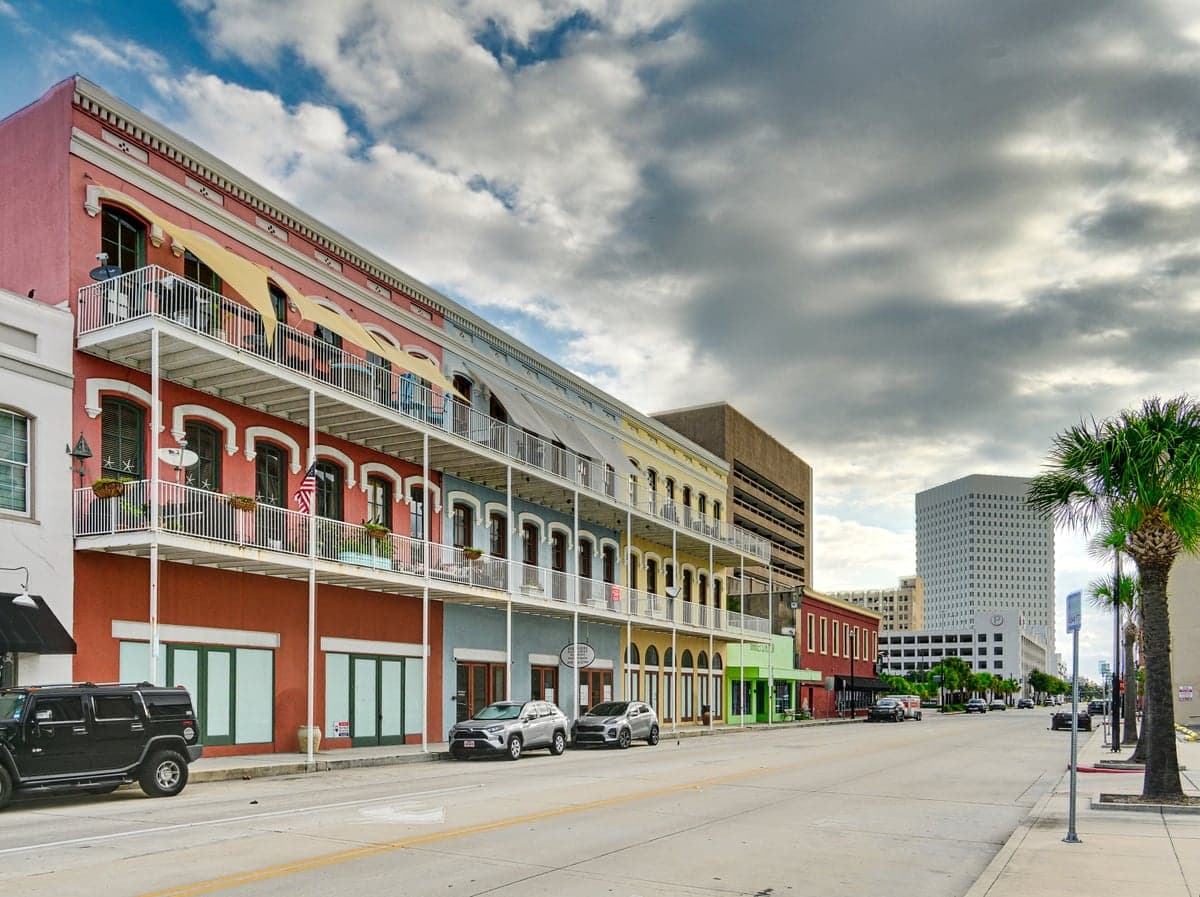
Galveston Island is the county’s most famous population center, a historic port city of roughly 50,000 residents that blends Victorian architecture, a working port, and a tourism-driven economy centered on the Strand Historic District, Pleasure Pier, and miles of public beaches. Daily life here is shaped by seasonal visitor surges, a vibrant arts scene, and a walkable downtown core, though residents contend with higher property insurance costs and occasional hurricane evacuations. Texas City, the county’s second-largest city with about 50,000 people, presents a starkly different environment: a heavy-industrial hub anchored by petrochemical refineries and the Port of Texas City. Its residential neighborhoods are more affordable than the island, with a median home value around $220,000, and the city offers strong blue-collar employment but fewer recreational amenities. League City, the fastest-growing major suburb in the county (population ~115,000), functions largely as a Houston bedroom community, with master-planned subdivisions, top-rated Clear Creek Independent School District schools, and retail corridors along I-45. Commuters here face an average countywide commute of 27.7 minutes, though League City residents driving to downtown Houston often exceed 40 minutes each way.
Smaller towns & rural pockets
Beyond the three largest cities, Galveston County contains several distinct smaller communities. Kemah, a waterfront village on Clear Lake, is known for its boardwalk restaurants and marinas, drawing boaters and weekend diners but offering limited full-time housing stock. Dickinson, just north of League City, retains a small-town feel with older ranch-style homes and a historic downtown, while La Marque (population ~18,000) sits between Texas City and Hitchcock, offering some of the county’s most affordable housing—median home values near $200,000—and a quieter, family-oriented atmosphere. The county’s rural character is most evident in Santa Fe and Hitchcock, unincorporated areas and small towns where agricultural land, horse properties, and older farmhouses dominate. Bacliff, a census-designated place on Galveston Bay, is a working-class fishing community with mobile homes and modest cottages, while San Leon offers similar bayfront living with a more rustic, off-the-grid feel. These rural pockets lack the retail density and school ratings of League City but provide larger lots, lower property taxes, and proximity to bay fishing and birding.
Cost & lifestyle range
The cost-of-living spread across Galveston County is substantial. At the high end, West Galveston Island (particularly the West End) features beachfront homes with median values exceeding $500,000, along with higher insurance premiums and HOA fees in gated communities like Pirates Beach and Terramar. League City’s master-planned neighborhoods (e.g., South Shore Harbour, Tuscan Lakes) command median home prices around $375,000, with rents averaging $1,600–$1,800 for a three-bedroom home. At the lower end, Texas City, La Marque, and Hitchcock offer median home values between $180,000 and $220,000, with rents as low as $1,100 for a two-bedroom apartment. The countywide median home value of $284,900 and median rent of $1,360 reflect this middle ground, but buyers should note that property insurance in coastal flood zones can add $3,000–$6,000 annually. Amenity access also varies: League City and Galveston Island have full-service hospitals (UTMB Health, HCA Houston Healthcare), while rural residents often drive 20–30 minutes to the nearest grocery or urgent care. School quality ranges from Clear Creek ISD (rated A by Niche) to Texas City ISD (rated C+), influencing family relocation decisions.
Galveston County best suits those who want proximity to Houston’s job market without sacrificing coastal access or rural space, but the right fit depends heavily on tolerance for tourism, industrial activity, or long commutes. Retirees and second-home buyers gravitate to the island’s historic districts or beachfront, while families with school-age children cluster in League City’s subdivisions. Commuters on a budget find value in Texas City and La Marque, and those seeking acreage or a slower pace settle in Santa Fe or Bacliff. The county’s diversity of environments—from the boardwalk bustle of Kemah to the quiet bayous of San Leon—means that most lifestyle preferences can be accommodated, provided the trade-offs in commute time, flood risk, and school quality are accepted.

Crime in Galveston County
Crime rates similar to the national median for U.S. locations.
Violent CrimeViolent Crime Analysis
Property CrimeProperty Crime Analysis
Crime Analysis
Galveston County presents a mixed safety profile typical of a coastal metro area, with violent crime rates that track close to the national average but property crime figures that run noticeably higher. The county recorded a violent crime rate of 344.4 per 100,000 residents and a property crime rate of 1,791.9 per 100,000 in the most recent reporting period. These numbers reflect the challenges of a growing population, a major tourism corridor, and the influence of the broader Houston metropolitan area, where progressive prosecutorial policies in nearby Harris County have been linked to rising recidivism and softer sentencing outcomes.
Crime in context
Galveston County’s violent crime rate of 344.4 per 100,000 sits slightly above the national average of roughly 380 per 100,000 but well below the Texas state average of approximately 445 per 100,000. Property crime, however, is a more pressing concern: the county’s rate of 1,791.9 per 100,000 exceeds both the national average (about 1,954) and the Texas average (roughly 2,200). Compared to nearby jurisdictions, Galveston County fares better than Harris County, which has a violent crime rate near 500 per 100,000 and a property crime rate above 2,500 per 100,000, a disparity many analysts attribute to Harris County’s progressive district attorney, who has implemented cashless bail and reduced prosecution of low-level offenses. In contrast, Galveston County’s district attorney, Jack Roady, has maintained a more traditional approach to prosecution, emphasizing accountability for repeat offenders and opposing blanket bail reforms. This difference is reflected in the county’s lower violent crime figures, though property crime remains elevated due to the transient tourist population in coastal communities like Galveston Island and Texas City.
What residents experience
Residents of Galveston County’s smaller inland cities generally report feeling safer than those in the coastal tourist hubs. League City, the county’s largest city with over 110,000 residents, consistently posts violent crime rates below 200 per 100,000, making it one of the safer large suburbs in the Houston region. Friendswood, which straddles Galveston and Harris counties, also maintains low crime figures, with a violent crime rate near 150 per 100,000, bolstered by its own police department and a city council that prioritizes public safety funding. By contrast, Texas City and Galveston City experience higher crime concentrations. Texas City, home to a major petrochemical complex, sees property crime rates above 2,500 per 100,000, driven by theft from vehicles and industrial equipment. Galveston City’s violent crime rate hovers around 500 per 100,000, fueled by incidents in the Strand historic district and public housing areas near Broadway Avenue. Residents in these areas frequently cite concerns about car break-ins and porch piracy, especially during peak tourist seasons when transient populations swell.
Neighborhood-level variation is significant across the county. The master-planned communities of Kemah and Clear Lake Shores report near-zero violent crime and property crime rates under 1,000 per 100,000, thanks to gated entries and private security patrols. In contrast, unincorporated areas along Highway 6 and FM 517 see higher rates of burglary and theft, as limited sheriff’s office coverage creates longer response times. Residents considering a move to Galveston County should weigh the trade-offs: the coastal cities offer lifestyle amenities but carry elevated property crime risks, while inland suburbs like League City and Friendswood provide a safer daily experience with strong schools and community policing. The county’s judicial philosophy, which has resisted the progressive reforms seen in Harris County, offers some reassurance for those concerned about lenient sentencing, but the persistent property crime problem underscores the need for proactive home security measures, especially in tourist-adjacent neighborhoods.
* Values derived from national, state, county, city and local statistics and may differ in a specific area. Last updated: 2026-06-15T09:47:41.000Z
Narrative content on this page is AI-generated and may contain mistakes. Verify any details that matter before acting on them.
ReloMaps may earn a commission from affiliate links at no extra cost to you.

