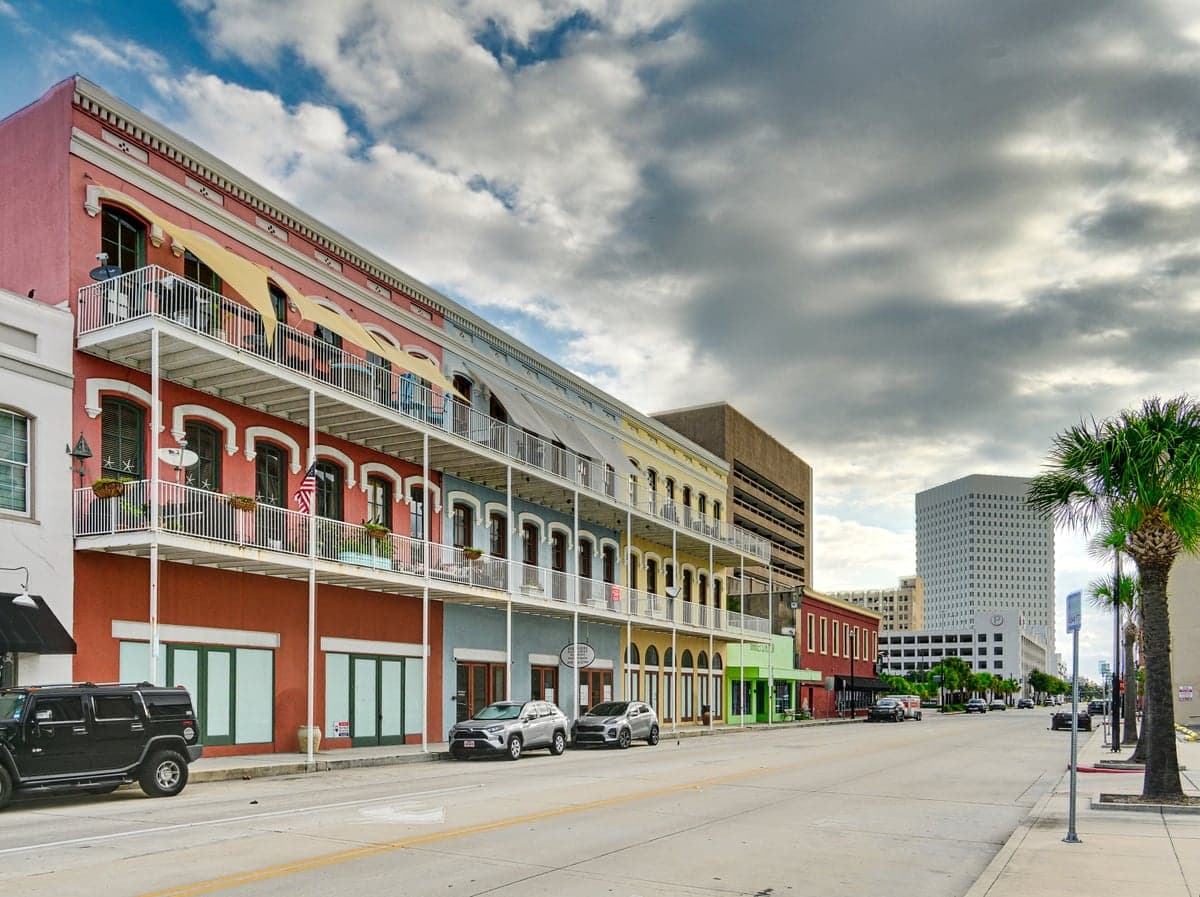
Photo: Wikipedia
Personal Sovereignty in Galveston County
Strong independent fundamentals that actively favor personal liberty and low regulation.
What does Personal Sovereignty tell us?
Personal Sovereignty measures your capacity for self-reliance and independence with minimal government friction. Higher scores mean fewer barriers between you and the way you want to live... but it assumes you have the space you need and good neighbors.
What does this tell us?
Personal Sovereignty measures your capacity for self-reliance and independence with minimal government friction. Higher scores mean fewer barriers between you and the way you want to live... but it assumes you have the space you need and good neighbors.
State Policy
Energy independence: Net exporter (220% of energy produced in-state)
Personal Liberty
Homesteading

Personal Liberty Analysis
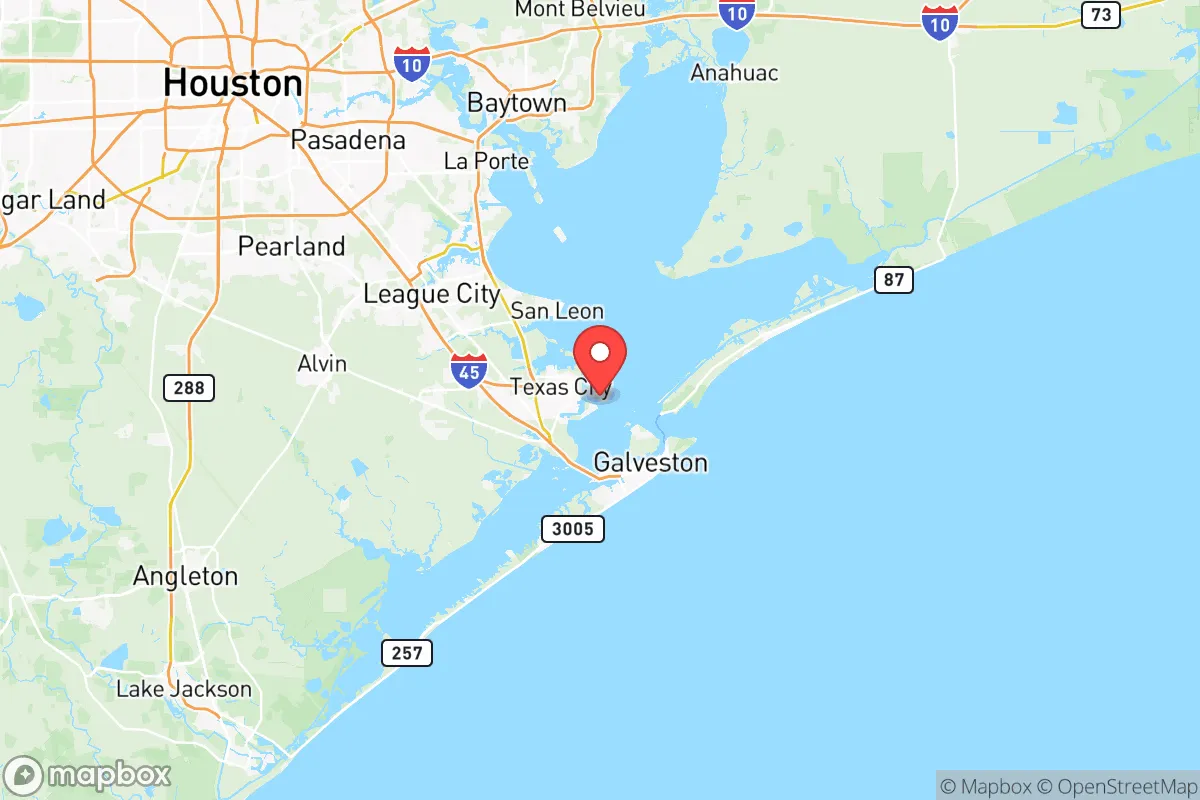
Galveston County offers a notably high degree of personal sovereignty compared to many urban Texas counties, blending a strong Texas legal framework for self-defense and property rights with a local regulatory environment that is generally permissive but varies significantly between its coastal cities and inland communities. The county's 2024 population of roughly 370,000 is spread across jurisdictions ranging from the historic port city of Galveston to the suburban expanse of League City and the more rural stretches near Santa Fe and Dickinson. For a relocation reader prioritizing autonomy, the key differentiators are not state-level laws—which are uniformly strong on gun rights and property—but the local zoning codes, tax rates, and enforcement culture that shape daily life from Texas City to Kemah.
Tax burden and regulatory posture across Galveston County
Texas has no state income tax, and Galveston County's property tax environment is competitive but not the lowest in the state. The county's total property tax rate for 2025 averages around 2.3% of assessed value, with the Galveston Independent School District (GISD) and Clear Creek ISD being the largest components. Compared to Harris County (Houston) next door, where combined rates can exceed 2.5%, Galveston County offers a modest but real advantage. However, the regulatory posture varies sharply by municipality. The City of Galveston itself has a more active code enforcement culture, with strict short-term rental regulations and floodplain management rules that can frustrate property owners. In contrast, unincorporated areas near Hitchcock and Santa Fe have far lighter touch, with fewer building permit requirements and no city-level rental restrictions. League City and Friendswood, while suburban, maintain homeowner association (HOA) covenants that can be restrictive on property use—a factor that directly impacts personal sovereignty for those who value unencumbered land use. The county's overall posture is pro-business and pro-property owner, but readers should verify whether their desired location falls under a city's regulatory umbrella or the county's more laissez-faire jurisdiction.
Self-defense and gun law specifics in Galveston County
Texas law provides a strong foundation for self-defense rights, and Galveston County's local enforcement culture aligns with that. The county is in the Fifth Court of Appeals district, which has consistently upheld Castle Doctrine and Stand Your Ground protections. Open carry of handguns with a License to Carry (LTC) is legal, and permitless carry (constitutional carry) has been in effect since 2021. Local sheriffs and police departments in Galveston County are generally supportive of gun rights; the Galveston County Sheriff's Office processes LTC applications efficiently and does not impose additional local restrictions. However, there are practical differences by city. The City of Galveston has a higher density of "30.06" and "30.07" signage (prohibiting concealed and open carry, respectively) posted at private businesses, particularly along the Seawall and in the Strand historic district. In contrast, rural areas near Alta Loma and Bacliff have virtually no posted restrictions, and gun culture is more visible in daily life. For readers who prioritize the ability to carry without encountering posted prohibitions, the inland and unincorporated parts of the county offer a more seamless experience. The county's gun ranges, such as the Galveston County Gun Range near Texas City, are well-maintained and accessible, reflecting a community that values the Second Amendment as a practical right.
Self-reliance and homesteading viability: lot sizes, zoning, and off-grid feasibility
Homesteading and off-grid living are feasible in Galveston County but are highly location-dependent due to floodplain regulations and municipal zoning. The county's minimum lot size in unincorporated areas is typically 1 acre for single-family homes without public water and sewer, though some subdivisions require larger parcels. Areas near Santa Fe and Alta Loma offer the best combination of affordable land (prices around $15,000–$25,000 per acre as of 2025) and minimal zoning restrictions. These areas allow for chickens, goats, and small-scale agriculture without special permits. However, the county's floodplain management—mandated by the Federal Emergency Management Agency (FEMA) due to hurricane risk—imposes strict elevation requirements for new construction in flood zones, which can add $20,000–$40,000 to building costs. Off-grid solar and rainwater collection are legal and common in unincorporated areas, but the county requires a permit for any structure over 200 square feet, and septic systems must meet Texas Commission on Environmental Quality (TCEQ) standards. The City of Galveston and League City have far more restrictive codes: Galveston bans rainwater as a primary water source and requires connection to municipal sewer, while League City's zoning limits livestock to lots over 2 acres. For serious homesteaders, the unincorporated areas near Dickinson and Bacliff offer the greatest latitude, though proximity to the coast means saltwater intrusion and hurricane preparedness are ongoing considerations.
Personal liberties: parental rights, medical autonomy, speech, and property
Texas law provides strong protections for parental rights, including the Parental Bill of Rights (Texas Family Code Chapter 151) and the ability to opt children out of curriculum materials. Galveston County school districts—including Texas City ISD, Santa Fe ISD, and Clear Creek ISD—generally respect these rights, though enforcement varies by campus. Homeschooling is legal with minimal state oversight (no notification required), and the county has a robust homeschooling community, particularly in Santa Fe and Friendswood. Medical autonomy is shaped by state law: Texas has no vaccine mandate for adults, and the 2023 law prohibiting COVID-19 vaccine mandates by private employers applies statewide. However, Galveston County's healthcare system, dominated by the University of Texas Medical Branch (UTMB) in Galveston, is more aligned with institutional protocols than rural counties; some readers may find the medical culture less accommodating of alternative treatments. Free speech is protected under the Texas Religious Freedom Restoration Act and the state's anti-SLAPP statute, and Galveston County has no local ordinances restricting political speech or signage beyond standard time-place-manner rules. Property rights are strong, with Texas's private property rights laws limiting eminent domain for economic development. However, the county's beach access laws (the Texas Open Beaches Act) can create tension for coastal property owners, as the public has a right to access the dry beach up to the vegetation line—a factor unique to Galveston Island and Bolivar Peninsula that limits absolute property control.
Overall, Galveston County offers a solid but nuanced personal sovereignty environment that ranks above the Texas average for property rights and self-defense, but below the most libertarian rural counties in West Texas or the Hill Country. The trade-off is access to coastal amenities, a strong job market anchored by UTMB and the Port of Galveston, and proximity to Houston's economy. For a reader who values maximum autonomy—no HOA, minimal zoning, and the ability to live off-grid—the unincorporated areas near Santa Fe, Alta Loma, and Bacliff are the best bets. For those who want strong gun rights and low taxes but accept suburban conveniences, League City and Friendswood deliver. The City of Galveston itself, while culturally vibrant, imposes the most restrictions on property use and self-reliance. The county's overall posture is one of permissive state law tempered by local municipal control, making it essential for relocating individuals to verify the specific jurisdiction's rules before purchasing property.

* Values derived from national, state, county, city and local statistics and may differ in a specific area. Last updated: 2026-06-15T09:47:41.000Z
Narrative content on this page is AI-generated and may contain mistakes. Verify any details that matter before acting on them.
ReloMaps may earn a commission from affiliate links at no extra cost to you.

