Photo: Wikipedia
Demographics of Bell County
Affluence Level in Bell County
A middle-class area roughly in line with national averages across income, home values, education, and employment.
People of Bell County
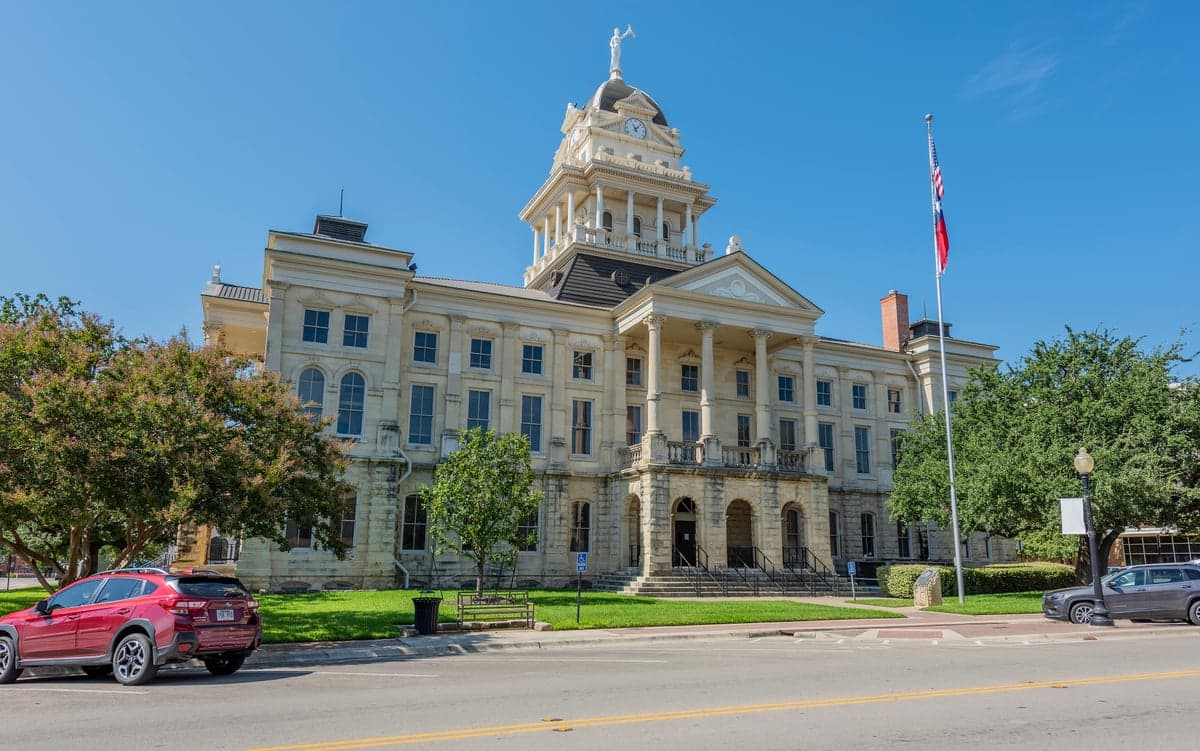
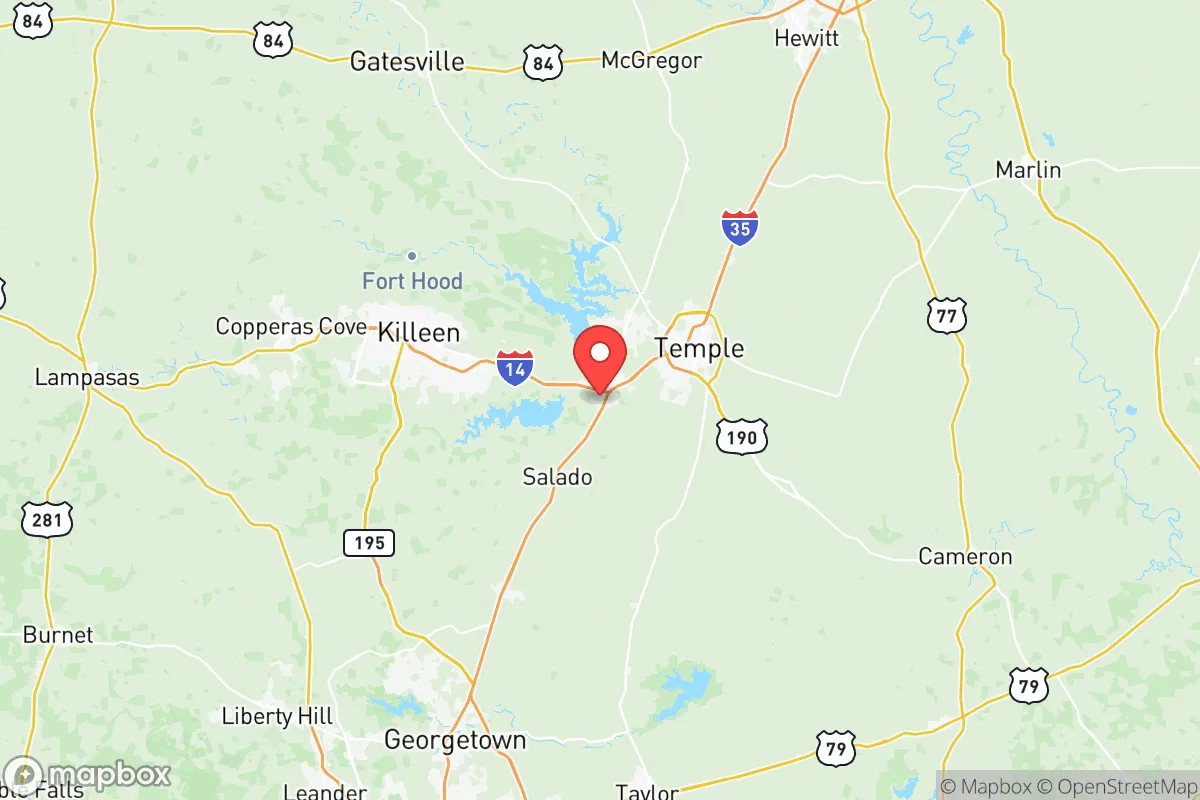
The people of Bell County, Texas today form a diverse, rapidly growing population of 379,811, anchored by the twin cities of Temple and Belton and the sprawling Fort Cavazos (formerly Fort Hood) military installation. The county is characterized by a strong military and veteran presence, a significant African American community concentrated in Killeen and Harker Heights, a growing Hispanic population across all communities, and a smaller but established white population that remains influential in rural areas and historic towns like Salado and Rogers. Distinctive identity markers include a deep-rooted sense of patriotism tied to the base, a relatively young median age driven by active-duty families, and a political culture that leans conservative but is increasingly shaped by the diverse backgrounds of its residents.
Settlement & growth (pre-1960)
Before American settlement, the area now known as Bell County was home to various Native American nations, including the Tonkawa, Comanche, and Waco tribes, who used the region's rivers and prairies for hunting and seasonal camps. Spanish and Mexican authorities claimed the land but established no permanent settlements within the county's boundaries, leaving it as a contested frontier zone until the Republic of Texas era.
Anglo-American settlement began in earnest after Texas statehood in 1845, with the first wave of settlers being primarily of Scots-Irish and English descent who migrated from the Upper South and Deep South. These early pioneers were drawn by cheap land grants and the promise of cotton farming along the Brazos River and its tributaries. They founded the county seat of Belton in 1850, followed by the railroad towns of Temple (1881) and Bartlett (1882). The arrival of the Gulf, Colorado and Santa Fe Railway in the 1880s transformed Temple into a regional agricultural and commercial hub, attracting merchants, bankers, and professionals from across the South.
Following the Civil War and Reconstruction, a significant population of freed African Americans settled in Bell County, many working as sharecroppers and tenant farmers on the cotton plantations that dominated the rural economy. Black communities formed in specific neighborhoods of Temple and Belton, as well as in smaller settlements like Little River-Academy and Holland, where they established churches, schools, and mutual aid societies. By 1900, African Americans made up roughly 25% of the county's population, a share that would remain relatively stable for decades.
The single most transformative event in Bell County's history was the establishment of Camp Hood (now Fort Cavazos) in 1942, during World War II. The U.S. Army selected the area for its vast, open terrain and proximity to rail lines, and the base quickly became one of the largest military installations in the world. The construction and staffing of Camp Hood drew tens of thousands of soldiers, civilian workers, and their families from across the United States, including large numbers of African Americans and white Southerners. The city of Killeen, previously a small farming town of fewer than 2,000 residents, exploded into a boomtown, and the base's permanent presence after the war reshaped the county's economy and demographics forever.
Modern era (post-1965)
The 1965 Hart-Cellar Act had a more muted effect on Bell County than on major metropolitan areas, but it did begin a gradual diversification of the population. The most significant post-1965 change was the dramatic expansion of Fort Cavazos during the Vietnam War and the Cold War, which brought waves of soldiers and their families from all 50 states and from allied nations. This military-driven migration introduced a steady stream of Hispanic, Asian, and Pacific Islander families to Killeen, Harker Heights, and Copperas Cove, creating small but visible ethnic enclaves near the base.
Domestic migration from the Rust Belt and California accelerated after 1990, as Bell County's lower cost of living, warm climate, and job opportunities in healthcare and logistics attracted retirees and working-class families. Temple emerged as a regional medical center, anchored by Baylor Scott & White Health, which drew skilled professionals from across the country. The African American population grew steadily, reaching 21.6% today, with the largest concentrations in Killeen and Harker Heights, where many Black military retirees chose to settle after service. The Hispanic population expanded from a small base to 25.8%, driven by both immigration from Mexico and Central America and by natural increase, with growing communities in Temple, Belton, and the rural farming areas around Rogers and Holland.
Suburbanization reshaped the county's geography after 2000, as new master-planned communities and subdivisions sprouted along the I-35 corridor between Temple and Georgetown. Harker Heights transformed from a small crossroads into a thriving suburb of Killeen, attracting middle-class families of all backgrounds. The historic village of Salado, once a stagecoach stop, reinvented itself as an upscale bedroom community and tourist destination, drawing white professionals and retirees seeking a small-town aesthetic. Meanwhile, the East/Southeast Asian population, at 2.2%, and the Indian subcontinent population, at 0.6%, remain modest but are concentrated among medical professionals at Baylor Scott & White and military-affiliated families in Killeen.
The future
Bell County is projected to continue its rapid growth, with the population expected to exceed 450,000 by 2035, driven by the expansion of Fort Cavazos, the ongoing development of the I-35 corridor, and the continued growth of Temple's healthcare sector. The county is becoming more diverse, with the Hispanic share rising steadily through both immigration and higher birth rates, while the white share is declining as older rural residents age and younger, more diverse families move in. The African American population is expected to remain stable or grow slightly, sustained by military retention and natural increase.
New communities are likely to concentrate in the southern part of the county, near the Williamson County line, where land is cheaper and commuter access to Austin is feasible. The area around Salado and the I-35 frontage roads is already seeing significant residential and commercial development, attracting a mix of young families and remote workers priced out of Austin. The rural towns of Rogers, Holland, and Little River-Academy are likely to remain smaller and more homogeneous, but they too will face pressure from suburban sprawl. The cultural identity of Bell County is evolving from a predominantly white, Southern, rural-military character to a more multiethnic, suburban, and service-oriented one, though the military ethos and conservative political leanings remain deeply embedded.
For someone moving in now, Bell County offers a rapidly diversifying, family-oriented environment with strong job growth in healthcare, logistics, and the military, but with a cost of living that remains well below the Texas state average. The county is becoming a more integrated, multiethnic community, where the old divides between rural and suburban, white and non-white, are slowly giving way to a shared identity shaped by military service, economic opportunity, and the daily realities of life in a fast-growing Sun Belt corridor.

* Values derived from national, state, county, city and local statistics and may differ in a specific area. Last updated: 2026-06-17T20:11:03.000Z
Narrative content on this page is AI-generated and may contain mistakes. Verify any details that matter before acting on them.
ReloMaps may earn a commission from affiliate links at no extra cost to you.

