Photo: Wikipedia
Quality of Life in Robertson County
A livable area that tracks near national norms for affordability, walkability, and neighborhood health.
What does Quality of Life tell us?
Quality of Life measures an area by evaluating factors like cost of living, nearby amenities, country club access, airport proximity, socioeconomic signals and neighborhood character. For large states, this is a general average — quality of life can vary dramatically between metro areas, suburbs, and rural communities within the same state.
What does this tell us?
Quality of Life measures an area by evaluating factors like cost of living, nearby amenities, country club access, airport proximity, socioeconomic signals and neighborhood character. For large states, this is a general average — quality of life can vary dramatically between metro areas, suburbs, and rural communities within the same state.
Cost of Living
3% above national average
93%
The Real Cost of Living in Robertson County for 2026
| Tier | Individual | Family (4) |
|---|---|---|
| Survival | $19k | $35k |
| Comfortable | $58k | $85k |
| Luxury | $117k+ | $182k+ |
| Elite (Top 5%) | $138k+ | $214k+ |
Quality-of-Life Analysis
Robertson County, Tennessee, offers a quality-of-life spectrum that spans from the suburban-style convenience of its largest town, Springfield, to the quiet, land-rich seclusion of unincorporated communities like Orlinda and Cross Plains. With a cost-of-living index of 103 (just above the national average) and a median home value of $296,700, the county attracts a mix of Nashville commuters seeking more space, agricultural families, and retirees looking for a slower pace. The county's character is defined by this tension between growth and rural tradition, with each pocket offering a distinctly different daily experience.
Largest town(s) & population centers
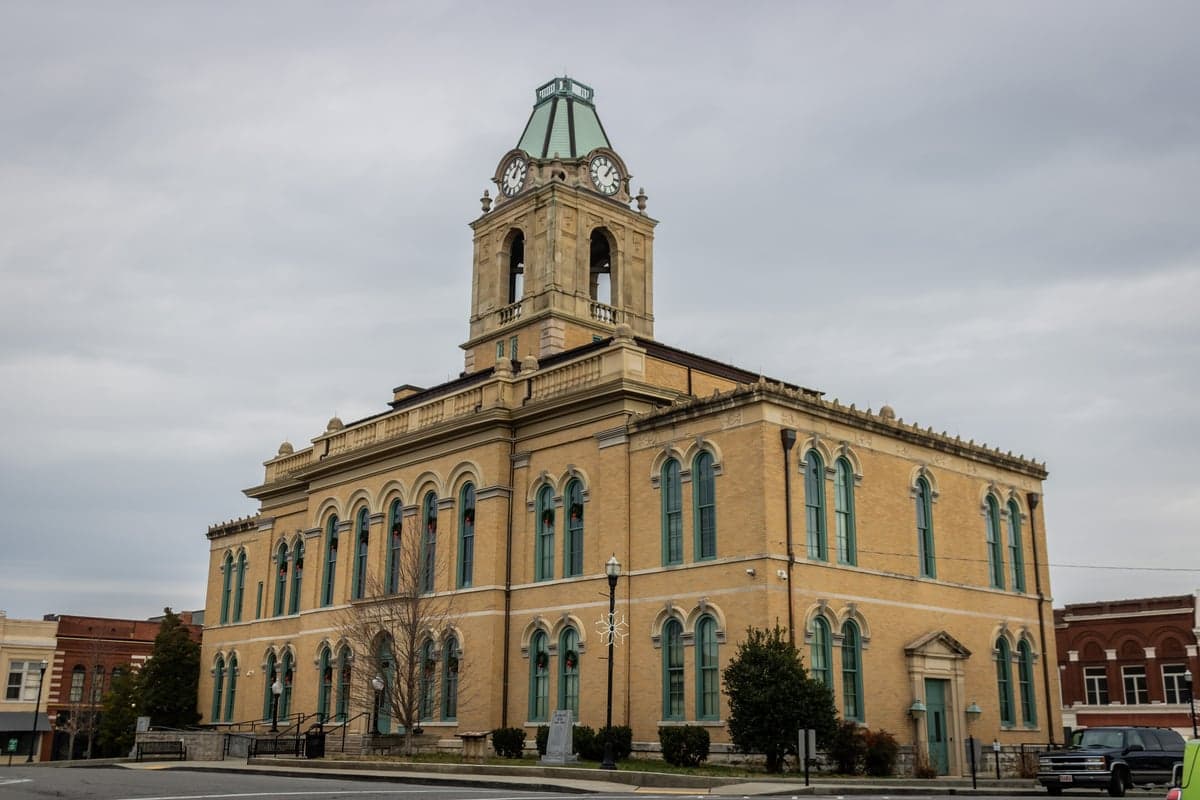
Springfield is the county seat and by far the largest population center, home to roughly 17,000 residents. Daily life here centers on a walkable historic downtown square with local restaurants, the Robertson County Farmers Market, and community events like the annual National Carousel Festival. The town provides most essential amenities—Walmart, Kroger, several medical clinics, and NorthCrest Medical Center—but residents often drive 30-40 minutes south to Nashville for major shopping, entertainment, or specialized healthcare. The average commute in the county is 31.6 minutes, a figure driven largely by Springfield residents working in the Nashville metro area. Housing in Springfield spans from older Craftsman homes near downtown (often under $250,000) to newer subdivisions on the south side pushing toward $400,000. White House, straddling the Robertson-Sumner county line, functions as a secondary population hub with its own growing retail corridor along Highway 31W and a more suburban, family-oriented feel than Springfield's historic core.
Smaller towns & rural pockets
Outside the two main towns, Robertson County's smaller communities offer a markedly different pace. Orlinda (population ~900) is a classic farming hamlet with a single gas station, a post office, and vast stretches of row crops and cattle pasture. Cross Plains (population ~1,700) sits near the Kentucky border and retains a strong agricultural identity, with many residents living on 5-20 acre parcels. Adams (population ~650) is known for the historic Bell Witch Cave and a tight-knit community where the local general store remains a social hub. Cedar Hill (population ~300) is little more than a crossroads with a handful of homes and farmland. These areas lack sidewalks, streetlights, and public water in many cases, relying on private wells and septic systems. Residents here typically commute to Springfield or even Clarksville for groceries and medical care, but they gain significant land, privacy, and lower property taxes compared to the county's more developed zones.
Cost & lifestyle range
The cost-of-living spread across Robertson County is wide. At the higher end, newer subdivisions in southern Springfield and White House—such as those near Highway 41—see home values frequently exceeding $350,000 to $450,000, with median rent countywide at $1,176. These areas offer HOA-maintained common spaces, proximity to Interstate 65, and access to the same big-box retail as suburban Nashville. At the lower end, rural properties in Orlinda, Adams, and northern Cross Plains can still be found for $200,000 to $250,000, often on one to five acres. However, lower purchase prices come with trade-offs: longer drives to any amenity, higher transportation costs, and limited internet options in some pockets (though fiber is expanding). Property taxes in Robertson County are relatively moderate—around 0.6% of assessed value—but vary little across the county since the rate is uniform. The real cost difference is in housing size and land: a 1,500-square-foot house on a quarter-acre in Springfield costs roughly the same as a 1,200-square-foot house on three acres in Orlinda.
Who thrives in Robertson County? Nashville commuters who want a suburban or semi-rural home base with a manageable 30-40 minute drive to downtown find the southern corridor near White House and Springfield most practical. Agricultural families and hobby farmers gravitate toward Orlinda, Cross Plains, and Adams, where land is still affordable and zoning is minimal. Retirees on a fixed income often choose Springfield for its walkable downtown and access to medical services, while those seeking true quiet buy acreage in the northern reaches. The county's appeal is its variety—but the key is matching the specific community to the lifestyle expectation, as the difference between a subdivision in White House and a farmstead in Orlinda is not just geographic but fundamental to daily experience.

Crime in Robertson County
Higher crime rates than 58% of comparable U.S. locations.
Violent CrimeViolent Crime Analysis
Property CrimeProperty Crime Analysis
Crime Analysis
Robertson County, Tennessee, reports a violent crime rate of 495.2 per 100,000 residents and a property crime rate of 1,650.8 per 100,000, placing it above the national average for both categories. While the county is not among the most dangerous in the state, these figures indicate a higher risk environment than many surrounding rural areas, particularly in the unincorporated zones near Springfield and the growing corridor along I-24. The county’s proximity to Nashville and its rapid population growth have introduced both economic opportunity and the policing challenges that accompany suburban expansion.
Crime in context
Robertson County’s violent crime rate of 495.2 per 100,000 is roughly 40% higher than the national average of about 380 per 100,000 and significantly above the Tennessee state average of approximately 630 per 100,000. The property crime rate of 1,650.8 per 100,000 is also elevated compared to the national figure of roughly 1,950 per 100,000, meaning property crime is a more pressing concern than violent crime on a per-capita basis. Springfield, the county seat, accounts for a disproportionate share of reported incidents, with the Springfield Police Department handling the bulk of calls. By contrast, smaller municipalities like Greenbrier and White House report lower per-capita crime rates, though they are not immune to the spillover effects of regional growth. The county’s location along the I-24 corridor, a major drug and human trafficking route, contributes to elevated crime statistics that are not uniform across the area.
What residents experience
Residents in Robertson County most frequently encounter property crimes such as theft, burglary, and vehicle break-ins, particularly in commercial districts and newer subdivisions near the interstate. Violent crime, while less common, includes aggravated assault and robbery, with incidents concentrated in specific neighborhoods within Springfield and along the Highway 49 corridor toward Adams. The judicial environment in Robertson County is a critical factor for safety-conscious residents. The 19th Judicial District, which covers Robertson and Montgomery counties, has seen a shift toward more progressive prosecutorial policies in recent years. District Attorney Jason White, elected in 2022, has emphasized alternatives to incarceration and diversion programs for non-violent offenders. While these policies aim to reduce recidivism, critics argue they result in shorter sentences and earlier releases for repeat offenders, directly increasing the number of criminals on the street. This progressive approach to justice, while sympathetic to offenders, negatively impacts public safety and victims’ rights, as plea deals and reduced charges become more common. Residents in areas like Cross Plains and Orlinda, which rely on the Robertson County Sheriff’s Office for primary law enforcement, express concern that lenient judicial outcomes undermine the deterrent effect of arrests.
Neighborhood-level variation
Crime is not evenly distributed across Robertson County. Springfield’s downtown core and the neighborhoods surrounding the industrial parks near I-24 experience the highest incident rates, driven by drug-related activity and property crime. In contrast, the bedroom communities of Greenbrier and White House maintain lower crime rates, benefiting from smaller populations, active neighborhood watch programs, and closer coordination with the Robertson County Sheriff’s Office. The unincorporated areas near Ridgetop and Millersville see very few violent crimes but report occasional thefts from vehicles and outbuildings. For those considering relocation, the safest options within the county are the smaller towns and rural subdivisions where law enforcement response times are faster and community cohesion is stronger. However, the countywide trend is toward increasing crime as population grows, and the progressive judicial philosophy in the 19th District means that even arrests in safer areas may not lead to meaningful consequences for offenders.
* Values derived from national, state, county, city and local statistics and may differ in a specific area. Last updated: 2026-06-28T02:24:47.000Z
Narrative content on this page is AI-generated and may contain mistakes. Verify any details that matter before acting on them.
ReloMaps may earn a commission from affiliate links at no extra cost to you.

