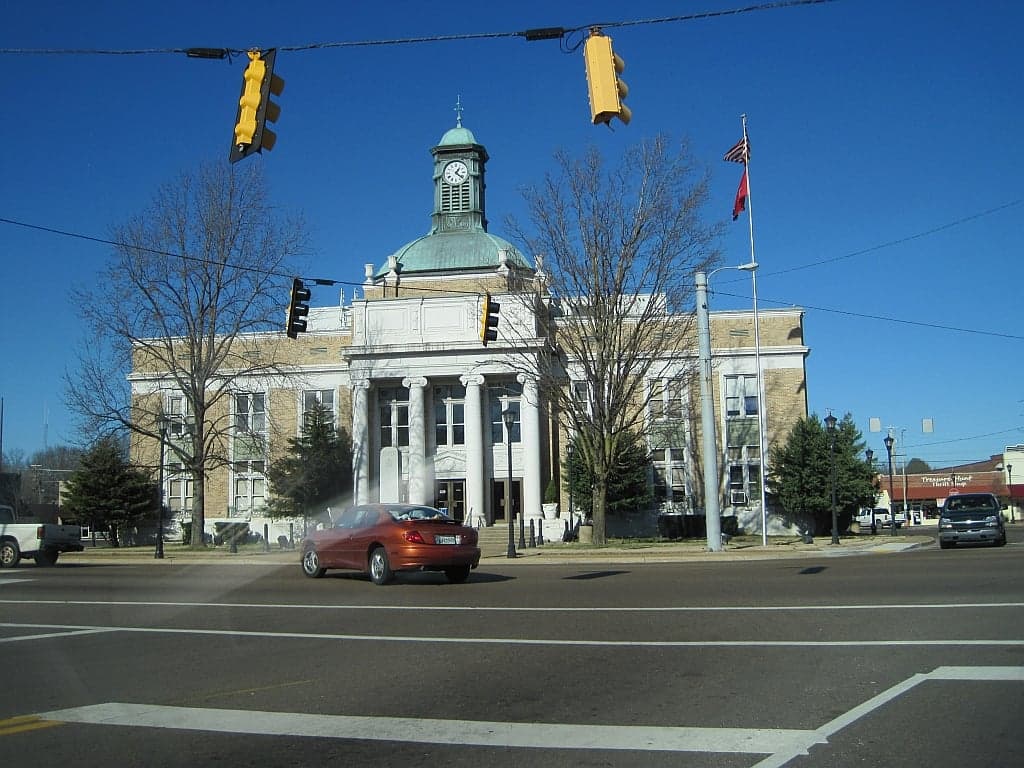
Photo: Wikipedia
Political ClimatePolitical Climate in Fayette County
Showing county-level results — no local-only data available.
Lean and PVI are calculated from this county’s 2020 and 2024 presidential results, Cook-style.
Political rankings in Tennessee
- Most Conservative Cities in Tennessee
- Most Liberal Cities in Tennessee
- Best Liberal-Leaning Towns in the South
- Best Liberal-Leaning Towns in Appalachia
- Safest Liberal-Leaning Towns in the South
- Safest Conservative-Leaning Towns in the South
- Affordable Small Towns for Conservatives
- Safest Conservative-Leaning Cities in the U.S.
- Most Conservative Counties in Tennessee
- Most Liberal Counties in Tennessee
Local Political AnalysisPolitical Analysis of Fayette County
Fayette County, Tennessee, is a deep blue island in a red state, with a Cook PVI of D+23 that stands in stark contrast to Tennessee’s overall R+13 rating. This isn’t a recent fluke—the county has voted Democratic in every presidential election since 2000, though the margins have tightened from the 30-point blowouts of the Obama years to a still-solid 15-point win for Biden in 2020. The real story here is the growing divide between the county’s rural, traditionally Democratic-leaning communities and the fast-growing suburban and exurban precincts around Memphis, which are pulling the county rightward faster than most locals expected.
How it compares
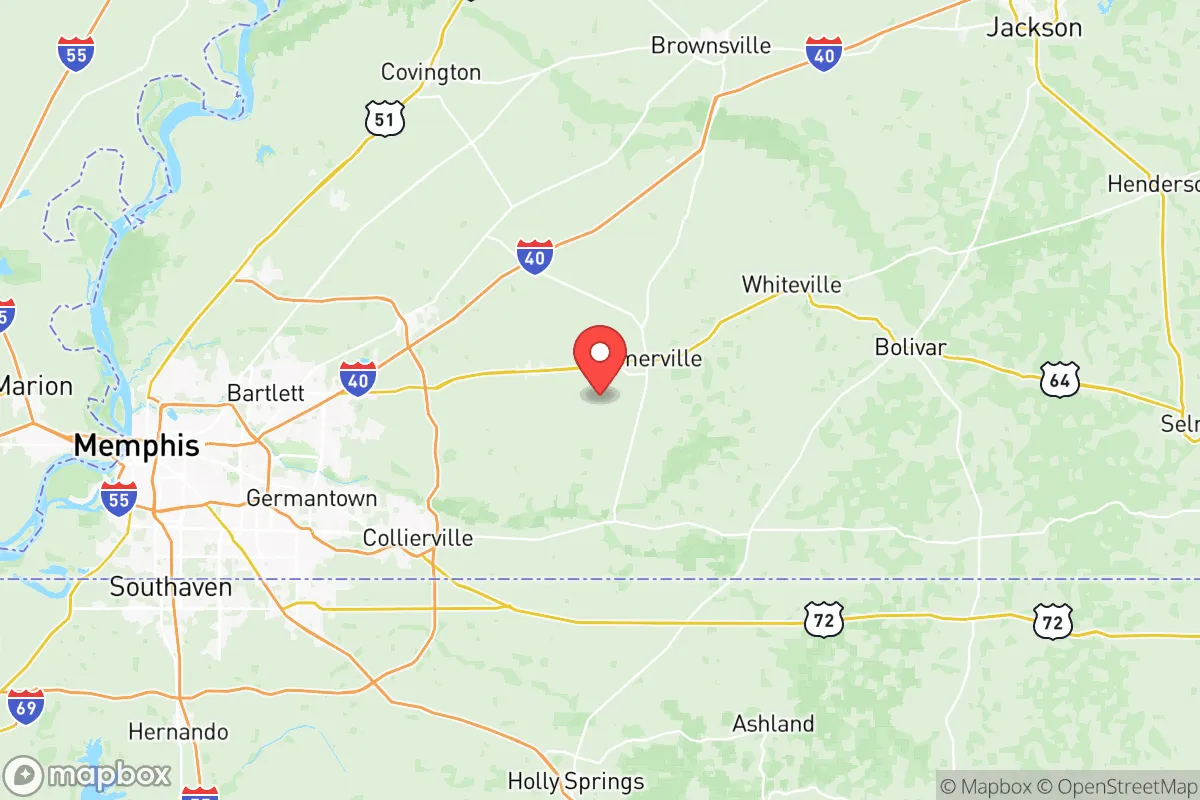
The D+23 PVI means Fayette County is about 36 points more Democratic than Tennessee as a whole—a chasm that’s rare even in the polarized South. To put it in perspective, while the state legislature in Nashville is firmly Republican, Fayette County’s local offices—county commission, school board, and judicial seats—are still dominated by Democrats, though that grip is slipping. The county’s blue lean is driven by two main blocs: the historically Black communities in towns like Sommerville (the county seat) and Moscow, which vote reliably Democratic, and the more moderate white voters in Oakland and Rossville, who often split tickets. On the flip side, the fast-growing exurbs around Piperton and Eads—where new subdivisions are sprouting up for Memphis commuters—are increasingly Republican, with some precincts there voting 60-40 for Trump in 2020. The swing precincts are in the central part of the county, around Laconia and Williston, where the vote often mirrors the national popular vote within a few points. That’s where the next election will be won or lost.
What this means for residents
For conservative residents, the county’s blue lean can feel frustrating, especially on cultural issues. Local school boards and county commissions have been slower to adopt the kind of conservative education policies you’d see in, say, neighboring Hardeman County. But the practical impact is muted: Tennessee state law preempts many local ordinances on guns, taxes, and abortion, so a conservative in Fayette County still lives under the same state-level Republican governance as someone in Knoxville. For liberal residents, the county offers a rare sense of political safety in a red state—you can reliably find Democratic candidates on the ballot for local races, and the county’s Democratic Party organization is active and well-funded. That said, the county’s trajectory is unmistakably rightward. The 2020 election saw the smallest Democratic margin in decades, and the 2022 midterms flipped a county commission seat in Piperton to Republican for the first time. If the current growth trends hold—especially the influx of white-collar workers from Memphis—Fayette County could be a toss-up within a decade.
Culturally, the county’s political divide mirrors its geography. The eastern half, around Sommerville and Moscow, feels like old-school West Tennessee: slower-paced, with deep roots in the Black farming community and a strong sense of local identity. The western half, around Piperton and Eads, is increasingly a bedroom community for Memphis professionals, with newer subdivisions, chain restaurants, and a more transient population. This split shows up in everything from school board debates (rural vs. suburban funding priorities) to zoning fights (farmland vs. development). The one thing both sides agree on? Nobody wants to become another Collierville—the fast-growing Memphis suburb just north of the county line that’s seen its small-town character swallowed by sprawl. That shared anxiety about growth might be the only bipartisan issue left in Fayette County.

State Political ClimatePolitical Climate in Tennessee
State Political AnalysisPolitical Environment in the State
Tennessee is a solidly Republican state with a Cook PVI of R+13, meaning it votes about 13 points more Republican than the national average in presidential elections. The state has shifted rightward over the past 20 years, driven by a combination of suburban growth in the Nashville and Knoxville exurbs, a deep rural conservative base, and the political realignment of working-class voters away from the Democratic Party. While Democrats still hold a few urban strongholds, the statewide trajectory has been consistently red since 2000, with no serious signs of reversal.
Urban vs. rural divide
The political map of Tennessee is a classic story of urban islands in a sea of red. Nashville (Davidson County) is the state's most reliably Democratic major city, voting for Joe Biden by a 30-point margin in 2020, but it's surrounded by a ring of fast-growing, deeply Republican suburbs like Williamson County (Brentwood, Franklin) and Rutherford County (Murfreesboro), which are among the most conservative suburban counties in the nation. Memphis (Shelby County) is the other major Democratic stronghold, driven by a large African American population, but the rest of West Tennessee is heavily Republican. Knoxville (Knox County) and Chattanooga (Hamilton County) are more politically mixed: Knox County voted for Trump by 20 points in 2020, but the city of Knoxville itself is a blue dot, and Hamilton County has been trending slightly more competitive as Chattanooga's urban core grows. The rural areas—places like Fentress County in the Upper Cumberland or Hardeman County in West Tennessee—routinely vote 70-80% Republican. The key trend: the Nashville and Knoxville exurbs are growing fast, and they're bringing in conservative-leaning transplants from blue states, further solidifying the state's red tilt.
Policy environment
Tennessee's policy environment is defined by low taxes, limited regulation, and a strong conservative social agenda. There is no state income tax on wages—only a 6.5% flat tax on interest and dividends, which is being phased out by 2029. The state sales tax is among the highest in the nation at 7%, with local add-ons pushing it to 9.75% in some cities. Property taxes are low, with effective rates around 0.6% of home value. The state is a "right-to-work" state and has a constitutional amendment banning a state income tax. On education, Tennessee has school choice programs including Education Savings Accounts (ESAs) for low-income families in certain counties, and the state legislature is actively expanding charter schools. Healthcare policy is notable for not expanding Medicaid under the ACA, leaving roughly 300,000 low-income residents in the coverage gap. Election laws are moderately restrictive: voter ID is required, early voting is available for two weeks, and the state has a strict felony disenfranchisement law that bars voting until all fines and fees are paid. The state legislature is heavily gerrymandered, with Republicans holding supermajorities in both chambers.
Recent policy direction
Recent legislation in Tennessee has pushed the state further to the right on multiple fronts. In 2023, the legislature passed a near-total abortion ban with no exceptions for rape or incest, only to save the life of the mother. On gun rights, Tennessee enacted permitless carry for handguns in 2021, allowing any legal adult to carry a concealed firearm without a permit. In 2023, after the Covenant School shooting in Nashville, the legislature passed a bill to protect gun and ammunition manufacturers from civil liability for crimes committed with their products. On education, the state passed a law in 2022 banning the teaching of "divisive concepts" related to race and gender in public schools, and in 2023 it enacted a law requiring school districts to notify parents of any changes to a student's health or well-being, effectively targeting transgender students. On property rights, Tennessee has strong eminent domain protections and no statewide rent control. On voting, the state passed a law in 2023 making it a felony for election officials to send unsolicited absentee ballot applications. On privacy and surveillance, Tennessee passed a law in 2024 requiring age verification for adult websites, a move that has drawn First Amendment challenges. The overall direction is clear: the state is moving to codify conservative cultural values into law, with a particular focus on parental rights, gun rights, and limiting abortion access.
Civil unrest & political movements
Tennessee has seen its share of political flashpoints. The Covenant School shooting in Nashville in March 2023 sparked massive protests at the state capitol, with thousands of demonstrators demanding gun control measures. The legislature responded by expelling two Democratic lawmakers—Justin Jones and Justin Pearson—for leading a protest on the House floor, a move that drew national attention and led to their quick reinstatement by local officials. The state has a visible and organized Moms for Liberty chapter network, particularly in Williamson and Rutherford counties, which has been active in school board elections and library book challenges. On the left, the Tennessee Justice Center and Stand Up Nashville organize around Medicaid expansion and tenant rights. Immigration politics are less heated than in border states, but the legislature passed a law in 2024 requiring law enforcement to cooperate with federal immigration authorities. There is no sanctuary city movement of note; Nashville's 2017 "sanctuary city" resolution was largely symbolic and quickly challenged. Election integrity controversies have been minimal compared to states like Georgia or Arizona, though the 2020 election did see some local Republican activists question the results. Overall, the political atmosphere is polarized but not chaotic; most residents live in politically homogeneous communities and don't experience daily friction.
Projection
Over the next 5-10 years, Tennessee will likely become more Republican, not less. The in-migration pattern is key: the state is gaining about 80,000 new residents per year, many from California, Illinois, and New York. While some of these transplants are moderate or liberal, the majority are conservative-leaning families and retirees drawn by low taxes and a perceived "traditional" culture. The Nashville and Knoxville exurbs—places like Spring Hill, Nolensville, and Farragut—are growing explosively and voting increasingly Republican. The urban cores of Nashville and Memphis are also growing, but their political influence is diluted by gerrymandering and the sheer pace of suburban expansion. The state's Republican supermajority is unlikely to be seriously challenged before 2030. Expect further legislation on school choice expansion, tax cuts (possibly eliminating the remaining income tax on dividends), and continued restrictions on abortion and transgender rights. The wild card is the 2026 gubernatorial election (Governor Bill Lee is term-limited), which could see a more moderate Republican or a more hardline conservative take the helm, but the overall policy direction will remain solidly right.
For a new resident, the bottom line is this: Tennessee offers a low-tax, culturally conservative environment where your vote for a Republican candidate will almost certainly be in the majority statewide. If you're conservative, you'll find a state government that actively reflects your values on guns, taxes, and education. If you're liberal, you'll find a small but vibrant urban scene in Nashville, Memphis, and parts of Knoxville and Chattanooga, but you'll be living under a state government that is actively hostile to many of your policy preferences. The practical takeaway is that Tennessee is a state where the political direction is clear and stable—what you see is what you'll get for the foreseeable future.
* Values derived from national, state, county, city and local statistics and may differ in a specific area. Last updated: 2026-10-24T03:12:37.000Z
Narrative content on this page is AI-generated and may contain mistakes. Verify any details that matter before acting on them.
ReloMaps may earn a commission from affiliate links at no extra cost to you.

