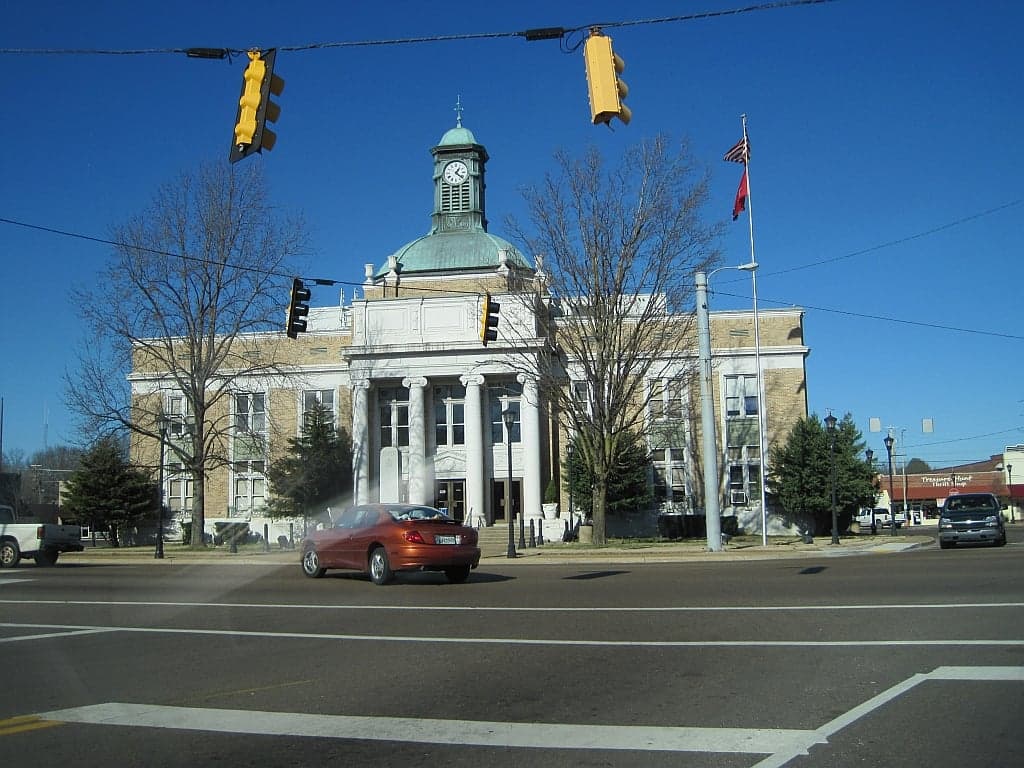
Photo: Wikipedia
Personal Sovereignty in Fayette County
Viable for self-reliance. Generally workable, though some barriers may limit total independence.
What does Personal Sovereignty tell us?
Personal Sovereignty measures your capacity for self-reliance and independence with minimal government friction. Higher scores mean fewer barriers between you and the way you want to live... but it assumes you have the space you need and good neighbors.
What does this tell us?
Personal Sovereignty measures your capacity for self-reliance and independence with minimal government friction. Higher scores mean fewer barriers between you and the way you want to live... but it assumes you have the space you need and good neighbors.
State Policy
Energy independence: Importer (21% of energy produced in-state)
Personal Liberty
Homesteading

Personal Liberty Analysis
Fayette County, Tennessee, offers a notably high degree of personal sovereignty, grounded in Tennessee’s strong constitutional protections and a local culture that prizes self-reliance. The county’s regulatory environment is light-touch, with no county-wide zoning in unincorporated areas, and its tax burden is among the lowest in the state. For individuals and families seeking to maximize personal autonomy—from self-defense rights to homesteading feasibility—Fayette County presents a compelling option, though specific conditions vary between its towns, such as the more rural unincorporated areas around Somerville and Moscow versus the more structured environments of Oakland and Piperton.
Tax burden and regulatory posture: How light is the government footprint?
Fayette County’s government footprint is intentionally small, with a tax burden that ranks among the most favorable in Tennessee. The county’s property tax rate is approximately $2.18 per $100 of assessed value, which is below the state median and significantly lower than neighboring Shelby County (Memphis). There is no county-wide zoning in unincorporated areas, meaning property owners in places like Moscow and La Grange can use their land for a wide range of agricultural, residential, or commercial purposes without seeking variances or permits from a planning board. This regulatory posture extends to business formation: Tennessee has no state income tax, and Fayette County’s local sales tax rate is 2.75%, bringing the combined rate to 9.75%—competitive for the region. The county’s approach is consistently pro-property-rights, with minimal interference in land use, building codes, or business operations outside of state-mandated health and safety standards. For a reader prioritizing low taxes and minimal bureaucratic hurdles, Fayette County’s unincorporated areas are a standout choice, while towns like Oakland and Piperton have more structured municipal codes (e.g., subdivision regulations, building permits) that still remain light compared to urban jurisdictions.
Self-defense and gun law specifics: What are the legal protections for armed citizens?
Tennessee is a strong Second Amendment state, and Fayette County’s local enforcement culture aligns with that. The state operates under a constitutional carry law (permitless carry) for both open and concealed handguns, effective since 2021, for any law-abiding adult 21 or older. No permit, training, or background check beyond the point of sale is required to carry a firearm in public. Fayette County’s sheriff’s office, led by an elected sheriff, is publicly supportive of gun rights; there are no local ordinances restricting magazine capacity, firearm types, or storage requirements. The county also has a robust “stand your ground” law, with no duty to retreat in any place where a person is lawfully present. For those seeking to use firearms for home defense, property protection, or recreational shooting on private land, the legal environment is permissive. The only notable restriction is that carrying a firearm on school property (K-12) requires a valid enhanced handgun permit, which involves an 8-hour training course. In practice, gun ownership is widespread across all towns, from Somerville to Rossville, and local gun shops and ranges are common. The sheriff’s office processes carry permit applications efficiently, with typical turnaround under 30 days.
Self-reliance and homesteading viability: Lot sizes, zoning, and off-grid feasibility
Fayette County is one of the most homestead-friendly areas in West Tennessee, largely due to its lack of county-wide zoning and its agricultural heritage. In unincorporated areas, minimum lot sizes are not mandated by the county, allowing for small-acreage homesteads (1-5 acres) or larger farms (20+ acres) depending on location and subdivision history. Off-grid living is legally feasible: there are no county ordinances prohibiting rainwater collection, solar panel installation, composting toilets, or alternative energy systems, though state-level health codes require septic systems for wastewater. Wells are common and regulated by the Tennessee Department of Environment and Conservation, but the permitting process is straightforward for private residential use. The county’s soil quality is good for gardening and small-scale farming, with many properties in Moscow and La Grange already having established gardens or orchards. Livestock (chickens, goats, cattle) is allowed without special permits in unincorporated areas, though homeowners associations (HOAs) in subdivisions near Oakland and Piperton may restrict animals. For those seeking true self-reliance, the areas around Somerville and Moscow offer the most freedom, with large tracts of land, minimal neighbor density, and a culture of mutual aid among rural residents. The county’s agricultural extension office provides free resources on soil testing, pest management, and sustainable farming practices.
Personal liberties: Parental rights, medical autonomy, speech, and property
Tennessee law provides strong protections for personal liberties that resonate with a conservative-leaning audience. Parental rights are explicitly protected under state law, with a presumption that parents have the fundamental right to direct their children’s upbringing, education, and healthcare. Fayette County’s school board has been active in promoting parental transparency, including policies on curriculum review and opt-out options for certain materials. Medical autonomy is also robust: Tennessee has no state-level vaccine mandate for adults, and while school immunization requirements exist, medical and religious exemptions are available. The state’s “Right to Try” law allows terminally ill patients to access experimental treatments, and there are no local restrictions on alternative or holistic medicine practitioners. Free speech is protected under the Tennessee Constitution, which is more expansive than the First Amendment in some areas (e.g., protection for anonymous speech). Property rights are a cornerstone of local governance: the county has not adopted any form of rent control, and eminent domain is used sparingly, primarily for infrastructure projects. In practice, residents in Rossville and Somerville report a high degree of trust in local government, with minimal interference in private life. The only notable limitation is that Fayette County is a “dry” county (no retail alcohol sales), though this is a local option that reflects community values rather than a restriction on personal possession or consumption.
Overall, Fayette County’s sovereignty environment is among the most favorable in Tennessee for those prioritizing personal freedom. The combination of no county-wide zoning, constitutional carry, low taxes, and strong parental rights creates a legal framework that maximizes individual autonomy. Compared to neighboring Shelby County (Memphis) or even suburban Williamson County, Fayette County offers a lighter regulatory touch and a more permissive culture for self-reliance. The primary trade-off is access to urban amenities: the county is rural, with limited public transit and fewer healthcare specialists, but for a reader who values independence over convenience, Fayette County delivers a high degree of personal sovereignty that is increasingly rare in the modern United States.

* Values derived from national, state, county, city and local statistics and may differ in a specific area. Last updated: 2026-10-24T03:12:37.000Z
Narrative content on this page is AI-generated and may contain mistakes. Verify any details that matter before acting on them.
ReloMaps may earn a commission from affiliate links at no extra cost to you.

