Photo: Wikipedia
Quality of Life in Dyer County
A livable area that tracks near national norms for affordability, walkability, and neighborhood health.
What does Quality of Life tell us?
Quality of Life measures an area by evaluating factors like cost of living, nearby amenities, country club access, airport proximity, socioeconomic signals and neighborhood character. For large states, this is a general average — quality of life can vary dramatically between metro areas, suburbs, and rural communities within the same state.
What does this tell us?
Quality of Life measures an area by evaluating factors like cost of living, nearby amenities, country club access, airport proximity, socioeconomic signals and neighborhood character. For large states, this is a general average — quality of life can vary dramatically between metro areas, suburbs, and rural communities within the same state.
Cost of Living
38% below national average
121%
The Real Cost of Living in Dyer County for 2026
| Tier | Individual | Family (4) |
|---|---|---|
| Survival | $12k | $23k |
| Comfortable | $31k | $46k |
| Luxury | $99k+ | $154k+ |
| Elite (Top 5%) | $171k+ | $265k+ |
Quality-of-Life Analysis
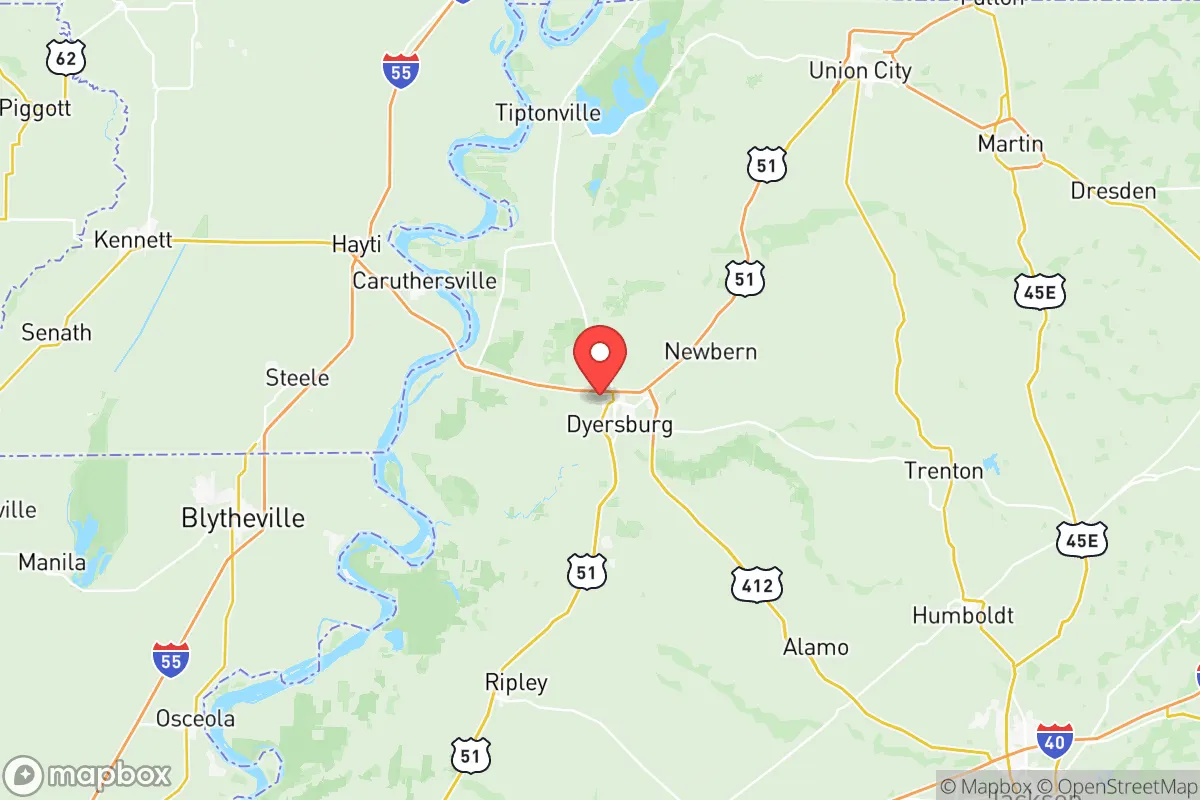
Dyer County, Tennessee, offers a spectrum of living environments that range from the modest urban conveniences of its county seat to the quiet, open spaces of its unincorporated farming communities. With a cost of living index of 62—well below the national average of 100—the county attracts a mix of workers commuting to nearby industrial hubs, retirees seeking affordable land, and families looking for a slower pace without sacrificing access to basic services. The character of daily life shifts noticeably depending on whether one lives in the central town of Dyersburg, a smaller community like Newbern, or a rural pocket such as Tigrett or Lenox.
Largest town(s) & population centers
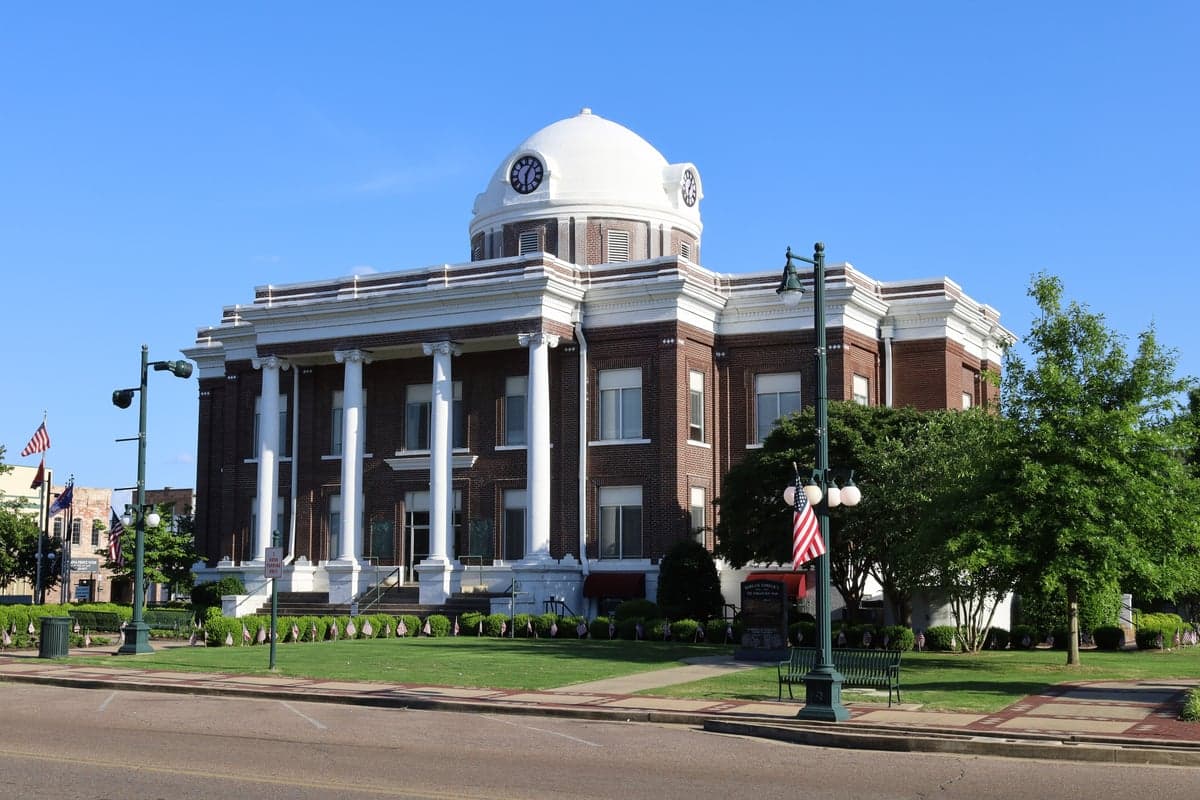
The dominant population center is Dyersburg, home to roughly 16,000 residents and the county’s commercial and governmental hub. Daily life here revolves around a compact downtown with local restaurants, a historic courthouse square, and big-box retail along Lake Road. The town hosts Dyersburg State Community College and the Dyersburg Regional Medical Center, providing stable employment and educational opportunities. Commuters appreciate the average commute of just 20.5 minutes, which makes living in Dyersburg practical for workers at nearby industrial employers like the Dyersburg Fabrics plant or those driving 30 minutes north to jobs in Union City or 45 minutes south to Memphis’s northern suburbs. The housing stock is a mix of older Craftsman bungalows near downtown and newer subdivisions on the town’s western edge, with median home values around $159,500 and median rents of $760—figures that make homeownership accessible for many first-time buyers.
Smaller towns & rural pockets
Outside Dyersburg, the county’s smaller communities offer distinctly quieter lifestyles. Newbern (population roughly 3,300) is the second-largest town, with a small historic district, a public library, and a weekly farmers market. It feels more like a village than a suburb, with most residents knowing their neighbors and relying on Dyersburg for major shopping and healthcare. Further south, Trimble (population about 600) is a classic Tennessee crossroads town with a grain elevator and a handful of churches, where life centers on agriculture and family. Unincorporated areas like Tigrett and Lenox are essentially open farmland with scattered homes, no commercial districts, and gravel roads—ideal for those who want acreage, privacy, and minimal regulation. These rural pockets lack municipal services like public water and sewer in many spots, so buyers must budget for well and septic systems.
Cost & lifestyle range
The cost spread across Dyer County is narrow in absolute dollars but meaningful in lifestyle terms. At the low end, a two-bedroom rental in a rural area like Tigrett might run $550–$650 per month, while a similar unit in Dyersburg averages $760. Home prices follow a similar pattern: a 1,200-square-foot house on a half-acre lot in Trimble can sell for under $120,000, while a comparable home in a Dyersburg subdivision near the high school might list for $180,000–$200,000. The county’s overall COL index of 62 means that even the priciest homes in Dyersburg are affordable relative to national benchmarks. The trade-off is clear: living in Dyersburg provides walkable access to grocery stores, pharmacies, and a hospital, while rural areas like Lenox require a 15- to 20-minute drive for milk or a doctor’s appointment. Property taxes remain low across the county, with no municipal tax in unincorporated areas, which appeals to retirees on fixed incomes.
The people who thrive in Dyer County are those who value affordability, short commutes, and a clear choice between small-town bustle and rural solitude. Young families often start in Dyersburg for its schools and jobs, then move outward to Newbern or Trimble for more land as their incomes grow. Retirees and remote workers with stable internet—though rural broadband can be spotty—find the low taxes and quiet of Tigrett or Lenox appealing. The county is not for those seeking urban nightlife or high-end dining, but for anyone who wants a low-stress, low-cost life in West Tennessee’s agricultural heartland, Dyer County delivers a genuine range of options.

Crime in Dyer County
Higher crime rates than 58% of comparable U.S. locations.
Violent CrimeViolent Crime Analysis
Property CrimeProperty Crime Analysis
Crime Analysis
Dyer County, Tennessee, reports a violent crime rate of 495.2 per 100,000 residents and a property crime rate of 1,650.8 per 100,000, placing it above both state and national averages for serious offenses. The county’s safety picture is heavily shaped by its largest city, Dyersburg, where the majority of reported incidents occur, while smaller communities like Newbern, Tiptonville, and Trimble generally experience lower crime volumes. Prospective residents should weigh the higher risk in the urban core against the relative calm of outlying towns and consider how local prosecutorial policies affect public safety outcomes.
Crime in context
Dyer County’s violent crime rate of 495.2 per 100K is roughly 40% higher than the Tennessee state average (approximately 350 per 100K) and nearly double the national median. Property crime at 1,650.8 per 100K also exceeds the state figure of about 1,400 per 100K. These numbers are driven primarily by incidents in Dyersburg, the county seat and economic hub, which accounts for roughly 70% of the county’s population and a disproportionate share of its crime. By contrast, Newbern (pop. ~3,300) and Tiptonville (pop. ~4,400) report significantly lower per-capita rates, though data for smaller towns is often aggregated into county totals. The 29th Judicial District, which covers Dyer County, has seen a mixed record on prosecution: while the district attorney’s office generally pursues felony cases, critics note that progressive-leaning policies in nearby Shelby County (Memphis) can influence regional sentencing trends through shared appellate courts and state-level reforms.
What residents experience
For those living in Dyer County, the most common safety concerns are property crimes—burglary, theft, and vehicle break-ins—which make up the bulk of reported incidents. Violent crime, while less frequent, is concentrated in specific Dyersburg neighborhoods, particularly around the downtown commercial corridor and areas near U.S. Route 51. Residents in Trimble and rural parts of the county report far fewer encounters with crime, often citing a strong sense of community watch and lower population density. The presence of progressive judicial philosophies in some Tennessee jurisdictions has raised concerns among conservative residents: when judges prioritize rehabilitation over incarceration, repeat offenders may cycle back into communities more quickly. Dyer County’s own courts have maintained a relatively tough stance on violent offenders, but the broader trend in Tennessee—including bail reform and sentencing guidelines—can dilute local enforcement efforts. For families, the practical takeaway is to research block-level crime maps in Dyersburg and consider the buffer of smaller towns like Newbern, where the sheriff’s office maintains a visible patrol presence.
Neighborhood-level variation is significant. Within Dyersburg, the east side (near Lake Road) and southwest quadrant (around the industrial park) see higher incident counts, while the northern residential areas near Dyer County High School report fewer problems. In Newbern, crime is largely limited to minor thefts from vehicles, and Tiptonville’s location on Reelfoot Lake attracts tourism but also occasional drug-related arrests. For the most current safety picture, consult the Dyer County Sheriff’s Office monthly reports and the Tennessee Bureau of Investigation crime data portal, which break down offenses by jurisdiction. Overall, Dyer County offers affordable living but demands vigilance in its urban center, especially for those accustomed to the lower crime rates of rural West Tennessee.
* Values derived from national, state, county, city and local statistics and may differ in a specific area. Last updated: 2026-06-27T07:34:05.000Z
Narrative content on this page is AI-generated and may contain mistakes. Verify any details that matter before acting on them.
ReloMaps may earn a commission from affiliate links at no extra cost to you.

