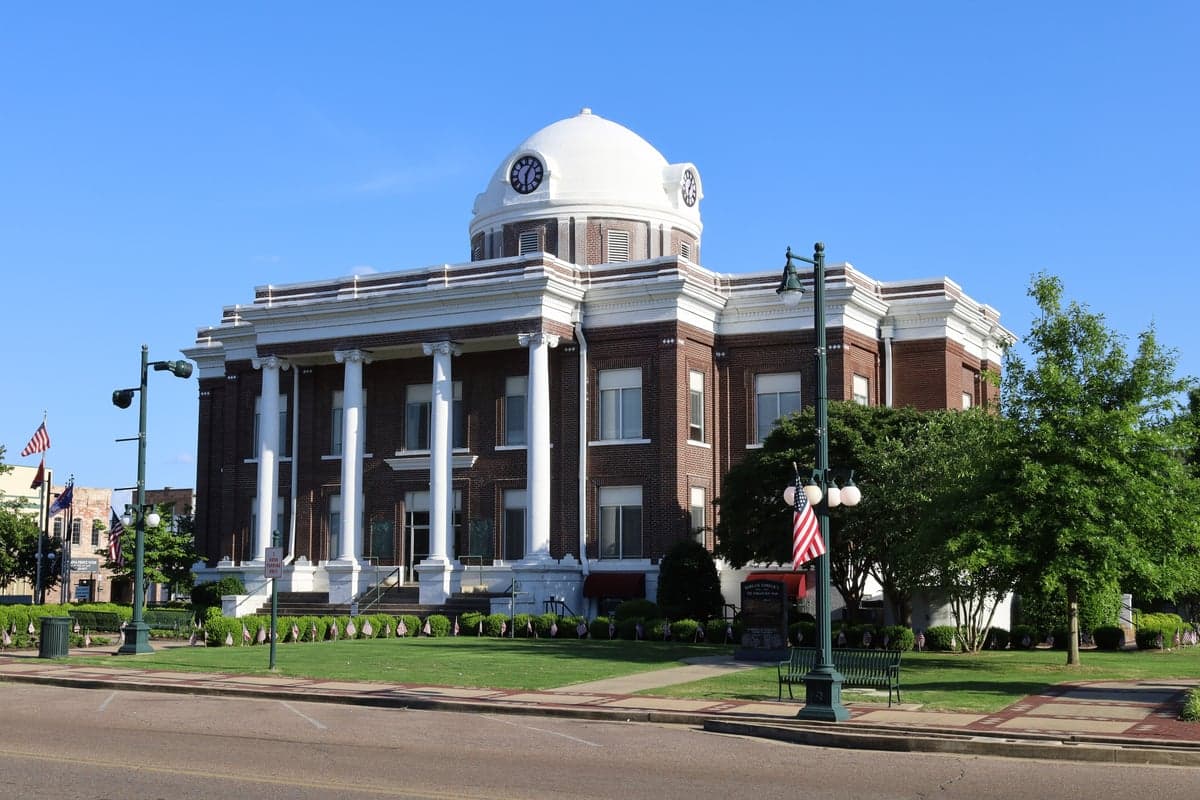
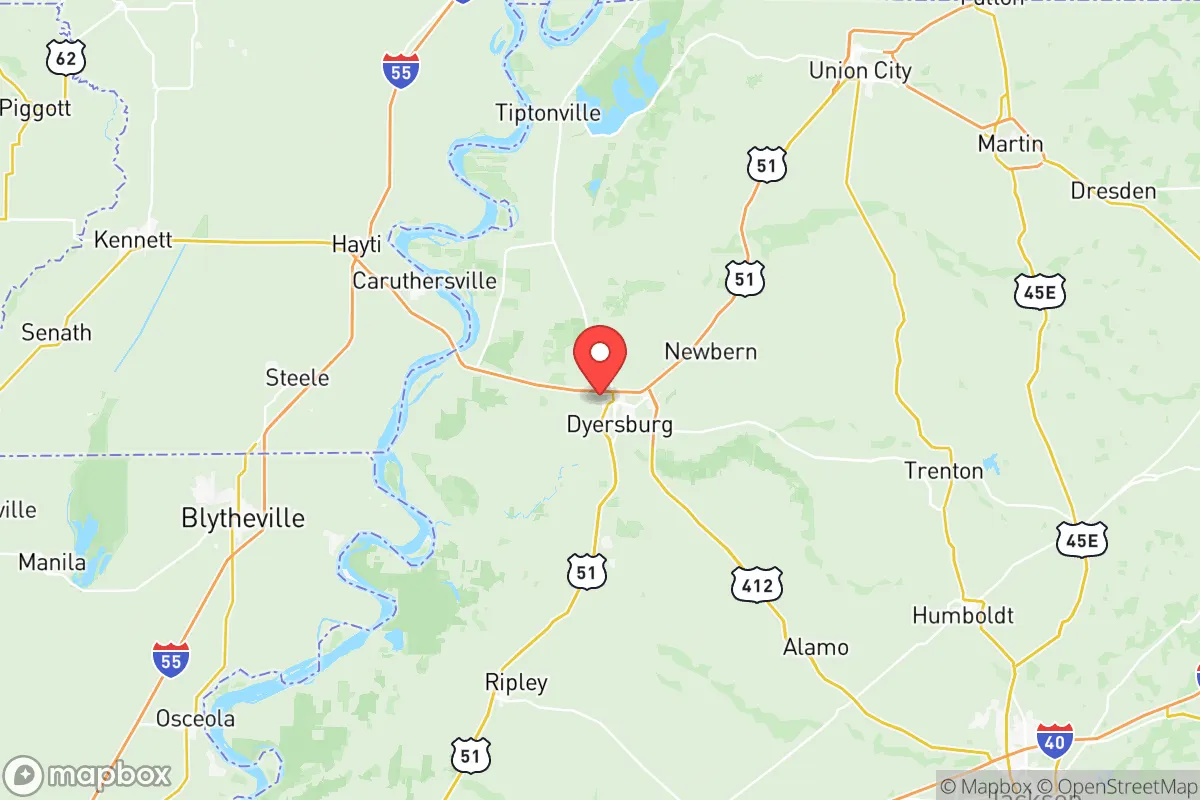
Photo: Wikipedia
Personal Sovereignty in Dyer County
Viable for self-reliance. Generally workable, though some barriers may limit total independence.
What does Personal Sovereignty tell us?
Personal Sovereignty measures your capacity for self-reliance and independence with minimal government friction. Higher scores mean fewer barriers between you and the way you want to live... but it assumes you have the space you need and good neighbors.
What does this tell us?
Personal Sovereignty measures your capacity for self-reliance and independence with minimal government friction. Higher scores mean fewer barriers between you and the way you want to live... but it assumes you have the space you need and good neighbors.
State Policy
Energy independence: Importer (25% of energy produced in-state)
Personal Liberty
Homesteading

Personal Liberty Analysis
Dyer County, Tennessee, offers a notably high degree of personal sovereignty, grounded in Tennessee’s strong constitutional protections and a local culture that prizes self-reliance. The county’s regulatory environment is light-touch, its tax burden is among the lowest in the nation, and its gun laws are explicitly permissive. For individuals and families who prioritize autonomy—whether in self-defense, homesteading, or medical decisions—Dyer County presents a legal and cultural framework that consistently favors personal choice over government oversight. This analysis examines the specific factors that shape that environment, from tax policy and zoning to parental rights and off-grid feasibility, with attention to how conditions vary across the county’s communities.
Tax burden and regulatory posture: How Tennessee’s low-tax, light-regulation framework applies in Dyer County
Tennessee has no state income tax on wages, and Dyer County’s property tax rate is among the lowest in the state. The county’s combined property tax rate (county plus city) in the largest municipality, Dyersburg, is approximately $2.40 per $100 of assessed value, while unincorporated areas and smaller towns like Newbern and Trimble often see slightly lower rates. This means a $150,000 home in Dyersburg carries an annual property tax bill of roughly $1,440—far below the national average. Sales tax in Dyer County is 9.75% (state plus local), which is moderate for Tennessee but still lower than many states with income taxes. The regulatory posture is consistently light: there is no county-level business licensing requirement for most home-based enterprises, no local zoning in unincorporated areas, and no county-wide building codes beyond basic state requirements for new construction. Dyersburg and Newbern have municipal zoning, but it is generally permissive, allowing home occupations, small-scale agriculture, and accessory dwelling units by right in most residential zones. The county’s approach to regulation is best described as “hands-off unless a clear public safety issue arises,” which aligns with the preferences of those seeking minimal government interference in daily life.
Self-defense and gun law specifics: Constitutional carry, permitless carry, and local culture in Dyer County
Tennessee is a constitutional carry state, meaning any law-abiding adult 21 or older can carry a handgun openly or concealed without a permit. Dyer County fully reflects this posture. The county’s sheriff’s office, based in Dyersburg, is publicly supportive of Second Amendment rights and issues enhanced handgun carry permits (for reciprocity with other states) on a shall-issue basis. There are no county-level restrictions on firearm possession beyond state law, and no local ordinances banning firearms in parks or public buildings (except where state law prohibits them, such as in schools and courthouses). The gun culture is deeply embedded: shooting ranges are common, with the Dyersburg Gun Club and several private ranges in rural areas like Lenox and Bogota. Stand-your-ground and castle doctrine laws are fully in effect, with no duty to retreat in any place where a person is lawfully present. For residents of Finley or RoEllen, the practical effect is that self-defense decisions are left almost entirely to individual judgment, with strong legal protections for those who use force in defense of self, family, or property. The only notable local nuance is that Dyersburg has a city ordinance prohibiting the discharge of firearms within city limits (except at approved ranges), so rural areas offer more freedom for recreational shooting on private land.
Self-reliance and homesteading viability: Lot sizes, zoning, and off-grid feasibility across Dyer County
Dyer County is predominantly agricultural, with large tracts of farmland and rural residential parcels that make homesteading highly viable. In unincorporated areas, there is no minimum lot size for residential use, though the county’s health department requires at least one acre for a septic system. This means a family can purchase a 1- to 5-acre parcel in areas like Trimble or Bogota for $2,000–$5,000 per acre and establish a small farm, garden, or off-grid homestead with minimal regulatory hurdles. Newbern and Dyersburg have municipal zoning that requires larger lots (typically 0.25–0.5 acres in residential zones), but both towns allow keeping chickens, bees, and small livestock (goats, sheep) with a simple permit. Off-grid living is legally feasible: Tennessee has no state law prohibiting rainwater collection, composting toilets, or solar panel installation, and Dyer County does not impose additional restrictions. The county’s building codes apply only to new construction and major renovations, so existing structures can be retrofitted for off-grid systems without permits. The main practical limitation is utility access: rural areas like Lenox and RoEllen may lack natural gas lines, but electricity (from TVA) and well water are widely available. For those seeking maximum self-reliance, the unincorporated areas of northern and eastern Dyer County—particularly around Finley and Trimble—offer the most freedom, with no zoning, no building permits for minor structures, and a culture of neighborly non-interference.
Personal liberties: Parental rights, medical autonomy, speech, and property rights in Dyer County
Tennessee has strong statutory protections for parental rights, including a 2023 law affirming that parents have the fundamental right to direct the upbringing, education, and healthcare of their children. Dyer County’s school board, which governs the Dyer County School System (serving all areas except Dyersburg, which has its own city school district), has a conservative majority that generally defers to parental authority on curriculum and health matters. Homeschooling is straightforward: parents file a simple notice of intent with the local school district and provide annual standardized test results or a portfolio review. Medical autonomy is similarly protected: Tennessee has no vaccine mandate for adults, and the state’s 2022 law prohibits employers from requiring COVID-19 vaccination as a condition of employment. Dyer County’s local government has not enacted any additional health mandates. Free speech is robustly protected under the Tennessee Constitution, and the county has no local ordinances restricting political speech, signage, or assembly. Property rights are strong: Tennessee’s eminent domain laws require a public purpose and just compensation, and Dyer County has not been aggressive in using condemnation for private development. The county’s planning commission, which reviews subdivision plats and land-use changes, is known for approving most applications without lengthy delays. For residents of Newbern or Trimble, the practical effect is that personal decisions—from medical choices to how one uses their land—are largely left to individual discretion, with minimal government second-guessing.
Overall, Dyer County ranks among the most sovereignty-friendly areas in Tennessee, which itself is one of the most freedom-oriented states in the U.S. The combination of no income tax, low property taxes, constitutional carry, permissive zoning in rural areas, and strong protections for parental and medical autonomy creates an environment where personal responsibility is the default. Compared to counties in neighboring states like Arkansas or Kentucky, Dyer County offers a lighter regulatory touch and lower tax burden. For a single individual or family seeking maximum personal freedom—whether in self-defense, homesteading, or daily life—Dyer County’s legal and cultural framework consistently favors individual choice over government oversight, with the most autonomy found in its rural communities like Finley, Trimble, and Bogota.

* Values derived from national, state, county, city and local statistics and may differ in a specific area. Last updated: 2026-06-27T07:34:05.000Z
Narrative content on this page is AI-generated and may contain mistakes. Verify any details that matter before acting on them.
ReloMaps may earn a commission from affiliate links at no extra cost to you.

