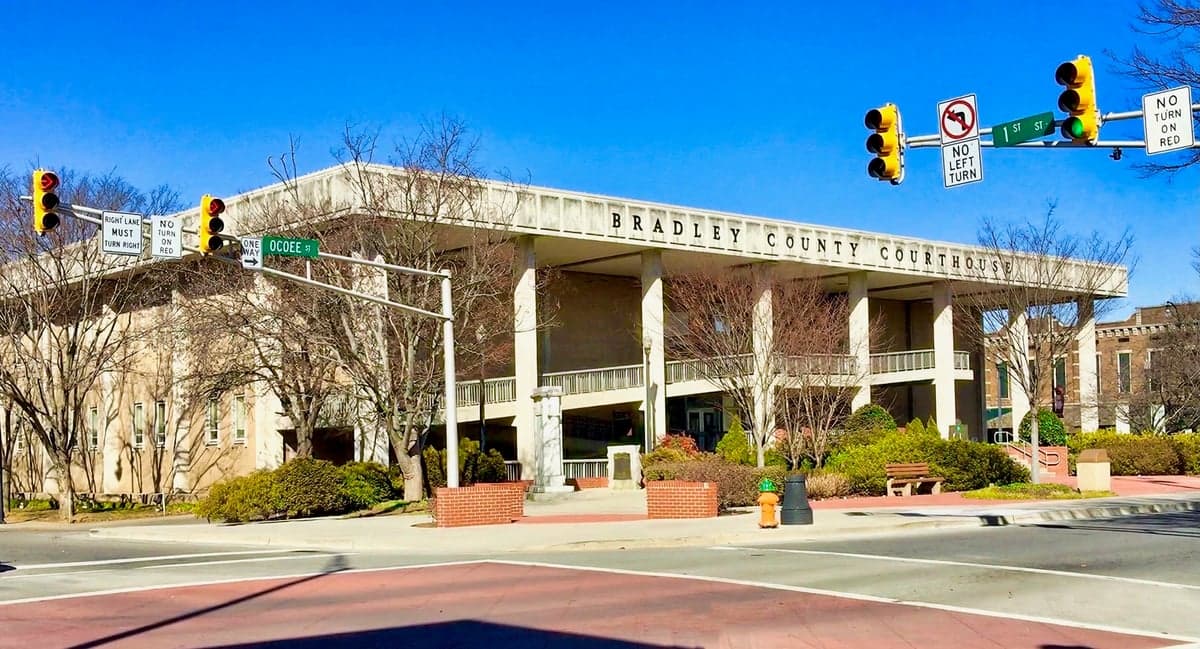
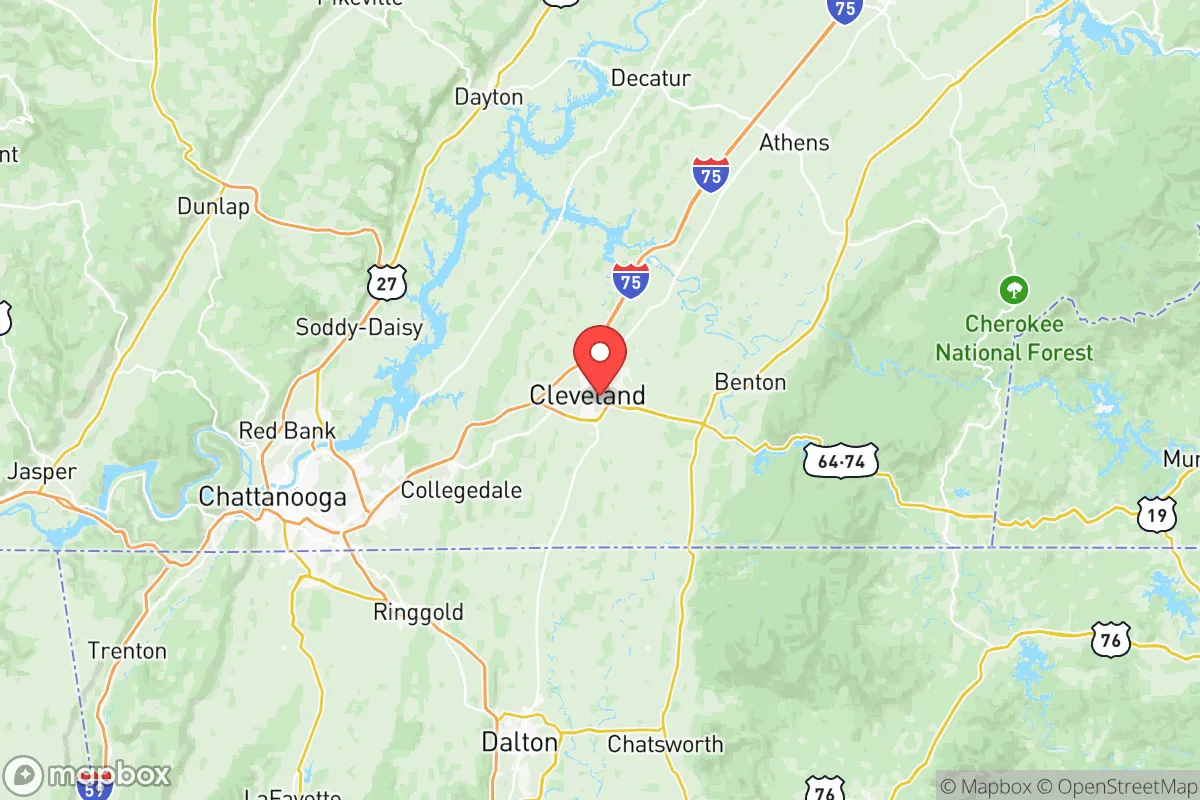
Photo: Wikipedia
Quality of Life in Bradley County
A livable area that tracks near national norms for affordability, walkability, and neighborhood health.
What does Quality of Life tell us?
Quality of Life measures an area by evaluating factors like cost of living, nearby amenities, country club access, airport proximity, socioeconomic signals and neighborhood character. For large states, this is a general average — quality of life can vary dramatically between metro areas, suburbs, and rural communities within the same state.
What does this tell us?
Quality of Life measures an area by evaluating factors like cost of living, nearby amenities, country club access, airport proximity, socioeconomic signals and neighborhood character. For large states, this is a general average — quality of life can vary dramatically between metro areas, suburbs, and rural communities within the same state.
Cost of Living
18% below national average
97%
The Real Cost of Living in Bradley County for 2026
| Tier | Individual | Family (4) |
|---|---|---|
| Survival | $15k | $29k |
| Comfortable | $45k | $66k |
| Luxury | $107k+ | $166k+ |
| Elite (Top 5%) | $126k+ | $195k+ |
Quality-of-Life Analysis
Bradley County, Tennessee, offers a broad quality-of-life spectrum that ranges from the suburban-style convenience of its largest city, Cleveland, to the quiet, agricultural rhythms of communities like Charleston and the unincorporated rural stretches near the Polk County line. This diversity attracts a mix of residents: young families and professionals drawn to Cleveland’s job base and amenities, retirees seeking lower taxes and a slower pace, and those who want acreage and privacy without being hours from a major metro. The county’s overall cost of living index sits at 82 (18% below the U.S. average), with a median home value of $230,800 and median rent of $959, making it one of the more affordable options in southeastern Tennessee.
Largest town(s) & population centers
Cleveland is the county seat and by far the largest population center, home to roughly 48,000 residents. Daily life here centers on a mix of retail corridors (notably Paul Huff Parkway and Keith Street), regional employers like Whirlpool and Wacker Polysilicon, and the campus of Lee University. The city offers a range of housing from older bungalows near the historic downtown square to newer subdivisions on the northern and western edges. Commute times average 23 minutes, which is close to the national norm, and many residents work locally or commute south to Chattanooga (about 30 minutes via I-75). Cleveland provides the most diverse set of amenities in the county, including a full-service hospital, multiple grocery chains, a public library system, and a growing number of local restaurants and breweries. For families, the Bradley County Schools system is the primary public option, with several elementary schools and Cleveland High School serving the city.
Smaller towns & rural pockets
South of Cleveland, the town of Charleston (population roughly 700) offers a distinctly small-town feel along the Hiwassee River. Life here is quieter, with limited commercial services — residents typically drive to Cleveland or Athens for groceries and medical care. Charleston is known for its annual events like the Hiwassee River Festival and for access to river recreation. Further east, the unincorporated community of McDonald sits along U.S. 11 and provides a mix of older homes and newer subdivisions, with a handful of local businesses and a strong sense of community centered on McDonald Elementary School. The rural pockets of eastern Bradley County, particularly along the Ocoee River corridor near the Polk County line, are sparsely populated and dominated by farmland, forest, and a few scattered churches and volunteer fire departments. These areas appeal to buyers seeking land, privacy, and a self-sufficient lifestyle, but they lack public water and sewer in many spots.
Cost & lifestyle range
The cost spread across Bradley County is notable. At the lower end, older homes in central Cleveland or small rental houses in Charleston can be found for under $200,000, and the median rent of $959 reflects the relative affordability of the county’s rental stock. At the upper end, newer subdivisions in the North Cleveland and Waterville areas feature homes in the $350,000–$500,000 range, often on half-acre to one-acre lots. Property taxes remain low by national standards, which is a consistent draw for retirees and out-of-state buyers. Lifestyle differences are equally pronounced: a resident in a North Cleveland subdivision can walk to a coffee shop and have a 10-minute commute to a factory job, while a resident on a 10-acre tract near the Hiwassee River may have a 30-minute drive to the nearest supermarket. The county’s lack of public transit means a car is essential everywhere, but traffic congestion is minimal outside of Cleveland’s main retail corridors during peak hours.
Bradley County works best for people who want a low-cost, low-stress base in the Tennessee Valley with the option to step up to city amenities when needed. Families who prioritize good public schools and a short commute to stable manufacturing or logistics jobs will find Cleveland practical, while those seeking acreage, river access, or a true small-town atmosphere will gravitate toward Charleston or the rural eastern stretches. The county’s affordability and geographic variety make it a viable choice for a wide range of household types, provided they are comfortable with car dependence and a slower pace of life outside the main population center.

Crime in Bradley County
Higher crime rates than 58% of comparable U.S. locations.
Violent CrimeViolent Crime Analysis
Property CrimeProperty Crime Analysis
Crime Analysis
Bradley County, Tennessee, presents a mixed safety picture where violent crime rates significantly exceed national averages while property crime remains slightly below the national benchmark. The county's overall violent crime rate of 495.2 incidents per 100,000 residents is roughly 40% higher than the U.S. average, driven largely by concentrated incidents in the urban core of Cleveland. Property crime, at 1,650.8 per 100,000, sits about 5% below the national rate, though residents in outlying communities like Charleston and Benton Springs report notably lower theft and burglary numbers than those near the I-75 corridor.
Crime in context
Bradley County's violent crime rate of 495.2 per 100,000 places it well above the Tennessee state average of approximately 620 per 100,000 and the national average of roughly 380 per 100,000. The disparity is most pronounced in aggravated assault, which accounts for nearly 70% of violent offenses in the county. Property crime at 1,650.8 per 100,000 is lower than the state average of about 2,200 per 100,000 and slightly below the national figure of 1,954 per 100,000. However, these countywide averages mask significant variation: the city of Cleveland, which contains roughly 60% of the county's population, reports violent crime rates approaching 600 per 100,000, while the unincorporated areas around McDonald and the rural stretches near the Hiwassee River see rates closer to 200 per 100,000.
What residents experience
For most residents, daily life in Bradley County involves low risk of violent victimization, but property crime—particularly vehicle break-ins and package theft—is a routine concern in neighborhoods near the Cleveland city limits. The Bradley County Sheriff's Office and Cleveland Police Department have adopted a data-driven approach, deploying patrols to hotspots along Keith Street and the 25th Street corridor where commercial property crime clusters. Residents in the safer enclaves of Charleston and Benton Springs report minimal interaction with law enforcement beyond traffic enforcement, while those in the Waterville and South Cleveland areas near the Ocoee River face higher rates of drug-related property crime tied to the regional opioid trade. The 10th Judicial District, which covers Bradley County, has seen a shift toward more progressive prosecution policies under District Attorney Stephen Hatchett, who has emphasized diversion programs for nonviolent offenders. Critics argue this approach has contributed to repeat property crime offenders cycling through the system, particularly in the Cleveland city limits where progressive judicial policies have led to reduced jail time for theft and burglary convictions, frustrating victims who see the same individuals reoffending within months.
Neighborhood-level variation is stark. The safest areas include the gated communities around Lake Forest and the rural subdivisions near Georgetown Road, where violent crime is virtually nonexistent and property crime rates run below 500 per 100,000. In contrast, the Downtown Cleveland district and the apartment complexes along Paul Huff Parkway report violent crime rates exceeding 700 per 100,000, driven by domestic disputes and drug-related assaults. The Bradley County Sheriff's Office publishes a monthly crime map showing that the vast majority of violent incidents occur within a two-mile radius of the intersection of US-11 and APD-40, while the eastern half of the county—including the Hopewell and Tasso communities—remains among the safest in Southeast Tennessee. Prospective residents should prioritize properties east of I-75 or in the Charleston area to minimize exposure to the county's crime hotspots.
* Values derived from national, state, county, city and local statistics and may differ in a specific area. Last updated: 2026-07-12T03:48:59.000Z
Narrative content on this page is AI-generated and may contain mistakes. Verify any details that matter before acting on them.
ReloMaps may earn a commission from affiliate links at no extra cost to you.

