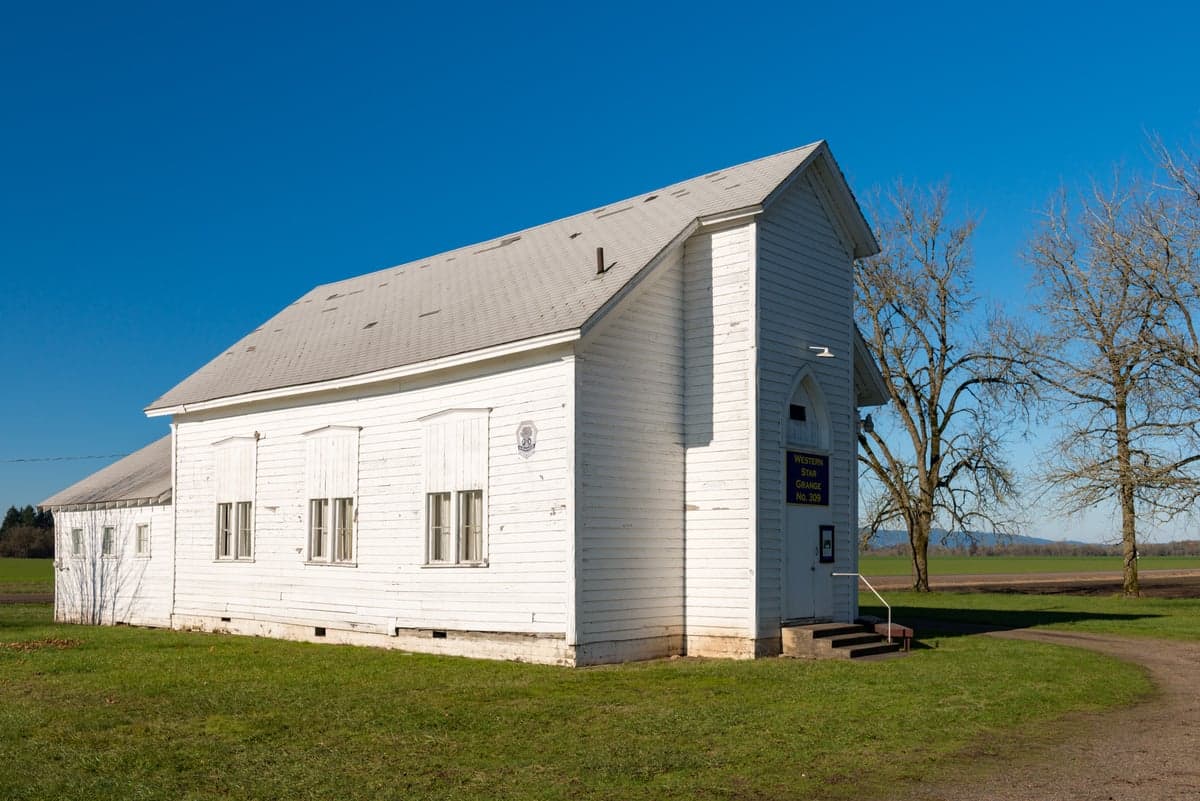
Photo: Wikipedia
Political ClimatePolitical Climate in Tangent, OR
District shown is the primary district for this city’s centroid. Cities may span multiple districts.
Inherited from parent county — no local data available.
* Lean and PVI are calculated from the surrounding county’s 2020 and 2024 presidential results, Cook-style — a finer measure here than its congressional district (OR-5).
Political rankings in Oregon
- Most Conservative Cities in Oregon
- Most Liberal Cities in Oregon
- Best Conservative-Leaning Towns on the West Coast
- Best Conservative-Leaning Towns in the Pacific Northwest
- Most Affordable Liberal-Leaning Small Towns in the U.S.
- Safest Liberal-Leaning Cities in the U.S.
- Most Conservative Counties in Oregon
- Most Liberal Counties in Oregon
Local Political AnalysisPolitical Analysis of Tangent, OR
Tangent, Oregon, is a solidly conservative pocket in a state that leans decisively Democratic, with a Cook PVI of R+13 compared to Oregon’s D+8. That’s a 21-point gap, and it’s not just a number on a map—it’s the kind of place where local candidates rarely face a serious primary challenge from the left, and where the Republican base turns out reliably for school board and city council races. Over the last decade, the area has held steady, even as the Willamette Valley’s urban centers have shifted further left; if anything, Tangent’s politics have hardened a bit, driven by growth from people moving out of Albany and Corvallis who want lower taxes and fewer regulations.
How it compares
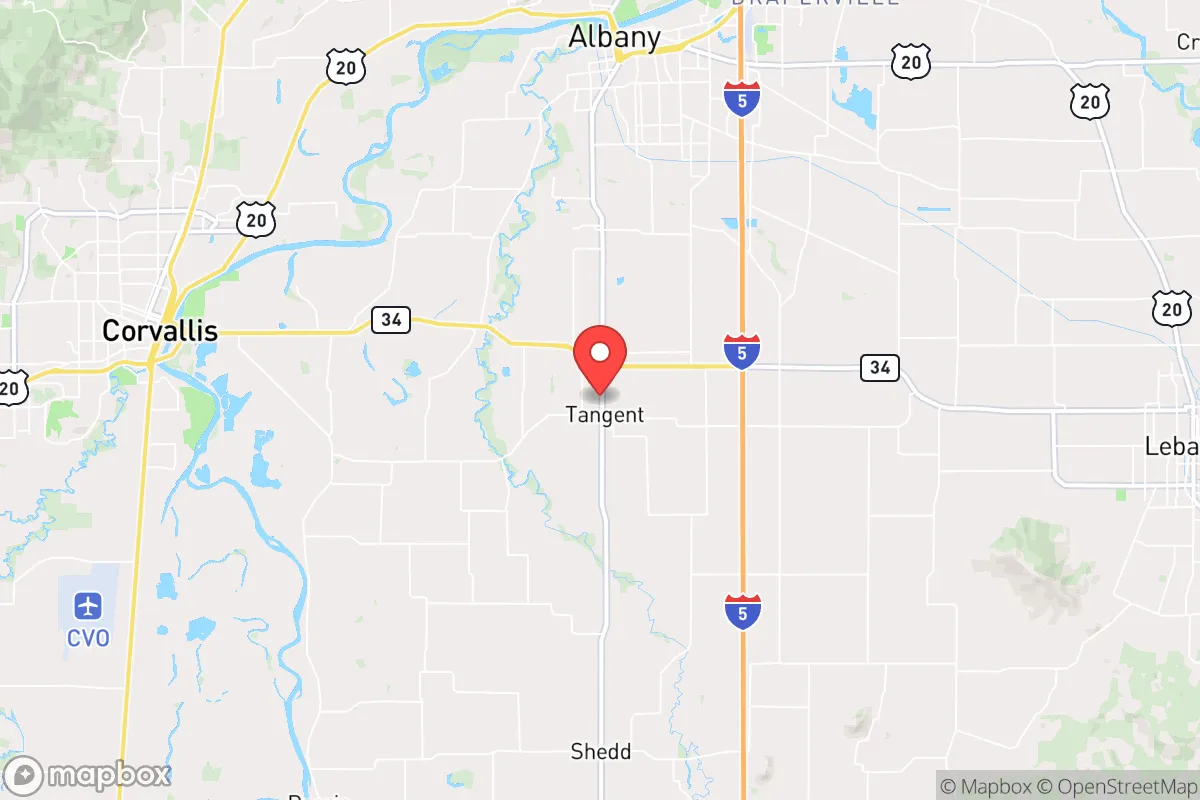
Drive ten miles north to Albany, and you’ll find a more mixed political landscape—still conservative-leaning but with a noticeable Democratic minority, especially in the older neighborhoods near the river. Head west to Corvallis, home of Oregon State University, and you’re in a D+20 environment where progressive policies on housing and climate are the norm. Tangent sits in Linn County, which voted for Trump by about 18 points in 2020, while the state as a whole went for Biden by 16. That means a Tangent resident lives in a world where their state representatives are almost all Republicans, their county commissioners are conservative, but their governor and U.S. senators are Democrats. It creates a constant tension: local laws and zoning tend to be pro-property rights and low-regulation, but state mandates on land use, emissions, and education funding often override them.
What this means for residents
For conservative residents, Tangent feels like a refuge—a place where you can openly display political signs, attend a church that aligns with your values, and send your kids to a school where the PTA isn’t pushing a progressive agenda. You’ll find that local government meetings are dominated by discussions about water rights, road maintenance, and keeping property taxes low, not the culture-war issues that dominate state politics. For liberal residents, it can be isolating. You might be one of the few households with a Biden or Harris yard sign, and you’ll need to drive to Corvallis or Eugene to find a Democratic club meeting or a progressive book club. That said, the area is not hostile—people are generally polite and neighborly, and political disagreements rarely spill into personal feuds. The practical effect is that liberal residents often become more active in local nonpartisan roles, like the library board or the volunteer fire department, to have a voice without the partisan label.
One cultural distinction worth noting: Tangent is part of the “Greater Albany” area, which has a strong agricultural and manufacturing base, and that shapes the local political conversation. You’ll hear more about the cost of fertilizer, the impact of the state’s overtime rules on small farms, and the frustration with Portland’s influence on state policy than you will about urban transit or homeless services. The long-term trajectory likely stays conservative, but as the Willamette Valley grows and housing pressures push more people south from Portland and Salem, Tangent may see a slow demographic shift. For now, though, it remains one of the most reliably Republican small towns in a blue state—a place where the national political winds feel distant, but the local ones blow steady from the right.

State Political ClimatePolitical Climate in Oregon
State Political AnalysisPolitical Environment in the State
Oregon is a reliably Democratic state with a Cook PVI of D+8, but that single number masks one of the most politically fractured landscapes in the country. The state has shifted leftward over the past 20 years, driven by explosive growth in the Portland metro area and the influx of out-of-state transplants, but that shift has been anything but smooth — rural resentment has deepened, the Democratic coalition has splintered over public safety and housing, and a serious centrist and conservative backlash has emerged in the suburbs and exurbs. For a conservative-leaning relocator, Oregon offers a mixed picture: deep-blue state government and urban centers, but also vast stretches of culturally conservative territory and a political environment that is far more competitive than the PVI suggests.
Urban vs. rural divide
Oregon's political map is a study in extremes. The Portland metro area — Multnomah, Washington, and Clackamas counties — generates roughly half the state's vote and is overwhelmingly Democratic, with Multnomah County delivering margins of 40 points or more in statewide races. Portland itself is the engine of the state's leftward drift, but the suburbs tell a more nuanced story. Washington County, home to tech and semiconductor employers like Intel, has trended blue but still contains pockets of conservative voters in places like Hillsboro and Beaverton. Clackamas County, which includes Oregon City and Lake Oswego, has been a bellwether — it voted for Democrat Joe Biden in 2020 but also for Republican Christine Drazan in the 2022 gubernatorial race, reflecting a swing-voter streak that matters in close elections. Outside the Willamette Valley, the state is deeply red. Bend in Deschutes County has become a political battleground as California transplants have shifted it from reliably Republican to competitive — it voted for Biden in 2020 by a slim margin, but the surrounding high desert counties remain solidly conservative. Medford and Grants Pass in Jackson and Josephine counties are Republican strongholds, while Pendleton in eastern Oregon and Klamath Falls in the south anchor a vast rural conservative bloc that feels increasingly alienated from Salem and Portland. The divide is not just geographic but cultural: urban Oregon votes on housing, climate, and social policy; rural Oregon votes on property rights, gun access, and opposition to Portland-style governance.
Policy environment
Oregon's state-level policy leans heavily Democratic. There is no state sales tax, which is popular across the political spectrum, but income taxes are among the highest in the nation — the top marginal rate is 9.9%, and the corporate activity tax (CAT) passed in 2019 adds a layer of business cost that conservatives often cite as a deterrent. Property taxes are capped by Measure 50 (1997), which limits annual increases to 3%, a boon for long-term homeowners but a source of inequity for new buyers. The regulatory environment is generally strict: land-use laws under Senate Bill 100 (1973) tightly control urban growth boundaries, which has constrained housing supply and contributed to the state's affordability crisis. On education, Oregon spends above the national average per pupil but ranks near the bottom in graduation rates — a persistent frustration for families. Healthcare policy is progressive: the Oregon Health Plan covers low-income residents through a Medicaid expansion, and the state has some of the strongest reproductive rights protections in the country, including the 2017 Reproductive Health Equity Act. Election laws are among the most accessible: Oregon was the first state to vote entirely by mail (1998), and automatic voter registration at the DMV has boosted turnout. For conservatives, the policy environment is a mixed bag — the tax and regulatory climate is a clear negative, but the absence of a sales tax and the property tax cap are genuine advantages, and the mail-in voting system is widely trusted across the political spectrum.
Recent policy direction
The last five years have seen Oregon lurch leftward on several fronts, then pull back slightly in response to backlash. On gun policy, Measure 114 (passed in 2022, blocked in court) would have required a permit to purchase and banned magazines over ten rounds — a flashpoint for rural conservatives who see it as an infringement. On drug policy, Measure 110 (2020) decriminalized possession of small amounts of hard drugs, but the experiment backfired badly: overdose deaths surged, and public drug use in Portland became a national symbol of failed policy. In 2024, the legislature partially recriminalized possession, a rare retreat. On education, the 2019 Student Success Act poured $1 billion into schools, but parental rights became a hot issue during COVID — many rural districts pushed back against school closures and mask mandates, and the 2022 gubernatorial race saw Republican Christine Drazan run strongly on a parental rights platform. On property rights, Oregon's land-use system remains a sore point for rural landowners, and the 2021 wildfire season exposed tensions over forest management and liability. On privacy and surveillance, Oregon has a strong biometric privacy law and limits on facial recognition, but police use of license plate readers is common. On voting, Oregon's mail-in system is secure and popular, but conservatives have raised concerns about ballot harvesting and signature verification — though no major fraud has been proven. The overall direction is a slow, contested drift leftward, with periodic corrections when the policy goes too far too fast.
Civil unrest & political movements
Oregon has been a flashpoint for political conflict for decades. The 2020 protests in Portland — which lasted for months and included federal intervention — made the city a global symbol of left-wing activism and police confrontation. The protests were driven by racial justice and anti-police sentiment, but they also drew antifa and far-left groups, and the nightly clashes with federal officers became a rallying cry for conservatives. In response, rural and suburban Oregon saw a surge in right-wing organizing: the Josephine County and Douglas County areas have long been hubs for militia-adjacent groups, and the 2020 election cycle saw armed protests at the state capitol in Salem. The Walmart parking lot in Medford became a regular site for dueling protests. Immigration politics are less heated than in border states, but Oregon is a sanctuary state (1987 law), and Portland has resisted cooperation with ICE — a point of tension with rural counties that want stricter enforcement. Election integrity controversies flared in 2020 and 2022, with some rural counties calling for audits and hand recounts, but no widespread fraud was found. The Greater Idaho movement — a secessionist push to have eastern Oregon counties join Idaho — has gained traction, with 13 of 36 counties voting to explore the idea. It is not likely to succeed, but it reflects the depth of rural alienation. A new resident in Portland will see visible homelessness and occasional protest activity; a new resident in Bend or Medford will see a more subdued but politically engaged environment, with yard signs and local meetings reflecting the urban-rural fault line.
Projection
Over the next 5-10 years, Oregon is likely to remain a Democratic-leaning state, but the margin could narrow. In-migration from California has slowed, and the state's housing crisis and public safety issues are pushing some moderate voters toward Republicans. The Portland metro area will continue to drive the state's blue lean, but the suburbs — particularly Clackamas County and Deschutes County (Bend) — are becoming more competitive. The Democratic Party's internal fractures over homelessness, drug policy, and public safety could open the door for more Republican wins in statewide races, especially if the GOP can nominate centrist candidates like Christine Drazan rather than hardline conservatives. The rural-urban divide will likely deepen, with more counties exploring the Greater Idaho idea and more rural residents feeling ignored by Salem. For a conservative moving in now, the trajectory suggests that Oregon will not flip red, but it may become a more genuinely competitive state — and the practical experience of living there will vary enormously depending on whether you settle in Portland, Bend, or Pendleton.
For a conservative-leaning relocator, the bottom line is that Oregon offers a choice rather than a monolith. If you want a blue-state policy environment with high taxes and progressive governance, Portland and the Willamette Valley deliver that. If you want a red-state cultural environment with lower housing costs and more personal freedom, the rural counties — from Grants Pass to Klamath Falls — offer that, but you will be voting against a state government that often works against your interests. The key is to pick your county carefully, understand that state-level politics will lean left regardless, and recognize that Oregon's political climate is not static — it is in the middle of a realignment that could make it more competitive, and more contentious, in the years ahead.
* Values derived from national, state, county, city and local statistics and may differ in a specific area. Last updated: 2026-11-17T00:22:00.000Z
Narrative content on this page is AI-generated and may contain mistakes. Verify any details that matter before acting on them.
ReloMaps may earn a commission from affiliate links at no extra cost to you.

