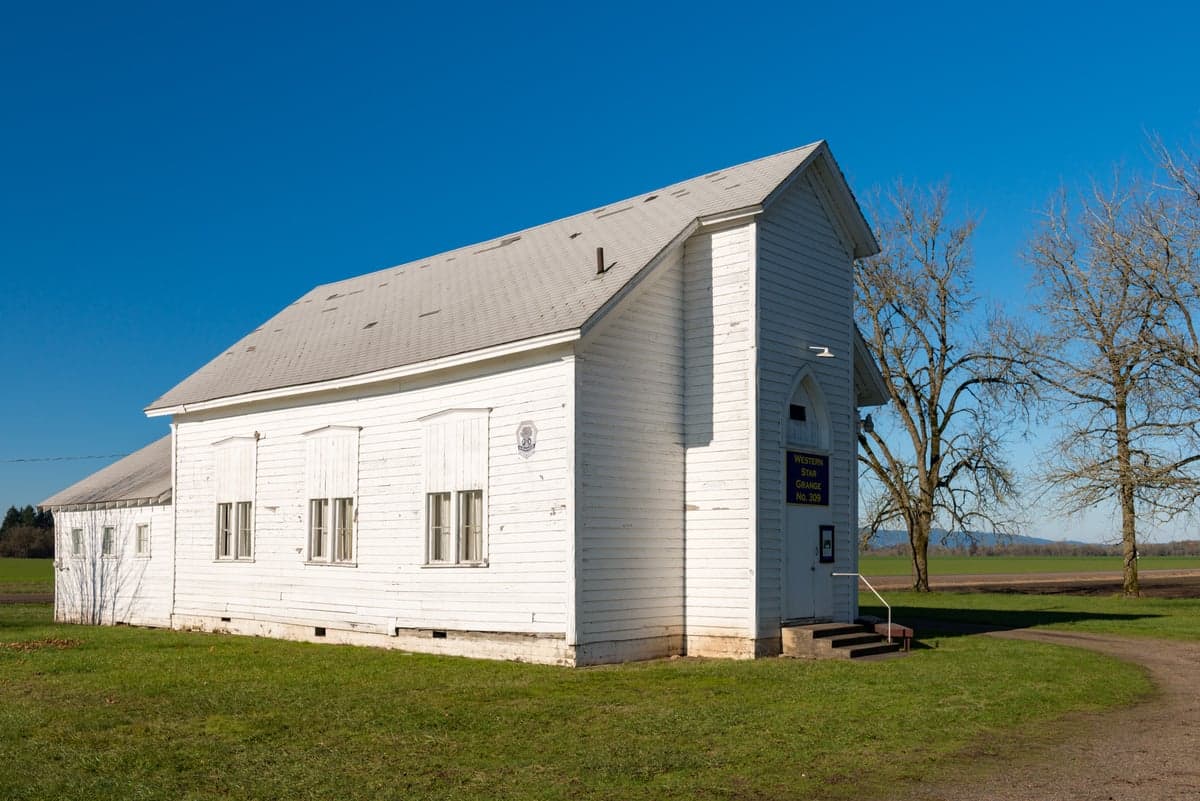
Photo: Wikipedia
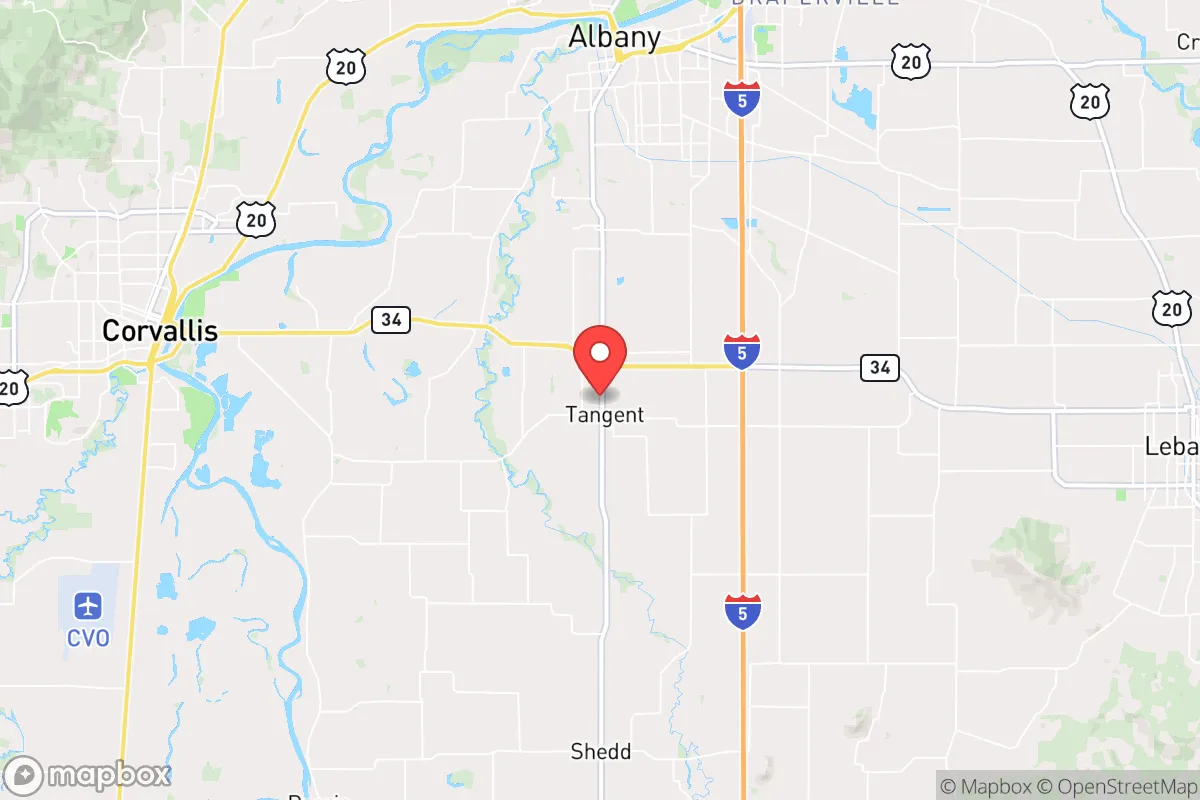
Personal Sovereignty in Tangent, OR
Viable for self-reliance. Generally workable, though some barriers may limit total independence.
What does Personal Sovereignty tell us?
Personal Sovereignty measures your capacity for self-reliance and independence with minimal government friction. Higher scores mean fewer barriers between you and the way you want to live... but it assumes you have the space you need and good neighbors.
What does this tell us?
Personal Sovereignty measures your capacity for self-reliance and independence with minimal government friction. Higher scores mean fewer barriers between you and the way you want to live... but it assumes you have the space you need and good neighbors.
State Policy
Energy independence: Importer (23% of energy produced in-state)
Personal Liberty
Homesteading

Personal Liberty Analysis
Tangent, Oregon, offers a notably high degree of personal sovereignty relative to many other parts of the Pacific Northwest, driven primarily by Oregon’s permissive land-use framework outside urban growth boundaries and a state-level political culture that, while mixed, leaves significant room for individual autonomy in rural Linn County. The town’s small population of roughly 1,200 residents and its location in the Willamette Valley’s agricultural heartland create an environment where self-reliance is not just possible but often expected. For a relocation reader prioritizing freedom from overbearing regulation, Tangent represents a middle ground: it lacks the extreme libertarian enclave character of some rural Idaho or Montana towns, but it offers substantially more breathing room than Portland or Salem, with lower taxes, minimal zoning friction, and a legal environment that respects property rights and self-defense.
Tax burden and regulatory posture in Linn County
Oregon has no state sales tax, which directly benefits Tangent residents making major purchases or managing household budgets, though the trade-off is a reliance on property and income taxes. The state income tax is progressive, with rates from 4.75% to 9.9% on high earners, which is moderate by West Coast standards but higher than in neighboring Washington. Property taxes in Linn County are relatively low, with an effective rate around 1.0% of assessed value, and Oregon’s Measure 50 caps annual assessed value increases at 3%, providing long-term predictability for homeowners. Tangent itself has no city-level income tax, and the regulatory posture from Linn County government is generally light-touch, especially for agricultural and residential uses. Building permits are required for new structures, but the county planning department is known for straightforward, non-adversarial processing compared to more urbanized counties. Oregon’s statewide land-use system, while restrictive in urban growth boundaries, actually protects rural landowners from overdevelopment and preserves the agricultural character that many sovereignty-minded residents value. The net effect is a tax and regulatory environment that is moderate but predictable, with no surprise fees or aggressive enforcement targeting individual property owners.
Self-defense and gun law specifics in Oregon
Oregon is a “shall issue” state for concealed handgun licenses, meaning that if a Tangent resident meets basic requirements—age 21, no disqualifying criminal history, completion of a safety course—the county sheriff must issue the permit. Linn County is notably gun-friendly, with Sheriff Michelle Duncan publicly supportive of Second Amendment rights, and the permitting process is efficient, typically taking 30 days or less. Oregon does not require a permit to openly carry a firearm, and there is no state-level ban on common semiautomatic rifles, though a 2022 voter-approved measure (Measure 114) attempted to impose a permit-to-purchase system and magazine capacity limits. As of 2026, Measure 114 remains blocked by court injunction, so the legal status quo in Tangent is that standard-capacity magazines and private firearm transfers without a state permit are still lawful. Stand-your-ground laws do not exist in Oregon; the state follows a “duty to retreat” standard in public spaces if safely possible, though the Castle Doctrine applies inside one’s home. For a self-defense-minded resident, Tangent offers a practical environment: easy access to firearms, a supportive sheriff, and a rural setting where defensive firearm use is culturally accepted, but with the caveat that state-level politics could shift the legal landscape in future legislative sessions.
Self-reliance and homesteading viability: lot sizes, zoning, and off-grid feasibility
Tangent’s zoning is predominantly Exclusive Farm Use (EFU) and Rural Residential, which directly supports homesteading and self-reliance. Minimum lot sizes in the EFU zone are 80 acres for new parcels, though existing smaller lots are common and grandfathered. Rural Residential zones typically require 2- to 5-acre minimums, making it feasible for a family to keep chickens, goats, a large garden, and even a small orchard without special permits. Linn County does not restrict rainwater collection, and wells are the primary water source for most rural properties, with drilling costs averaging $8,000–$15,000 depending on depth. Off-grid solar is entirely legal, and net metering is available through Consumers Power Inc., the local electric cooperative, which is member-owned and generally accommodating to independent power generation. Composting toilets and greywater systems are permitted under Oregon’s relatively straightforward DEQ rules for rural properties not connected to municipal sewer. There are no county-level bans on livestock within agricultural zones, and beekeeping, pastured poultry, and small-scale market gardening are common. The main constraint is Oregon’s statewide land-use law, which limits subdivision of EFU land and restricts non-farm dwellings, but for a buyer purchasing an existing rural home on 2–20 acres, the regulatory barriers to self-sufficient living are minimal. Tangent’s agricultural zoning actually protects homesteaders from incompatible neighboring uses, preserving the quiet, rural character that makes self-reliance practical.
Personal liberties: parental rights, medical autonomy, speech, and property
Oregon law generally respects parental rights in education, with a robust homeschool statute that requires only a simple notice of intent and no standardized testing mandates for most families. Tangent parents can homeschool, enroll in public virtual charter schools, or participate in the Linn County online learning consortium without excessive bureaucratic oversight. Medical autonomy is more constrained at the state level: Oregon has universal vaccine mandates for school attendance (with medical and non-medical exemptions available), and physician-assisted suicide is legal, but there are no state-level mandates for COVID-19 vaccines or masks as of 2026. Informed consent laws for medical procedures are standard, and Tangent residents have access to several independent healthcare providers in nearby Albany and Corvallis who offer direct primary care and cash-pay services, bypassing insurance bureaucracy. Free speech protections are robust under both the Oregon and U.S. Constitutions, and Linn County has no local ordinances restricting signage, political expression, or public assembly. Property rights are well-protected, with Oregon’s Measure 37 (and its successor Measure 49) providing pathways for landowners to seek compensation or waivers when land-use regulations reduce property value. Eminent domain is rarely exercised in rural Linn County, and property taxes are transparent and capped. The overall liberty environment in Tangent is one of practical, lived freedom rather than ideological abstraction: residents are largely left alone to raise their families, build their lives, and manage their land as they see fit, provided they respect basic health and safety codes.
Compared to other areas in the Pacific Northwest, Tangent offers a strong balance of personal sovereignty, especially for those who value self-reliance, property rights, and a light regulatory touch. It lacks the extreme low-tax posture of eastern Oregon counties like Lake or Harney, but it compensates with better access to markets, healthcare, and infrastructure while maintaining a rural, independent character. For a conservative-leaning individual or family seeking a place where autonomy is respected rather than managed, Tangent represents a solid, middle-path choice—not a libertarian utopia, but a genuinely free place to live without the friction found in more urbanized or politically restrictive parts of the state.

* Values derived from national, state, county, city and local statistics and may differ in a specific area. Last updated: 2026-11-17T00:22:00.000Z
Narrative content on this page is AI-generated and may contain mistakes. Verify any details that matter before acting on them.
ReloMaps may earn a commission from affiliate links at no extra cost to you.

