 Popular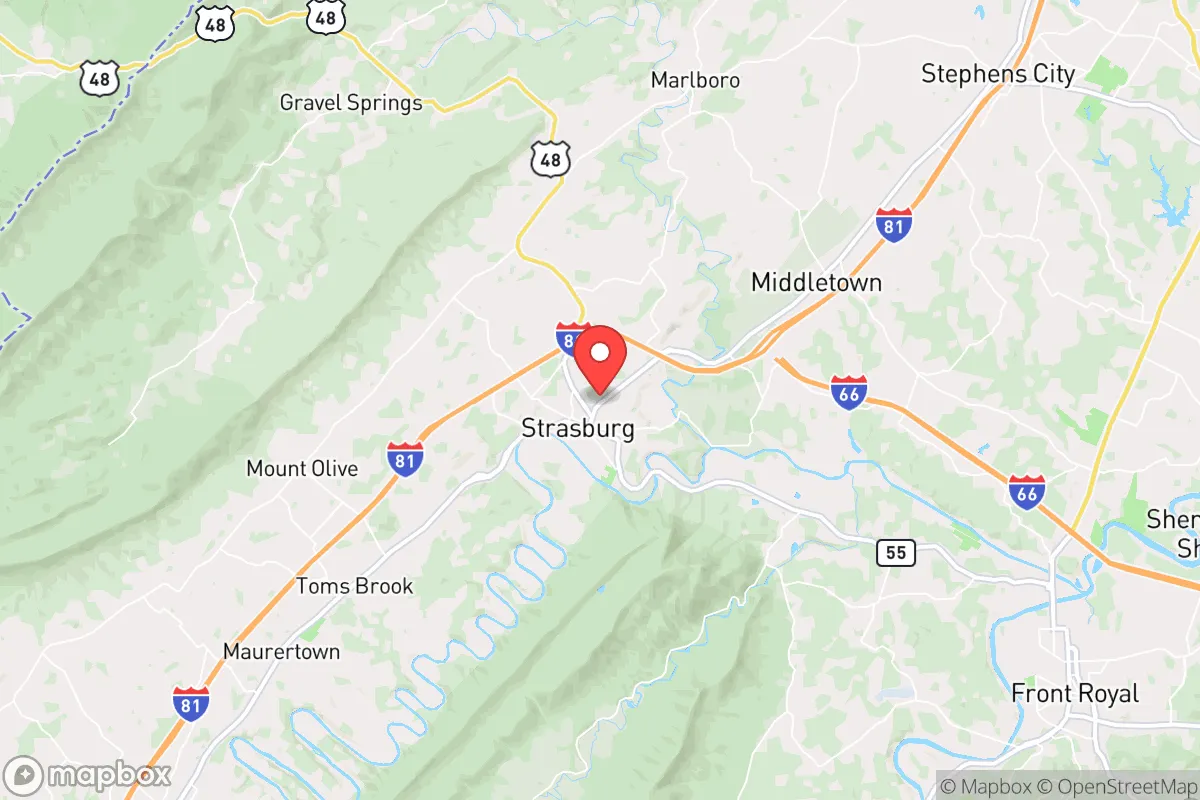

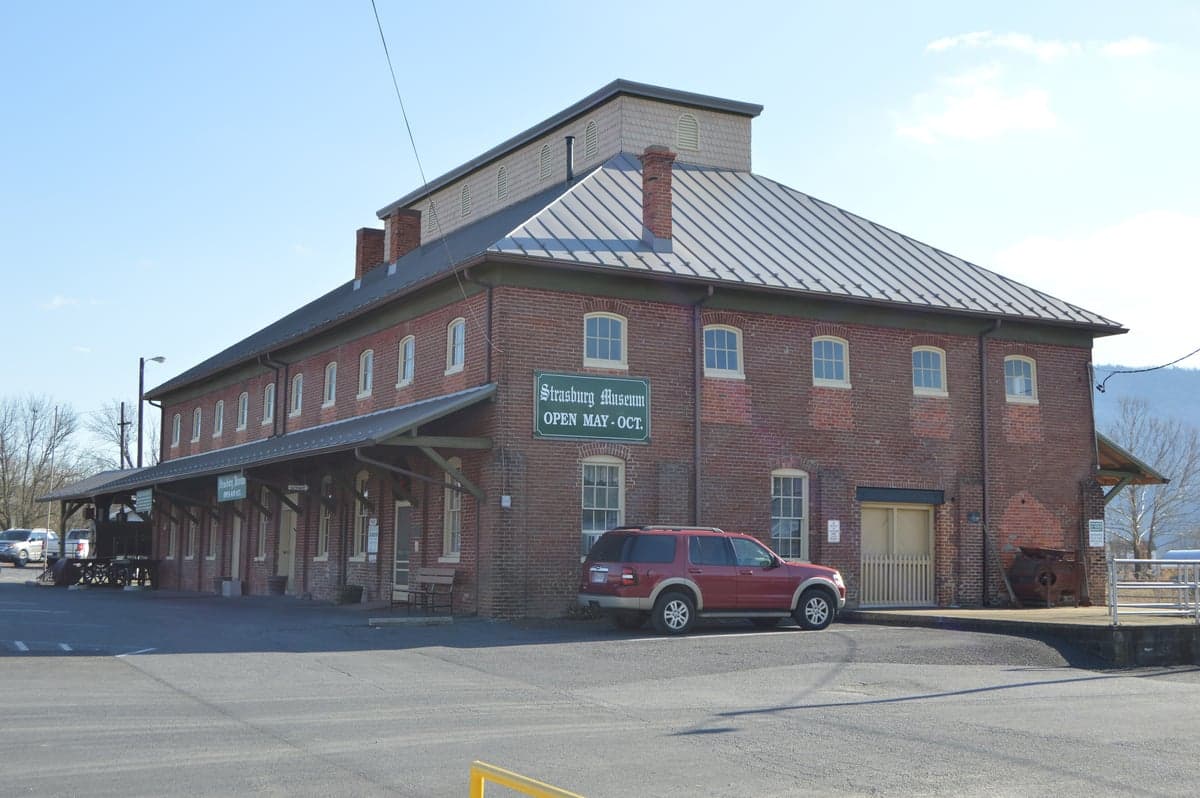
Photo: Wikipedia
Political ClimatePolitical Climate in Strasburg, VA
District shown is the primary district for this city’s centroid. Cities may span multiple districts.
Inherited from parent state — no local data available.
Local Political AnalysisPolitical Analysis of Strasburg, VA
Strasburg is a reliably conservative town in a reliably conservative corner of Virginia. With a Cook Partisan Voting Index (PVI) of R+12, the town and surrounding Shenandoah County lean heavily Republican, a stark contrast to the state of Virginia as a whole, which has shifted to a D+4 PVI in recent years. This isn't a purple area; it's a deep red one, and that's been the case for as long as anyone can remember. The shift you see statewide, driven by the explosive growth of Northern Virginia and the Richmond suburbs, has barely touched Strasburg. If you look at a map of the 2024 presidential election, Strasburg sits in a sea of red, while the state turned blue. The real political action here isn't between Democrats and Republicans, but between different factions of the GOP.
How it compares
The difference between Strasburg and the rest of Virginia is like night and day. Drive 90 minutes east to the D.C. suburbs, and you're in places like Loudoun County, which voted for Biden by over 20 points. That world of high-tech jobs, massive data centers, and constant growth feels like a different country. Even closer to home, the contrast is sharp. Head south to Harrisonburg (Rockingham County), which is still conservative but has a more moderate, college-town vibe thanks to James Madison University. Or go north to Winchester, which is more purple and trending blue as it becomes a bedroom community for D.C. commuters. Strasburg, by contrast, is still very much a small, rural manufacturing and agricultural town. The local economy is built around things like the nearby Amazon data centers in Warren County and traditional industries like the local concrete plant and food processing, not tech startups or government contracting. This economic base, combined with a strong local gun culture and a deep sense of self-reliance, keeps the politics firmly to the right.
What this means for residents
For a conservative resident, life in Strasburg is comfortable. Your views on taxes, the Second Amendment, and the role of government are the local norm. You'll find your values reflected in the local school board, the county board of supervisors, and even in the conversations at the local diner. For a liberal resident, it can feel isolating. You're unlikely to see a "Biden 2024" sign in a front yard, and political discussions at a family gathering can be tense. However, it's not hostile. People are generally polite and neighborly. The real friction isn't about national politics as much as it is about local growth. The biggest debate in town right now is how to manage the pressure from Northern Virginia spillover — new housing developments, increased traffic on Route 66/81, and the strain on local schools. This is a classic rural-versus-suburban tension that cuts across party lines. Many long-time residents, regardless of their party registration, are wary of the changes that come with growth.
One cultural distinction that really sets Strasburg apart is its fierce independence. There's a strong "we take care of our own" mentality here. The local government is small and hands-off. You won't find the same level of social services or public transit you'd get in a blue-leaning city. The trade-off is lower taxes and a lot less red tape. Looking ahead, the political trajectory is likely to stay the same for the near future. The town's demographics are stable, and the economic drivers aren't changing. The real wildcard is if the growth from Northern Virginia ever truly jumps the mountain and turns this area into a commuter suburb. If that happens, the R+12 might start to slip. But for now, Strasburg remains a solid, conservative stronghold, a place where the politics are as steady as the Blue Ridge Mountains that frame the town.

State Political ClimatePolitical Climate in Virginia
State Political AnalysisPolitical Environment in the State
Virginia has shifted from a reliably purple swing state to a solidly Democratic-leaning one, carrying a Cook PVI of D+4. The state hasn't voted for a Republican presidential candidate since 2004, and Democrats now control the governorship, the state Senate, and the House of Delegates as of the 2025 elections. This isn't a sudden flip—it's the culmination of a 15-year arc driven by explosive growth in the Washington, D.C. suburbs, particularly in Northern Virginia, which now supplies a quarter of the state's votes and leans heavily Democratic.
Urban vs. rural divide
The political map of Virginia is a tale of two Virginias. The urban crescent—Northern Virginia (Fairfax, Loudoun, Prince William counties), Richmond, and Norfolk/Virginia Beach—is overwhelmingly Democratic. Fairfax County alone, with over 1.1 million people, votes about 65% Democratic. Loudoun County, once a Republican stronghold, flipped blue in the 2010s and now votes D+15. Meanwhile, rural and exurban areas—Roanoke, Lynchburg, the Shenandoah Valley, and Southside Virginia—vote heavily Republican. The divide is stark: in 2024, Bristol in the far southwest voted 75% Republican, while Arlington voted 80% Democratic. The key battlegrounds are the exurban counties like Chesterfield and Hanover near Richmond, which have trended right but are being slowly diluted by suburban growth.
Policy environment
Virginia's policy environment reflects its purple-to-blue trajectory. The state has a flat income tax rate of 5.75%, with a standard deduction of $8,000 for single filers. Sales tax is 5.3% (plus local add-ons up to 1%). Property taxes are set locally and average around 0.8% of assessed value—moderate by national standards. The regulatory posture is business-friendly in the Richmond and Norfolk areas, but Northern Virginia's high cost of living and strict land-use rules can be a shock. Education policy is a flashpoint: the state has seen a push for LGBTQ-inclusive curricula and critical race theory bans in schools, with Governor Glenn Youngkin (R) signing a 2022 executive order to "end the use of inherently divisive concepts" in classrooms. Healthcare is mixed—Virginia expanded Medicaid under the Affordable Care Act in 2018, covering about 400,000 low-income adults, but the state has some of the highest health insurance premiums in the South. Election laws are relatively accessible: no-excuse absentee voting, early voting starting 45 days before an election, and same-day voter registration. Voter ID is required but can be a photo ID or a utility bill.
Recent policy direction
The last five years have seen a tug-of-war between Democratic majorities and Republican governors. On gun rights, Virginia passed a 2020 law requiring universal background checks and a "red flag" law allowing temporary seizure of firearms from individuals deemed a threat. However, a 2024 court ruling struck down the state's ban on carrying firearms in places of worship, and the legislature has not moved on an "assault weapons" ban. On parental rights, the 2022 "Model Policies" on transgender students—requiring schools to notify parents of a child's gender identity change—were a major win for conservatives, though they remain tied up in litigation. On abortion, Virginia is an outlier in the South: abortion is legal up to 26 weeks, with a 24-hour waiting period and parental consent for minors. A 2024 bill to enshrine abortion rights in the state constitution failed, but the issue remains a live political battleground. On property rights, Virginia has a strong "right to farm" law protecting agricultural operations from nuisance lawsuits, and the state's eminent domain laws are relatively restrained. On voting access, the 2020 "Virginia Voting Rights Act" expanded language assistance and prohibited voter intimidation, but a 2024 law requiring citizenship verification for voter registration has been challenged in court. On privacy, the 2021 "Virginia Consumer Data Protection Act" gives residents control over how companies use their personal data, but it lacks a private right of action.
Civil unrest & political movements
Virginia has been a flashpoint for political movements. The 2017 Unite the Right rally in Charlottesville—which turned violent and left one counter-protester dead—still echoes in local politics, with the city removing Confederate statues and facing ongoing legal battles. The 2020 protests over George Floyd's death in Richmond led to the toppling of a statue of Confederate General Robert E. Lee on Monument Avenue, a moment that symbolized the state's cultural shift. On the right, the Virginia Citizens Defense League (VCDL) has held massive annual "Lobby Day" rallies at the state capitol since 2020, drawing thousands of gun-rights activists. Immigration politics are less heated than in border states, but Prince William County has seen tensions over its 2007 "illegal immigration" resolution, which required police to check immigration status. Fairfax County is a "sanctuary" jurisdiction, limiting cooperation with federal immigration enforcement. Election integrity remains a sore spot: the 2020 election saw no major fraud, but the 2021 gubernatorial race (won by Youngkin by 2 points) was marred by a ballot drop box controversy in Loudoun County, where a Republican operative was charged with ballot harvesting. The state's secession rhetoric is minimal—unlike Texas or California, there's no serious movement to leave the Union.
Projection
Over the next 5-10 years, Virginia will likely become more Democratic as Northern Virginia's population continues to grow, fueled by federal jobs and tech expansion (Amazon's HQ2 in Arlington is a major driver). The exurban counties around Richmond and Norfolk may flip blue as well, mirroring the pattern seen in Loudoun. However, the rural areas will remain deeply red, and the state's gerrymandered legislative districts (drawn by a bipartisan commission in 2021) mean Republicans can still hold the House of Delegates in a good year. The wild card is in-migration: Virginia is gaining residents from blue states like New York and California, but also from red states like Florida and Texas. If the state's tax burden and housing costs continue to rise, it could trigger a backlash that slows the blue shift. For now, expect a continued Democratic lean, with occasional Republican wins in statewide races when the national environment favors them.
Bottom line for a new resident: If you're conservative, you'll find your people in the Shenandoah Valley, Southside, or exurban Chesterfield, but you'll be voting in a state where your vote is increasingly a minority. If you're liberal, you'll feel at home in Arlington, Richmond, or Charlottesville, but you'll face high housing costs and a legislature that still has real conservative muscle. The practical takeaway: Virginia is a state where your local government—county board, school board—matters more than the statehouse, because the political divide is so geographic. Pick your county carefully, and you can live in a bubble that matches your values, even as the state as a whole drifts left.
* Values derived from national, state, county, city and local statistics and may differ in a specific area. Last updated: 2026-09-11T01:16:31.000Z
Narrative content on this page is AI-generated and may contain mistakes. Verify any details that matter before acting on them.
ReloMaps may earn a commission from affiliate links at no extra cost to you.

