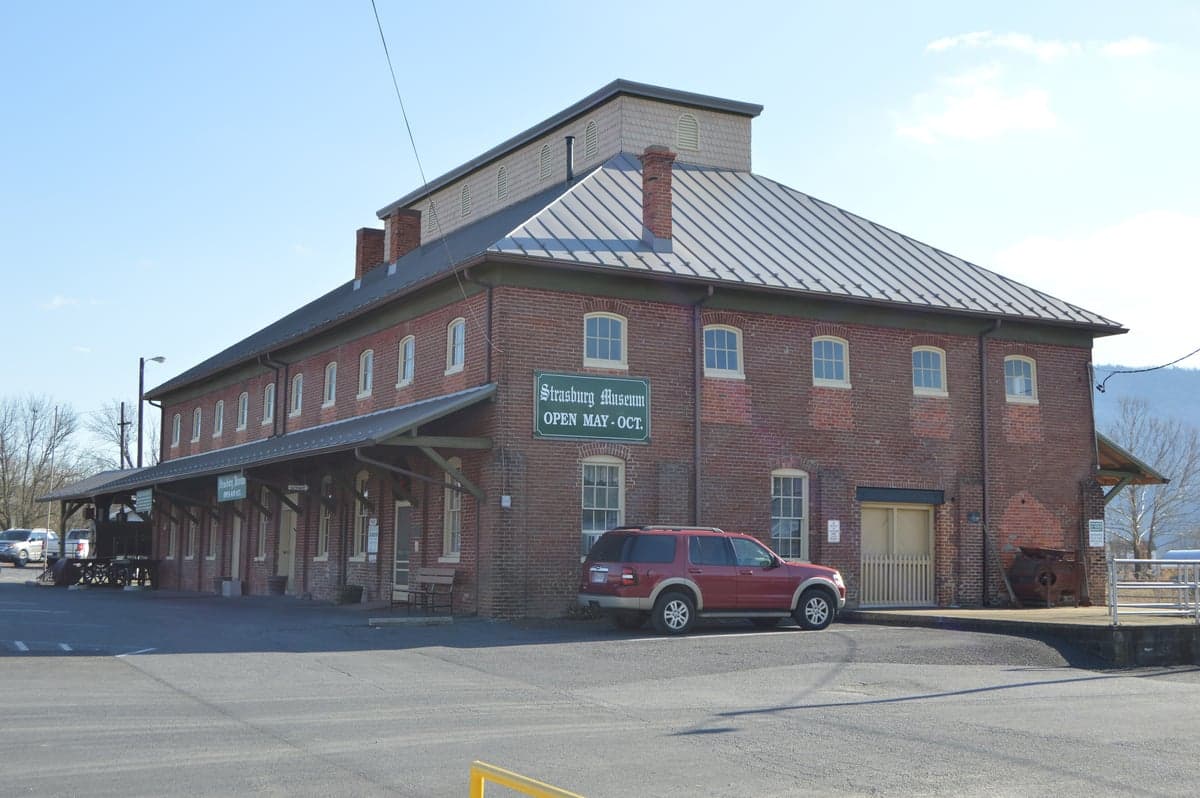
 Popular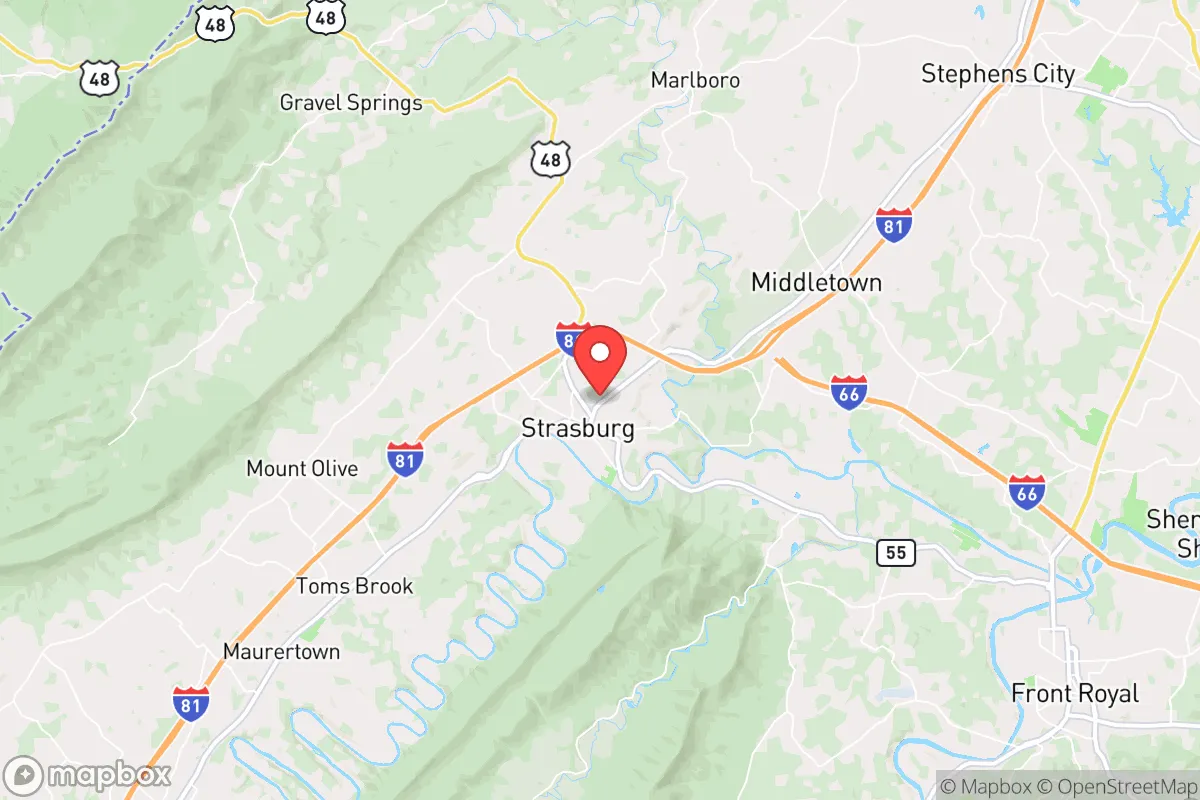
Photo: Wikipedia
Demographics of Strasburg, VA
Affluence Level in Strasburg, VA
A middle-class area roughly in line with national averages across income, home values, education, and employment.
People of Strasburg, VA
The people of Strasburg, Virginia, today form a predominantly white, working- and middle-class community of 7,162 residents, marked by a strong local identity rooted in the town’s industrial and agricultural past. With a foreign-born population of just 0.5% and a college attainment rate of 19.1%, Strasburg is a notably homogenous and less-educated community compared to state and national averages. The population is overwhelmingly white (86.8%), with small Hispanic (4.3%) and Black (2.9%) minorities and a negligible East/Southeast Asian presence (1.0%). This is a place where generational ties run deep, and newcomers are often drawn by affordable housing, a slower pace of life, and proximity to the broader Shenandoah Valley economy.
How the city was settled and grew
Strasburg’s population history begins with German and Scots-Irish settlers who moved south from Pennsylvania along the Great Wagon Road in the mid-1700s. These early families were drawn by fertile bottomland along the North Fork of the Shenandoah River and the promise of land grants from Lord Fairfax. The town was officially laid out in 1761 by Peter Stover, a German immigrant, and quickly became a milling and trading hub. The original German-speaking settlers concentrated in what is now Old Town Strasburg, the historic core along King Street, where many 18th- and 19th-century stone and brick homes still stand. A second wave of German and Swiss immigrants arrived in the 1840s-1860s, settling in the Stover's Mill area along the river, where they established gristmills and tanneries. The arrival of the Shenandoah Valley Railroad in the 1870s shifted the town’s center slightly east, creating the Railroad District around Depot Street, where a mix of Irish and German laborers built modest row houses and boarding homes. By 1900, Strasburg was a thriving railroad and manufacturing town, with a population of roughly 1,500, almost entirely of German and Scots-Irish descent.
Modern era (post-1965)
Following the 1965 Immigration and Nationality Act, Strasburg saw virtually no new immigration, a pattern that continues today. The town’s modern demographic story is one of domestic in-migration from other parts of Virginia and the Mid-Atlantic, rather than international arrivals. The construction of Interstate 81 in the 1960s made Strasburg more accessible, and the town began to attract families and retirees from the Washington, D.C., and Northern Virginia suburbs seeking lower housing costs. These newcomers, predominantly white and middle-class, settled in newer subdivisions like Northwood Estates and South Fork Meadows, built on former farmland north and south of the historic core. The small Hispanic population (4.3%) is largely concentrated in the West Strasburg area, near the industrial parks along Route 55, where seasonal agricultural and light manufacturing jobs have drawn a modest number of Latino workers since the 1990s. The Black population (2.9%) is dispersed, with no single neighborhood majority, though a historic Black community once centered around Church Street has largely dissolved as older families moved away. The East/Southeast Asian population (1.0%) is scattered and very small, with no identifiable ethnic enclave.
The future
Strasburg’s population is projected to grow slowly, if at all, over the next 10-20 years, constrained by limited housing stock and a lack of major employers. The town’s racial and ethnic composition is likely to remain overwhelmingly white, with only a slight increase in Hispanic share as the broader Shenandoah Valley sees modest Latino in-migration for agricultural and service work. The college-educated share (19.1%) may rise slowly as telecommuters from Northern Virginia continue to trickle in, but Strasburg lacks the amenities and job base to attract a large professional class. New residential development is likely to occur in the Strasburg Junction area near the I-81 interchange, where a few small subdivisions and townhome projects are planned. The town’s cultural identity—rooted in German heritage, conservative values, and a strong sense of local history—is unlikely to shift dramatically. The biggest demographic change may be an aging population, as younger residents leave for college and careers elsewhere, while retirees from the D.C. area fill the gap.
For someone moving in now, Strasburg offers a stable, safe, and culturally cohesive small town where neighbors know each other and change comes slowly. It is not a place of rapid growth or diversity, but rather a community where the past is still present in its architecture, its family names, and its rhythms. New residents will find a welcoming but insular environment, where fitting in often means respecting the town’s deep-rooted traditions and pace of life.

* Values derived from national, state, county, city and local statistics and may differ in a specific area. Last updated: 2026-09-11T01:16:31.000Z
Narrative content on this page is AI-generated and may contain mistakes. Verify any details that matter before acting on them.
ReloMaps may earn a commission from affiliate links at no extra cost to you.

