 Popular
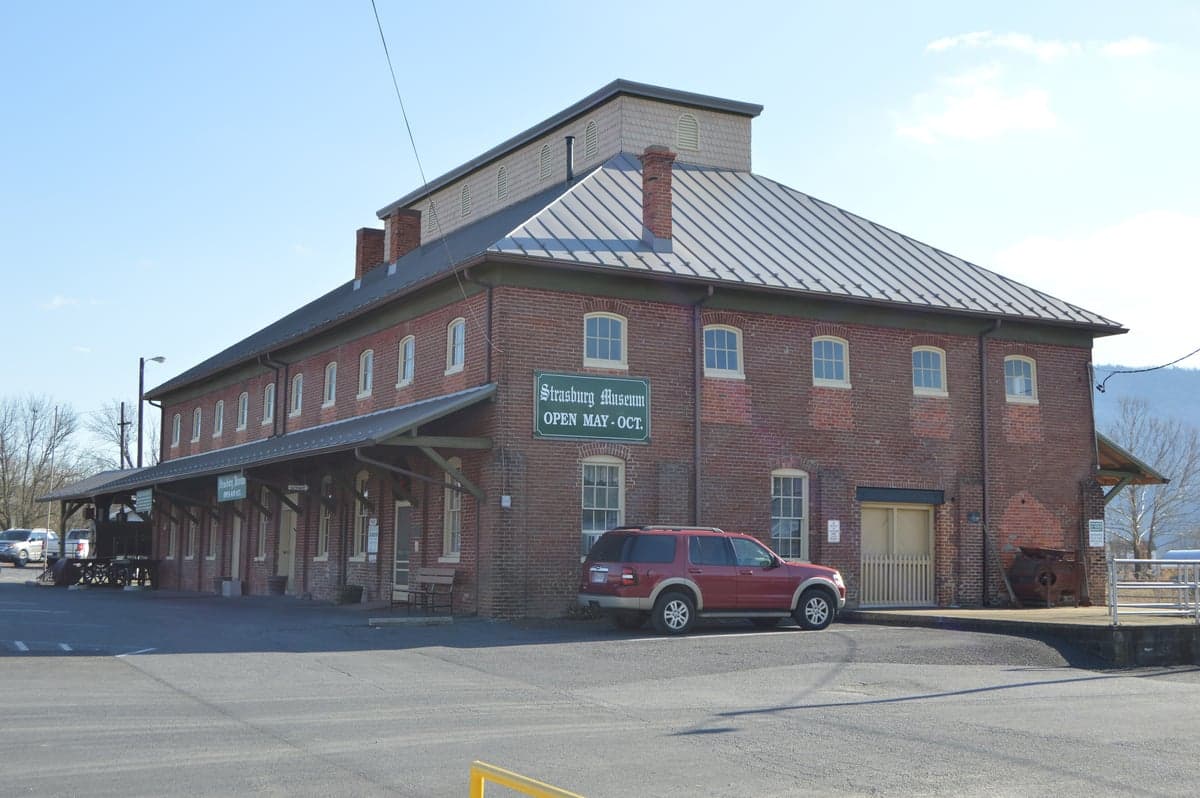
Photo: Wikipedia
Personal Sovereignty in Strasburg, VA
Viable for self-reliance. Generally workable, though some barriers may limit total independence.
What does Personal Sovereignty tell us?
Personal Sovereignty measures your capacity for self-reliance and independence with minimal government friction. Higher scores mean fewer barriers between you and the way you want to live... but it assumes you have the space you need and good neighbors.
What does this tell us?
Personal Sovereignty measures your capacity for self-reliance and independence with minimal government friction. Higher scores mean fewer barriers between you and the way you want to live... but it assumes you have the space you need and good neighbors.
State Policy
Energy independence: Importer (20% of energy produced in-state)
Personal Liberty
Homesteading

Personal Liberty Analysis
Strasburg, Virginia, offers a notably high degree of personal sovereignty relative to many other parts of the Mid-Atlantic, largely due to Virginia’s status as a Dillon Rule state combined with the distinctly rural, self-reliant culture of Shenandoah County. While not a libertarian enclave, the town’s regulatory environment is light-touch, its tax burden is moderate, and its legal framework strongly supports self-defense, parental rights, and property autonomy. For individuals and families who prioritize independence over convenience-oriented government services, Strasburg presents a compelling balance of local control and state-level protections, though it is not without constraints like state-level vehicle emissions inspections and a sales tax on groceries.
Tax burden and regulatory posture in Strasburg and Shenandoah County
Virginia’s overall tax burden ranks near the middle nationally, but Shenandoah County keeps local levies low. The combined state and local sales tax rate is 5.3% (4.3% state + 1% local), which applies to most goods including groceries—a notable difference from many states that exempt food. Property taxes are the primary local revenue source, with Shenandoah County’s rate at $0.52 per $100 of assessed value as of 2025, well below the Virginia average of roughly $0.80. A home assessed at $300,000 would incur an annual tax bill of about $1,560. The county does not levy a personal property tax on vehicles, though the state does impose one based on value with a tax relief program that reduces the burden on the first $20,000 of value. Strasburg itself operates under a town council-manager form, but its regulatory footprint is minimal—there are no local income taxes, no business license fees for most home-based enterprises, and zoning is generally permissive in agricultural and rural residential districts. The Dillon Rule means the town and county can only exercise powers explicitly granted by the state, which keeps local ordinance creep in check. For a relocation-minded reader, the key takeaway is that Virginia’s state-level regulatory structure is moderate, but Shenandoah County’s local implementation is decidedly light-touch, with no onerous permitting requirements for typical home renovations or small-scale farming activities.
Self-defense and gun law specifics in Strasburg
Virginia is a shall-issue state for concealed carry permits, meaning the sheriff of Shenandoah County must issue a permit to any applicant who meets statutory requirements—no discretion, no subjective “good cause” standard. The application process involves a background check and proof of completed firearms training, with permits valid for five years. Open carry is legal without a permit for anyone 18 or older who can legally possess a firearm, and Strasburg has no local ordinances restricting open or concealed carry beyond state law. The town does not have any “sensitive place” restrictions beyond those in state code (e.g., courthouses, schools, airports). Virginia’s firearm laws are preemptive, meaning localities like Strasburg cannot enact their own bans on assault weapons, magazine capacity, or carry in parks—a significant protection for gun owners. The state does require a background check for all firearm transfers, including private sales, through the Virginia State Police’s point-of-contact system, which is a moderate restriction compared to states with no private-sale checks. Stand-your-ground and castle doctrine are codified in Virginia law, with no duty to retreat in any place where a person has a lawful right to be. For a self-defense-minded resident, Shenandoah County’s sheriff is known for a pro-Second Amendment stance, and the county has been designated a “Second Amendment Sanctuary” by local resolution, signaling that local law enforcement will not enforce any future state-level gun bans deemed unconstitutional. This creates a legal environment where firearm ownership and carry are straightforward and well-protected.
Self-reliance and homesteading viability: lot sizes, zoning, and off-grid feasibility
Strasburg’s zoning code and the surrounding county’s land-use policies are highly favorable for homesteading and self-reliance. Within the town limits, residential lots typically range from 0.25 to 1 acre, but the town’s Agricultural (A) district permits lots as small as 2 acres for farming uses. Outside town, in Shenandoah County’s Agricultural (A-1) district, the minimum lot size is 3 acres, and many parcels available for purchase are 5 to 20 acres, often with existing wells and septic systems. Raising chickens, goats, and up to two horses is permitted on lots of 1 acre or more within the county, with no permit required for non-commercial livestock. Beekeeping is allowed on any lot over 0.5 acres. Off-grid living is feasible but not unrestricted: Virginia law requires a building permit for any permanent structure, and the county enforces the Virginia Uniform Statewide Building Code, which mandates minimum insulation, electrical, and plumbing standards. However, there is no county-level requirement to connect to municipal water or sewer if a private well and septic system are installed, and solar panels are permitted by right with no special zoning overlay. Rainwater collection is legal and encouraged, with no state-level restrictions on cisterns. The county does not have a noise ordinance that would restrict generators or farm equipment, and there are no restrictions on clotheslines or composting. For a family seeking to reduce reliance on external systems, Strasburg’s regulatory environment is permissive enough to allow significant self-sufficiency without constant government interaction, though the building code does impose baseline safety standards that prevent truly unpermitted construction.
Personal liberties: parental rights, medical autonomy, speech, and property
Virginia law provides strong protections for parental rights in education and healthcare. The state’s Code explicitly affirms that parents have the fundamental right to make decisions concerning the upbringing, education, and care of their children. Shenandoah County Public Schools, which serves Strasburg, does not have a mask or vaccine mandate for students, and parents can opt their children out of any sex education or health curriculum with a written request. Homeschooling is straightforward: parents must file a notice of intent with the superintendent and provide either a curriculum description or evidence of a recognized program, with no standardized testing requirement for the first year and only annual assessment options thereafter (portfolio review, standardized test, or evaluation letter). Medical autonomy is moderate: Virginia does not have a state-level religious or philosophical exemption to vaccine mandates for school entry, but Shenandoah County does not enforce any local mandate beyond state law, and medical exemptions are available. The state does not have a “right to try” law for terminally ill patients beyond federal provisions, but it does allow direct primary care agreements that bypass insurance. Free speech is protected under the First Amendment, and Strasburg has no local noise or signage ordinances that would restrict political expression on private property. Property rights are strong: Virginia is a “right-to-farm” state, meaning agricultural operations are protected from nuisance lawsuits if they have been operating for more than one year and comply with best management practices. The county does not have rent control, and there are no restrictions on short-term rentals like Airbnb in unincorporated areas, though Strasburg town limits require a conditional use permit for rentals under 30 days. For a reader prioritizing personal liberties, the combination of parental opt-out rights, permissive homeschooling laws, and strong property protections makes Strasburg a favorable environment for families who want to minimize government involvement in their daily lives.
Overall, Strasburg’s personal sovereignty profile is strong for a Virginia town, particularly in the realms of self-defense, homesteading, and parental rights. The tax burden is moderate but not negligible, and the regulatory posture is light-touch without being laissez-faire. Compared to areas like Northern Virginia or the Tidewater region, Strasburg offers significantly more autonomy, especially regarding firearm carry and land use. Compared to states like West Virginia or Idaho, however, it is more regulated—particularly on building codes and private firearm transfers. For a conservative-leaning individual or family seeking a balance of local freedom, reasonable taxes, and access to a regional economy, Strasburg represents a solid middle ground where personal sovereignty is respected but not absolute.

* Values derived from national, state, county, city and local statistics and may differ in a specific area. Last updated: 2026-09-11T01:16:31.000Z
Narrative content on this page is AI-generated and may contain mistakes. Verify any details that matter before acting on them.
ReloMaps may earn a commission from affiliate links at no extra cost to you.

