Demographics of St Albans, VT
Affluence Level in St Albans, VT
A middle-class area roughly in line with national averages across income, home values, education, and employment.
People of St Albans, VT
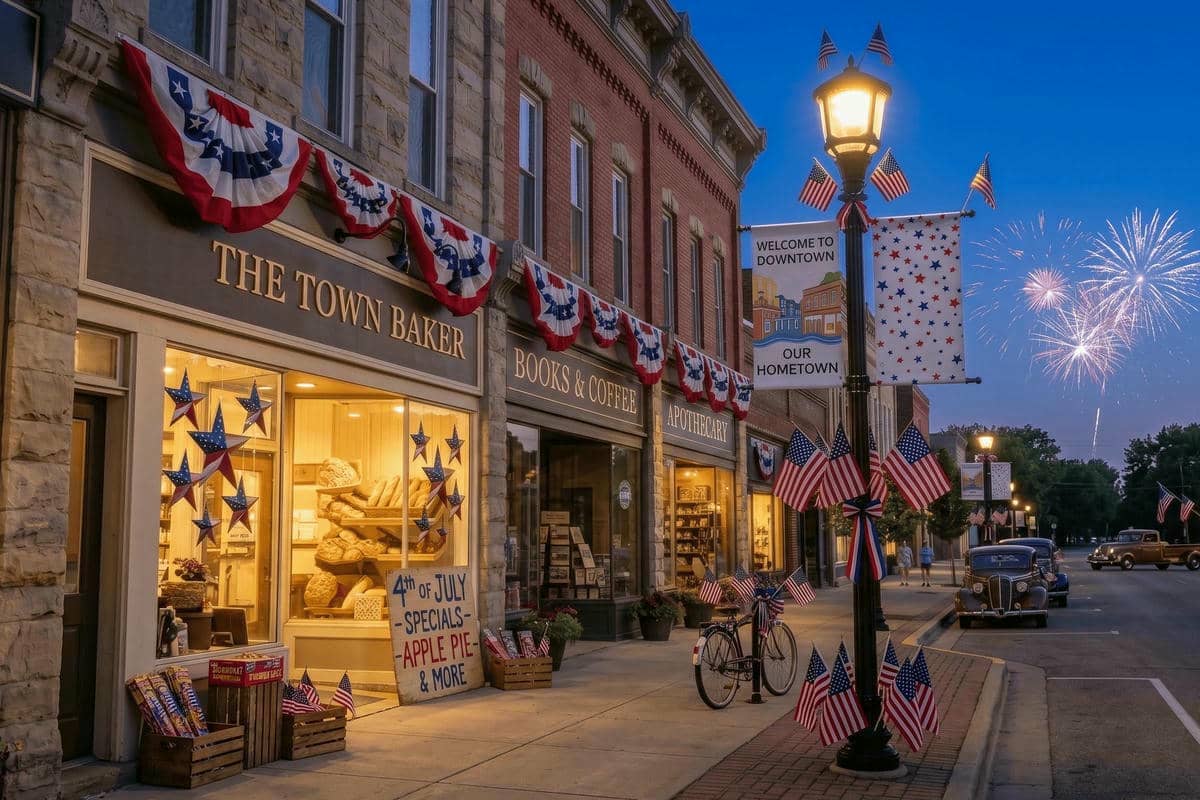
The people of St Albans, Vermont today form a tight-knit, predominantly white community of 6,910 residents, characterized by a strong sense of local identity rooted in the city’s history as a railroad and manufacturing hub. With 91.5% of the population identifying as white and a foreign-born rate of just 0.9%, St Albans remains one of the least ethnically diverse cities in New England, a fact that shapes its quiet, family-oriented character. The city’s residents are notably less college-educated than the state average (28.9% hold a bachelor’s degree or higher), reflecting a workforce historically tied to blue-collar industries and agriculture. Despite its small size, St Albans maintains a distinctive small-city density, with a walkable downtown and a population that values civic engagement, local events, and a slower pace of life.
How the city was settled and grew
St Albans was chartered in 1763 and first settled by Anglo-American farmers from Connecticut and Massachusetts, drawn by the fertile land of the Missisquoi River valley. The city’s early growth was modest until the arrival of the Vermont Central Railroad in the 1850s, which transformed it into a major rail hub and repair center. This industrial boom attracted a wave of French-Canadian immigrants from Quebec, who crossed the border for steady work in the rail yards and foundries. These families settled primarily in the Lower Rail District near the tracks and in the working-class blocks of South Main Street, where French was spoken on the streets well into the 20th century. A smaller wave of Irish immigrants arrived during the same period, concentrating in the North End near St Paul’s Church. By 1900, St Albans was a thriving railroad town with a population that was overwhelmingly white, native-born, and culturally divided between Yankee Protestants and French-Canadian Catholics.
Modern era (post-1965)
After the 1965 Hart-Cellar Act, St Albans saw virtually no increase in immigration from Asia, Africa, or Latin America, a pattern that continues today. The city’s foreign-born population remains under 1%, and its racial composition has changed little: Hispanic residents make up 1.0%, Black residents 0.5%, and East/Southeast Asian residents 0.0%. Domestic in-migration has been modest, with most new arrivals coming from other parts of Vermont or neighboring New York. Suburbanization in the post-1965 era pushed some growth toward the Hathaway Point area on Lake Champlain and newer subdivisions along Fairfield Street, but these remain overwhelmingly white and middle-class. The city’s historic neighborhoods—the Lower Rail District and South Main Street—have seen some reinvestment but retain their working-class character. The most notable demographic shift has been a gradual aging of the population, as younger adults leave for Burlington or out of state, and retirees stay put.
The future
St Albans’ population is projected to remain stable or decline slightly over the next decade, with little change in its racial or ethnic makeup. The city’s low foreign-born rate and lack of major employers attracting diverse workforces mean that diversity will likely remain minimal. However, the Downtown Historic District has seen a modest influx of younger professionals and remote workers drawn by lower housing costs compared to Burlington, which could slowly increase the college-educated share above the current 28.9%. These newcomers tend to be white and native-born, so the cultural identity of St Albans—rooted in French-Canadian heritage, small-town conservatism, and a strong sense of place—is unlikely to shift dramatically. The city’s biggest demographic challenge is retaining families, as the school-age population has declined and housing stock ages.
For someone moving to St Albans now, the city offers a stable, safe, and culturally homogeneous environment where community ties run deep and change comes slowly. It is not a place of rapid demographic transformation or urban energy, but rather a quiet, family-oriented city where newcomers are welcomed if they respect local traditions. The bottom line: St Albans is becoming slightly more professional and remote-worker-friendly, but its essential character as a white, working-to-middle-class, French-heritage town will persist for the foreseeable future.

* Values derived from national, state, county, city and local statistics and may differ in a specific area. Last updated: 2026-10-21T14:33:53.000Z
Narrative content on this page is AI-generated and may contain mistakes. Verify any details that matter before acting on them.
ReloMaps may earn a commission from affiliate links at no extra cost to you.

