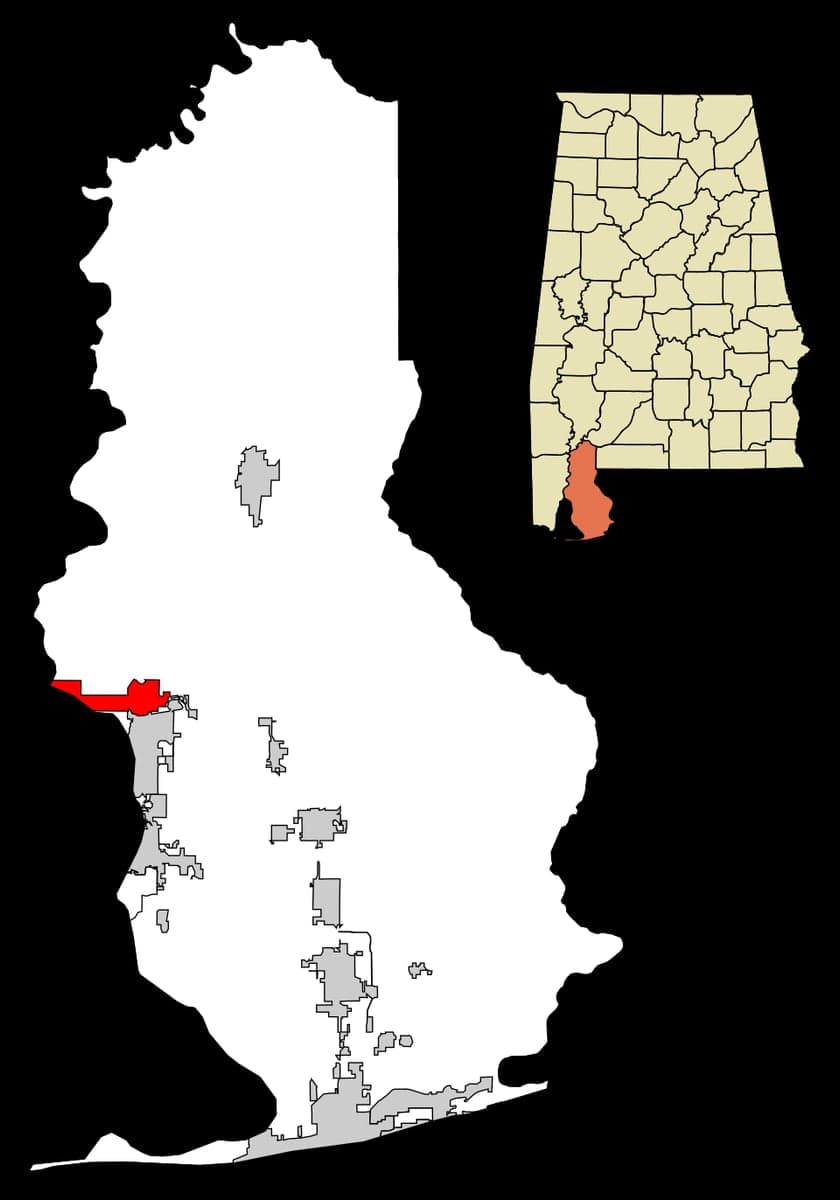
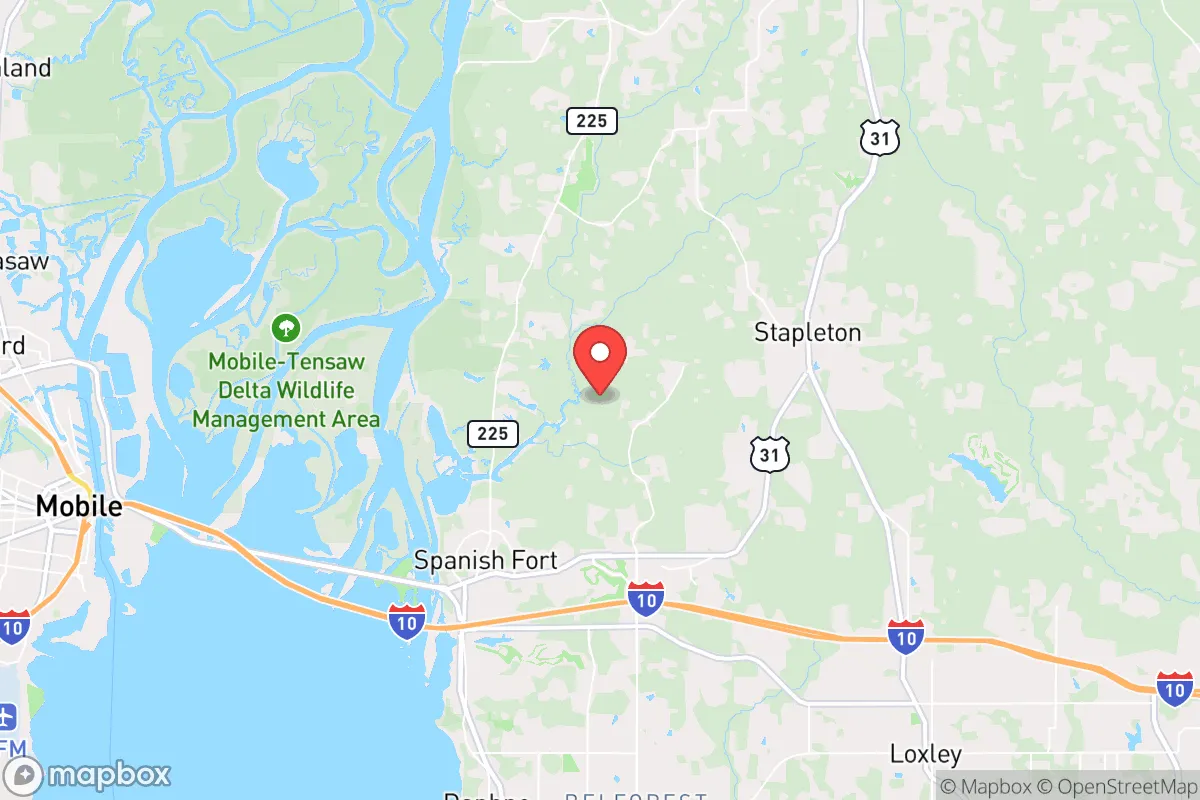
Photo: Wikipedia
Personal Sovereignty in Spanish Fort, AL
Viable for self-reliance. Generally workable, though some barriers may limit total independence.
What does Personal Sovereignty tell us?
Personal Sovereignty measures your capacity for self-reliance and independence with minimal government friction. Higher scores mean fewer barriers between you and the way you want to live... but it assumes you have the space you need and good neighbors.
What does this tell us?
Personal Sovereignty measures your capacity for self-reliance and independence with minimal government friction. Higher scores mean fewer barriers between you and the way you want to live... but it assumes you have the space you need and good neighbors.
State Policy
Energy independence: Importer (45% of energy produced in-state)
Personal Liberty
Homesteading

Personal Liberty Analysis
Spanish Fort, Alabama, offers a personal sovereignty environment that is among the strongest in the Gulf Coast region, driven by Alabama’s consistently low-tax, low-regulation state framework and a deeply ingrained culture of self-reliance. For individuals and families who prioritize autonomy—whether in financial decisions, self-defense, or lifestyle choices—this Baldwin County suburb provides a legal and practical foundation that minimizes government intrusion while maximizing personal discretion. The city’s governance is notably light-touch, with local ordinances generally aligning with the state’s permissive posture, making it a strategic choice for those seeking to live with fewer bureaucratic constraints than they would find in neighboring Florida or even parts of coastal Mississippi.
Tax burden and regulatory posture: How Alabama’s framework keeps government small
Alabama’s tax structure is among the most favorable in the nation for personal sovereignty. There is no state-level property tax on real estate; instead, property taxes are assessed at the county level, and Baldwin County’s effective rate is approximately 0.33% of assessed value—one of the lowest in the country. For a $350,000 home, that translates to roughly $1,155 annually, compared to over $3,500 in many Texas counties or $4,000+ in parts of Florida. The state income tax is a flat 5%, but Alabama allows a full federal income tax deduction on state returns, effectively lowering the rate for most filers. Sales tax in Spanish Fort is 9% (4% state, 2% county, 3% city), which is moderate but offset by the absence of a state property tax. Regulatory posture is equally light: Alabama is a right-to-work state with minimal occupational licensing requirements, and Baldwin County has no county-level zoning overlay for most residential properties, leaving land-use decisions largely to municipalities. Spanish Fort’s own zoning code is straightforward, focusing on lot sizes and setbacks rather than prescriptive design standards, which means homeowners face fewer hurdles for renovations, accessory structures, or home-based businesses than in more regulated suburbs like Fairhope or Daphne.
Self-defense and gun law specifics: Stand your ground and constitutional carry
Alabama is a constitutional carry state, meaning no permit is required to carry a concealed firearm for anyone legally allowed to possess one. This went into effect in 2022, and Spanish Fort’s local law enforcement has publicly stated they will not enforce any local ordinances that conflict with state preemption, which is strong. The state also has a Stand Your Ground law with no duty to retreat in any place where a person is lawfully present, including public spaces. Castle Doctrine protections extend to vehicles and workplaces, not just residences. For those who choose to obtain a concealed carry permit (still available for reciprocity with other states), Baldwin County’s sheriff’s office processes applications within 30 days, and the fee is $20 per year. There are no magazine capacity restrictions, no firearm registration requirements, and no waiting periods for purchases. Spanish Fort has no local gun ordinances beyond state law, so residents enjoy full preemption. The city’s low crime rate (violent crime is roughly 1.2 incidents per 1,000 residents, well below national average) means that self-defense is more about preparedness than necessity, but the legal framework is unequivocally permissive.
Self-reliance and homesteading viability: Lot sizes, zoning, and off-grid feasibility
Spanish Fort’s residential landscape is a mix of suburban subdivisions and larger rural lots, particularly as you move north toward the Tensaw River. Minimum lot sizes in the city’s R-1 zoning district are 12,000 square feet (roughly 0.28 acres), but many neighborhoods feature lots of 0.5 to 1 acre, and unincorporated Baldwin County areas just outside city limits allow lots as small as 1 acre with no minimum square footage. For homesteading, the key factor is that Baldwin County has no county-wide zoning for agricultural uses, so keeping chickens, goats, or even a small number of livestock is permitted on lots of 1 acre or more in unincorporated areas, and Spanish Fort’s code allows up to 4 chickens on lots under 1 acre with a permit. Off-grid feasibility is moderate: Alabama has no state-level ban on rainwater collection, and Baldwin County allows it without a permit for non-potable uses. Solar panels are permitted by right in Spanish Fort, with no HOA restrictions in most subdivisions (though some newer HOAs may have aesthetic covenants). The primary constraint is that the city requires connection to municipal water and sewer for any habitable structure, so true off-grid living is only possible in unincorporated areas where well and septic are allowed. The local climate—mild winters and long growing seasons—supports year-round gardening, and soil quality in the area is generally sandy loam, suitable for raised beds.
Personal liberties: Parental rights, medical autonomy, speech, and property
Alabama is one of the strongest states for parental rights in education. The state’s Parental Rights in Education Act (2022) requires schools to notify parents of any curriculum changes involving sexuality or gender identity and gives parents the right to opt their children out of any instruction they find objectionable. Spanish Fort’s school system, part of Baldwin County Public Schools, has a conservative board that generally defers to parental authority. Medical autonomy is similarly robust: Alabama has no state-level vaccine mandate for adults, and while school vaccine requirements exist, philosophical exemptions are allowed for K-12 students. The state’s Medical Freedom Act (2023) prohibits employers from requiring COVID-19 vaccination as a condition of employment, and no such mandates exist in Spanish Fort’s local government or major employers. Free speech protections are strong, with no local hate speech ordinances or restrictions on political expression. Property rights are protected by Alabama’s Private Property Protection Act, which requires just compensation for any regulatory taking that reduces property value by more than 50%. Eminent domain for private economic development is prohibited. Spanish Fort has no rent control, no short-term rental bans (though they are regulated), and no inclusionary zoning mandates, giving property owners broad discretion over their land.
Compared to other Gulf Coast relocation destinations, Spanish Fort offers a sovereignty profile that is notably lighter than Florida’s (which has higher property taxes and more local government regulation) and significantly more permissive than coastal Mississippi’s (which has higher sales taxes and more restrictive gun laws in some municipalities). The city’s combination of low property taxes, constitutional carry, strong parental rights, and minimal zoning creates an environment where personal autonomy is the default rather than the exception. For a family or individual who values independence—whether in financial planning, self-defense, or lifestyle choices—Spanish Fort represents a strategic balance of legal freedom and practical livability, with few of the trade-offs found in more heavily regulated Sun Belt suburbs.

* Values derived from national, state, county, city and local statistics and may differ in a specific area. Last updated: 2026-08-18T00:28:01.000Z
Narrative content on this page is AI-generated and may contain mistakes. Verify any details that matter before acting on them.
ReloMaps may earn a commission from affiliate links at no extra cost to you.

