Photo: Wikipedia
Political ClimatePolitical Climate in South Riding, VA
District shown is the primary district for this city’s centroid. Cities may span multiple districts.
Local Political AnalysisPolitical Analysis of South Riding, VA
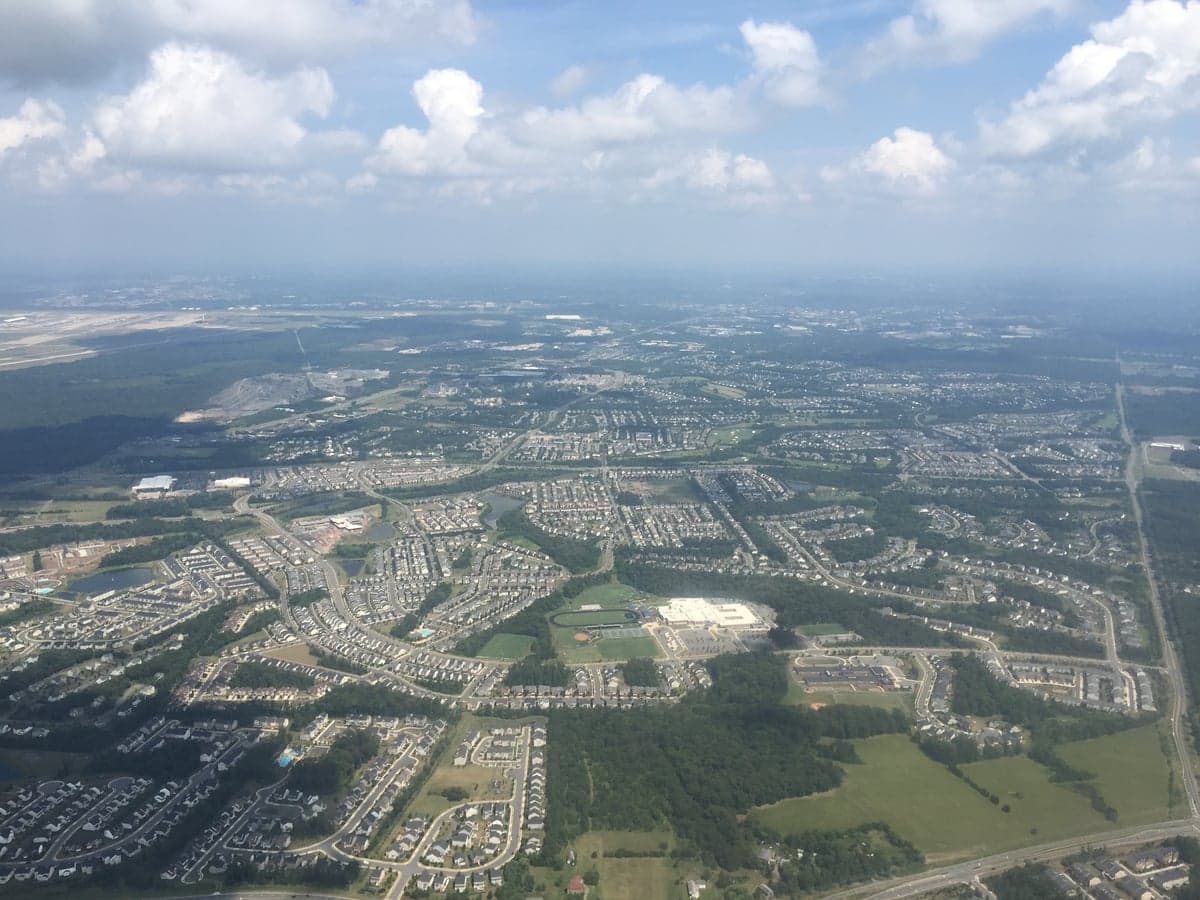
South Riding leans reliably Democratic, with a Cook PVI of D+6 that places it noticeably left of the national average. That D+6 score is a full two points more Democratic than Virginia’s statewide D+4 rating, and the gap has been widening over the last decade as Loudoun County’s explosive growth has drawn in younger, more diverse, and more educated voters from the D.C. metro area. If you’ve been here since the early 2000s, you’ve watched this shift happen in real time—what was once a quiet, exurban outpost of the D.C. suburbs is now a dense, fast-growing community where Democratic candidates routinely win by double digits in local and federal races.
How it compares
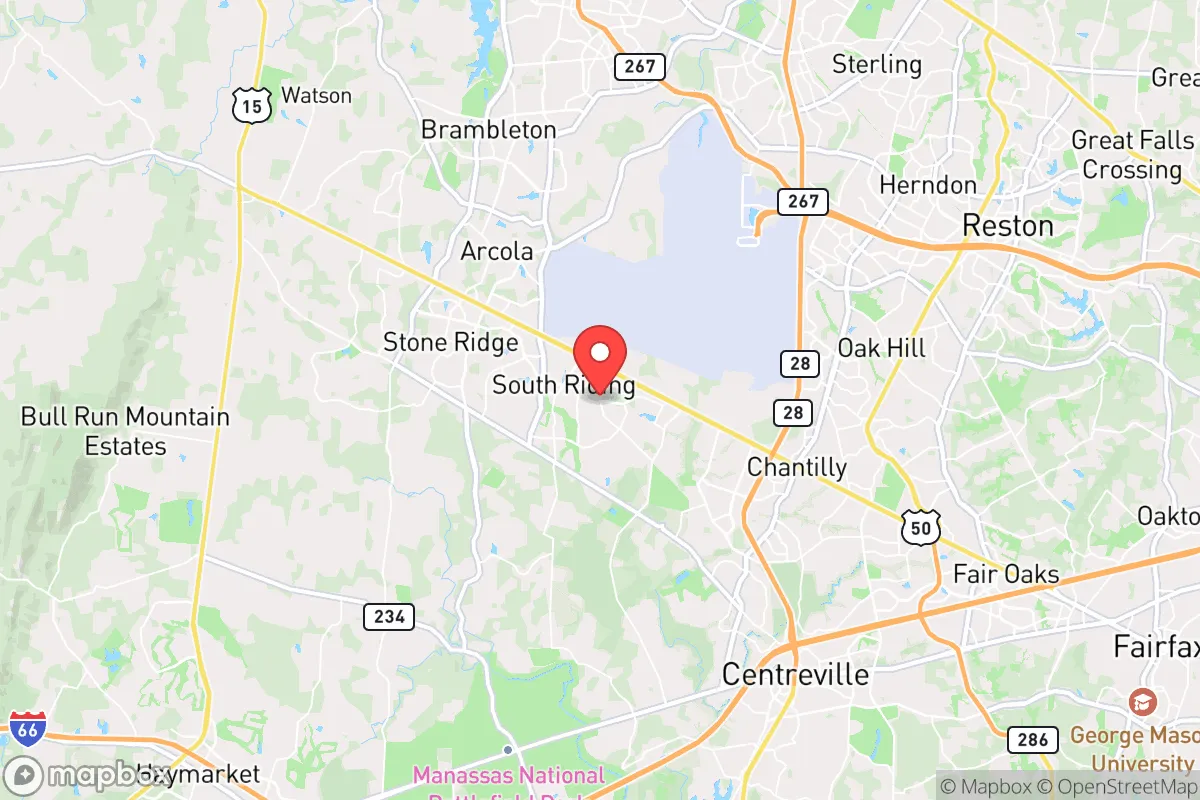
South Riding’s D+6 PVI is more liberal than the statewide Virginia average of D+4, but it’s not an outlier in Loudoun County. Nearby Ashburn and Brambleton both lean similarly, while the western part of the county—places like Lovettsville and Round Hill—still trend more conservative, often voting Republican by narrow margins. The real contrast comes when you drive 20 miles west to towns like Middleburg or Purcellville, where the rural character and older housing stock attract a more Republican-leaning electorate. South Riding, by contrast, is a master-planned community built in the 1990s and 2000s, and its demographics—highly educated, tech-employed, and racially diverse—are a textbook recipe for Democratic dominance. In the 2024 presidential election, Loudoun County as a whole went for the Democratic candidate by about 15 points, and South Riding’s precincts were among the bluest in the county.
What this means for residents
For liberal residents, South Riding feels like a comfortable environment where Democratic candidates are the norm and progressive policies on education, transit, and housing are broadly supported. You’ll find active Democratic clubs, frequent canvassing events, and a general sense that your vote aligns with your neighbors’. For conservative residents, the reality is more nuanced: you’re not outnumbered in a hostile way, but you are in a clear minority. Local Republican clubs still exist, and there are conservative-leaning churches and community groups, but you won’t see many Trump signs in yards, and local elected officials—from the school board to the county supervisors—are almost all Democrats. That said, Loudoun County’s politics are pragmatic rather than ideological; the county government focuses heavily on managing growth, school capacity, and transportation, which means even conservative residents can find common ground on issues like tax rates and infrastructure spending.
Culturally, South Riding’s political lean shows up in its public schools, which emphasize diversity and inclusion programs, and in its local policies, like the county’s push for expanded bus rapid transit and affordable housing mandates. The area’s trajectory is clear: with continued development and an influx of federal contractors and tech workers, South Riding will likely stay D+6 or even drift further left. But the flip side is that the community remains economically diverse enough that you’ll still find plenty of small-business owners, military families, and longtime residents who lean right—just not enough to swing an election. If you’re moving here, expect a politically engaged, mostly liberal suburb where the biggest fights are about school overcrowding and data center noise, not culture wars.

State Political ClimatePolitical Climate in Virginia
State Political AnalysisPolitical Environment in the State
Virginia has shifted from a reliably purple swing state to a solidly Democratic-leaning one over the past two decades, now carrying a Cook PVI of D+4. The transformation has been driven primarily by explosive population growth in the Washington, D.C. suburbs, particularly in Northern Virginia, which now dominates statewide elections. While the state still elects Republican governors in off-years (Glenn Youngkin won in 2021), the underlying trend is unmistakable: the GOP has not won a statewide race in a presidential year since 2004, and the state legislature has flipped to Democratic control for the first sustained period in a generation.
Urban vs. rural divide
The political map of Virginia is a textbook case of the urban-rural split. The Democratic stronghold is the crescent from Northern Virginia (Arlington, Alexandria, Fairfax County) down through Richmond and into Hampton Roads (Norfolk, Virginia Beach). These three regions alone account for roughly 60% of the state's vote. Fairfax County alone casts more votes than the entire western half of the state. The rural southside and southwest — places like Danville, Martinsville, and the coal country around Wise — vote overwhelmingly Republican, often by 60-70 point margins. The suburbs of Richmond (Henrico County) and the exurbs of Loudoun County have been the key battlegrounds; Loudoun flipped from +17 Romney in 2012 to +25 Biden in 2020, a 42-point swing that encapsulates the state's trajectory. The I-81 corridor cities like Harrisonburg and Roanoke are more competitive but trending blue, while the Shenandoah Valley remains reliably red.
Policy environment
Virginia's policy environment reflects its purple-to-blue shift. The state has a flat income tax rate of 5.75% and a sales tax of 5.3% (higher in Northern Virginia and Hampton Roads for transportation). Property taxes are set locally and vary widely — Loudoun County's rate is about 1.2% of assessed value, while rural counties like Lee are under 0.5%. The state has a right-to-work law, but the minimum wage was raised to $12.00/hour in 2023 with a path to $13.50. Education policy is decentralized: school boards have significant control, but the state has adopted the Virginia Standards of Learning (SOLs) and has seen a push for "lab schools" and charter school expansion under Youngkin. Healthcare is dominated by the expansion of Medicaid under the Affordable Care Act, which was approved in 2018 under a bipartisan deal. Election laws are moderately restrictive: Virginia requires a photo ID to vote (though student IDs are accepted), has no-excuse absentee voting, and allows early voting up to 45 days before an election. The state does not have a "stand your ground" law, but it does have a "castle doctrine" and a permitless open carry law for handguns (though localities can restrict firearms in government buildings).
Recent policy direction
The last five years have seen Virginia lurch left on several fronts, then pull back slightly under Youngkin. In 2020, the Democratic-controlled legislature passed a sweeping gun control package: universal background checks, a "red flag" law (allowing temporary seizure of firearms from individuals deemed a threat), and a ban on assault weapons (later struck down by a court). They also abolished the death penalty, legalized marijuana possession (up to one ounce) in 2021, and passed the Virginia Clean Economy Act, which mandates 100% carbon-free electricity by 2050. On education, Youngkin's administration has pushed for "parental rights" — including a model policy requiring schools to notify parents if a child requests a name or pronoun change — and has banned "divisive concepts" in training materials. On abortion, Virginia remains a relative outlier in the South: abortion is legal up to 26 weeks, and after that only if the mother's life is at risk or the fetus is nonviable. A 2023 attempt by Youngkin to enact a 15-week ban failed in the Democratic-controlled Senate. On property rights, Virginia has a strong "by-right" zoning tradition in rural areas, but Northern Virginia has seen upzoning and density mandates. The state has no "right to farm" constitutional amendment, but it does have a Right to Farm Act that protects agricultural operations from nuisance lawsuits. On privacy, Virginia passed the Consumer Data Protection Act in 2021, one of the stronger state-level privacy laws in the country. On voting, the state has moved toward greater access: automatic voter registration at the DMV, same-day registration during early voting, and no-excuse absentee voting are all now law.
Civil unrest & political movements
Virginia has been a flashpoint for political movements on both sides. The 2017 "Unite the Right" rally in Charlottesville, which turned violent and left one counter-protester dead, remains a defining scar. The city has since removed Confederate statues and become a symbol of the national reckoning over race. On the right, the "Parents Matter" movement — sparked by school closures and critical race theory debates — was a major force in Youngkin's 2021 victory, particularly in suburban Loudoun and Prince William counties. Immigration politics are less heated than in border states, but Northern Virginia has several sanctuary cities (Arlington, Alexandria, Fairfax County) that limit cooperation with ICE. The 2020 election saw no major fraud controversies in Virginia, but the 2021 gubernatorial race was close (Youngkin won by 2 points) and saw intense scrutiny of mail-in ballots. The state has seen periodic protests over gun laws (the 2020 Lobby Day in Richmond drew thousands of armed demonstrators) and over abortion (the 2023 legislative session saw large rallies on both sides). The "Virginia Way" of civility has frayed, but the state has not seen the kind of sustained unrest seen in Portland or Seattle.
Projection
Over the next 5-10 years, Virginia is likely to continue its slow drift leftward, but with significant caveats. The D.C. suburbs will keep growing — Loudoun County is projected to add another 100,000 residents by 2030 — and those new arrivals are overwhelmingly Democratic-leaning professionals. However, the state's population is also aging, and the rural areas are losing population, which could accelerate the urban-rural polarization. The wild card is the I-81 corridor: if cities like Harrisonburg and Roanoke continue to attract remote workers and retirees from the Northeast, they could flip blue, cementing a Democratic lock on statewide races. But the GOP is not dead: Youngkin's 2021 win showed that a moderate Republican who focuses on education and the economy can still win in a D+4 state, especially in an off-year when turnout is lower. The state's electoral college votes (13) are likely to remain in the Democratic column for presidential races, but the governor's mansion will remain competitive. For a new resident, the practical takeaway is that Virginia is a state where your experience will vary dramatically by location: Northern Virginia feels like a blue-state suburb of D.C., while Southside Virginia feels like the Deep South. The state's laws are a patchwork — liberal on abortion and marijuana, moderate on guns, conservative on taxes — and that patchwork is likely to persist.
For a relocator, the bottom line is that Virginia offers a middle ground that is increasingly rare in America: a state where you can find a deep-red rural county, a purple exurb, and a deep-blue urban center all within a two-hour drive. The taxes are moderate, the schools are generally good (especially in Northern Virginia), and the job market is strong, driven by the federal government and defense contractors. But the political climate is real: if you are a conservative, you will find your views in the minority in the state's power centers, and if you are a liberal, you will find yourself in a state that is still fighting over abortion and gun rights. The key is to pick your county carefully — and to understand that the state's trajectory is toward the blue, but not so fast that a Republican can't still win a statewide race in a good year.
* Values derived from national, state, county, city and local statistics and may differ in a specific area. Last updated: 2026-09-14T15:10:22.000Z
Narrative content on this page is AI-generated and may contain mistakes. Verify any details that matter before acting on them.
ReloMaps may earn a commission from affiliate links at no extra cost to you.

