Photo: Wikipedia
Demographics of South Riding, VA
Affluence Level in South Riding, VA
A wealthy area with high-earning, well-educated households. Incomes, home values, and educational attainment meaningfully outpace national averages.
People of South Riding, VA
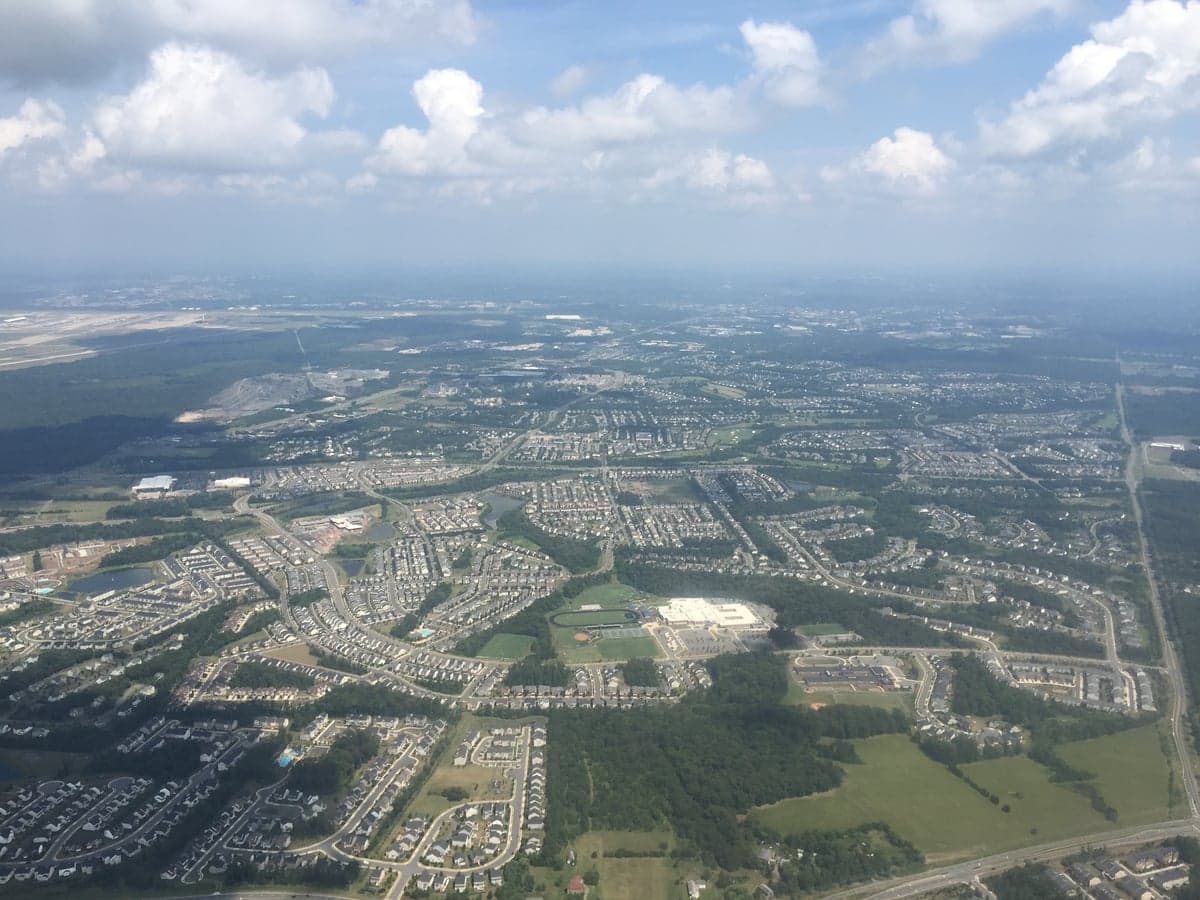
South Riding, Virginia, is a planned community of roughly 34,200 residents that has become one of the most ethnically diverse and highly educated suburbs in Loudoun County. The population is characterized by a majority-minority makeup, with White residents at 37.1%, Indian-subcontinent residents at 20.4%, East/Southeast Asian residents at 15.3%, Hispanic residents at 10.6%, and Black residents at 9.0%. Two-thirds of adults hold a college degree, and the foreign-born share stands at 11.0%, reflecting a community built by successive waves of domestic and international professionals drawn to the area’s technology corridor and top-ranked schools.
How the city was settled and grew
Unlike older Virginia towns, South Riding has no colonial or 19th-century founding. The area was largely rural farmland until the late 1980s, when the South Riding development began as a master-planned community on former agricultural land. The first wave of residents were primarily White middle-class families moving from Fairfax County and other Washington, D.C., suburbs, attracted by lower home prices and larger lots. These early settlers concentrated in the South Riding Center and South Riding North neighborhoods, which feature single-family homes built between 1990 and 2000. The community incorporated as a town in 1994, and its population grew steadily as Loudoun County’s technology sector expanded.
Modern era (post-1965)
The post-1965 Immigration and Nationality Act reshaped South Riding’s demographics dramatically, though the effects took decades to reach this planned suburb. The real transformation began around 2005, when the Dulles Technology Corridor—home to companies like Verizon, Orbital ATK, and numerous defense contractors—began drawing highly skilled professionals from around the world. Indian-subcontinent families, many working in IT and engineering, became the fastest-growing group, settling heavily in the South Riding East and South Riding South sections, where newer townhomes and single-family homes were built between 2005 and 2015. East/Southeast Asian families—particularly from Korea, Vietnam, and China—followed a similar pattern, clustering in South Riding West and the Ridgewood neighborhood. Hispanic and Black residents arrived during the same period, often in the South Riding North and South Riding Center areas, drawn by service-sector jobs in retail, construction, and hospitality. By 2020, South Riding had shifted from a predominantly White suburb to a majority-minority community, with White residents dropping from roughly 60% in 2000 to 37.1% in the latest estimates.
The future
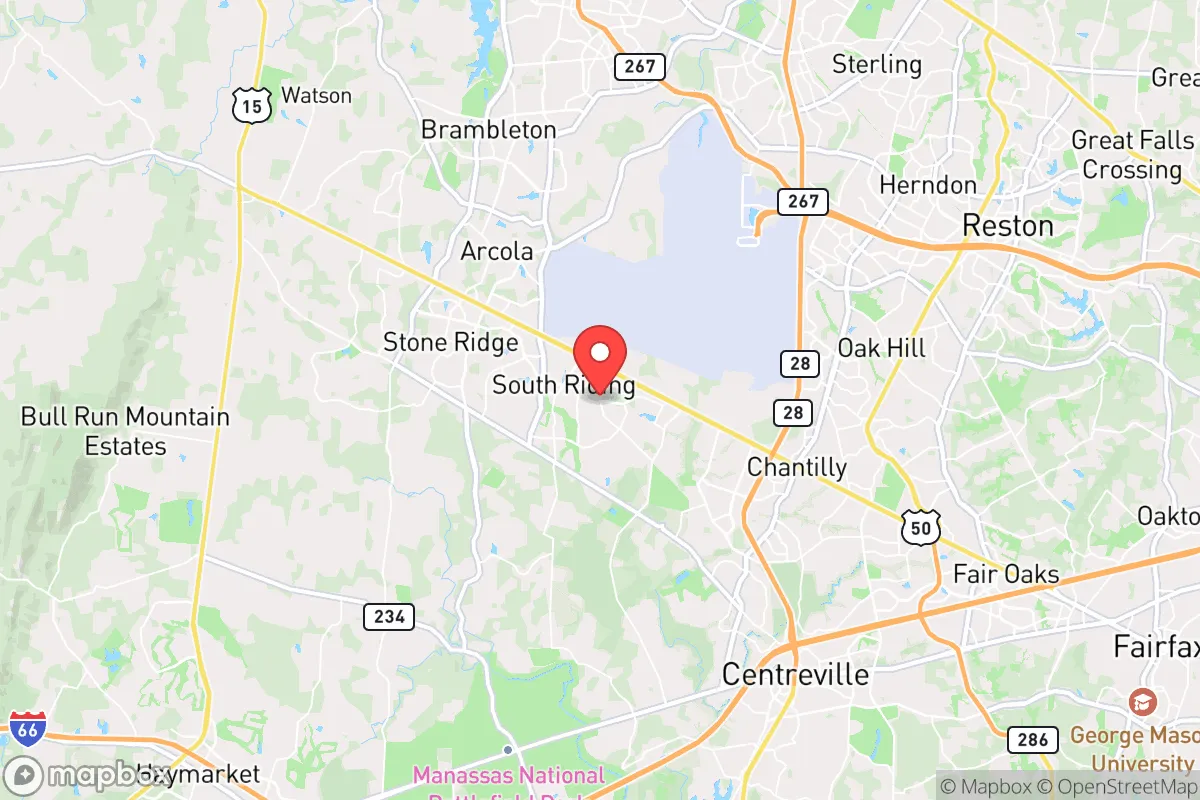
South Riding’s population is likely to become even more diverse over the next 10–20 years. The Indian-subcontinent share, already the largest non-White group at 20.4%, is expected to grow further as Loudoun County continues to attract tech and biotech employers. East/Southeast Asian communities, currently at 15.3%, are also projected to increase, particularly in newer developments like South Riding South and the Stone Ridge area just west of town. The Hispanic and Black shares are likely to remain stable or grow modestly, driven by families seeking affordable housing in the region’s outer suburbs. The White population, while declining as a percentage, will remain a significant presence, especially in older neighborhoods like South Riding Center. The town’s cultural identity is evolving from a generic 1990s suburb into a polyglot community where Indian festivals, Korean churches, and Hispanic markets coexist alongside traditional American suburban life. The high college-education rate (66.5%) suggests that future growth will continue to be driven by professional-class families prioritizing school quality and commute times.
For someone moving in now, South Riding offers a stable, family-oriented environment with exceptional schools and a genuinely multicultural character. The community is becoming more diverse, more educated, and more connected to the global economy—a trend that shows no sign of reversing. New residents should expect a place where the dominant culture is less about a single ethnic identity and more about shared values of professional ambition, educational achievement, and suburban comfort.

* Values derived from national, state, county, city and local statistics and may differ in a specific area. Last updated: 2026-09-14T15:10:22.000Z
Narrative content on this page is AI-generated and may contain mistakes. Verify any details that matter before acting on them.
ReloMaps may earn a commission from affiliate links at no extra cost to you.

