Photo: Wikipedia
Personal Sovereignty in South Riding, VA
Viable for self-reliance. Generally workable, though some barriers may limit total independence.
What does Personal Sovereignty tell us?
Personal Sovereignty measures your capacity for self-reliance and independence with minimal government friction. Higher scores mean fewer barriers between you and the way you want to live... but it assumes you have the space you need and good neighbors.
What does this tell us?
Personal Sovereignty measures your capacity for self-reliance and independence with minimal government friction. Higher scores mean fewer barriers between you and the way you want to live... but it assumes you have the space you need and good neighbors.
State Policy
Energy independence: Importer (20% of energy produced in-state)
Personal Liberty

Personal Liberty Analysis
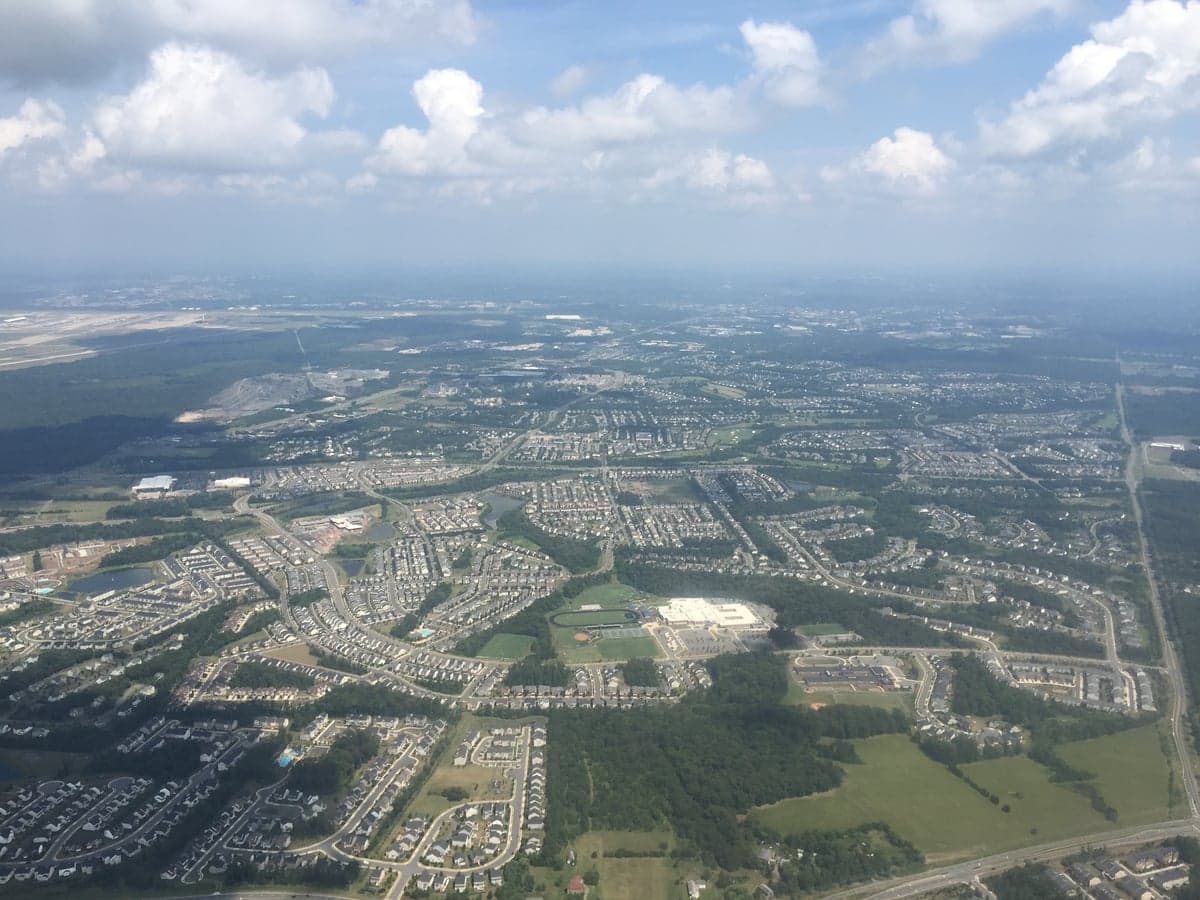
South Riding, Virginia, offers a notably high degree of personal sovereignty for a suburban community, blending Virginia’s strong self-defense and property rights framework with a local regulatory environment that is lighter than in neighboring Fairfax County but more structured than rural Loudoun County. For individuals and families prioritizing autonomy, the area provides a solid foundation for self-reliance, though the suburban context imposes some practical limits on off-grid living and extreme independence. The key trade-off is access to excellent infrastructure and schools in exchange for adherence to a moderately enforced set of zoning and homeowners association (HOA) rules.
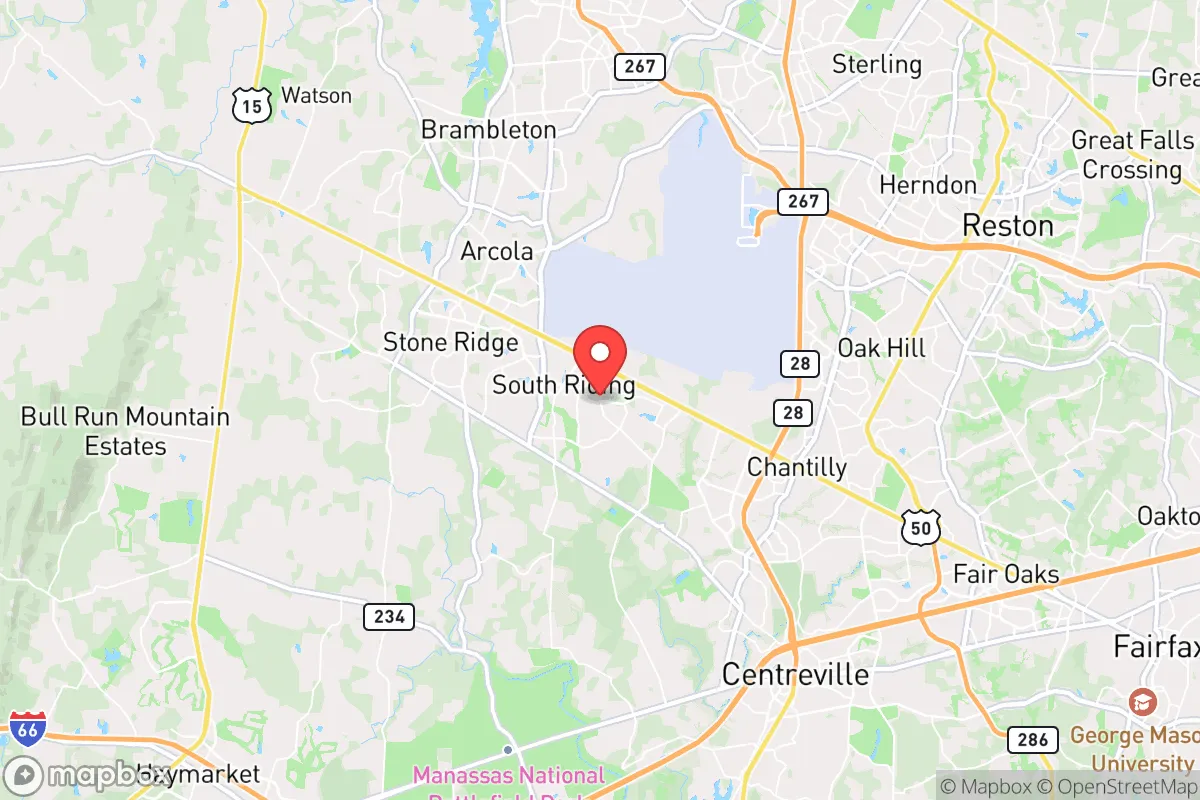
Tax burden and regulatory posture in Loudoun County
Virginia’s overall tax burden is moderate compared to other states, ranking roughly in the middle nationally. Loudoun County, where South Riding sits, has a real estate tax rate of approximately $1.065 per $100 of assessed value as of 2025, which is higher than rural Virginia counties but lower than Arlington or Alexandria. The county’s regulatory posture is business-friendly in intent, with a streamlined permitting process for home additions and renovations, though HOAs in South Riding often add an extra layer of approval for exterior changes. There is no county-level income tax, and Virginia’s state income tax is a flat 5.75% on most income, which is predictable for budgeting. Sales tax in Loudoun is 6%, with no additional local option tax on groceries. The regulatory environment is best described as moderately light-touch for a suburban jurisdiction: building codes are enforced, but the county does not impose rent control, plastic bag bans, or aggressive energy-efficiency mandates that are common in more progressive localities. For a family running a home-based business, Loudoun County requires a business license for gross receipts over $2,000, but the fee is modest and the process is straightforward.
Self-defense and gun law specifics in Virginia
Virginia is a shall-issue state for concealed carry permits, meaning the sheriff’s office must issue a permit if the applicant meets statutory requirements (age 21, no disqualifying criminal record, completion of a firearms safety course). Loudoun County’s sheriff has historically processed applications efficiently, with typical wait times of 30-45 days. Open carry is legal for anyone 18 or older who can legally possess a firearm, and there is no state preemption law that prevents localities from regulating firearms in certain public spaces. However, Loudoun County does not impose additional restrictions beyond state law, so South Riding residents enjoy the full scope of Virginia’s gun rights. Virginia law prohibits carrying firearms in places of worship unless the congregation authorizes it, and in schools, courthouses, and government buildings. Stand-your-ground laws do not exist in Virginia; the state follows a duty-to-retreat standard in public spaces, but the Castle Doctrine applies in one’s home and vehicle, meaning there is no duty to retreat before using deadly force against an intruder. Magazine capacity limits and universal background checks were proposed in the state legislature in recent years but have not passed as of 2026, so standard-capacity magazines and private firearm sales remain legal. For a family prioritizing self-defense, South Riding offers a legal environment that respects the right to keep and bear arms with minimal local interference.
Self-reliance and homesteading viability: lot sizes, zoning, and off-grid feasibility
South Riding is a planned community with lot sizes typically ranging from 0.1 to 0.5 acres, which limits large-scale homesteading. Most homes are on quarter-acre lots with HOA covenants that restrict livestock, large gardens visible from the street, and the installation of solar panels without approval. Chickens are generally allowed in South Riding, but roosters are prohibited, and coop placement must be at least 25 feet from neighboring structures. Zoning in the South Riding area is predominantly residential suburban (R-1 and R-2), which permits accessory structures like sheds but not detached workshops or barns. Off-grid living is effectively impossible within the community because all homes are connected to public water and sewer, and the HOA requires connection to the electrical grid. Rainwater collection for outdoor use is permitted under Virginia law, but using it as a primary water source is not feasible due to county health codes. For a family seeking serious self-reliance—raising meat animals, growing a substantial portion of food, or generating independent power—South Riding is not the right fit. However, the nearby rural areas of western Loudoun County, such as Middleburg and Upperville, offer 5- to 20-acre lots with agricultural zoning that permit horses, cattle, and larger gardens, and those areas are only a 20-30 minute drive from South Riding. The trade-off is that those rural properties lack the same school quality and proximity to employment centers.
Personal liberties: parental rights, medical autonomy, speech, and property
Virginia law generally respects parental rights in education, with a statute that allows parents to opt their children out of specific instructional materials or activities that conflict with their religious or moral beliefs. Loudoun County Public Schools have a formal opt-out process for sex education and certain health curricula, and parents can request alternative assignments. Virginia is a parental notification state for abortion, requiring that a parent or guardian be notified before a minor can obtain the procedure. Medical autonomy is broad for adults: Virginia does not have a state-level vaccine mandate for adults, and there is no mask mandate or business closure authority currently in effect at the state level. Loudoun County’s health department does not impose local mandates beyond state requirements. Free speech protections are strong, with no local ordinances restricting political signage on private property beyond standard HOA rules that may limit sign size and duration. Property rights are well-protected under Virginia’s eminent domain laws, which require just compensation and a public purpose. Loudoun County does not have rent control or inclusionary zoning that forces property owners to set aside units at below-market rates. One notable liberty is Virginia’s lack of a state-level red flag law, meaning that temporary firearm seizure orders are not available to law enforcement without a criminal conviction or mental health adjudication. This is a significant factor for families who prioritize the right to keep arms without risk of administrative confiscation.
Overall, South Riding offers a strong sovereignty profile for a suburban area, particularly in self-defense rights and parental control over education. The main constraints come from HOA covenants and the suburban lot size, which limit homesteading and off-grid independence. Compared to nearby jurisdictions, South Riding is significantly more freedom-oriented than Fairfax County, which has higher taxes and more restrictive land-use policies, but less autonomous than rural Fauquier or Clarke counties, where zoning is minimal and property taxes are lower. For a family that values personal liberty but also wants excellent schools, low crime, and proximity to Washington, D.C., South Riding strikes a practical balance—it is not a libertarian enclave, but it respects the core pillars of self-reliance and individual rights within a community framework.

* Values derived from national, state, county, city and local statistics and may differ in a specific area. Last updated: 2026-09-14T15:10:22.000Z
Narrative content on this page is AI-generated and may contain mistakes. Verify any details that matter before acting on them.
ReloMaps may earn a commission from affiliate links at no extra cost to you.

