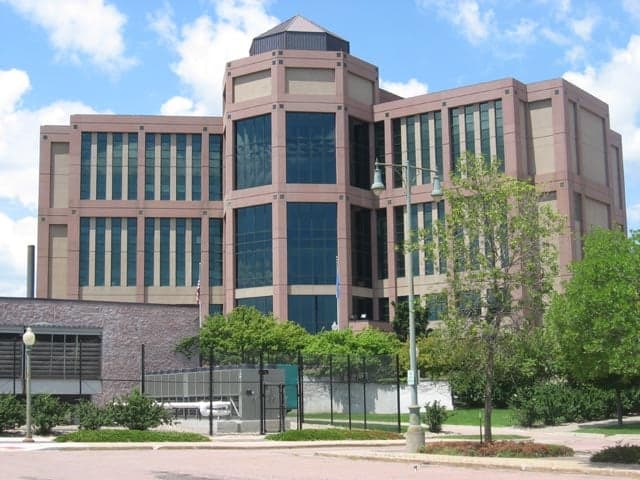
Photo: Wikipedia
Personal Sovereignty in Minnehaha County
Viable for self-reliance. Generally workable, though some barriers may limit total independence.
What does Personal Sovereignty tell us?
Personal Sovereignty measures your capacity for self-reliance and independence with minimal government friction. Higher scores mean fewer barriers between you and the way you want to live... but it assumes you have the space you need and good neighbors.
What does this tell us?
Personal Sovereignty measures your capacity for self-reliance and independence with minimal government friction. Higher scores mean fewer barriers between you and the way you want to live... but it assumes you have the space you need and good neighbors.
State Policy
Energy independence: Importer (35% of energy produced in-state)
Personal Liberty
Homesteading

Personal Liberty Analysis
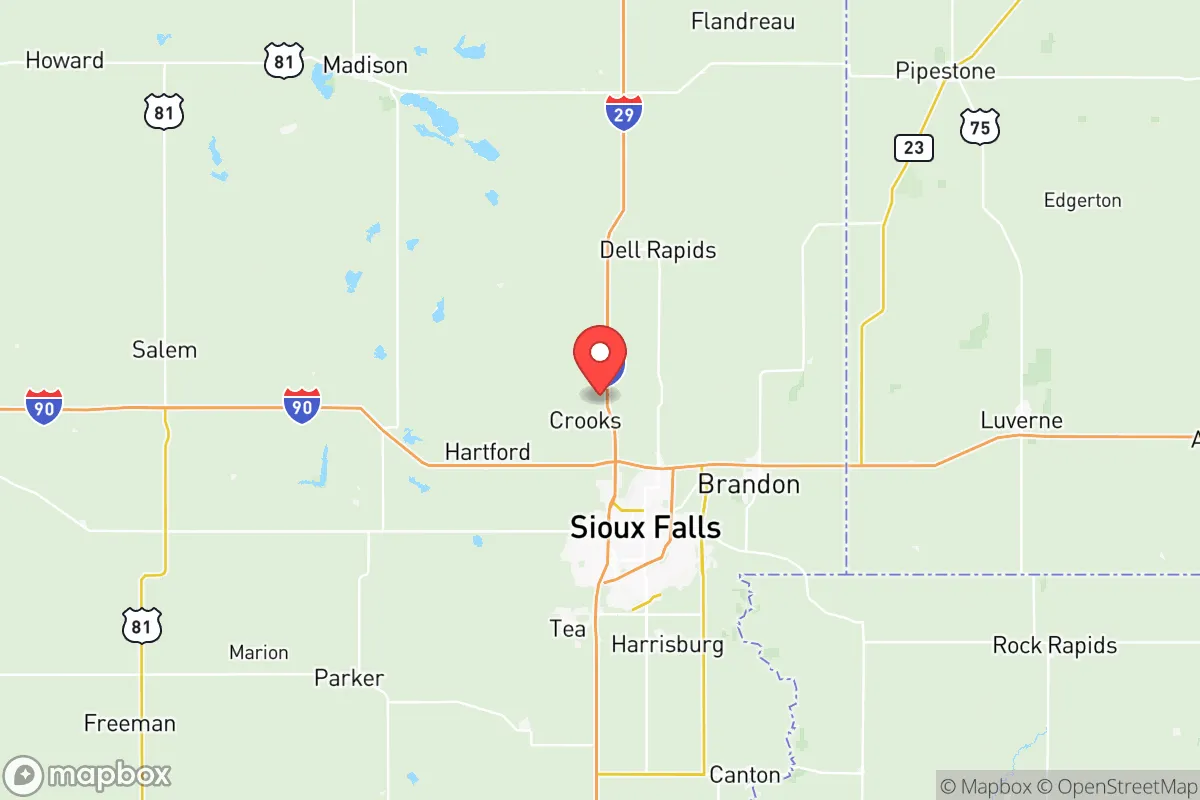
Minnehaha County, anchored by Sioux Falls, presents a nuanced personal sovereignty environment where South Dakota's famously light-touch state governance meets the practical realities of a growing metropolitan area. The county offers residents a notably high degree of personal autonomy compared to much of the Upper Midwest, driven by no state income tax, permissive gun laws, and a regulatory culture that generally favors individual choice over government mandate. However, the degree of personal freedom varies significantly between the urban core of Sioux Falls and the more rural towns like Brandon, Dell Rapids, and Hartford, where local ordinances and community expectations shape the lived experience of self-reliance.
Tax burden and regulatory posture in Minnehaha County
The most immediate expression of personal sovereignty in Minnehaha County is financial: South Dakota has no state income tax, no personal property tax on vehicles or business equipment, and no state inheritance or estate tax. For a single individual or family relocating from a high-tax state like California, Illinois, or Minnesota, this represents an immediate and permanent increase in disposable income. The primary revenue source is a 4.5% state sales tax, with Minnehaha County adding a 2% county sales tax and Sioux Falls levying an additional 2% city sales tax, bringing the total in the city to 8.5%. Property taxes are assessed at the local level and are moderate by national standards — the effective rate in Sioux Falls typically runs around 1.2% to 1.4% of assessed value, though rural parcels in areas like Crooks or Baltic may see slightly lower rates. The regulatory posture at the county level is generally permissive. Zoning in unincorporated areas is minimal, and the county does not impose the kind of land-use restrictions found in more heavily regulated states. However, within Sioux Falls city limits, building codes, business licensing, and planning requirements are more robust, reflecting the needs of a city of over 200,000. For a reader prioritizing maximum regulatory freedom, the unincorporated areas of the county or smaller towns like Valley Springs offer a noticeably lighter touch than the city itself.
Self-defense and gun law specifics in Minnehaha County
South Dakota is a constitutional carry state, meaning that as of July 1, 2019, any legal resident 18 or older who can legally possess a firearm may carry it openly or concealed without a permit. Minnehaha County fully reflects this state-level policy. There is no county-level firearm registry, no waiting period for purchase, and no requirement to register a firearm with local authorities. The sheriff's office in Minnehaha County issues enhanced permits for those who wish to carry in states with reciprocity agreements, but the permit is optional for daily carry within South Dakota. Stand-your-ground laws are in effect, with no duty to retreat in any place where a person has a legal right to be. Castle doctrine protections apply to homes, vehicles, and businesses. For a reader who prioritizes self-defense rights, Minnehaha County is among the most accommodating jurisdictions in the country. The practical difference between Sioux Falls and the surrounding towns like Brandon or Dell Rapids is negligible regarding state law, though shooting ranges and private land for safe recreational shooting are more accessible in the rural parts of the county. The Sioux Falls Police Department and Minnehaha County Sheriff's Office both maintain generally pro-Second Amendment stances in their public communications and enforcement practices.
Self-reliance and homesteading viability across the county
Minnehaha County offers genuine opportunities for self-reliant living, but the feasibility depends heavily on location. In unincorporated areas and small towns like Hartford, Crooks, and Baltic, minimum lot sizes in agricultural zoning districts are typically 40 acres or larger, allowing for substantial gardening, small-scale livestock, and even limited farming operations. The county's planning department generally permits accessory structures like barns, workshops, and greenhouses without the kind of aesthetic review common in more restrictive jurisdictions. Off-grid feasibility is moderate: South Dakota has no state law prohibiting rainwater collection, and solar panel installation is permitted without significant bureaucratic hurdles in unincorporated areas. However, grid-tied electrical service is the norm, and well water and septic systems are standard for rural properties. Within Sioux Falls city limits, homesteading is far more constrained — lot sizes are smaller, livestock is generally prohibited except for chickens in some zones, and building codes are more prescriptive. For a family seeking to grow a significant portion of their own food, keep chickens or goats, and reduce reliance on municipal utilities, the rural townships around Valley Springs or Renner are far more viable than any in-town property. The county's soil quality is excellent for gardening, with the region's glacial till providing rich loam, and the growing season runs roughly from mid-May to late September.
Personal liberties in Minnehaha County: parental rights, medical autonomy, speech, and property
South Dakota has positioned itself as a strong defender of parental rights in education. State law requires school districts to notify parents of any curriculum involving human sexuality, and parents have the right to opt their children out of specific instructional materials. Minnehaha County school districts, including the Sioux Falls School District and smaller districts in Brandon and Dell Rapids, generally comply with these statutes, though the larger Sioux Falls district has seen more public debate around implementation than its rural counterparts. Medical autonomy is shaped by state law: South Dakota does not have a vaccine mandate for adults, and while some healthcare employers in Sioux Falls may require certain immunizations, there is no statewide mandate. The state has some of the most restrictive abortion laws in the nation, which may align with the values of a conservative-leaning audience. Free speech protections are robust, with no state-level hate speech laws that would criminalize protected expression, and the county does not impose special event permit requirements that would burden political speech or assembly. Property rights are strongly protected under state law, with no statewide rent control and limited eminent domain authority. The county's approach to property regulation is generally deferential to landowners, particularly in unincorporated areas where use restrictions are minimal. For a reader who values the ability to make decisions about their own health, their children's education, and their property without excessive government interference, Minnehaha County offers a legal environment that is among the most accommodating in the region.
Overall, Minnehaha County delivers a high degree of personal sovereignty relative to most of the United States, particularly for those who locate outside the Sioux Falls city limits. The combination of no income tax, constitutional carry, strong property rights, and parental authority in education creates an environment where individual choice is the default rather than the exception. For a conservative-leaning individual or family weighing relocation, the county offers the rare advantage of metropolitan economic opportunity — Sioux Falls has a robust job market and modern amenities — without sacrificing the legal and cultural framework of personal independence. The trade-off is that the urban core necessarily involves more regulation and density, but the surrounding towns of Brandon, Dell Rapids, Hartford, Crooks, and Baltic provide clear alternatives where the ethos of self-reliance remains the dominant cultural and legal reality.

* Values derived from national, state, county, city and local statistics and may differ in a specific area. Last updated: 2026-07-04T13:28:05.000Z
Narrative content on this page is AI-generated and may contain mistakes. Verify any details that matter before acting on them.
ReloMaps may earn a commission from affiliate links at no extra cost to you.

