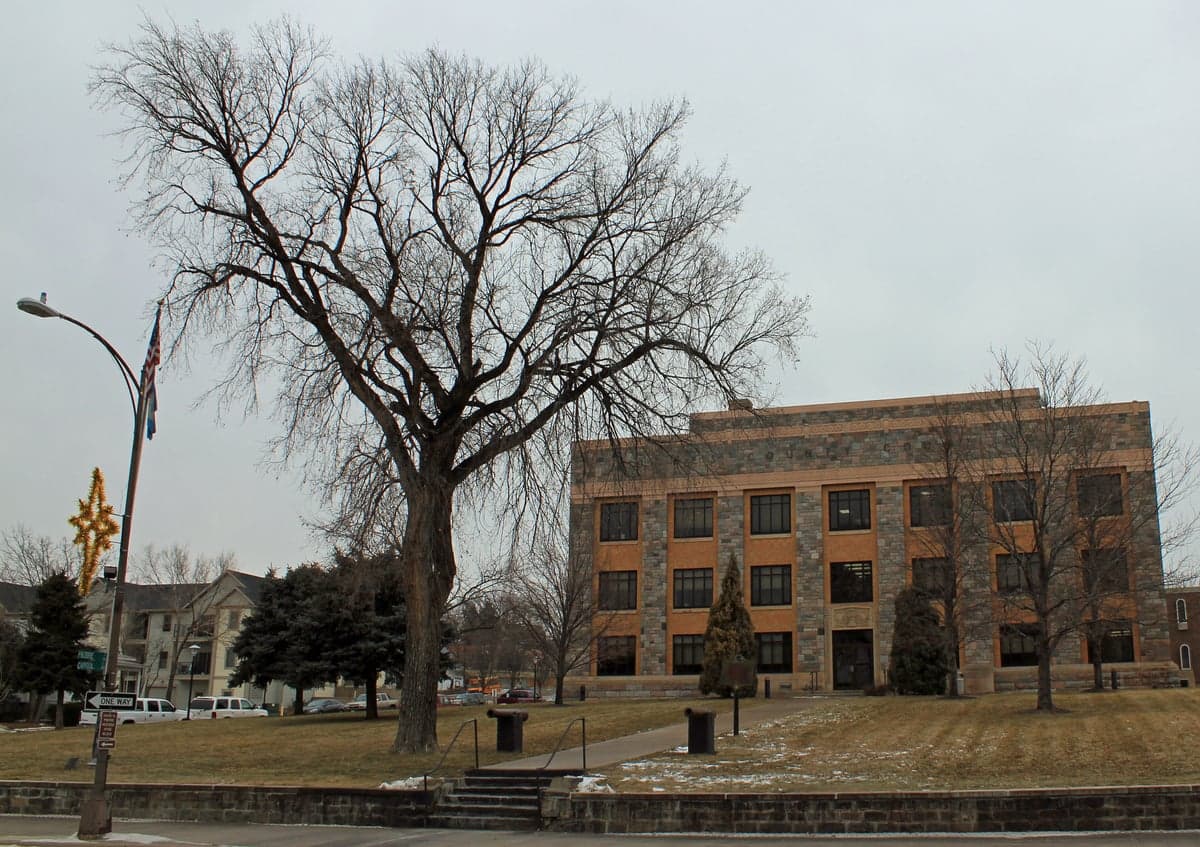
Photo: Wikipedia
Quality of Life in Hughes County
A livable area that tracks near national norms for affordability, walkability, and neighborhood health.
What does Quality of Life tell us?
Quality of Life measures an area by evaluating factors like cost of living, nearby amenities, country club access, airport proximity, socioeconomic signals and neighborhood character. For large states, this is a general average — quality of life can vary dramatically between metro areas, suburbs, and rural communities within the same state.
What does this tell us?
Quality of Life measures an area by evaluating factors like cost of living, nearby amenities, country club access, airport proximity, socioeconomic signals and neighborhood character. For large states, this is a general average — quality of life can vary dramatically between metro areas, suburbs, and rural communities within the same state.
Cost of Living
21% below national average
125%
The Real Cost of Living in Hughes County for 2026
| Tier | Individual | Family (4) |
|---|---|---|
| Survival | $15k | $28k |
| Comfortable | $43k | $63k |
| Luxury | $113k+ | $175k+ |
| Elite (Top 5%) | $133k+ | $206k+ |
Quality-of-Life Analysis
Hughes County, anchored by the state capital Pierre, offers a quality-of-life spectrum that ranges from the government-centered, amenity-rich environment of its largest city to the quiet, wide-open spaces of its rural towns and farmlands. The county draws a mix of state employees, healthcare workers, and small-business owners to its population centers, while its smaller communities and agricultural pockets appeal to those seeking lower costs, more land, and a slower pace of life. With a cost-of-living index of 79 (21% below the national average) and a median home value of $221,100, the county provides tangible financial breathing room across most of its geography.
Largest town(s) & population centers
Pierre, the state capital and Hughes County's only incorporated city, is the undisputed population and economic hub, home to roughly 14,000 residents. Daily life here revolves around state government employment, with the South Dakota State Capitol complex, numerous state agencies, and the adjacent Fort Pierre (across the Missouri River in Stanley County) providing stable white-collar jobs. The city offers a surprising density of amenities for its size, including the South Dakota Cultural Heritage Center, the Oahe Dam recreation area, and a walkable downtown with local restaurants and shops. The average commute of just under 14 minutes is among the shortest in the state, reflecting the compact layout and limited traffic. Housing here is the county's most expensive, with median home values around $221,100 and rents averaging $930, but these figures still undercut national averages significantly. Families and professionals working in government or healthcare (the Avera St. Mary's Hospital is a major employer) find Pierre's blend of small-city convenience and outdoor access—especially to Lake Oahe for fishing and boating—highly attractive.
Smaller towns & rural pockets
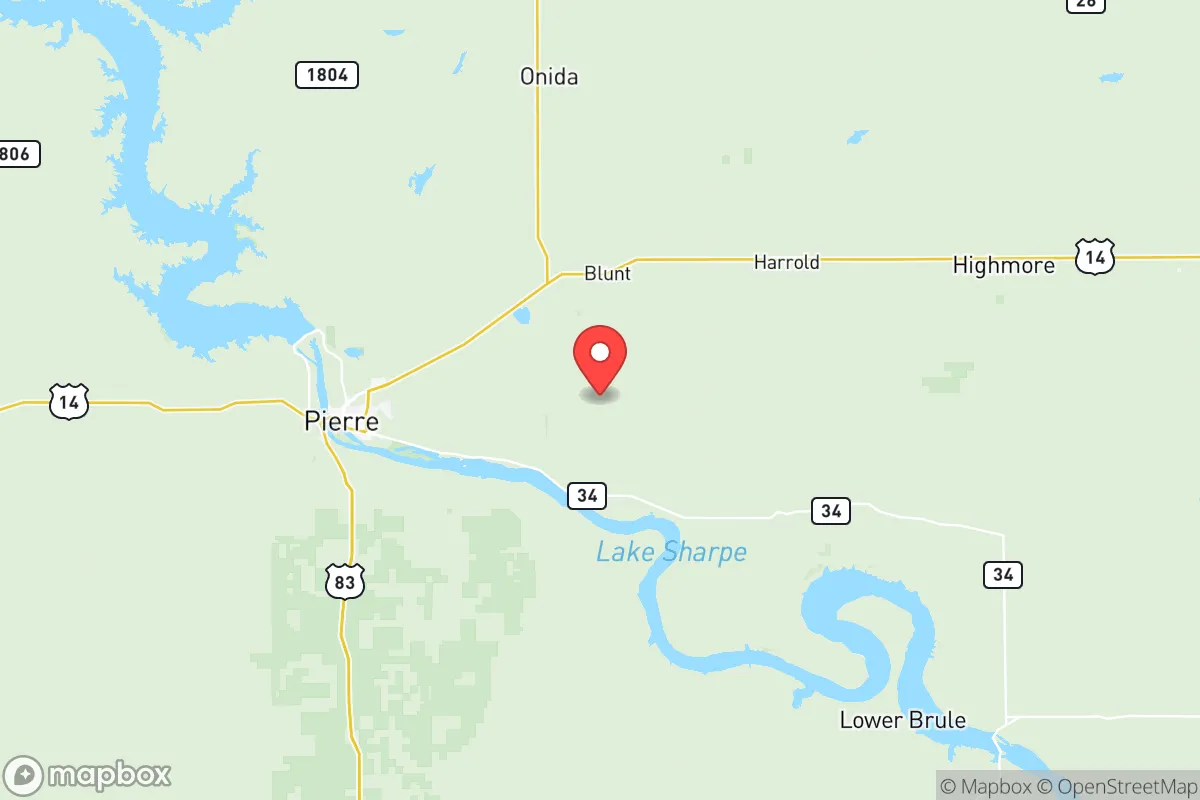
Outside Pierre, Hughes County's population thins dramatically into unincorporated communities and agricultural crossroads. Canning, a tiny hamlet about 10 miles southeast of Pierre, consists of a handful of homes and a grain elevator, offering a true rural lifestyle with minimal services. Harrold, roughly 20 miles east of Pierre, is similarly small, with a population under 200 and a grain elevator as its economic anchor. The rural areas along U.S. Highway 14 and South Dakota Highway 34 are dotted with farmsteads and ranches, where residents often commute to Pierre for work, shopping, and schools. These pockets lack retail, healthcare, and dining options entirely, meaning residents rely on Pierre for most necessities. The trade-off is significant: land is cheaper, privacy is abundant, and the pace of life is dictated by seasons and crops rather than office hours. The county's overall population density is just 12 people per square mile, and these rural areas are where that statistic is most tangible.
Cost & lifestyle range
The cost-of-living spread across Hughes County is modest but meaningful. At the high end, Pierre's housing market—with a median home value of $221,100 and median rent of $930—reflects demand from state employees and professionals. Utilities and groceries are slightly above the county average due to the city's concentration of services. At the low end, rural properties in areas like Canning or Harrold can be found for under $150,000, and land parcels are often available for $2,000–$5,000 per acre. Rentals in these areas are scarce, but homeowners enjoy lower property taxes (South Dakota has no state income tax) and minimal municipal fees. The lifestyle range is stark: Pierre offers a walkable downtown, public schools, a hospital, and cultural events, while rural residents trade those amenities for acreage, privacy, and direct access to hunting and farming. The county's overall cost-of-living index of 79 means even Pierre's pricier housing is affordable by national standards, making the entire county a viable option for remote workers or retirees seeking a lower cost base.
Hughes County is best suited for individuals and families who value financial predictability and outdoor recreation over urban bustle. State government employees, healthcare professionals, and remote workers will find Pierre's amenities and short commute a strong draw, while farmers, ranchers, and those seeking solitude will appreciate the affordability and space of the county's rural pockets. The county's lack of major retail or entertainment beyond Pierre means it is not for everyone, but for those aligned with its pace, it offers a stable, low-stress quality of life that is increasingly rare in the United States.

Crime in Hughes County
Generally safer than 61% of comparable U.S. locations.
Violent CrimeViolent Crime Analysis
Property CrimeProperty Crime Analysis
Crime Analysis
Hughes County, South Dakota, presents a mixed safety profile where property crime rates significantly exceed national averages while violent crime remains slightly below the U.S. norm, creating a landscape where residents face higher risks of theft and burglary than physical assault. The county's largest city, Pierre, serves as the state capital and anchors most of the county's population and crime activity, while smaller communities like Fort Pierre and Blunt generally report fewer incidents. Understanding the specific crime dynamics across these areas is essential for anyone considering relocation to central South Dakota.
Crime in context
Hughes County's violent crime rate of 293.6 per 100,000 residents sits just below the national average of approximately 380 per 100,000, but notably above South Dakota's statewide rate of roughly 280 per 100,000. Property crime, however, is a more pressing concern: the county's rate of 1,283 per 100,000 exceeds both the national average (about 1,954 per 100,000) and the South Dakota average (around 1,150 per 100,000). This means residents are roughly 10% more likely to experience a property crime than the average South Dakotan, though still less likely than the typical American. The county's justice system, overseen by the Hughes County State's Attorney's Office and the Sixth Judicial Circuit, operates within a state that has maintained a generally conservative approach to criminal justice, with mandatory minimum sentences for certain violent offenses and a strong emphasis on victim restitution. However, as with many counties, the effectiveness of prosecution and sentencing can vary, and readers should be aware that progressive prosecutorial policies—such as reduced bail requirements or diversion programs for property offenders—can lead to higher recidivism and more criminals on the street, directly impacting public safety.
What residents experience
Daily life in Hughes County involves a tangible awareness of property crime, particularly in Pierre, where theft from vehicles, burglary of storage units, and occasional shoplifting at retail centers along Sioux Avenue and Highland Avenue are the most common complaints. The Pierre Police Department reports that larceny-theft accounts for roughly 60% of all property crime, with unlocked vehicles and unattended garages being frequent targets. Violent crime is less common in daily experience, but does occur: aggravated assaults often stem from domestic disputes or bar-related altercations near downtown Pierre's nightlife spots, while robberies are rare. Fort Pierre, separated from Pierre by the Missouri River, benefits from a smaller population and lower overall crime density, though its proximity to Pierre means property crime can spill over. Blunt, a rural community of about 350 people, sees very few incidents, with most calls involving minor disturbances or livestock-related issues. Residents in Pierre's newer subdivisions, such as those near the Capitol Lake area, generally report feeling safer than those in older neighborhoods closer to the city center, where rental properties and transient populations are more concentrated.
Neighborhood-level variation
Crime in Hughes County is not evenly distributed. The highest concentration of reported incidents occurs in Pierre's central business district and along the Highway 14/83 corridor, where commercial activity and higher foot traffic create more opportunities for theft. The area around the South Dakota State Capitol complex and the adjacent residential neighborhoods—such as the historic district near Capitol Avenue—tend to have lower crime rates, benefiting from increased police patrols and a more stable homeowner population. In contrast, the eastern edge of Pierre, near the airport and industrial parks, sees occasional burglaries of businesses and construction sites. Fort Pierre's riverfront area, popular with tourists and boaters, experiences seasonal spikes in vehicle break-ins during summer months. For those seeking the safest environments, the rural towns of Blunt and Harrold (the latter in adjacent Faulk County but part of the same regional safety landscape) offer extremely low crime rates, though with limited amenities. Prospective residents should also consider that Hughes County's relatively low population density means emergency response times can be longer in outlying areas, a factor that may influence safety perceptions for families with young children or elderly members.
* Values derived from national, state, county, city and local statistics and may differ in a specific area. Last updated: 2026-07-02T10:33:10.000Z
Narrative content on this page is AI-generated and may contain mistakes. Verify any details that matter before acting on them.
ReloMaps may earn a commission from affiliate links at no extra cost to you.

