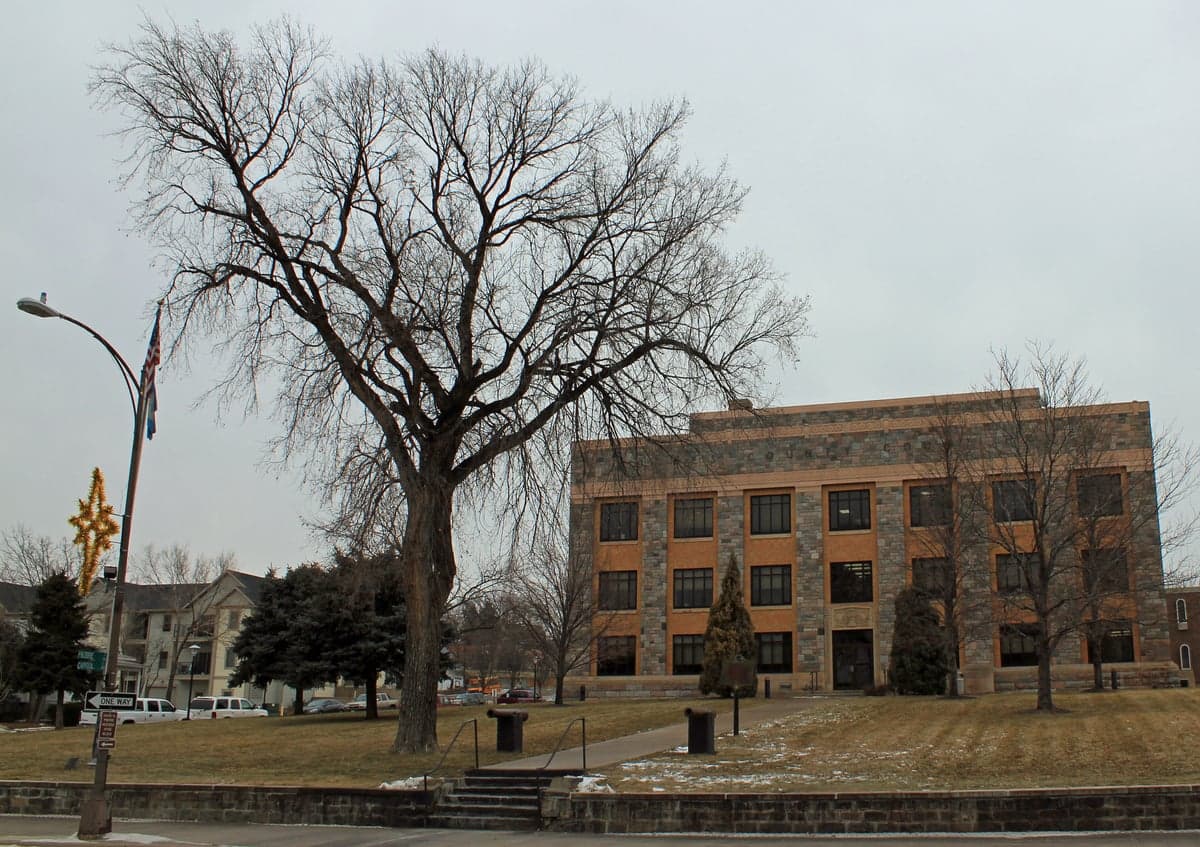
Photo: Wikipedia
Personal Sovereignty in Hughes County
Viable for self-reliance. Generally workable, though some barriers may limit total independence.
What does Personal Sovereignty tell us?
Personal Sovereignty measures your capacity for self-reliance and independence with minimal government friction. Higher scores mean fewer barriers between you and the way you want to live... but it assumes you have the space you need and good neighbors.
What does this tell us?
Personal Sovereignty measures your capacity for self-reliance and independence with minimal government friction. Higher scores mean fewer barriers between you and the way you want to live... but it assumes you have the space you need and good neighbors.
State Policy
Energy independence: Importer (35% of energy produced in-state)
Personal Liberty
Homesteading

Personal Liberty Analysis
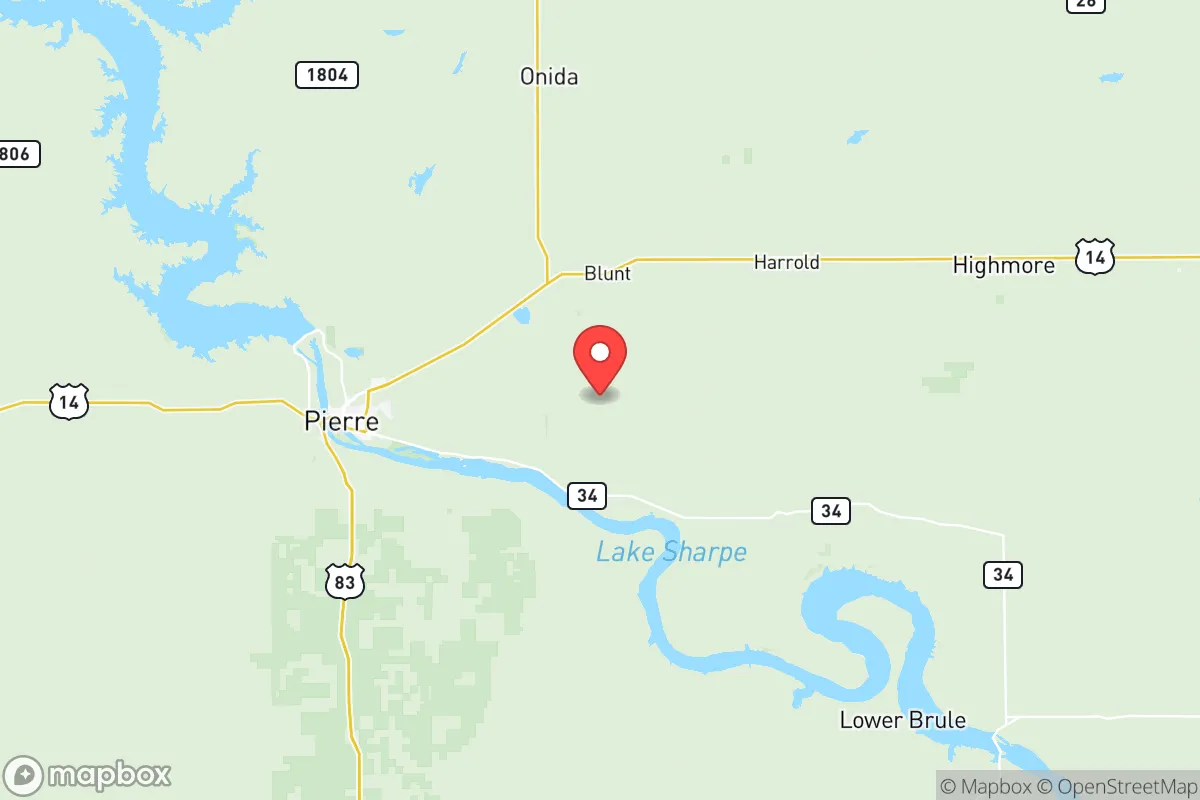
Hughes County, anchored by the state capital Pierre, offers a personal sovereignty environment that balances South Dakota’s famously light-touch state governance with the practical realities of a county seat that houses state agencies and a modest regulatory footprint. For individuals and families prioritizing autonomy, the area provides a notably low tax burden, strong self-defense protections, and genuine off-grid potential, though the degree of personal freedom varies between the city limits of Pierre and the more rural stretches of the county like Fort Pierre, Blunt, and Harrold. The county’s political culture leans conservative, with a practical, live-and-let-live ethos that generally respects individual choice in daily life, making it a compelling option for those seeking to minimize government overreach without moving to a completely unincorporated frontier.
Tax burden and regulatory posture in Hughes County
South Dakota’s absence of a state income tax is the cornerstone of personal financial sovereignty in Hughes County, and the county itself keeps property taxes among the lowest in the nation. The effective property tax rate in Hughes County hovers around 1.1% of assessed value, which is competitive even by South Dakota standards. There is no personal or corporate income tax, no inheritance tax, and no estate tax, meaning residents keep nearly all of what they earn. The regulatory posture is generally permissive: business licensing in Pierre is straightforward, with no onerous zoning overlays for most commercial activities, and the county’s planning department is known for a practical, non-intrusive approach. However, within the Pierre city limits, there are standard municipal codes governing building permits, noise, and land use, which are more restrictive than in unincorporated areas like the rural stretches near Blunt or Harrold. For those seeking maximum regulatory freedom, living outside Pierre’s city limits in the county’s unincorporated areas is the clear choice, where a simple building permit and basic septic approval are often the only hurdles for construction.
Self-defense and gun law specifics in Hughes County
South Dakota is a constitutional carry state, and Hughes County fully reflects that ethos. No permit is required to carry a concealed firearm for any law-abiding adult 18 or older, and the county sheriff’s office issues permits for those who want reciprocity with other states. The state preempts local firearm ordinances, meaning Pierre and Fort Pierre cannot enact their own gun bans or magazine restrictions. Open carry is legal and common in rural areas, and in Pierre, it is not unusual to see firearms in vehicles or holstered on individuals in everyday settings like grocery stores or gas stations. The county has no waiting periods for firearm purchases, and private sales between individuals require no background check. For self-defense, South Dakota law provides a strong Castle Doctrine with no duty to retreat in one’s home, vehicle, or place of business, and a Stand Your Ground law applies to any place where a person has a legal right to be. Hughes County’s gun culture is practical and non-confrontational; the sheriff’s office is known for a pro-Second Amendment stance, and there are no local restrictions on magazine capacity or firearm types. The only notable nuance is that discharging a firearm within Pierre city limits is restricted, so target practice or hunting requires moving to the county’s rural areas near Blunt or along the Missouri River breaks.
Self-reliance and homesteading viability in Hughes County
Hughes County offers genuine homesteading potential, particularly in its unincorporated areas where lot sizes and zoning are minimal. In the rural townships around Harrold and Canning, agricultural zoning allows for minimum lot sizes of 40 acres for new splits, though existing parcels can be smaller if grandfathered. Off-grid living is feasible: the county does not require connection to municipal water or sewer in unincorporated areas, and many residents rely on private wells and septic systems. Solar panels and wind turbines are permitted without special permitting beyond standard electrical inspections, and rainwater collection is legal. The county’s building code is based on the International Residential Code but is enforced with a light touch; owner-builders can act as their own general contractor with a simple permit. In Pierre and Fort Pierre, however, city zoning is more restrictive—Fort Pierre requires a minimum lot size of 7,000 square feet in residential zones, and both cities mandate connection to municipal water and sewer where available. For serious self-reliance, the rural areas near Blunt and Harrold are far more accommodating, with lower land prices (often under $2,000 per acre for raw land) and no homeowners’ association restrictions. The county’s extension office offers resources for small-scale farming and livestock, and the local agricultural community is welcoming to newcomers interested in sustainable living.
Personal liberties in Hughes County: parental rights, medical autonomy, speech, and property
South Dakota’s legal framework strongly supports parental rights, and Hughes County reflects that. Parents have broad authority over their children’s education, including the right to homeschool without state oversight beyond a simple notification, and the county’s school districts—Pierre, Fort Pierre, and rural Blunt—are generally accommodating to alternative education choices. Medical autonomy is more nuanced: South Dakota has some of the most restrictive abortion laws in the nation, but for other medical decisions, the state does not mandate COVID-19 vaccines or masks, and there are no state-level vaccine passports. The county’s healthcare system, centered on Avera St. Mary’s Hospital in Pierre, is conventional but respects patient choice within legal bounds. Free speech is robustly protected, with no local hate speech ordinances or content-based restrictions. Property rights are strong: eminent domain is rarely used, and the county’s planning department generally defers to landowners unless a clear public safety issue exists. Hughes County has no county-level mask mandates, business closure orders, or vaccine requirements, and the local government’s response to the COVID-19 pandemic was notably restrained, with the county commission declining to impose restrictions beyond state guidance. For those concerned about government overreach in daily life, the county’s culture of personal responsibility and minimal interference is a significant draw.
Overall, Hughes County ranks among the more sovereignty-friendly areas in the upper Midwest, offering a combination of low taxes, strong gun rights, and genuine off-grid potential that is rare even in South Dakota. The trade-off is that Pierre, as the state capital, has a slightly more regulated environment than truly rural counties like Jones or Lyman to the south, but the county’s unincorporated areas—especially around Harrold, Blunt, and Canning—provide a level of personal freedom that rivals any location in the state. For individuals and families who prioritize autonomy over urban amenities, Hughes County delivers a practical, no-nonsense environment where personal sovereignty is the default, not an exception.

* Values derived from national, state, county, city and local statistics and may differ in a specific area. Last updated: 2026-07-02T10:33:10.000Z
Narrative content on this page is AI-generated and may contain mistakes. Verify any details that matter before acting on them.
ReloMaps may earn a commission from affiliate links at no extra cost to you.

