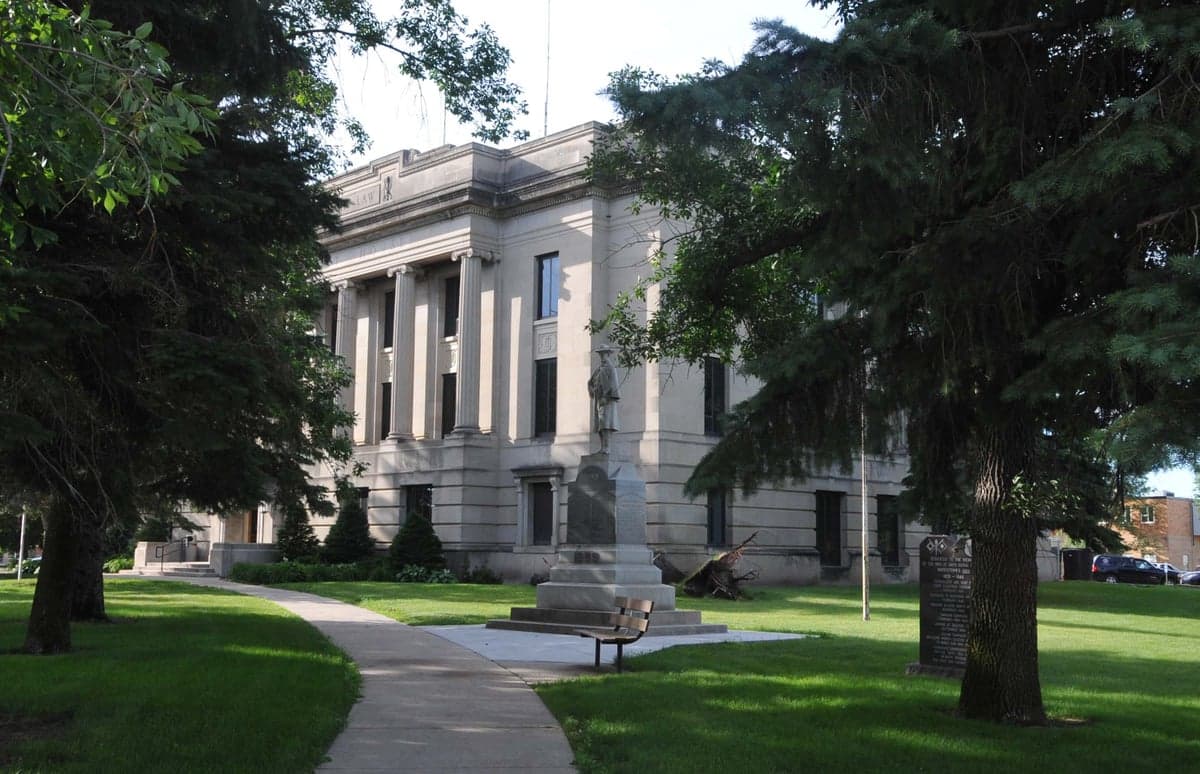
Photo: Wikipedia
Political ClimatePolitical Climate in Codington County
Showing state-level results — no local-only data available.
Local Political AnalysisPolitical Analysis of Codington County
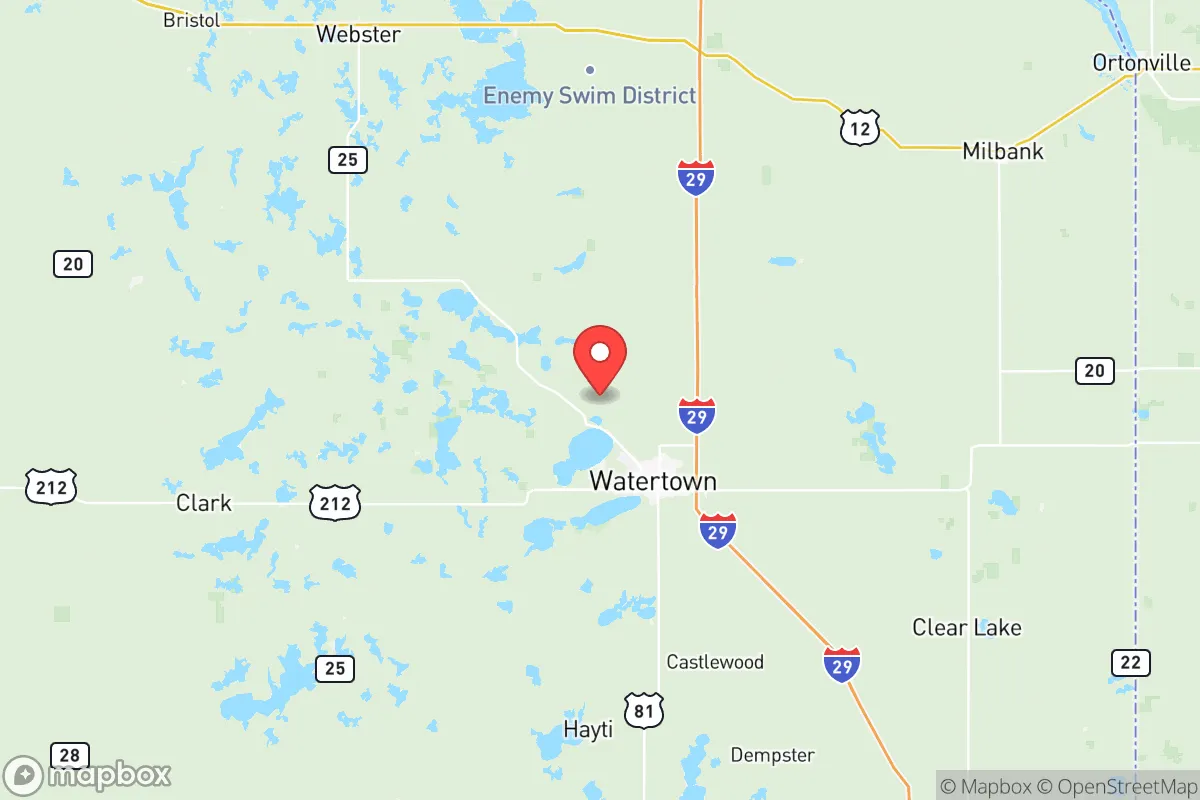
Codington County, anchored by Watertown, is a reliably Republican stronghold with a Cook Partisan Voting Index of R+15, meaning it votes about 15 points more Republican than the national average. This isn't a recent shift; the county has been a GOP bastion for decades, though the margin has widened in the last two presidential cycles. In 2024, Donald Trump carried the county by roughly 30 points, a jump from his 22-point win in 2020, reflecting a broader rural rightward trend across eastern South Dakota. The county's political center of gravity is Watertown, but even there, the city's precincts show a clear split: the more affluent, newer subdivisions on the west side lean heavily red, while the older, denser neighborhoods near the downtown core and the lake are more purple, occasionally breaking for a moderate Democrat in local races.
How it compares to South Dakota as a whole
South Dakota itself is a deep red state, but Codington County is notably more conservative than the state's average. While the state's Cook PVI isn't publicly calculated, statewide presidential results show a roughly R+20 lean, meaning Codington's R+15 actually makes it slightly less Republican than the state as a whole. That's because the state's rural western counties—like Butte, Meade, and Pennington—are even more conservative, often voting +40 or more. Codington's relative moderation comes from Watertown's mix of manufacturing workers, healthcare professionals, and a small but visible liberal-leaning population around Lake Kampeska. The county's swing precincts are in the city's central wards, where issues like school funding and local infrastructure can tip a race, but those same precincts still vote Republican in national elections by a 10-15 point margin. The surrounding small towns—like Florence, Henry, and Kranzburg—are uniformly deep red, often voting 80%+ Republican, which pulls the county's overall numbers rightward.
What this means for residents
For conservative residents, the political climate is comfortable and affirming. Local government, from the county commission to the school board, is dominated by Republicans, and policy debates tend to focus on tax cuts, agricultural support, and Second Amendment rights. The county's GOP lean means that conservative voters rarely feel their views are out of step with their neighbors. For liberal residents, the reality is more nuanced. While they are a clear minority, they are not isolated; Watertown has a small but active Democratic group that organizes around issues like public education funding and environmental protection of the Big Sioux River. The practical effect is that liberal residents often find their voices heard on local issues—like library funding or park improvements—but have little influence on state or national representation. The county's state legislators are all Republicans, and the congressional delegation is solidly conservative, so liberal residents typically engage through issue-specific advocacy rather than electoral wins.
Culturally, Codington County's politics manifest in distinct policy choices. The county has a strong "local control" ethos, with the commission often pushing back against state mandates on land use and taxation. There's a visible strain of libertarian-leaning conservatism here, especially among farmers and small business owners, who favor low taxes and minimal regulation but are skeptical of federal intervention. The county's gun culture is robust—concealed carry permits are common, and the local sheriff's office is vocal about Second Amendment rights. At the same time, Watertown's status as a regional healthcare and education hub means there's consistent support for public services like the Prairie Lakes Healthcare System and Lake Area Technical College, which enjoy broad bipartisan backing. The result is a political environment that is deeply red but not uniformly ideological, where practical local needs often temper partisan purity.

State Political ClimatePolitical Climate in South Dakota
State Political AnalysisPolitical Environment in the State
South Dakota has been a reliably Republican state for decades, with a partisan lean that has only deepened in recent years. In the 2024 presidential election, Donald Trump carried the state by a margin of roughly 30 points, a shift from the 26-point win in 2020 and the 18-point margin in 2016. The state’s political center of gravity is firmly conservative, driven by a rural, agricultural, and increasingly libertarian-leaning electorate. However, the picture is more nuanced than a simple red-state label, with a growing urban-rural divide and a unique strain of prairie populism that occasionally bucks national party lines.
Urban vs. rural divide
The political map of South Dakota is starkly divided between its few urban centers and the vast rural expanse. The state’s largest city, Sioux Falls, is the most politically moderate area, with Minnehaha County voting for Trump by only 12 points in 2024—a far cry from the statewide average. The city’s growth, driven by a booming healthcare and finance sector, has brought in a more diverse and slightly more Democratic-leaning population, though it remains solidly red in practice. Rapid City, the second-largest city, is more conservative, with Pennington County voting for Trump by 22 points. The real engine of the state’s Republican dominance is the rural countryside. Counties like Harding, Perkins, and Jones routinely deliver 80-90% of their votes to Republican candidates. The Pine Ridge Indian Reservation (Oglala Lakota County) is a notable exception, consistently voting over 80% Democratic, but its small population has little impact on statewide outcomes. The divide isn’t just about population density—it’s cultural, with urban areas more focused on economic growth and services, while rural voters prioritize agricultural policy, land rights, and limited government.
Policy environment
South Dakota’s policy environment is a textbook example of a low-tax, low-regulation state. There is no state income tax, a major draw for relocators, and the state sales tax is 4.5%, with local options pushing it to around 6.5% in some cities. Property taxes are moderate, with a median effective rate of about 1.1% of home value. The regulatory posture is business-friendly, with few zoning restrictions outside of Sioux Falls and Rapid City. Education policy is locally controlled, with school choice options limited but growing—the state passed a limited school voucher program in 2023. Healthcare is a mixed bag: the state expanded Medicaid in 2023 via a ballot initiative, a rare progressive win, but the system remains strained in rural areas with hospital closures. Election laws are among the most accessible in the region—same-day voter registration is allowed, and no-excuse absentee voting is permitted. The state has a part-time legislature, which keeps government small and responsive to local concerns.
Recent policy direction
Over the past five years, South Dakota has moved decisively toward a more libertarian-conservative posture on several fronts. On gun and self-defense law, the state passed constitutional carry in 2019, allowing permitless concealed carry, and in 2021 enacted a “Second Amendment Preservation Act” that prohibits state enforcement of federal gun laws deemed unconstitutional. Parental and education rights have been a flashpoint: in 2022, the legislature passed a “Parents’ Bill of Rights” requiring schools to notify parents about curriculum changes and medical services, and in 2023 banned the teaching of critical race theory in K-12 schools. On speech and privacy, the state has no broad surveillance laws, but local police use of license plate readers is common. Medical and bodily autonomy is sharply restricted: a near-total abortion ban was triggered in 2022 after the Dobbs decision, with exceptions only for rape, incest, or life of the mother. The state also banned gender-affirming care for minors in 2023. Property rights are strongly protected, with no state-level eminent domain abuse issues. Taxation remains a bright spot for conservatives—the legislature cut the sales tax on groceries from 4.5% to 4.2% in 2023, with further cuts proposed. Voting and ballot access saw a tightening in 2024 with a new voter ID law requiring a photo ID, though same-day registration remains intact.
Civil unrest & political movements
South Dakota is not a hotbed of civil unrest, but it has seen notable political movements. The Noem administration has been a lightning rod for controversy, particularly around the governor’s use of state aircraft and her 2020 decision to send the state’s National Guard to the Texas border. Protests have been small and localized—the largest in recent years were the 2020 Black Lives Matter rallies in Sioux Falls and Rapid City, which drew a few hundred participants each. The Pine Ridge Reservation has been a site of ongoing tension over law enforcement jurisdiction and missing Indigenous women, but these issues rarely spill into statewide politics. On the right, the South Dakota Freedom Caucus has pushed for more aggressive nullification of federal laws, including a 2023 resolution calling for a state-level constitutional convention. Immigration politics are muted—the state has a very small foreign-born population (about 4%), and there are no sanctuary cities. Election integrity controversies have been minimal, with no major fraud cases in recent cycles. The most visible flashpoint for a new resident might be the occasional debate over carbon pipeline projects, which have sparked fierce landowner protests in counties like Brown and Spink, pitting property rights against corporate interests.
Projection
Over the next 5-10 years, South Dakota’s political trajectory is likely to remain solidly Republican, but with growing internal tensions. The in-migration from blue states, particularly to Sioux Falls and the Black Hills region around Rapid City, will slowly moderate the state’s politics—these newcomers tend to be fiscally conservative but socially moderate, which could push the state toward a more pragmatic, less ideologically rigid conservatism. The rural population will continue to shrink, amplifying the political weight of the urban corridors. The state’s libertarian streak will likely deepen, with further tax cuts and deregulation, but the social conservative wing will continue to push for restrictions on abortion and transgender rights. The biggest wildcard is the carbon pipeline debate, which could reshape the state’s relationship with corporate agriculture and energy. If the pipeline is built, it will embolden property rights activists; if it fails, it could signal a shift toward more localized control. A new resident moving in now should expect a state that remains deeply conservative but increasingly divided between its growing, moderate cities and its shrinking, hardline rural base.
For a relocator, the bottom line is this: South Dakota offers a low-tax, low-regulation environment that appeals strongly to conservatives and libertarians. Liberal residents will find a state where their views are a distinct minority, but not hostile—the state’s culture of live-and-let-live means most people won’t bother you if you don’t bother them. The key practical takeaway is that your experience will vary dramatically depending on where you settle: Sioux Falls offers a more diverse, service-oriented economy with moderate politics, while rural counties offer wide-open spaces and a deeply conservative social fabric. If you value personal freedom, low taxes, and a hands-off government, South Dakota is a strong fit. If you prioritize progressive social policies or robust public services, you’ll find the state frustrating. Either way, the state’s politics are stable, predictable, and unlikely to surprise you.
* Values derived from national, state, county, city and local statistics and may differ in a specific area. Last updated: 2026-07-14T12:11:18.000Z
Narrative content on this page is AI-generated and may contain mistakes. Verify any details that matter before acting on them.
ReloMaps may earn a commission from affiliate links at no extra cost to you.

