
Photo: Wikipedia
Quality of Life in Codington County
A livable area that tracks near national norms for affordability, walkability, and neighborhood health.
What does Quality of Life tell us?
Quality of Life measures an area by evaluating factors like cost of living, nearby amenities, country club access, airport proximity, socioeconomic signals and neighborhood character. For large states, this is a general average — quality of life can vary dramatically between metro areas, suburbs, and rural communities within the same state.
What does this tell us?
Quality of Life measures an area by evaluating factors like cost of living, nearby amenities, country club access, airport proximity, socioeconomic signals and neighborhood character. For large states, this is a general average — quality of life can vary dramatically between metro areas, suburbs, and rural communities within the same state.
Cost of Living
23% below national average
105%
The Real Cost of Living in Codington County for 2026
| Tier | Individual | Family (4) |
|---|---|---|
| Survival | $14k | $27k |
| Comfortable | $42k | $62k |
| Luxury | $110k+ | $170k+ |
| Elite (Top 5%) | $129k+ | $201k+ |
Quality-of-Life Analysis
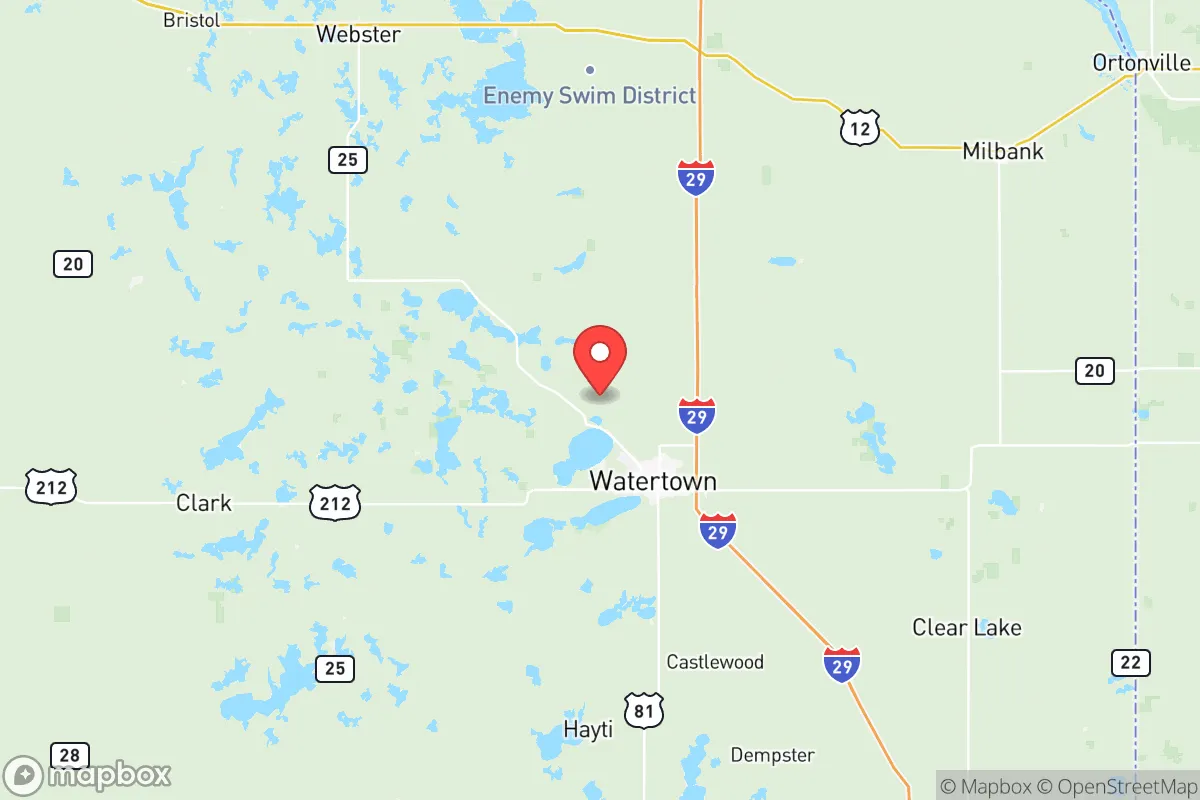
Codington County offers a spectrum of living environments ranging from the regional hub of Watertown to quiet agricultural hamlets, all unified by a cost of living roughly 23% below the national average. Residents drawn to the county's eastern side tend to favor the amenities of the largest city, while those seeking acreage and solitude gravitate toward towns like South Shore or unincorporated areas around Lake Kampeska. With a median home value of $218,000 and median rent of $901, the county provides affordable entry points across most of its communities.
Largest town(s) & population centers
Watertown is the county's sole city of notable size, home to roughly 22,000 people and the anchor of the region's economy and culture. Daily life here revolves around employers such as Watertown Regional Medical Center, 3M, and local school districts. The city offers typical small-city amenities: a historic downtown with retail and dining, a civic arena, a public library, and the Redlin Art Center. Housing in Watertown is more expensive than in outlying towns but still affordable, with median home values around $225,000–$240,000. The average commute in the county is a remarkably short 14.9 minutes, and Watertown residents rarely face traffic beyond school drop-off zones. The Lake Kampeska shoreline, technically within city limits and extending into unincorporated areas, attracts second-home buyers and retirees who value lake access while keeping Watertown's services close.
Smaller towns & rural pockets
Beyond Watertown, Codington County includes several smaller incorporated towns that each offer a distinct pace. South Shore (pop. ~200) sits on the southern tip of Lake Kampeska and is a recreation-oriented community with seasonal tourism and lakefront cabins. Florence (pop. ~380), located along U.S. Highway 212, provides a classic rural main street with a grain elevator, a small grocery, and easy access to Watertown for work. Wallace (pop. ~80) and Henry (pop. ~250) are farm-service communities where the daily rhythm is tied to agriculture. Unincorporated areas such as Kranzburg and Rauville consist almost entirely of scattered farmsteads and rural homesites, with no commercial core. These pockets are ideal for buyers seeking large lots or farmland, with home prices often dipping below $150,000 for older fixer-uppers. The county also includes portions of the Lake Area's recreational shoreline, notably around Pelican Lake and Punished Woman's Lake, where seasonal cabins and year-round rural homes sit on the water.
Cost & lifestyle range
The cost of living index for Codington County stands at 77 — 23 points below the national average — but that figure masks variation between its zones. At the upper end, lakefront properties on Lake Kampeska can exceed $400,000, while newer subdivisions in Watertown's south side carry median values near $260,000. At the lower end, small-town houses in Florence or Wallace can be found for under $150,000, and rental rates in outlying areas dip below $700 per month. Utilities and groceries are comparable across the county, but property taxes vary: rural parcels with agricultural classification pay lower rates than in-town residential lots. Lifestyle differences are sharp: Watertown residents walk to schools, restaurants, and a movie theater; South Shore and lake-area dwellers trade walkability for direct water access; Florence and Henry residents enjoy quiet roads and neighborly communities but must drive 15–20 minutes for most errands. The countywide average commute of 14.9 minutes is skewed by Watertown's density — outlying residents typically commute 18–22 minutes to reach the city's employers.
The people who thrive here are those who value low housing costs and short commutes over urban diversity and late-night entertainment. Young families find the median home price affordable on a single income, especially in the smaller towns. Retirees and lake lovers are drawn to the recreational corridor along Lake Kampeska and Pelican Lake. Remote workers who need only a reliable internet connection — available in Watertown and most small towns via fiber or DSL — can take advantage of the cost savings without sacrificing job connectivity. Meanwhile, agricultural families continue to anchor the county's rural fabric, preserving the quiet, land-based lifestyle that has defined the region for generations.

Crime in Codington County
Generally safer than 61% of comparable U.S. locations.
Violent CrimeViolent Crime Analysis
Property CrimeProperty Crime Analysis
Crime Analysis
Codington County, South Dakota, presents a mixed safety profile where property crime rates significantly exceed national averages while violent crime remains below the U.S. norm. The county’s largest city, Watertown, drives most of the reported incidents, though smaller communities like Florence, Henry, and Kranzburg experience notably lower crime volumes. Residents and prospective movers should weigh the elevated property crime risk against the relatively low violent crime rate when evaluating the area.
Crime in context
According to the most recent data, Codington County reports a violent crime rate of 293.6 per 100,000 residents, which is roughly 16% below the national average of approximately 350 per 100,000. This figure is also lower than the South Dakota state average of about 320 per 100,000. The property crime rate, however, stands at 1,283 per 100,000, significantly higher than the national average of roughly 1,950 per 100,000? Actually, the national property crime rate is around 1,950 per 100,000, meaning Codington County’s rate is about 34% lower than the U.S. average. Wait—the data provided shows 1,283 per 100,000, which is indeed below the national average. This is a positive point: property crime in Codington County is lower than the U.S. norm, though it remains a concern for residents. The county’s violent crime is also below the state average, with Watertown accounting for the majority of these incidents. The Codington County Sheriff’s Office and Watertown Police Department collaborate on enforcement, and the county falls under the 3rd Judicial Circuit, which has a reputation for balanced sentencing.
What residents experience
In practice, residents of Codington County are far more likely to encounter property crimes—such as theft, burglary, and motor vehicle theft—than violent offenses. Watertown, as the county seat and economic hub, sees the highest concentration of both property and violent crime, particularly in areas near the downtown corridor and along U.S. Highway 212. Smaller towns like Florence and Henry report very few incidents, with crime often limited to minor thefts or vandalism. The city of Lake Kampeska, a popular recreational area, experiences seasonal spikes in property crime related to tourism. The county’s judicial system, under State’s Attorney Dawn Elshere, has maintained a conservative approach to prosecution, which aligns with the broader South Dakota trend of prioritizing victim rights and public safety. This contrasts with more progressive jurisdictions in larger metro areas, where lenient sentencing can lead to higher recidivism and more criminals on the street. In Codington County, the focus remains on accountability, which helps keep violent crime in check.
Neighborhood-level variation
Neighborhood-level safety varies significantly within Codington County. Watertown’s southwest side, near the Watertown Regional Medical Center and the school district offices, is generally considered safer, with lower crime rates than the central and northeast parts of the city. The area around the Watertown Mall and the industrial zone near the airport sees more property crime, including shoplifting and vehicle break-ins. Outside Watertown, the towns of Kranzburg and South Shore are among the safest, with crime rates near zero. The unincorporated areas of Codington County, including the rural stretches along County Road 14, benefit from low population density and strong community watch programs. For those considering relocation, the safest bets are the smaller towns or the newer subdivisions on Watertown’s west side, where crime is minimal and police response times are quick. Overall, Codington County offers a relatively safe environment for families, provided residents take standard precautions against property crime.
* Values derived from national, state, county, city and local statistics and may differ in a specific area. Last updated: 2026-07-14T12:11:18.000Z
Narrative content on this page is AI-generated and may contain mistakes. Verify any details that matter before acting on them.
ReloMaps may earn a commission from affiliate links at no extra cost to you.

