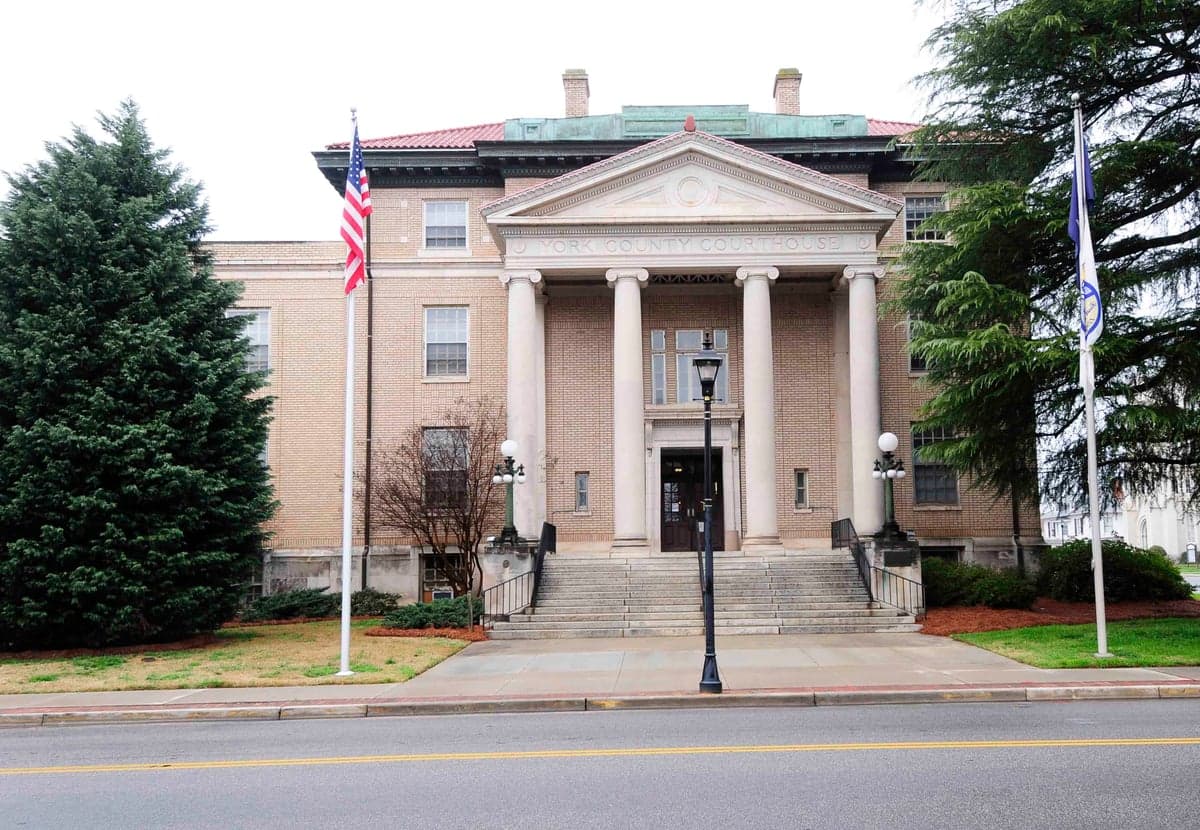
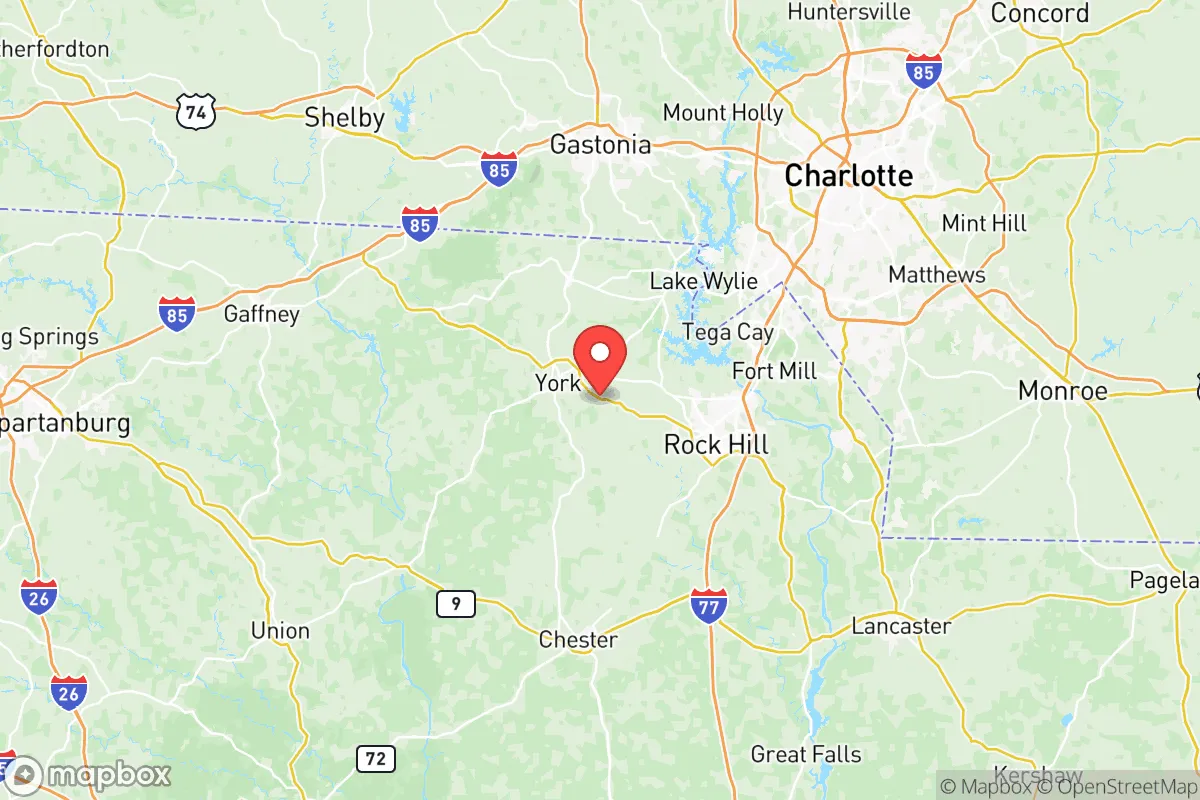
Photo: Wikipedia
Quality of Life in York County
A livable area that tracks near national norms for affordability, walkability, and neighborhood health.
What does Quality of Life tell us?
Quality of Life measures an area by evaluating factors like cost of living, nearby amenities, country club access, airport proximity, socioeconomic signals and neighborhood character. For large states, this is a general average — quality of life can vary dramatically between metro areas, suburbs, and rural communities within the same state.
What does this tell us?
Quality of Life measures an area by evaluating factors like cost of living, nearby amenities, country club access, airport proximity, socioeconomic signals and neighborhood character. For large states, this is a general average — quality of life can vary dramatically between metro areas, suburbs, and rural communities within the same state.
Cost of Living
13% above national average
90%
The Real Cost of Living in York County for 2026
| Tier | Individual | Family (4) |
|---|---|---|
| Survival | $21k | $39k |
| Comfortable | $63k | $92k |
| Luxury | $144k+ | $224k+ |
| Elite (Top 5%) | $170k+ | $263k+ |
Quality-of-Life Analysis
York County, South Carolina, offers a broad quality-of-life spectrum that ranges from the dense, amenity-rich suburbs of Charlotte to quiet, unincorporated crossroads and working farms. The county’s character shifts noticeably as you move south and east from the I-77 corridor, drawing different types of residents: commuters who prioritize proximity to Charlotte, families seeking established suburban school districts, and those who want rural acreage without losing access to a major metro area. With a cost-of-living index of 113 (100 = U.S. average), the county sits above the national norm but below many Charlotte-area suburbs in North Carolina, making it a practical middle ground for a wide range of household budgets.
Largest town(s) & population centers
Rock Hill is the county’s largest city and its primary employment and retail hub, with a population exceeding 75,000. Daily life here centers on the I-77 corridor, which provides a roughly 25-minute commute to Uptown Charlotte. Rock Hill offers a full set of urban amenities—the Rock Hill Galleria, multiple hospital systems, and a growing downtown dining scene around Main Street—while maintaining its own identity through events like the Come-See-Me Festival and the presence of Winthrop University. Fort Mill, directly north of Rock Hill along the Catawba River, has grown rapidly as a bedroom community for Charlotte professionals. Its historic downtown is compact but active, and the town is known for its highly rated Fort Mill School District. Tega Cay, a lakefront community on Lake Wylie, is the most affluent of the three major towns, with a median home value well above the county average of $322,700 and a strong emphasis on water recreation and gated subdivisions. These three towns together form the county’s suburban core, where most of the county’s retail, medical, and employment options are concentrated.
Smaller towns & rural pockets
South and east of the suburban core, the county opens into smaller towns and unincorporated communities that offer a markedly slower pace. York, the county seat, is a historic mill town with a walkable downtown square, a county courthouse, and a population around 8,000. It feels distinctly separate from the Charlotte orbit, with more local businesses and fewer chain retailers. Clover, near the North Carolina line west of Lake Wylie, is a small town of roughly 6,500 that serves as a service center for surrounding farmland and lake-access subdivisions. Lake Wylie (the unincorporated area around the lake, distinct from the town of Tega Cay) contains a mix of older lake cottages and newer developments, with a more relaxed, seasonal atmosphere. Further south, Hickory Grove and Sharon are unincorporated crossroads with little more than a post office and a volunteer fire department, representing the county’s most rural tier. These areas are characterized by large lots, mobile homes, and older farmhouses, with limited retail and no public water or sewer in many sections.
Cost & lifestyle range
The cost of living and available amenities vary dramatically across York County. At the high end, Tega Cay and the Baxter Village area of Fort Mill feature median home prices often exceeding $500,000, with HOA-managed neighborhoods, golf courses, and direct lake access. These areas are almost entirely car-dependent but offer the shortest commutes to Charlotte and the highest-rated schools. At the middle of the spectrum, Rock Hill and York offer more attainable housing near the county median of $322,700, with a mix of older homes in established neighborhoods and newer subdivisions on the outskirts. Median rent across the county is $1,304, which is manageable for two-income households but tight for single earners. At the low end, unincorporated areas around Hickory Grove and Sharon have home values well below $200,000, but residents face longer commutes—the countywide average commute is 27.4 minutes, but rural residents often drive 35–45 minutes to reach Rock Hill or Charlotte—and limited access to grocery stores, healthcare, and high-speed internet. The trade-off is land: a half-acre lot in Hickory Grove costs a fraction of a quarter-acre lot in Fort Mill.
York County works best for households that want a clear trade-off between proximity to Charlotte and space or affordability. Commuters who value short drive times and top-tier schools gravitate to Fort Mill and Tega Cay. Families and retirees who want a slower pace but still need access to shopping and medical care find a good fit in Rock Hill or York. Buyers seeking acreage and lower property costs—and who can tolerate a longer drive—find opportunity in the county’s rural southern and western pockets. The county’s strength is that it offers all of these options within a single school district and tax base, allowing residents to move along the spectrum as their needs change without leaving the area entirely.

Crime in York County
Crime rates similar to the national median for U.S. locations.
Violent CrimeViolent Crime Analysis
Property CrimeProperty Crime Analysis
Crime Analysis
York County, South Carolina, presents a mixed safety picture shaped by its rapid growth as a Charlotte, NC, exurb. With a violent crime rate of 373.9 per 100,000 residents and a property crime rate of 1,645.9 per 100,000, the county sits above national averages but below the most dangerous urban cores in the Carolinas. However, these countywide figures mask significant variation between communities like fast-growing Fort Mill, historic Rock Hill, and more rural towns such as Clover and York, where policing resources and local governance differ sharply.
Crime in context
York County’s violent crime rate is roughly 7% higher than the national average of 350 per 100,000 and about 10% above the South Carolina state average, which is itself one of the highest in the nation. Property crime in the county runs nearly 20% above the national rate of 1,380 per 100,000. The most common offenses are larceny-theft and burglary, concentrated in commercial corridors and near major highways like I-77. Aggravated assault accounts for the majority of violent incidents, while homicide and robbery rates remain lower than in nearby Mecklenburg County, NC. The 16th Judicial Circuit, which prosecutes York County cases, has seen increasing caseloads tied to population growth, and local law enforcement agencies—including the York County Sheriff’s Office and municipal police in Rock Hill and Fort Mill—have struggled to keep staffing levels commensurate with demand.
What residents experience
Daily life in York County varies dramatically by jurisdiction. In Rock Hill, the county’s largest city, residents report higher rates of both violent and property crime, particularly in areas near Winthrop University and along the Cherry Road corridor. Fort Mill, by contrast, benefits from a wealthier tax base and a proactive police department, resulting in lower crime rates that often approach national lows for a suburb of its size. Tega Cay, a lakefront community, consistently posts the lowest crime numbers in the county, with violent incidents rare and property crime mostly limited to unlocked vehicle entries. Clover and York, smaller towns with older housing stock and fewer retail destinations, see moderate property crime but relatively little violence. Residents in unincorporated areas of the county, especially those near the Gaston County line, sometimes face longer emergency response times and less visible patrol presence.
Neighborhood-level variation and judicial concerns
Neighborhood-level safety in York County is heavily influenced by proximity to high-traffic retail zones and apartment complexes. The Carowinds Boulevard area in Fort Mill, for example, sees elevated property crime due to tourist traffic and transient populations, while established subdivisions in Baxter and Lake Wylie report near-zero violent crime. A growing concern among residents is the ideological direction of the 16th Circuit Solicitor’s Office. Critics argue that progressive-leaning policies, including diversion programs and reduced sentencing for repeat property offenders, have contributed to a revolving-door justice system that prioritizes offender rehabilitation over public safety. This approach, while well-intentioned, has led to frustration in communities like Rock Hill, where residents feel that lenient plea deals and early releases embolden criminals and undermine the deterrent effect of prosecution. For families considering a move to York County, researching specific neighborhoods and attending local city council meetings can provide a clearer picture of how these dynamics play out block by block.
* Values derived from national, state, county, city and local statistics and may differ in a specific area. Last updated: 2026-07-11T22:06:03.000Z
Narrative content on this page is AI-generated and may contain mistakes. Verify any details that matter before acting on them.
ReloMaps may earn a commission from affiliate links at no extra cost to you.

