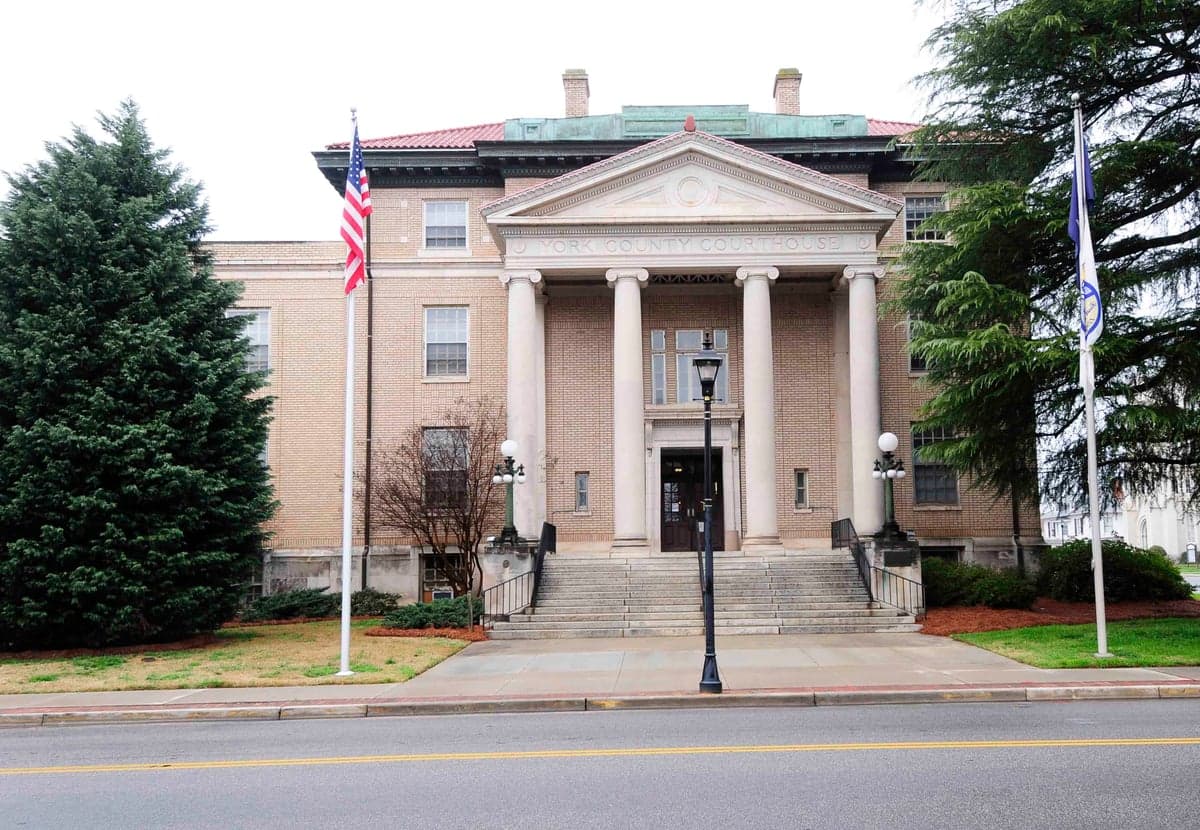
Photo: Wikipedia
Personal Sovereignty in York County
Viable for self-reliance. Generally workable, though some barriers may limit total independence.
What does Personal Sovereignty tell us?
Personal Sovereignty measures your capacity for self-reliance and independence with minimal government friction. Higher scores mean fewer barriers between you and the way you want to live... but it assumes you have the space you need and good neighbors.
What does this tell us?
Personal Sovereignty measures your capacity for self-reliance and independence with minimal government friction. Higher scores mean fewer barriers between you and the way you want to live... but it assumes you have the space you need and good neighbors.
State Policy
Energy independence: Importer (25% of energy produced in-state)
Personal Liberty
Homesteading

Personal Liberty Analysis
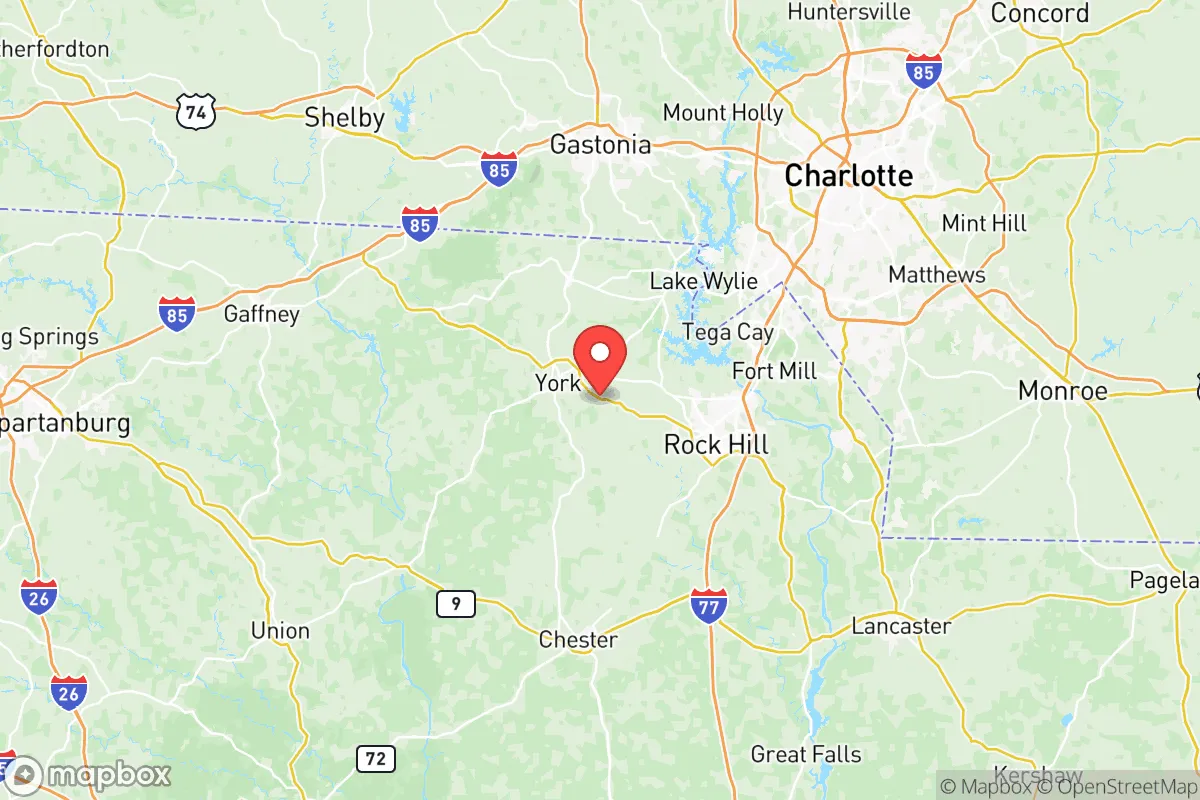
York County, South Carolina offers a notably high degree of personal sovereignty relative to many parts of the Southeast, driven by South Carolina's status as a Dillon's Rule state with a generally light regulatory touch and strong protections for gun rights and parental authority. While the county's northern and eastern edges—towns like Lake Wylie, Fort Mill, and Tega CayYork, Clover, and Hickory Grove retain a more rural, hands-off character where individual autonomy is the default. For a relocation audience prioritizing self-reliance, the key differentiator is not state law—which is uniformly favorable—but the specific municipal and county zoning codes that vary significantly across the county's 696 square miles.
Tax burden and regulatory posture: How South Carolina's light-touch approach shapes York County
South Carolina's tax environment is among the most favorable in the nation for personal sovereignty, with no state income tax on Social Security benefits, a flat 6.4% state income tax rate (phasing down to 6.0% by 2026), and a median property tax rate of just 0.57% of assessed value—well below the national average. York County's millage rate adds roughly 0.3% to that, keeping the combined effective rate around 0.9% for owner-occupied homes, which is significantly lower than neighboring Mecklenburg County, NC (where rates exceed 1.2%). The county operates under a council-administrator form of government with minimal business licensing requirements—no county-level business license is required for home-based enterprises, though the City of Rock Hill and Town of Fort Mill do impose their own. Zoning is the primary regulatory lever: unincorporated areas of York County (roughly 60% of the landmass) have no county-wide zoning, allowing property owners in places like Hickory Grove and Sharon to operate small farms, workshops, or rental units without discretionary permits, while Fort Mill's Planned Development districts require detailed site plans and HOA approval for any exterior modification.
Self-defense and gun law specifics: Stand Your Ground, permitless carry, and local culture
South Carolina is a strong Second Amendment state with permitless (constitutional) carry for anyone 18 or older who can legally possess a firearm, effective since 2021. The state also has a "Stand Your Ground" statute (Section 16-11-440) with no duty to retreat in any place where the defender has a legal right to be, and a Castle Doctrine that extends to occupied vehicles and workplaces. York County's sheriff's office, led by Sheriff Kevin Tolson (elected, Republican), is known for issuing concealed weapon permits (CWPs) efficiently—typically within 30 days—and for maintaining a pro-issuance posture on the optional CWP, which still offers reciprocity with 36 other states. Local gun culture is robust: the York County Shooting Sports Complex in York is a 100-acre public range with rifle, pistol, and shotgun bays, and the Catawba River Valley hosts multiple private gun clubs. In practice, open carry is common in rural areas like Clover and Smyrna, while Fort Mill and Tega Cay see more concealed carry due to suburban density and HOA rules that sometimes restrict firearm storage in common areas—though state law preempts local ordinances from banning carry entirely.
Self-reliance and homesteading viability: Lot sizes, zoning, and off-grid feasibility across York County
Homesteading viability varies dramatically by location within York County. In unincorporated areas, minimum lot sizes are 1 acre for septic-served parcels (the default outside municipal water/sewer districts), and many tracts in the western part of the county—around Hickory Grove, Sharon, and Smyrna—are available in 5- to 20-acre parcels suitable for small-scale farming, livestock, and timber management. The county's Land Development Code allows accessory dwelling units (ADUs), barns, and workshops by right on parcels over 2 acres, with no special use permit required. Off-grid feasibility is moderate: South Carolina has no state-level ban on rainwater collection (it's actually encouraged via a tax credit for cisterns), and solar panel installation is protected by state law (Section 27-53-20) against HOA prohibitions, though HOAs in Fort Mill and Lake Wylie can restrict panel placement on front-facing roof slopes. Composting toilets and graywater systems are permitted under the state's alternative wastewater regulations, but require a permit from DHEC (Department of Health and Environmental Control) and annual inspection—a bureaucratic hurdle that pushes most homesteaders toward conventional septic. The county's agricultural district program (Section 12-43-220) offers a 4% assessment ratio for land in active agricultural use, which can cut property taxes by 60-70% for parcels over 10 acres used for farming or forestry.
Personal liberties: Parental rights, medical autonomy, speech, and property protections
South Carolina has some of the strongest parental rights protections in the country, including a Parents' Bill of Rights (enacted 2023) that requires schools to obtain parental consent before administering any health-related survey or instruction, and allows parents to opt their children out of any curriculum they find objectionable. York County's school districts—Rock Hill, Fort Mill, Clover, and York—all maintain conservative curriculum policies, with Fort Mill Schools notably rejecting state-level "critical race theory" mandates and maintaining a parental notification policy for any mental health counseling. Medical autonomy is more limited: South Carolina has a strict abortion law (fetal heartbeat ban with no exceptions for rape or incest, only life of the mother), which aligns with the conservative audience's likely preferences, but also has no state-level protection for alternative medicine practitioners—naturopaths and direct-primary-care physicians operate in a gray area without licensure. Speech and assembly rights are robust: the county has no noise ordinances that restrict amplified speech on private property, and the City of Rock Hill's parade permit process is a simple 48-hour notification for groups under 50 people. Property rights are strongly protected by the state's "private property rights protection act" (Section 28-2-10), which requires just compensation for any regulatory taking that reduces property value by more than 20%, and York County has not used eminent domain for economic development since the 1990s.
Overall, York County ranks in the top 20% of South Carolina counties for personal sovereignty, with the key trade-off being between the high-autonomy rural west (Hickory Grove, Sharon, Smyrna) and the more regulated but amenity-rich suburban corridor (Fort Mill, Tega Cay, Lake Wylie). Compared to neighboring Mecklenburg County, NC, York offers lower taxes, stronger gun protections, and fewer zoning restrictions on homesteading—but with less access to urban job centers and cultural amenities. For a relocation audience that values self-reliance and minimal government interference, the western half of York County provides a rare combination of low regulatory burden, strong property rights, and a culture that respects individual choice, all within a 45-minute drive of Charlotte's employment base.

* Values derived from national, state, county, city and local statistics and may differ in a specific area. Last updated: 2026-07-11T22:06:03.000Z
Narrative content on this page is AI-generated and may contain mistakes. Verify any details that matter before acting on them.
ReloMaps may earn a commission from affiliate links at no extra cost to you.

