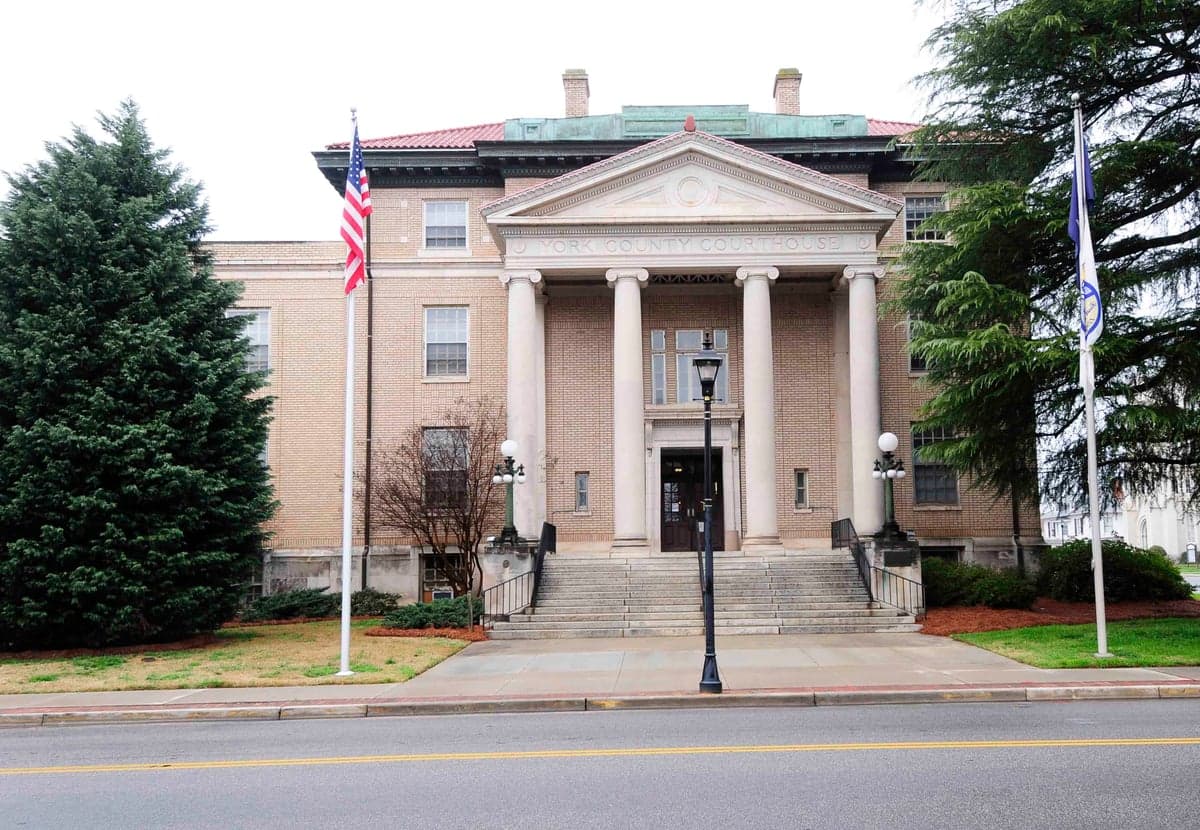
Photo: Wikipedia
Demographics of York County
Affluence Level in York County
A middle-class area roughly in line with national averages across income, home values, education, and employment.
People of York County
The people of York County, South Carolina today number 288,559, forming a rapidly growing suburban-exurban corridor anchored by Rock Hill, Fort Mill, and Tega Cay. The county is predominantly white (67.1%) with a significant Black minority (18.5%), a growing Hispanic population (7.0%), and small but established East/Southeast Asian (1.2%) and Indian-subcontinent (1.6%) communities. Its identity is shaped by a blend of historic textile-mill roots, Charlotte-anchored commuter culture, and a conservative-leaning civic character that attracts families seeking lower taxes and good schools.
Settlement & growth (pre-1960)
The Catawba Nation, a Siouan-speaking people, occupied the land along the Catawba River for centuries before European contact, with their primary settlement near present-day Fort Mill. By the 1750s, Scots-Irish and English settlers began moving south from Pennsylvania and Virginia along the Great Wagon Road, taking up land grants in the rolling Piedmont. These early arrivals founded York (the county seat, established 1785) and Rock Hill (incorporated 1852), naming the county after York, Pennsylvania — a nod to their origins. The region remained a sparsely populated agricultural area through the antebellum period, with cotton as the cash crop and enslaved African Americans making up roughly one-third of the population by 1860.
After the Civil War, York County's economy shifted dramatically toward textile manufacturing. From the 1880s through the 1920s, cotton mills sprang up along the Catawba River and its tributaries, drawing rural white families off farms and into mill villages in Clover, Fort Mill, and Rock Hill. This period cemented the county's working-class white identity. African Americans, meanwhile, moved from rural areas into segregated neighborhoods in Rock Hill and York, forming the foundation of the county's Black communities. The Great Migration (1910–1970) saw many Black residents leave for Northern industrial cities, but a substantial population remained, anchored by historically Black colleges like Clinton College in Rock Hill and Friendship College (now closed).
The mid-20th century brought the decline of textiles and the rise of Charlotte as a regional banking and distribution hub. By the 1950s, the construction of Interstate 77 began linking York County directly to Charlotte, setting the stage for the suburban boom that would follow. The county's population in 1960 was roughly 85,000 — overwhelmingly native-born, white, and rural or small-town in character.
Modern era (post-1965)
The 1965 Hart-Cellar Act had a modest direct effect on York County compared to coastal metros, but its indirect effects — through Charlotte's growth — reshaped the county. As Charlotte attracted banking headquarters and a professional class, York County's southern towns, particularly Fort Mill and Tega Cay, became prime bedroom communities. Domestic migration from the Rust Belt (New York, Ohio, Michigan) and the Northeast accelerated after 1990, bringing a wave of white and Black professionals seeking lower taxes, newer housing, and better schools. The county's population more than doubled between 1990 and 2020.
Immigration, while small in share (3.7% foreign-born), has grown noticeably since 2000. Hispanic residents, now 7.0% of the population, have concentrated in Rock Hill and York, working in construction, landscaping, and food processing. East/Southeast Asian communities — primarily Vietnamese and Korean families — number around 1.2% and are most visible in Fort Mill, drawn by the school system and proximity to Charlotte's professional jobs. The Indian-subcontinent population (1.6%) has grown rapidly since 2010, with families settling in Tega Cay and Fort Mill, often employed in Charlotte's tech, finance, and healthcare sectors. The Black population (18.5%) has become more suburban and middle-class, with significant concentrations in Rock Hill and southern Fort Mill, while the historic Black communities in York and Clover have seen relative decline as younger residents move toward the Charlotte orbit.
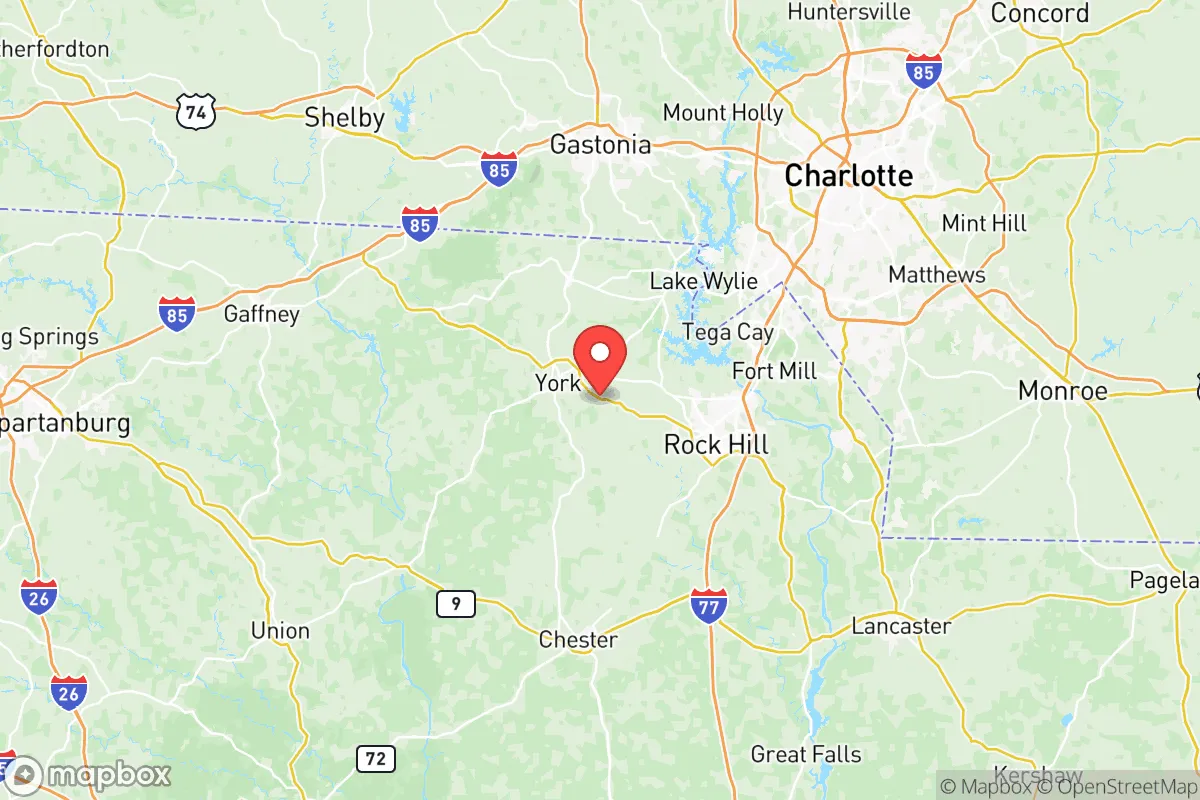
Suburbanization has been the dominant force. Fort Mill grew from a town of 7,000 in 2000 to over 30,000 by 2025, with master-planned communities and new schools. Tega Cay, a lakefront suburb on Lake Wylie, has attracted upper-middle-class families. Rock Hill, the county's largest city, has diversified economically with the Knowledge Park redevelopment and the arrival of a medical school, but retains a more working-class and historically Black character than its southern neighbors. The county's college-educated share (38.1%) reflects the influx of professionals, though it remains below the Charlotte metro average.
The future
York County is becoming more diverse, but the pace is gradual. The white share (67.1%) is declining slowly as Hispanic, Indian-subcontinent, and East/Southeast Asian populations grow, driven by both immigration and higher birth rates among younger families. The Black share is stable to slightly declining as a proportion, though absolute numbers continue to rise. The foreign-born share, while still low at 3.7%, is expected to approach 6–7% by 2040, with the largest gains among Indian-subcontinent and Hispanic residents.
Geographically, growth is concentrating in the southern tier — Fort Mill, Tega Cay, and the Lake Wylie area — where new subdivisions and commercial development are most intense. Rock Hill is experiencing infill and redevelopment but slower population growth. York and Clover remain more rural and less diverse, though they are beginning to see spillover development. The county's cultural identity is evolving from its textile-mill past toward a more professional, commuter-oriented character, but the conservative political lean and family-focused lifestyle remain strong draws for new arrivals.
For someone moving in now, York County offers a rapidly diversifying but still predominantly white, suburban environment with strong schools, low taxes, and direct access to Charlotte's economy. The most dynamic growth is in the southern towns closest to the state line, while the historic mill towns retain a quieter, more traditional character. The county is becoming more diverse and more educated, but the change is incremental rather than transformative — a steady evolution rather than a sudden shift.

* Values derived from national, state, county, city and local statistics and may differ in a specific area. Last updated: 2026-07-11T22:06:03.000Z
Narrative content on this page is AI-generated and may contain mistakes. Verify any details that matter before acting on them.
ReloMaps may earn a commission from affiliate links at no extra cost to you.

