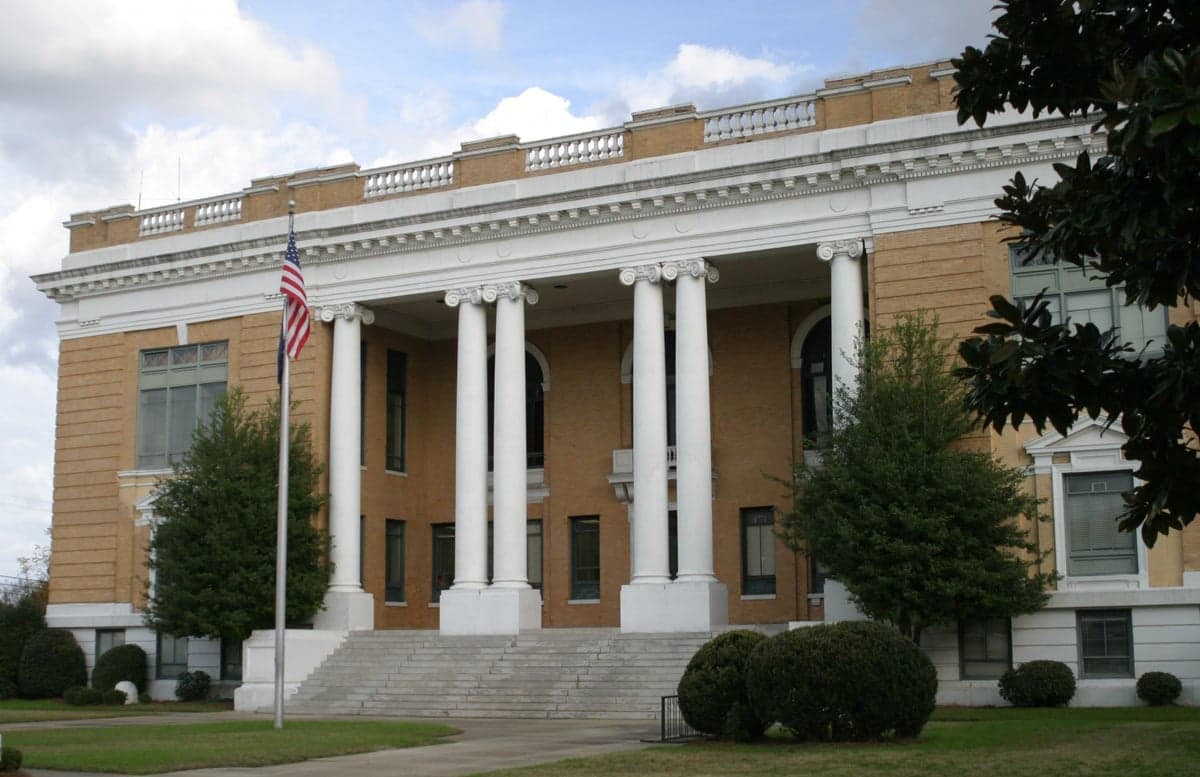
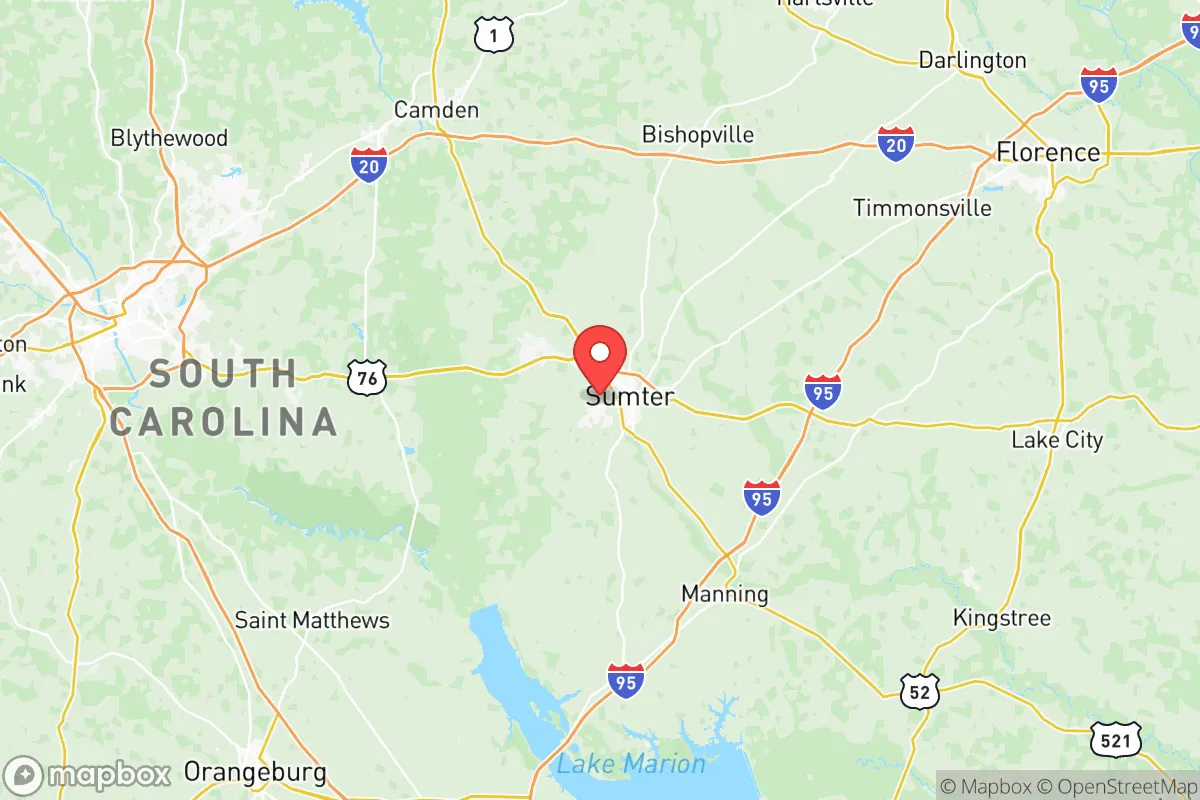
Photo: Wikipedia
Quality of Life in Sumter County
A livable area that tracks near national norms for affordability, walkability, and neighborhood health.
What does Quality of Life tell us?
Quality of Life measures an area by evaluating factors like cost of living, nearby amenities, country club access, airport proximity, socioeconomic signals and neighborhood character. For large states, this is a general average — quality of life can vary dramatically between metro areas, suburbs, and rural communities within the same state.
What does this tell us?
Quality of Life measures an area by evaluating factors like cost of living, nearby amenities, country club access, airport proximity, socioeconomic signals and neighborhood character. For large states, this is a general average — quality of life can vary dramatically between metro areas, suburbs, and rural communities within the same state.
Cost of Living
25% below national average
123%
The Real Cost of Living in Sumter County for 2026
| Tier | Individual | Family (4) |
|---|---|---|
| Survival | $16k | $30k |
| Comfortable | $31k | $46k |
| Luxury | $97k+ | $150k+ |
| Elite (Top 5%) | $114k+ | $176k+ |
Quality-of-Life Analysis
Sumter County, South Carolina, offers a broad quality-of-life spectrum that ranges from the historic, amenity-rich city of Sumter to quiet, unincorporated crossroads and rural farmland, drawing everyone from military families and retirees to commuters and agricultural workers. The county’s overall cost of living index sits at 75 (25% below the U.S. average), with a median home value of $159,500 and median rent of $1,006, making it one of the more affordable areas in the state. The average commute of 22.9 minutes is shorter than the national average, a practical advantage for residents working locally or commuting to Shaw Air Force Base or nearby Columbia.
Largest town(s) & population centers
The city of Sumter is the county’s undisputed hub, home to roughly 40,000 residents and the majority of the county’s jobs, retail, and healthcare. Daily life here centers around the historic downtown district, which features the Sumter Opera House, the Sumter County Museum, and a growing number of locally owned restaurants and breweries. The city also hosts Shaw Air Force Base, a major employer that brings a transient military population and supports a steady demand for rental housing. Sumter’s neighborhoods range from established, tree-lined areas like the Historic District and Bishopville Highway corridor to newer subdivisions near the Pocalla Springs area. For shopping and services, the Sumter Mall and the Broad Street commercial corridor provide big-box retail and chain dining, while the Swamp Fox Murals Trail and Swan Lake Iris Gardens offer outdoor recreation and cultural events. The city’s public schools, part of Sumter School District, include Sumter High School and Lakewood High School, with private options like Wilson Hall and St. Anne Catholic School available.
Smaller towns & rural pockets
Outside Sumter city limits, the county contains several smaller communities that offer a quieter, more rural lifestyle. Dalzell, located about 10 miles west of Sumter, is a growing unincorporated area with a mix of newer subdivisions and farmland, popular with families seeking larger lots and lower home prices. Stateburg, just south of Dalzell, is a historic village with several antebellum homes and a strong sense of local heritage, though it lacks its own commercial core and relies on Sumter for most services. Horatio, in the county’s northeast corner, is a tiny crossroads community surrounded by agricultural land, with few amenities beyond a post office and a handful of churches. Lydia, near the Lee County line, is similarly rural, with a population under 200 and no retail centers. These areas are characterized by well water and septic systems, gravel roads in some sections, and a slower pace of life that appeals to those who prioritize privacy and space over convenience.
Cost & lifestyle range
The cost of living varies noticeably across Sumter County, with the most affordable options found in the rural fringes and the highest prices concentrated in Sumter’s newer subdivisions. At the low end, a three-bedroom home in Dalzell or Horatio can sell for $120,000 to $150,000, and rents in those areas often fall below $900 per month. In contrast, a comparable home in Sumter’s Pocalla Springs or Millwood neighborhoods typically lists for $180,000 to $220,000, with rents averaging $1,100 to $1,300. The lifestyle trade-off is clear: rural residents enjoy larger lots (often 1–5 acres) and lower property taxes, but must drive 15–25 minutes for groceries, medical care, or a sit-down restaurant. Sumter residents pay a bit more for housing but gain walkable access to downtown events, the YMCA, and the Sumter County Library. Property taxes in the county are among the lowest in South Carolina, with the millage rate around 250 mills for owner-occupied homes, keeping annual tax bills on a $159,500 home under $1,000.
Sumter County is best suited for those who value affordability and a slower pace over urban excitement. Military personnel and civilian employees at Shaw Air Force Base find the commute and housing costs highly favorable. Retirees on fixed incomes can stretch their dollars further here than in coastal or upstate South Carolina. Families seeking good schools and a safe environment will find the Sumter city limits offer more activities and resources, while those who prioritize land and quiet will prefer Dalzell or Stateburg. The county’s mix of historic charm, military presence, and rural simplicity creates a practical, no-frills quality of life that rewards patience and local knowledge.

Crime in Sumter County
Crime rates similar to the national median for U.S. locations.
Violent CrimeViolent Crime Analysis
Property CrimeProperty Crime Analysis
Crime Analysis
Sumter County, South Carolina, presents a mixed safety picture for potential residents. The county's violent crime rate of 373.9 per 100,000 residents is notably higher than the national average, while its property crime rate of 1,645.9 per 100,000 also exceeds state and national benchmarks. These figures, drawn from recent law enforcement data, indicate that while many areas within the county are safe, certain neighborhoods and municipalities require heightened awareness, particularly given the influence of progressive judicial policies in the region.
Crime in context
Sumter County's violent crime rate of 373.9 per 100,000 is approximately 7% higher than the South Carolina state average and roughly 30% above the national median. Property crime, at 1,645.9 per 100,000, is about 15% higher than the state average and nearly 40% above the national figure. The city of Sumter, the county seat and largest municipality, drives a significant portion of these statistics, with higher concentrations of both violent and property offenses compared to smaller towns like Dalzell and Stateburg. The county's proximity to the larger Columbia metro area, combined with a justice system that has seen increasing progressive influence in recent years, contributes to recidivism rates that concern local safety advocates. The Third Judicial Circuit, which covers Sumter and surrounding counties, has implemented diversion programs and alternative sentencing that critics argue prioritize offender rehabilitation over public safety, leading to more repeat offenders on the streets.
What residents experience
For those living in Sumter County, daily safety experiences vary sharply by location. In the city of Sumter itself, residents report higher instances of aggravated assault and burglary, particularly in neighborhoods near the downtown corridor and along Broad Street. The city's violent crime rate is roughly double that of the county's rural areas. Conversely, communities like Dalzell and Stateburg—both unincorporated areas with strong homeowner associations and active neighborhood watches—experience significantly lower crime rates, often falling below state averages. Mayesville, a smaller town in the northern part of the county, has a property crime rate that is about 25% lower than the county average but still faces challenges with theft from vehicles. Residents in these safer enclaves often cite the importance of local law enforcement presence and community engagement as key factors in maintaining security. However, the county's overall property crime rate remains elevated due to auto thefts and break-ins in more transient areas near Interstate 95 and Highway 76.
Neighborhood-level variation
Neighborhood-level crime data reveals that Sumter County's safety is not uniform. The city of Sumter's South Sumter and West Sumter neighborhoods report the highest violent crime rates, with some blocks experiencing rates exceeding 600 per 100,000. In contrast, the Oakland and Bishopville Highway areas in the county's eastern portion show property crime rates 30-40% below the county average. The presence of Shaw Air Force Base, located near Sumter, creates a buffer zone with lower crime due to military police jurisdiction and a transient population of service members. For families considering relocation, the safest bets are the suburban-style developments in Dalzell and Stateburg, where violent crime is rare and property crime is manageable. The progressive lean of the local judiciary in Sumter County—including judges who favor reduced sentences for nonviolent offenders—has been linked to higher recidivism, making neighborhood selection critical for those prioritizing long-term safety. Prospective residents should consult local police reports and speak with real estate agents familiar with block-by-block trends before committing to a specific area.
* Values derived from national, state, county, city and local statistics and may differ in a specific area. Last updated: 2026-06-29T05:52:45.000Z
Narrative content on this page is AI-generated and may contain mistakes. Verify any details that matter before acting on them.
ReloMaps may earn a commission from affiliate links at no extra cost to you.

