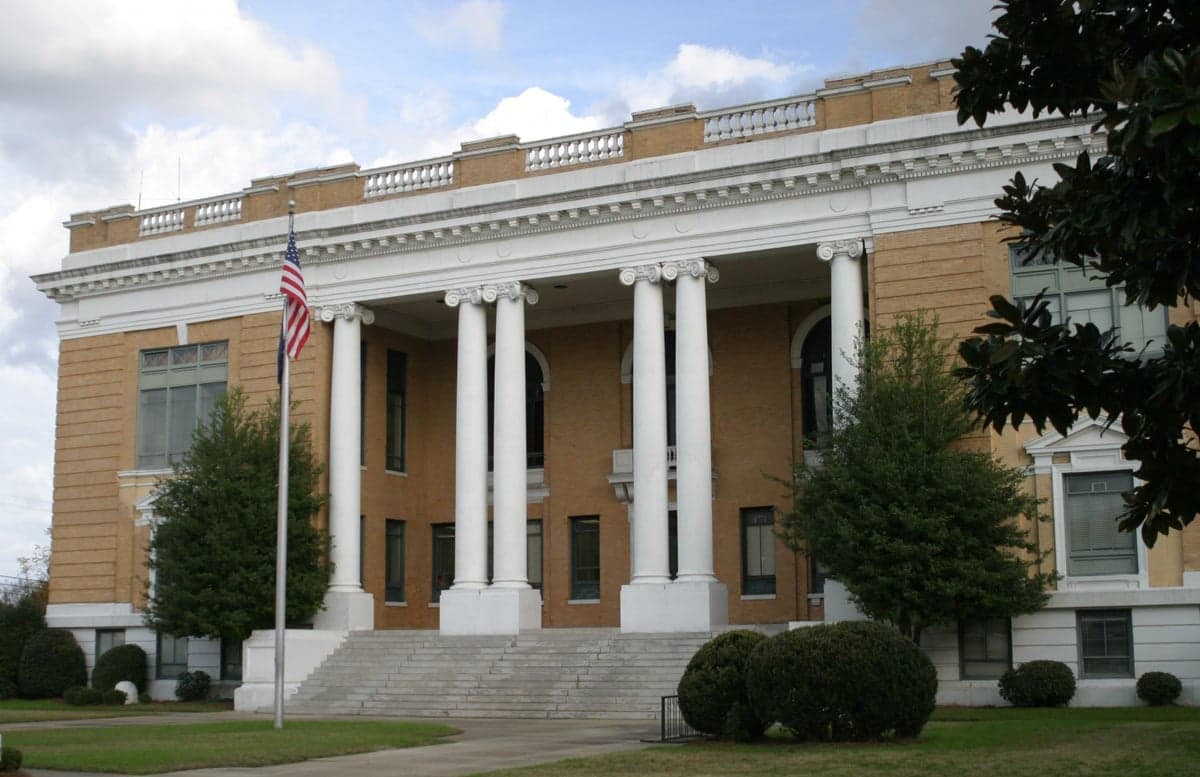
Photo: Wikipedia
Political ClimatePolitical Climate in Sumter County
Showing district-level results — no local-only data available.
Local Political AnalysisPolitical Analysis of Sumter County
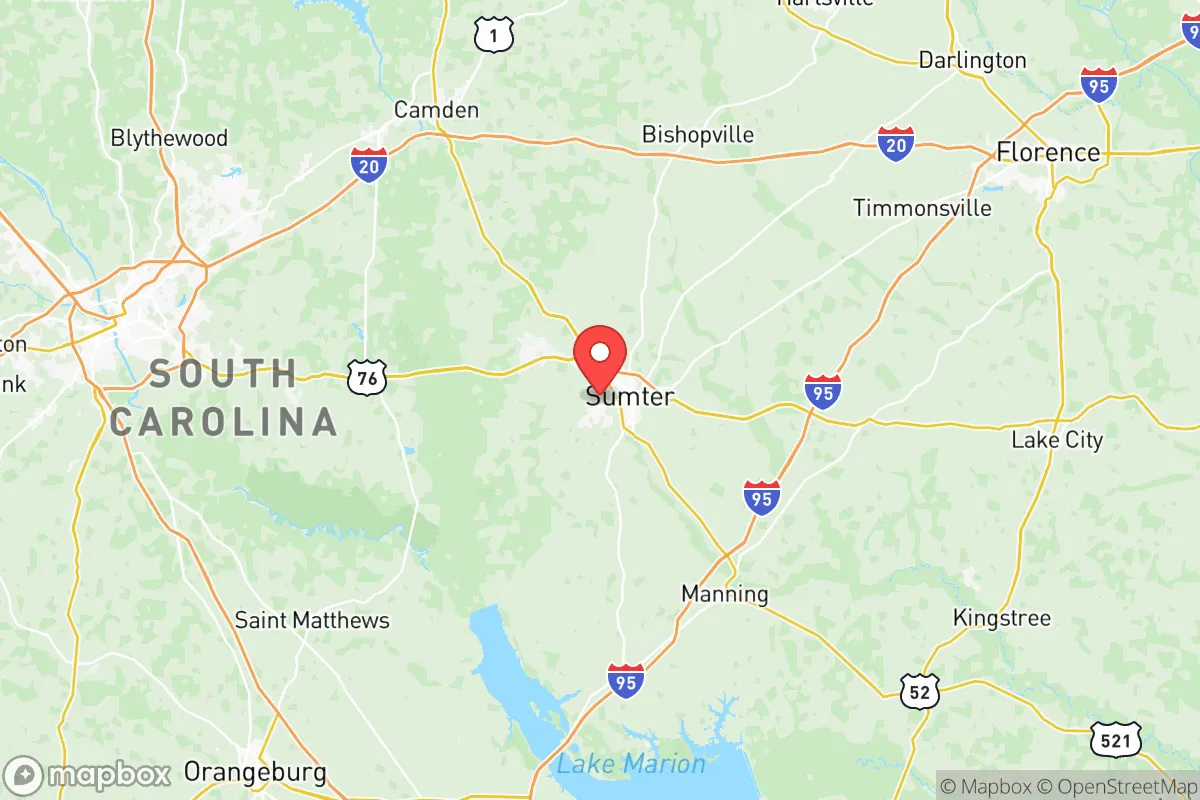
Sumter County, South Carolina, is a reliably Republican area with a Cook Partisan Voting Index of R+11, making it three points more conservative than the state of South Carolina as a whole, which sits at R+8. This isn't a recent shift; the county has voted for the GOP presidential candidate in every election since 2000, though the margins have tightened slightly in the last two cycles as the city of Sumter itself has become more competitive. The real story here is the stark urban-rural divide within the county, where the small towns and unincorporated areas lean heavily red while the city of Sumter provides a genuine blue foothold.
How it compares
Compared to the rest of South Carolina, Sumter County is a bit of a bellwether for the state's broader political evolution. The state's R+8 rating reflects a mix of deep-red rural areas and growing suburban and exurban pockets around Charleston, Greenville, and Columbia that are trending purple. Sumter County mirrors this, but with a more pronounced conservative tilt in its rural precincts. For example, the towns of Dalzell and Stateburg in the western part of the county are reliably Republican, often delivering 65-70% of the vote for GOP candidates. In contrast, the city of Sumter itself, particularly precincts around Morris College and the historic downtown, consistently vote Democratic, sometimes by margins of 20 points or more. The swing precincts are found in the suburban neighborhoods just outside the city limits, like those near Shaw Air Force Base, where military families and younger professionals create a more mixed voting pattern. These areas can flip between parties depending on the candidate and turnout, making them the key battlegrounds in local races.
What this means for residents
For conservative residents, Sumter County offers a comfortable political environment where Republican candidates are the default in most local and county-level elections. The county council and school board are dominated by Republicans, and policy debates tend to center on fiscal conservatism, limited government, and traditional values. For liberal residents, the picture is more nuanced. While the city of Sumter provides a supportive community, especially around the university and the historic Black neighborhoods, they face an uphill battle in county-wide races. However, the presence of Shaw Air Force Base and the growing healthcare sector at Prisma Health Tuomey Hospital means that pragmatic, non-partisan issues like infrastructure, economic development, and education funding often take precedence over culture-war battles. This creates a working environment where both sides can find common ground on local matters, even if national politics remain sharply divided.
Culturally, Sumter County retains a strong Southern identity with a slower pace of life, but it's not as insular as some of the more rural counties to the north and west. The city of Sumter has a notable arts scene and a growing number of craft breweries and farm-to-table restaurants, which attracts a younger, more diverse crowd. Policy-wise, the county has been slower to adopt some of the more aggressive conservative measures seen in other parts of the state, like strict abortion restrictions or permitless carry laws, largely because the local business community and military presence encourage a more moderate approach. Looking ahead, the county's political trajectory will likely hinge on whether the suburban swing precincts continue to drift leftward as they have in other parts of the state, or if the rural vote remains strong enough to keep Sumter County firmly in the red column for the foreseeable future.

State Political ClimatePolitical Climate in South Carolina
State Political AnalysisPolitical Environment in the State
South Carolina is a solidly Republican state with a Cook PVI of R+8, meaning it votes about eight points more Republican than the national average in presidential elections. The dominant coalition is a blend of traditional conservatives in the suburbs and rural areas, evangelical Christians in the Upstate and Midlands, and a growing number of fiscally conservative transplants from the Northeast and Midwest. Over the last 10-20 years, the state has shifted rightward on cultural issues while maintaining a pro-business, low-tax posture, though the fast-growing coastal areas and the city of Columbia have introduced a more competitive, purple streak in certain races.
Urban vs. rural divide
The political map of South Carolina is a classic tale of three regions. The Upstate, anchored by Greenville and Spartanburg, is the conservative heartland—heavily evangelical, reliably Republican, and home to the state’s most influential conservative legislators. Greenville County itself votes about 60-65% Republican in most races, though the city of Greenville has become more moderate as young professionals and out-of-state transplants move in. The Midlands, centered on Columbia (Richland County), is the state’s most Democratic-leaning urban area, thanks to the University of South Carolina, a large African American population, and state government workers. Richland County typically votes 60-65% Democratic, making it a blue island in a red sea. The Lowcountry, including Charleston (Charleston County), is the most politically dynamic region—historically conservative but now trending purple as a wave of out-of-state newcomers, many from blue states, has made the city and its immediate suburbs more competitive. Charleston County voted for Joe Biden in 2020 by a narrow margin, while the surrounding rural counties like Berkeley and Dorchester remain solidly red. The Pee Dee region, including Florence and Myrtle Beach (Horry County), leans Republican but with a populist, retiree-driven flavor. Rural counties across the state—like Abbeville, Barnwell, and McCormick—vote 70-80% Republican, driven by low population density, older demographics, and strong gun and church culture.
Policy environment
South Carolina’s policy environment is defined by low taxes and light regulation. The state has a flat income tax rate of 6.2% (phasing down to 6.0% by 2026), no estate tax, and a sales tax cap of 6% (local options add up to 2.5%). Property taxes are among the lowest in the nation, especially for owner-occupied homes, thanks to a 4% assessment ratio cap. The regulatory posture is strongly pro-business: South Carolina is a right-to-work state with no state-level minimum wage above the federal $7.25, and it has one of the lowest unionization rates in the country. Education policy is a mix of school choice expansion and traditional public funding. The state has a robust charter school law and a growing Education Scholarship Account (ESA) program for special needs students, but public school funding remains below the national average. Healthcare policy is conservative: the state did not expand Medicaid under the Affordable Care Act, leaving roughly 200,000 low-income adults in the coverage gap. Election laws are moderately restrictive: voters must show photo ID at the polls, absentee voting requires an excuse (though no-excuse early voting was expanded in 2022), and the state has a 30-day residency requirement for registration. Gun laws are permissive: no permit required for open carry, a "shall issue" concealed carry system, and a "stand your ground" law on the books.
Recent policy direction
Over the last five years, South Carolina has moved decisively to the right on cultural and social issues. In 2023, the state passed a six-week abortion ban (the "Fetal Heartbeat Act"), which took effect after the Dobbs decision, with no exceptions for rape or incest. On gun rights, the legislature passed a permitless concealed carry law (H. 3094) in 2024, allowing any legal gun owner to carry a concealed firearm without a permit. On education, the state enacted a "Parents' Bill of Rights" in 2023, requiring schools to notify parents of any changes to a student’s health or well-being and to allow parents to opt their children out of certain instructional materials. On speech and privacy, the state passed a law in 2023 banning TikTok on government devices and requiring age verification for adult websites. On property rights, the state has maintained strong eminent domain protections and a low property tax burden, though a 2024 law (H. 4000) tightened restrictions on short-term rentals in residential zones. On voting, the state passed a 2021 law (S. 108) that added a photo ID requirement for absentee ballots, limited drop boxes, and banned unsolicited mail-in ballot applications. On medical and bodily autonomy, the state has not legalized medical marijuana (though a limited CBD law exists) and has not expanded transgender healthcare access for minors. On taxation, the state is phasing down its income tax rate from 7% to 6% by 2026, with further cuts possible if revenue targets are met.
Civil unrest & political movements
South Carolina has a history of civil rights activism, but modern political movements are more subdued than in many states. The most visible flashpoint in recent years was the 2015 Charleston church shooting at Mother Emanuel AME Church, which led to the removal of the Confederate flag from the Statehouse grounds—a moment that still resonates in state politics. Since then, organized activism has been largely issue-specific: pro-choice groups have held regular protests at the Statehouse since the abortion ban, and Second Amendment advocates have been active in pushing permitless carry. Immigration politics are relatively quiet compared to border states, though a 2024 law (H. 4000) requires local law enforcement to cooperate with ICE detainers and bans "sanctuary city" policies. There is no significant secession or nullification rhetoric in mainstream politics, though a small libertarian fringe occasionally raises Tenth Amendment arguments. Election integrity controversies flared after 2020, with some Republican legislators calling for audits, but no major fraud was found, and the state’s voting system (paper ballots with optical scanners) is widely trusted. A new resident would notice that political signs are common in yards during election season, but political conversations in public are generally polite and avoid the heated tone of national media.
Projection
Over the next 5-10 years, South Carolina is likely to remain solidly Republican at the state level, but the margins will tighten in the fast-growing coastal counties. The influx of out-of-state residents—especially in Charleston, Greenville, and Myrtle Beach—is bringing a mix of fiscal conservatives and culturally moderate voters who may push the state toward a more pragmatic, less culturally aggressive conservatism. The Upstate’s growth is driven by manufacturing and tech jobs (BMW, Michelin, and a growing aerospace sector), which attracts a workforce that leans Republican but is less focused on social issues. The Lowcountry’s growth is more amenity-driven (retirees, remote workers), and these newcomers tend to be more moderate on social issues like abortion and LGBTQ rights. The rural counties will continue to vote heavily Republican, but their declining population share means their influence will wane slightly. The biggest wildcard is the state’s growing African American population (about 27% of the state) and the potential for increased turnout among younger voters in Columbia and Charleston. A Democrat could win a statewide race (like governor or Senate) if they run a moderate, pro-business campaign and turn out the urban vote, but the state’s legislative districts are heavily gerrymandered to favor Republicans, so the General Assembly will remain red for the foreseeable future. A relocator moving in now should expect a state that is reliably conservative on taxes, guns, and abortion, but with a growing libertarian streak on personal freedom and a slow drift toward moderation on cultural issues in the cities.
For a new resident, the bottom line is this: South Carolina offers a low-tax, low-regulation environment with strong gun rights and a conservative social culture, especially outside the major cities. Conservatives will find a welcoming policy landscape and a like-minded community in most areas. Liberals will find a state where their vote is less impactful at the state level but where they can live comfortably in Charleston, Columbia, or Greenville’s downtown, with access to progressive social circles and a growing economy. The key practical takeaway is to choose your location carefully—the political and cultural experience in Greenville versus Columbia versus Charleston is dramatically different, and the state’s laws are set by the rural and suburban majority, not the urban minority. If you value low taxes, gun rights, and a slower pace of life, you’ll feel at home. If you prioritize progressive social policies or strong public services, you’ll need to adjust your expectations or live in one of the blue islands.
* Values derived from national, state, county, city and local statistics and may differ in a specific area. Last updated: 2026-06-29T05:52:45.000Z
Narrative content on this page is AI-generated and may contain mistakes. Verify any details that matter before acting on them.
ReloMaps may earn a commission from affiliate links at no extra cost to you.

