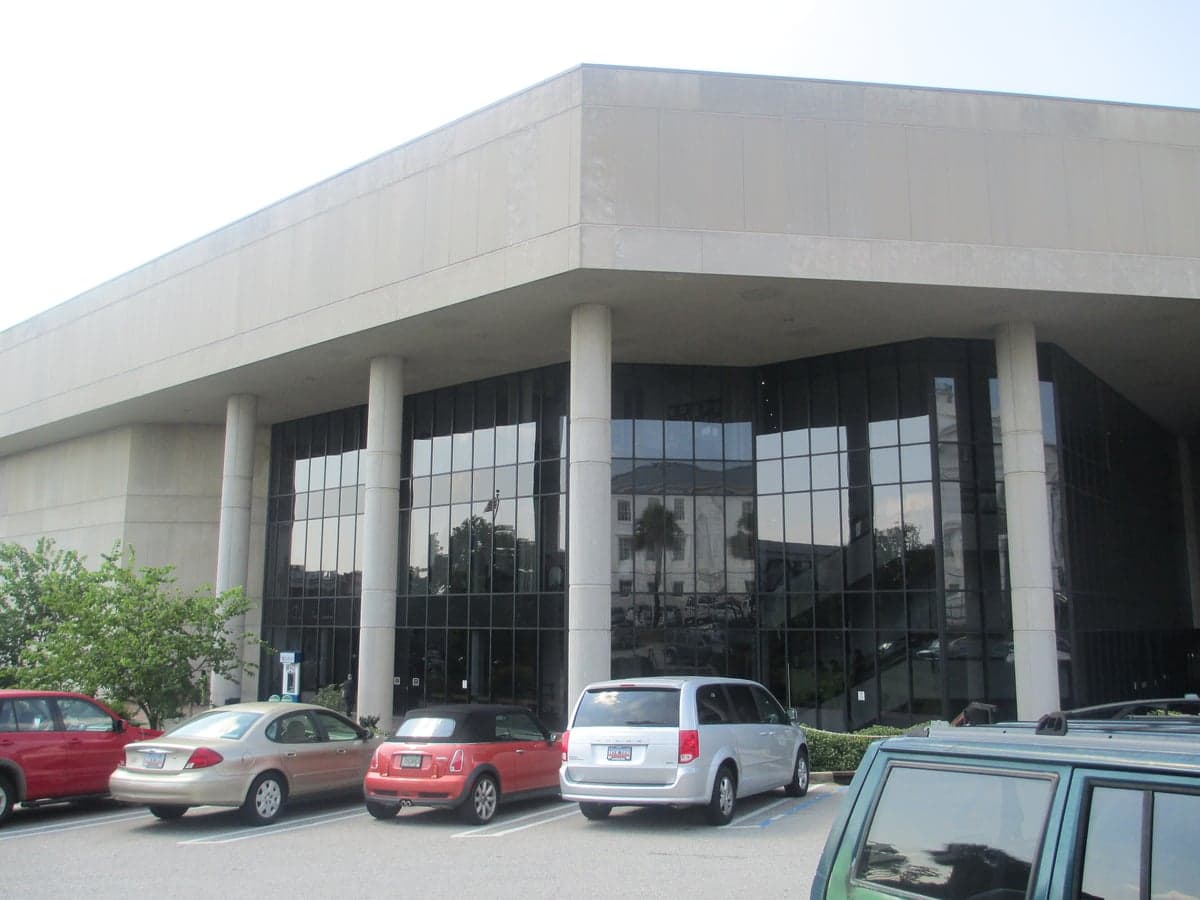
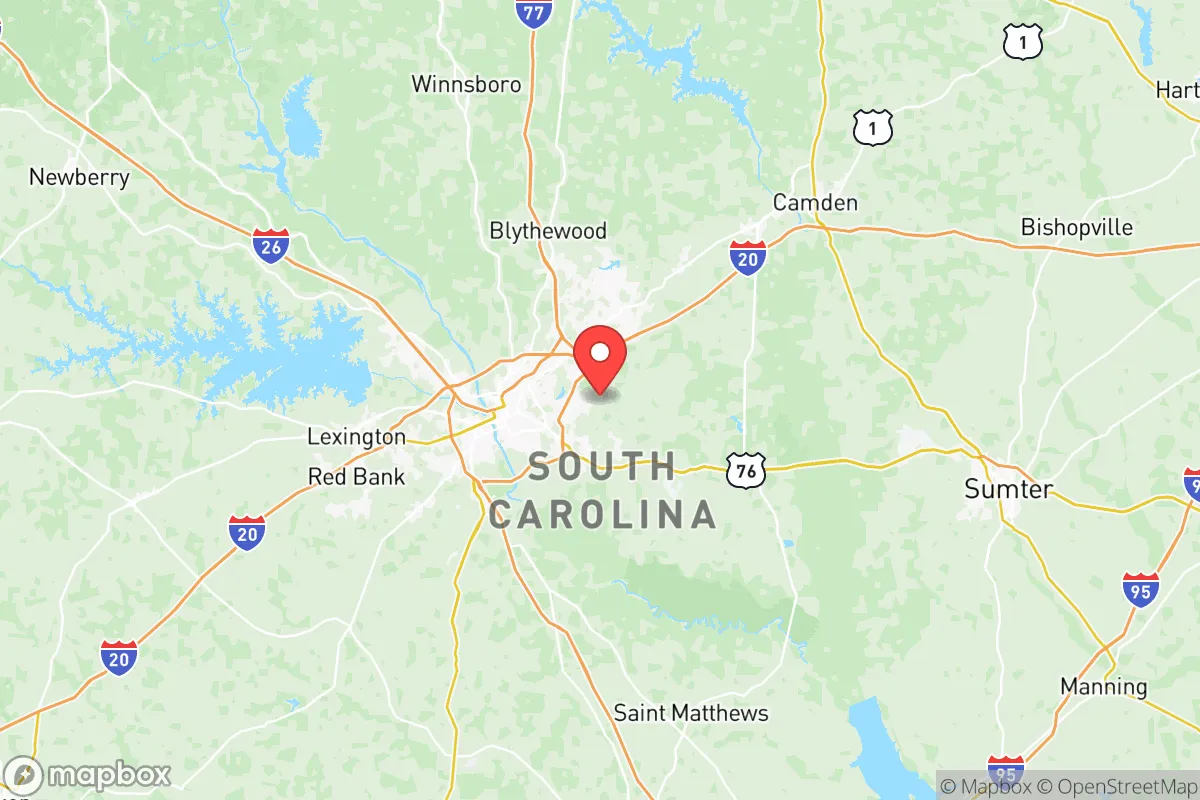
Photo: Wikipedia
Personal Sovereignty in Richland County
Viable for self-reliance. Generally workable, though some barriers may limit total independence.
What does Personal Sovereignty tell us?
Personal Sovereignty measures your capacity for self-reliance and independence with minimal government friction. Higher scores mean fewer barriers between you and the way you want to live... but it assumes you have the space you need and good neighbors.
What does this tell us?
Personal Sovereignty measures your capacity for self-reliance and independence with minimal government friction. Higher scores mean fewer barriers between you and the way you want to live... but it assumes you have the space you need and good neighbors.
State Policy
Energy independence: Importer (25% of energy produced in-state)
Personal Liberty
Homesteading

Personal Liberty Analysis
Richland County, South Carolina, presents a nuanced personal sovereignty environment where state-level protections for self-defense, property rights, and parental autonomy intersect with a more urbanized, county-level regulatory framework that can feel heavier than the surrounding rural areas. The county’s political and cultural center, Columbia, drives a more progressive local governance style, while the unincorporated areas and smaller towns like Blythewood, Eastover, and Gadsden offer a distinctly different, more hands-off experience. For individuals and families prioritizing personal freedom, the key is understanding that sovereignty in Richland County is not uniform—it varies significantly depending on whether you are inside city limits or in the county’s more rural stretches.
Tax burden and regulatory posture: How South Carolina’s light touch compares locally
South Carolina is widely regarded as a low-tax state, and Richland County generally benefits from this posture. There is no state income tax on Social Security benefits, and the state’s top marginal income tax rate is a flat 6.2% as of 2026, with a standard deduction that shields a significant portion of income. Property taxes are assessed at a state-mandated 4% of fair market value for owner-occupied primary residences, with a millage rate in Richland County that is moderate compared to coastal counties like Charleston or Beaufort. However, the county’s local sales tax rate is 8% (state 6% plus local option 2%), which is higher than in many surrounding counties like Lexington (7%) or Kershaw (7%). This higher sales tax is a direct result of Richland County’s more urbanized infrastructure needs and a voter-approved capital projects sales tax. The regulatory posture is generally business-friendly at the state level—South Carolina is a right-to-work state with minimal occupational licensing hurdles—but within Columbia and Forest Acres, zoning and land-use regulations are more restrictive. For example, short-term rental regulations in Columbia are stricter than in unincorporated areas, and the city’s stormwater and tree-protection ordinances add layers of permitting that are absent in rural parts of the county like Gadsden or the area around Fort Jackson. The net effect: a light state touch, but a noticeably heavier local hand in the urban core.
Self-defense and gun law specifics: Castle Doctrine, permitless carry, and local nuances
South Carolina is a strong Second Amendment state, and Richland County residents benefit from some of the most permissive self-defense laws in the Southeast. The state has a Castle Doctrine with no duty to retreat in one’s home, vehicle, or place of business, and it also extends to any place where a person has a legal right to be. As of 2024, South Carolina is a permitless (constitutional) carry state for anyone 18 or older who can legally possess a firearm. This means no permit is required to carry a concealed or open handgun. However, there are important local nuances. Columbia and the town of Forest Acres have ordinances that restrict the discharge of firearms within city limits, which can complicate self-defense scenarios involving outdoor property defense. Additionally, while the state preempts most local gun laws, Columbia has a history of attempting to regulate firearms in city parks and public buildings, though these efforts have been largely struck down or preempted by state law. For practical self-defense, the rural areas of Richland County—such as the communities around Eastover and the northern reaches near Blythewood—offer far more freedom to discharge firearms on private property for target practice or pest control. The Richland County Sheriff’s Department, which covers unincorporated areas, is generally supportive of gun rights, but the Columbia Police Department operates under a more cautious city council. For a family prioritizing self-defense, the unincorporated areas or towns like Blythewood provide a more friction-free environment than the city limits of Columbia.
Self-reliance and homesteading viability: Lot sizes, zoning, and off-grid feasibility
Homesteading and self-reliance are highly viable in the rural portions of Richland County, but the urban core presents significant barriers. In unincorporated areas, minimum lot sizes are typically 1 to 2 acres for single-family homes, and in the more agricultural zones near Gadsden and Eastover, parcels of 5 to 20 acres are common and affordable. Zoning in these areas is permissive: raising chickens, goats, and even small livestock is generally allowed without special permits, and there are no county-level bans on beekeeping or rainwater collection. Off-grid feasibility is mixed. South Carolina has no statewide ban on solar panels, and net metering is available through Dominion Energy and SCE&G, but the county does require building permits for solar installations. Rainwater collection is legal and encouraged for non-potable uses, but any system connected to a potable water supply must meet state health department standards. Composting toilets are legal in unincorporated areas but require a septic system permit. The biggest hurdle to full off-grid living is the county’s requirement for a minimum 1,000-gallon septic tank for any new home, which ties property development to a conventional wastewater system. In contrast, the city of Columbia has strict urban agriculture ordinances—backyard chickens are limited to six hens, no roosters, and must be kept 50 feet from any neighbor’s dwelling. For a family seeking true self-reliance, the areas around Blythewood (northern Richland County) and the rural tracts near the Wateree River in the eastern part of the county offer the most freedom, with larger parcels, fewer zoning restrictions, and a culture of neighborly independence.
Personal liberties: Parental rights, medical autonomy, speech, and property
South Carolina has a strong legal framework for parental rights, including a 2023 law that requires parental consent for any medical procedure on a minor, including vaccinations and mental health treatment. This law is enforced statewide, so Richland County families benefit from it equally. Medical autonomy for adults is more limited: South Carolina has not expanded Medicaid, and the state’s medical marijuana program is extremely restrictive (only CBD oil for a narrow list of conditions). The county’s public health system, dominated by Prisma Health and the University of South Carolina medical school, is generally aligned with mainstream medical protocols, which may be a concern for families seeking alternative or holistic care. Free speech is protected under the First Amendment, and Columbia has a history of active protest culture, but the city has been sued multiple times for overly restrictive parade and assembly permit requirements. Property rights are strong in unincorporated areas, where there are no county-wide rent control or landlord licensing laws. However, within Columbia, there are rental registration requirements and a city-wide housing code enforcement program that can feel intrusive to property owners. The county’s tax assessor is aggressive in reassessing properties after sales, which can lead to sudden property tax increases for new buyers—a point of frustration for those valuing financial predictability. Overall, the personal liberties environment is strongest in the rural and suburban parts of the county, where local government is less present and state-level protections hold more sway.
Compared to other areas in the Southeast, Richland County offers a moderate-to-strong personal sovereignty profile, but it is not as libertarian as rural counties in the Upstate or the Lowcountry. The state’s low tax burden, permitless carry, and parental rights laws provide a solid foundation, but the urban governance of Columbia and its suburbs adds a layer of regulation that can feel constraining for those accustomed to total autonomy. For a family or individual who values personal freedom, the clear strategic choice is to live in the unincorporated areas or towns like Blythewood, Eastover, or Gadsden, where the county’s light touch and the state’s protective laws combine to create an environment that is genuinely conducive to self-reliance and independence. The urban core, while offering amenities, demands more compromise on regulatory freedom.

* Values derived from national, state, county, city and local statistics and may differ in a specific area. Last updated: 2026-06-15T12:11:45.000Z
Narrative content on this page is AI-generated and may contain mistakes. Verify any details that matter before acting on them.
ReloMaps may earn a commission from affiliate links at no extra cost to you.

