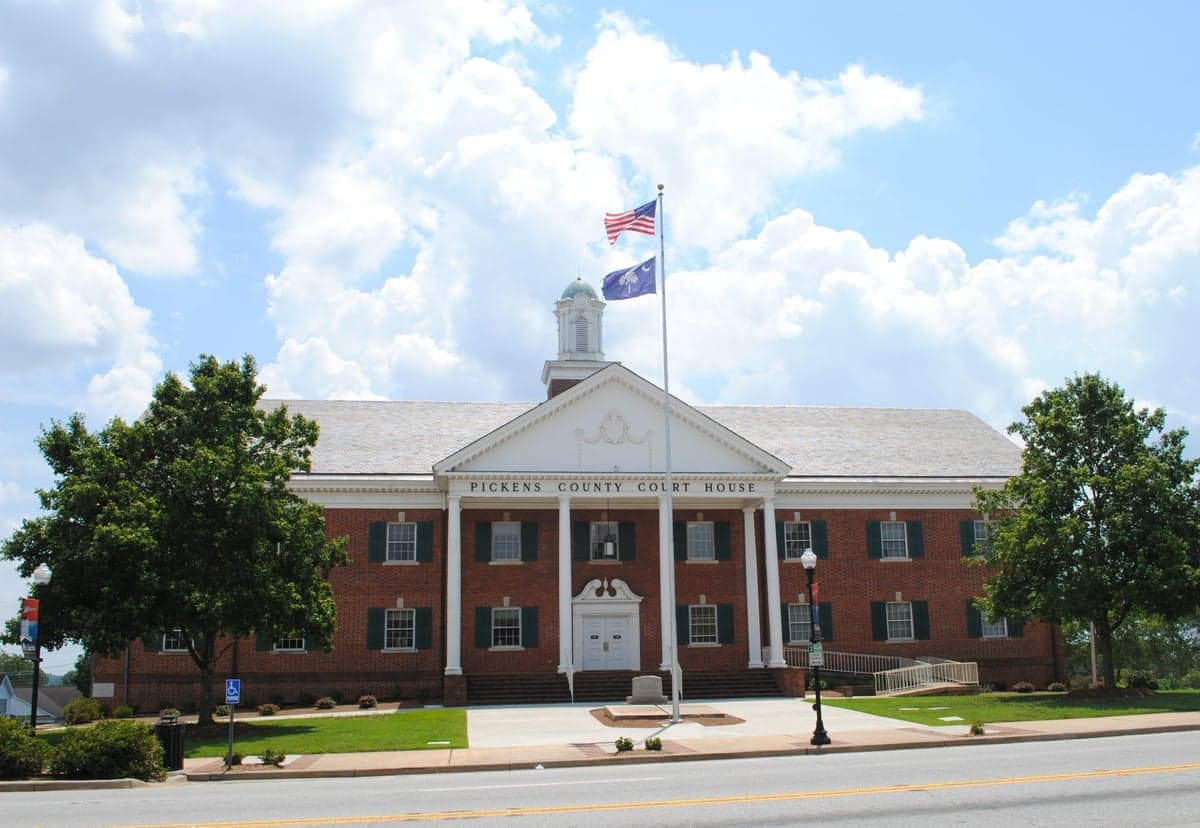
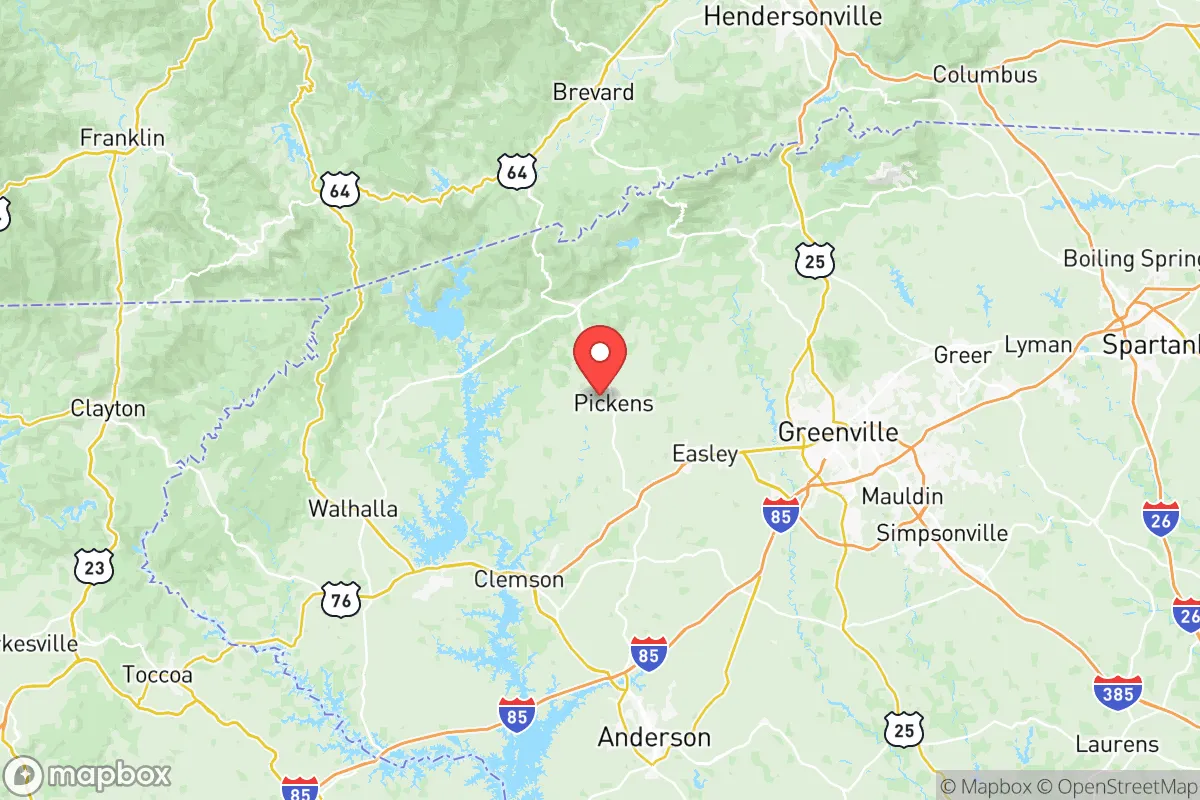
Photo: Wikipedia
Quality of Life in Pickens County
A livable area that tracks near national norms for affordability, walkability, and neighborhood health.
What does Quality of Life tell us?
Quality of Life measures an area by evaluating factors like cost of living, nearby amenities, country club access, airport proximity, socioeconomic signals and neighborhood character. For large states, this is a general average — quality of life can vary dramatically between metro areas, suburbs, and rural communities within the same state.
What does this tell us?
Quality of Life measures an area by evaluating factors like cost of living, nearby amenities, country club access, airport proximity, socioeconomic signals and neighborhood character. For large states, this is a general average — quality of life can vary dramatically between metro areas, suburbs, and rural communities within the same state.
Cost of Living
21% below national average
96%
The Real Cost of Living in Pickens County for 2026
| Tier | Individual | Family (4) |
|---|---|---|
| Survival | $15k | $28k |
| Comfortable | $42k | $62k |
| Luxury | $107k+ | $166k+ |
| Elite (Top 5%) | $138k+ | $214k+ |
Quality-of-Life Analysis
Pickens County, South Carolina, offers a broad quality-of-life spectrum that ranges from the college-town energy of Clemson to the quiet, rural character of communities like Six Mile and Sunset, with the county seat of Pickens occupying a middle ground. The county’s overall cost of living index of 79 (well below the U.S. average of 100) and a median home value of $216,000 make it one of the more affordable options in the rapidly growing Upstate region, attracting a mix of university faculty, remote workers, retirees, and families seeking land and lower taxes. The average commute of roughly 27 minutes reflects the county’s role as a bedroom community for nearby Greenville and Anderson, while the median rent of $936 keeps the area accessible for renters.
Largest town(s) & population centers
Clemson is the county’s largest and most dynamic population center, dominated by Clemson University and its roughly 28,000 students. Daily life here revolves around the university calendar, with game-day traffic, a walkable downtown along College Avenue, and a dense concentration of apartments and student-oriented housing. The median home value in Clemson proper is higher than the county average—often above $300,000—reflecting demand from faculty and alumni. Easley, which straddles the Pickens-Anderson county line, is the second major hub, functioning more as a family-oriented suburb with a historic downtown, big-box retail along U.S. 123, and a median home price closer to the countywide figure. Easley’s schools are well-regarded, and its commute to Greenville (under 20 minutes) makes it a practical choice for professionals.
Smaller towns & rural pockets
The town of Pickens, the county seat, sits at the foot of the Blue Ridge Escarpment and offers a slower pace with a revitalized Main Street, antique shops, and the Pickens County Museum. Housing here is notably affordable—many single-family homes sell for under $200,000—and the town attracts those who want small-town character without being isolated. Further north, Six Mile (population roughly 800) and Sunset (population roughly 3,000) are unincorporated communities that feel distinctly rural, with large lots, lake access to Lake Keowee, and limited commercial services. Norris, a tiny incorporated town near Clemson, is essentially a bedroom community with no downtown, while Central (population about 5,000) sits between Clemson and Pickens and has a modest commercial strip and a growing number of new subdivisions. The unincorporated areas along Highway 11 (Cherokee Foothills Scenic Highway) offer the most remote living, with mountain views, acreage, and a 30- to 40-minute drive to grocery stores or hospitals.
Cost & lifestyle range
The cost spread across Pickens County is significant. At the low end, the town of Pickens and the rural areas around Norris and Six Mile offer median home values between $180,000 and $220,000, with rents often below $900 for a two-bedroom. These areas appeal to first-time buyers, tradespeople, and retirees on fixed incomes. At the high end, lakefront properties on Lake Keowee (especially near Sunset and the Keowee Key retirement community) can exceed $500,000, and newer subdivisions in Clemson’s outer ring and Easley’s west side push median values toward $350,000. The lifestyle range is equally broad: Clemson offers walkable urban amenities, concerts, and Division I athletics; Easley provides suburban convenience with chain restaurants and a YMCA; the rural north offers privacy, hunting land, and dark skies. Property taxes remain low across the county—roughly 0.5% of assessed value—which is a consistent draw for newcomers from high-tax states.
Pickens County works best for people who want access to a major university and a regional job market (Greenville is 30 minutes from Easley) but prefer to live in a lower-cost, lower-density setting. Remote workers, Clemson employees, and retirees who value outdoor recreation (hiking in Table Rock State Park, boating on Lake Keowee) will find the most to like. Those seeking an urban nightlife or a diverse rental market should look to Greenville proper, but for a balance of affordability, natural beauty, and small-town character, Pickens County delivers a distinct quality-of-life niche in the Upstate.

Crime in Pickens County
Crime rates similar to the national median for U.S. locations.
Violent CrimeViolent Crime Analysis
Property CrimeProperty Crime Analysis
Crime Analysis
Pickens County, South Carolina, presents a mixed safety picture that is heavily influenced by its proximity to the liberal-leaning Greenville metro area. The county's overall violent crime rate of 376.1 per 100,000 residents and property crime rate of 1,653.2 per 100,000 place it above national averages, though significant variation exists between the quieter upstate towns and the more urbanized corridors near Clemson and Easley. Residents and prospective movers should pay close attention to how progressive judicial policies in the broader region may affect local crime trends.
Crime in context
Pickens County's violent crime rate is roughly 8% higher than the national average and significantly above the South Carolina state average of 510 per 100,000, though it remains lower than nearby Greenville County's rate of 420 per 100,000. Property crime in Pickens County stands at 1,653.2 per 100,000, which is about 15% higher than the national benchmark of 1,432 per 100,000. The county's crime statistics are pulled upward by incidents in the more densely populated areas of Easley and Clemson, where student populations and transient renters contribute to higher theft and burglary rates. In contrast, the smaller towns of Pickens and Liberty report lower crime volumes, though their smaller populations can produce volatile per-capita rates in any given year. The 13th Judicial Circuit, which covers Pickens and Greenville counties, has seen increasing scrutiny over progressive sentencing reforms that critics argue have led to shorter sentences for repeat property offenders, directly impacting the property crime rate.
What residents experience
Daily life in Pickens County varies sharply by location. Residents in Six Mile and rural areas near Table Rock State Park report feeling very safe, with most crime limited to occasional vehicle break-ins and minor thefts from unsecured outbuildings. In Easley, the county's largest city, residents experience a more urbanized crime pattern: property crime is the dominant concern, with car burglaries and package thefts being common complaints on neighborhood social media groups. Violent crime in Easley is concentrated in a few apartment complexes and along the US-123 corridor, with aggravated assaults making up the bulk of incidents. Clemson presents a unique dynamic, as the university's campus police handle many incidents, but off-campus student housing areas near College Avenue and Old Greenville Highway see elevated rates of burglary and alcohol-fueled assaults. The presence of progressive district attorneys in the circuit has led to a notable reduction in pretrial detention for nonviolent offenders, which some residents believe has emboldened property criminals to re-offend quickly after arrest.
Neighborhood-level safety in Pickens County is best assessed by looking at specific subdivisions and school attendance zones. The area around Dacusville and the rural stretches of Highway 183 consistently report the lowest crime rates in the county, with many blocks seeing zero violent incidents for years. Conversely, the Pendleton Road corridor in Easley and the Old Central Road area near Clemson show elevated property crime rates that mirror the worst-performing neighborhoods in Greenville County. Prospective residents should request crime maps from the Pickens County Sheriff's Office and avoid areas with high concentrations of rental properties near major highways, as these tend to attract transient populations and opportunistic criminals. The county's overall safety trajectory will depend heavily on whether the 13th Circuit's judicial philosophy shifts toward more accountability for repeat offenders, as current progressive policies have demonstrably failed to deter property crime in the region's most vulnerable neighborhoods.
* Values derived from national, state, county, city and local statistics and may differ in a specific area. Last updated: 2026-11-07T11:13:51.000Z
Narrative content on this page is AI-generated and may contain mistakes. Verify any details that matter before acting on them.
ReloMaps may earn a commission from affiliate links at no extra cost to you.

