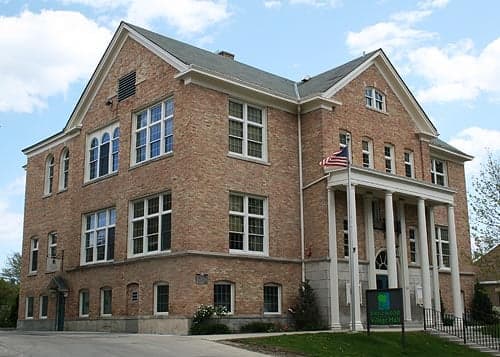
Photo: Wikipedia
Political ClimatePolitical Climate in Shorewood, WI
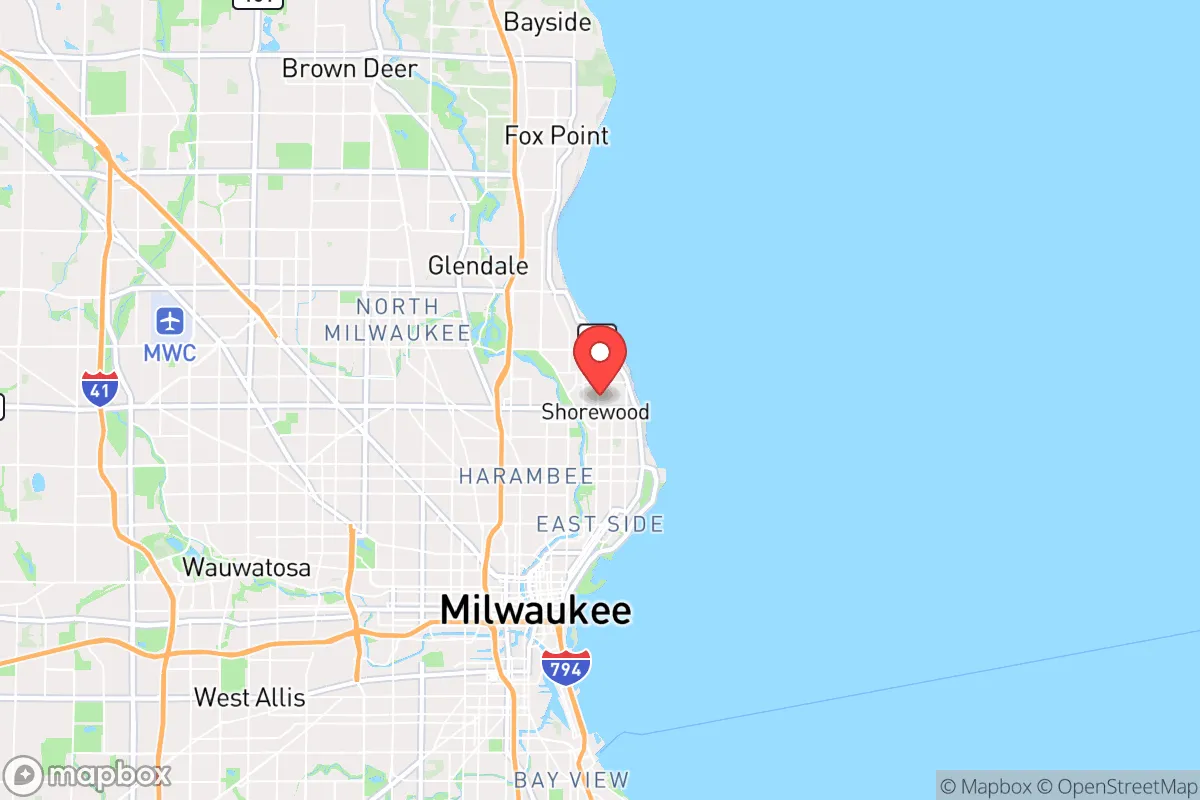
District shown is the primary district for this city’s centroid. Cities may span multiple districts.
Local Political AnalysisPolitical Analysis of Shorewood, WI
Shorewood is one of the most reliably liberal communities in Wisconsin, carrying a Cook Partisan Voting Index of D+26. That puts it far to the left of the state as a whole, which sits at exactly EVEN. In practice, this means Shorewood has voted for Democratic presidential candidates by margins of 70% or more in recent cycles, while statewide races in Wisconsin are routinely decided by a point or two. The trajectory here has been steady: the village has been a Democratic stronghold for decades, and if anything, the margin has widened slightly since 2016 as the suburbs around Milwaukee have polarized further along educational and cultural lines.
How it compares
Shorewood's D+26 rating is a world apart from the statewide EVEN score. To put that in perspective, the village is roughly as Democratic as the city of Madison's near-west side, while the state as a whole is a pure toss-up. The contrast with surrounding communities is stark. Head west a few miles into Wauwatosa, and you'll find a D+5 suburb that's still liberal but much more competitive. Go north to Whitefish Bay or Fox Point, and you're in D+15 to D+20 territory — still blue, but not as deep blue as Shorewood. Cross into the more conservative parts of Milwaukee County, like Greendale or Greenfield, and you're looking at districts that lean Republican or are evenly split. The real shock comes when you drive 20 minutes west into Waukesha County: Brookfield and Elm Grove are R+15 or deeper, a mirror image of Shorewood's politics. So Shorewood isn't just a blue dot in a purple state — it's an intensely blue bubble in a county that's itself deeply divided between the liberal lakefront suburbs and the conservative western suburbs.
What this means for residents
For liberal residents, Shorewood feels like a safe harbor. You can assume your neighbors share your views on most national issues, and local elections are effectively decided in the Democratic primary. The village government leans progressive on housing, environmental policy, and social services. For conservative residents, the reality is more isolating. You're likely in a clear minority in your precinct, and your vote in local races won't change the outcome. That said, Wisconsin's statewide elections are so close that every vote matters — a conservative in Shorewood has as much say in the governor's race or a US Senate race as someone in a deep-red Waukesha precinct. The practical trade-off is that you'll have less influence on school board or village board decisions, but your vote for president or senator carries the same weight as anyone else's in the state.
Culturally, Shorewood's political lean shows up in tangible ways. The village was an early adopter of paid family leave for municipal employees, and the school district has been outspoken about equity initiatives. You'll see more "In This House We Believe" signs than Trump flags, and the public library hosts author talks that skew progressive. But the village also maintains a strong sense of localism — people here care deeply about the parks, the schools, and the walkability of the neighborhoods, and those concerns often transcend party lines. The biggest policy distinction from the rest of Wisconsin is probably housing: Shorewood has been more willing than most suburbs to allow duplexes and accessory dwelling units, a stance that aligns with its progressive politics but also reflects a practical need for density in a landlocked, built-out village. Whether you're on the left or the right, you'll find that local issues — potholes, school funding, lakefront access — matter more day-to-day than the national political drama, even if the village's overall lean is unmistakable.

State Political ClimatePolitical Climate in Wisconsin
State Political AnalysisPolitical Environment in the State
Wisconsin is the ultimate swing state, with a Cook PVI of EVEN that perfectly captures its knife-edge political balance. Over the past 20 years, the state has lurched from reliably blue (voting for Democrats in every presidential election from 1988 to 2012) to a dead-even battleground where margins are measured in the tens of thousands. The dominant coalition is a rural-urban split: Milwaukee and Madison drive Democratic turnout, while the WOW counties (Waukesha, Ozaukee, Washington) and vast stretches of western and northern Wisconsin anchor the Republican base. The trajectory since 2010 has been one of increasing polarization, with the 2016 and 2020 presidential elections decided by less than 1 point, and the 2022 gubernatorial race by 3.4 points. For a relocator, this means your vote genuinely matters here, but you’ll also live in a state where political tension is baked into daily life.
Urban vs. rural divide
The political map of Wisconsin is a study in contrasts. Milwaukee County, home to the state’s largest city, delivers roughly 60-65% of its vote to Democrats, powered by a diverse, union-heavy, and increasingly Latino electorate. Madison, in Dane County, is the liberal anchor, routinely giving Democrats 75% of the vote — it’s the epicenter of progressive activism, university politics, and state government. Meanwhile, the WOW counties (Waukesha, Ozaukee, Washington) are among the most reliably Republican suburbs in the nation, often delivering 60-65% for the GOP. The real battleground is the “Blue Wall” counties — Brown (Green Bay), Outagamie (Appleton), Winnebago (Oshkosh), and Racine/Kenosha along the Lake Michigan shore. These areas have trended rightward since 2012, with Brown County flipping to Trump in 2016 and staying red in 2020. The rural northwoods and western driftless region are deeply Republican, while the central sands area (Portage, Wood counties) remains competitive. The divide isn’t just geographic — it’s cultural, with Milwaukee and Madison feeling like blue islands in a red sea.
Policy environment
Wisconsin’s policy environment is a patchwork of conservative and progressive elements. The state has a flat income tax of 4.4% (down from 7.75% in 2011), and property taxes are moderate — the median effective rate is about 1.6%, slightly above the national average. Sales tax is 5% statewide, with local options pushing it to 5.6% in Milwaukee. The regulatory posture is generally business-friendly, with right-to-work legislation passed in 2015 and Act 10 (2011) effectively ending collective bargaining for most public employees. Education policy is a flashpoint: the state has a robust school choice program (vouchers for private schools) and a charter school sector, but Milwaukee Public Schools remain chronically underfunded. Healthcare is mixed — Wisconsin expanded BadgerCare under the Affordable Care Act, but the state legislature has resisted further Medicaid expansion. Election laws are moderately restrictive: voter ID is required, absentee voting is available without excuse, and drop boxes were banned by the state Supreme Court in 2022. Gun laws are permissive — Wisconsin is a shall-issue state for concealed carry, with no permit required for open carry, and no red flag law.
Recent policy direction
The last five years have seen Wisconsin lurch rightward on several fronts. In 2023, the Republican-controlled legislature passed a flat income tax cut (from 5.3% to 4.4%) and a property tax freeze for seniors. On gun rights, the state enacted a “constitutional carry” law in 2024, allowing permitless concealed carry. Parental rights were strengthened with a 2023 law requiring school districts to notify parents of any changes to a student’s gender identity or sexual orientation. On abortion, the state is in legal limbo — a pre-1849 ban was struck down by a Dane County judge in 2023, but the case is pending before the state Supreme Court, which flipped to a 4-3 liberal majority in 2023. Election integrity remains a hot topic: the legislature passed a ban on private funding for election administration (2022) and tightened absentee ballot witness requirements. On privacy and surveillance, Wisconsin has no comprehensive data privacy law, but a 2023 bill restricting the use of facial recognition by police failed. Property rights are strong — the state has no statewide zoning preemption, but local control is robust. The overall direction is conservative on fiscal and cultural issues, with the courts as the primary battleground for abortion and redistricting.
Civil unrest & political movements
Wisconsin has a history of intense political activism. The 2011 Act 10 protests in Madison drew over 100,000 people to the Capitol, and the 2020 Kenosha unrest after the Jacob Blake shooting saw two people killed and widespread property damage. The state is a hotspot for election integrity activism — the 2020 election in Wisconsin was subject to a partial recount and multiple lawsuits, and the 2022 gubernatorial race featured a Republican candidate (Tim Michels) who questioned the 2020 results. Immigration politics are relatively muted compared to border states, but Milwaukee County has a sanctuary policy (2017) that limits cooperation with ICE, which has drawn backlash from rural conservatives. There’s no serious secession or nullification movement, but “county sovereignty” resolutions have passed in several rural counties. The most visible flashpoint for a new resident would be the constant presence of political signs and yard flags — in swing suburbs like Wauwatosa or Green Bay, you’ll see a mix of both parties. The state Supreme Court race in 2023 was the most expensive judicial election in U.S. history, reflecting the high stakes of every election here.
Projection
Over the next 5-10 years, Wisconsin is likely to remain a swing state, but the demographic trends favor Democrats in the long run. The Milwaukee and Madison metros are growing slowly, while the rural northwoods are shrinking. In-migration is modest — the state gained about 20,000 net new residents from 2020-2023, mostly from Illinois and Minnesota, and these newcomers tend to be more liberal. The WOW counties are aging and suburbanizing, but they’re also becoming slightly more diverse — Waukesha County went from 85% white in 2010 to 80% in 2020. The wild card is the state Supreme Court: with a 4-3 liberal majority, the court is likely to strike down the current Republican-drawn legislative maps (which are among the most gerrymandered in the nation) and order new ones, which could flip the state Assembly to competitive status. If that happens, expect a wave of progressive legislation on abortion, voting rights, and education funding. But the GOP base in the rural areas is deeply entrenched, and the state’s electoral college votes will remain in play. For a relocator, the next decade will feel like a perpetual campaign — expect high turnout, constant ads, and a state that’s always in the national spotlight.
For a new resident, the bottom line is that Wisconsin offers a genuine political battleground where your vote carries weight, but you’ll also live with the tension of a closely divided state. Conservatives will find a favorable tax environment, strong gun rights, and school choice, but will face a liberal Supreme Court and growing urban influence. Liberals will appreciate the progressive strongholds in Madison and Milwaukee, but will contend with a conservative legislature and a rural-urban cultural divide. The practical takeaway: if you want to live in a place where politics is a contact sport, Wisconsin delivers. If you prefer political homogeneity, you’ll need to pick your county carefully — Waukesha for red, Dane for blue, and Brown County if you want to live in the perpetual swing.
* Values derived from national, state, county, city and local statistics and may differ in a specific area. Last updated: 2026-10-15T19:34:51.000Z
Narrative content on this page is AI-generated and may contain mistakes. Verify any details that matter before acting on them.
ReloMaps may earn a commission from affiliate links at no extra cost to you.

