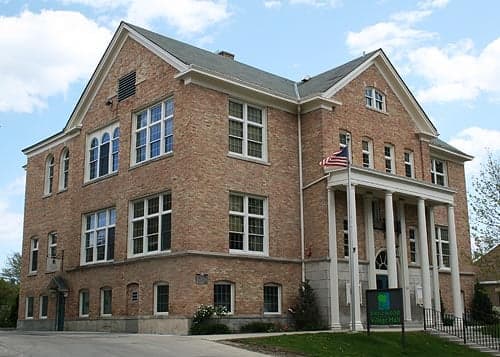
Photo: Wikipedia
Strategic Assessment of Shorewood, WI
Multiple tactical vulnerabilities. Population density, target proximity, or disaster risk are likely compounding. A retreat property and exit planning is required.
What does the Strategic Assessment tell us?
Our Strategic Assessment grades tactical survivability of an area. Major population centers, military targets, fallout zones, natural disasters, and border exposure all drive risk — lower exposure means a more defensible position in a crisis.
This is heavily inspired by Joel Skousen's Strategic Relocation book. Highly recommended you checkout the book ($)What does this tell us?
Our Strategic Assessment grades tactical survivability of an area. Major population centers, military targets, fallout zones, natural disasters, and border exposure all drive risk — lower exposure means a more defensible position in a crisis.
This is heavily inspired by Joel Skousen's Strategic Relocation book. Highly recommended you checkout the book ($)Strategic Pillars
Key Distances
Regional Safe Places
Below is our recommended "safe zones" in Wisconsin and the surrounding area based on our strategic heuristics. For most people, it's unrealistic to live in a “safe zone” full-time due to work, family or other personal reasons. They tend to be more rural. However, many of these areas are perfect for second homes and retreat properties that double as a vacation home or even a short-term rental.
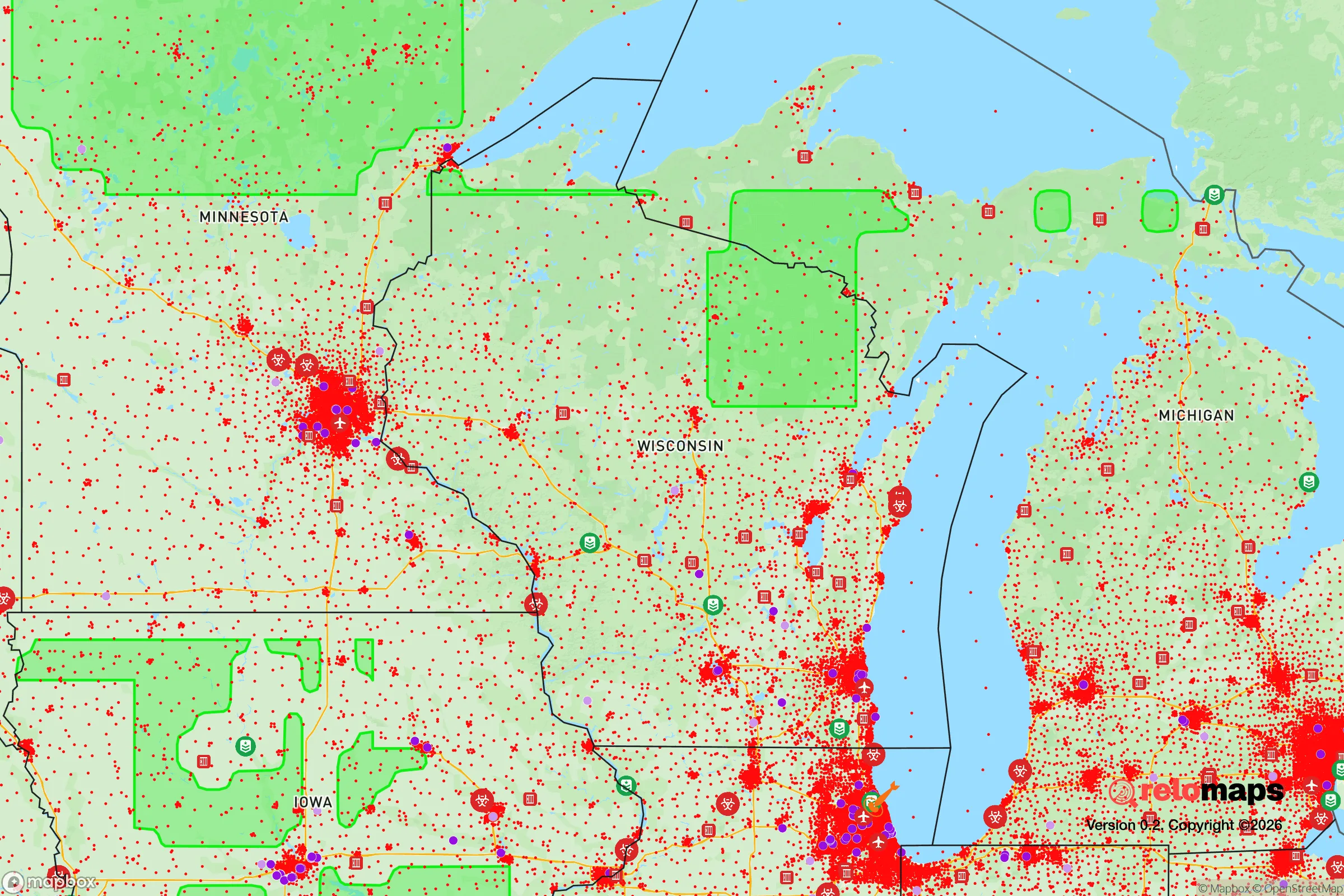
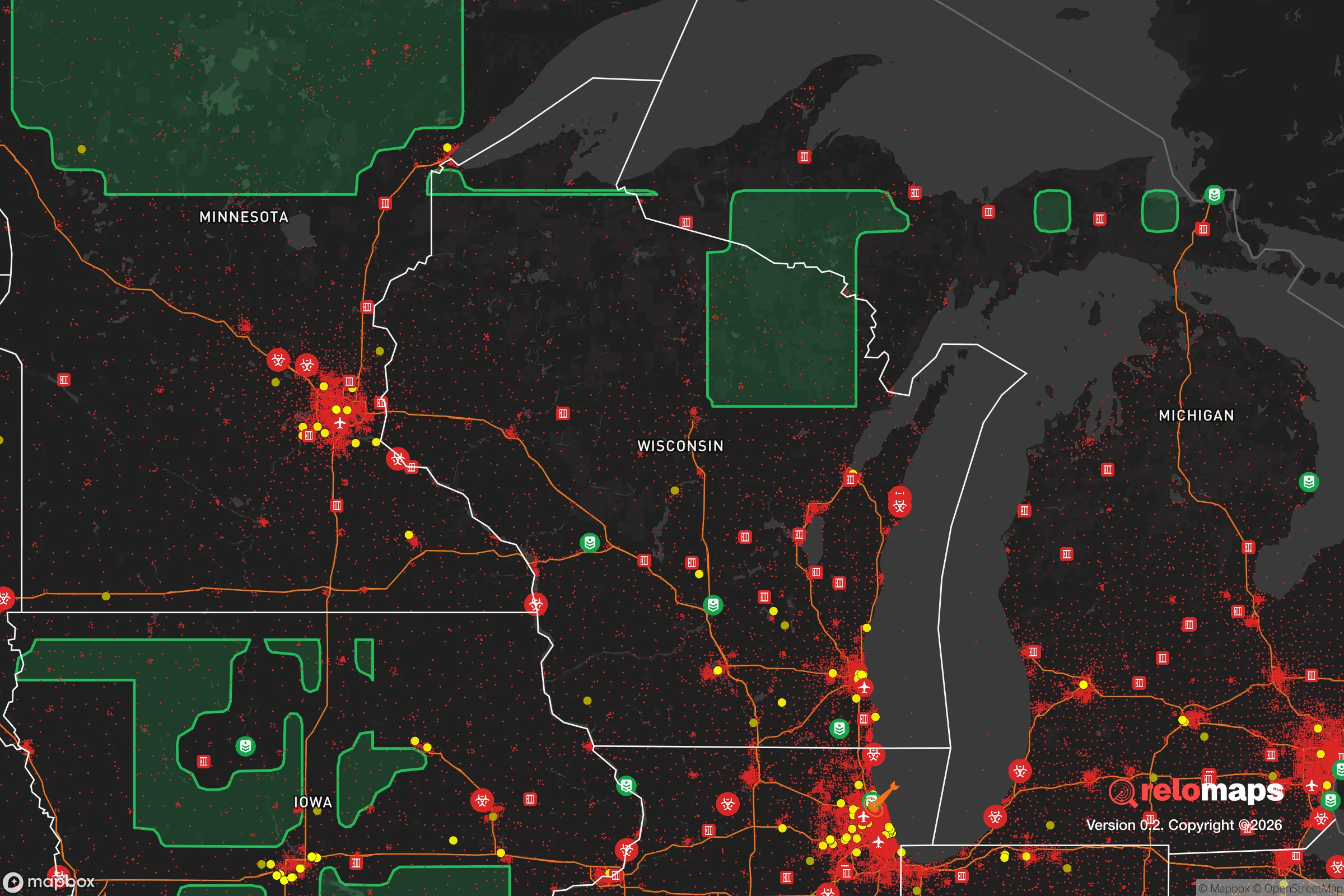


Important Note: For informational purposes only. This does not mean nothing bad ever happens in the green zones. Please use common sense. This is based on public data and modeled with AI. We tried to take a conservative approach but mistakes happen. We update this regularly as new information becomes available.
Solar Generator Recommendations
Backup power matters more here than in safer locations. We've picked three solar generators across budgets and capacity tiers — start with the budget unit if you only need a few essentials, or step up if you want to run a fridge and HVAC for days at a time.
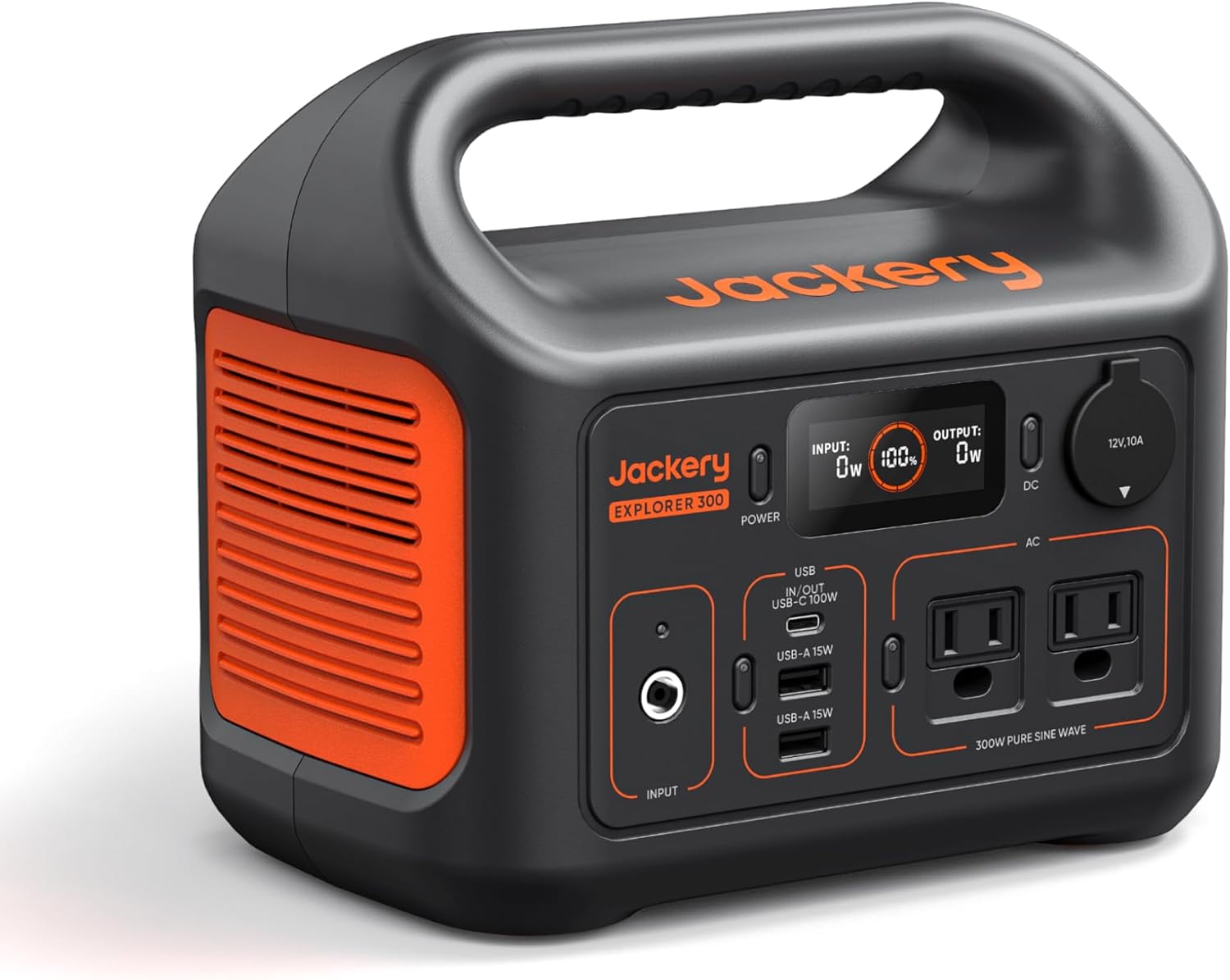
Jackery Portable Power Station Explorer 300
Budget OptionPower on the Go: Weighing only 11 lbs, it's convenient to set up and store with book-sized foldable solar panels

BLUETTI Portable Power Station AC180
Designed for both indoor and outdoor scenarios, AC180 is highly capable as it has a robost capacity and continuous output power.

EF ECOFLOW DELTA Pro Ultra Power Station
Upgraded PickEcoFlow DELTA Pro Ultra is a whole-home energy system designed to grow with your family. Integrated with the Smart Home Panel 2, it scales to meet your evolving energy needs — keeping your home powered, intelligent, and secure through every stage of life.
We earn a commission, at no additional cost to you.
Strategic Assessment Analysis
Shorewood, Wisconsin, presents a mixed strategic picture for the relocation-minded reader focused on resilience and self-sufficiency. While its location along the western shore of Lake Michigan offers a critical water resource and moderates some climate extremes, its position as a dense, inner-ring suburb of Milwaukee places it within the blast and fallout shadow of a major metropolitan area. For a conservative-leaning individual or family weighing disaster readiness, Shorewood’s advantages are real but heavily tempered by its proximity to high-value targets and the logistical challenges of a built-up, landlocked suburb.
Geographic position and natural advantages for long-term stability
Shorewood’s most significant natural asset is its direct frontage on Lake Michigan, which provides an essentially inexhaustible supply of fresh water. In a grid-down or drought scenario, this is a decisive advantage over inland communities that depend on groundwater or distant reservoirs. The lake also exerts a moderating effect on local temperatures, reducing the severity of both summer heat waves and winter cold snaps compared to areas farther inland. The village sits on a relatively stable bluff, with elevation that offers some protection against lake-effect flooding, though low-lying shoreline areas remain vulnerable to storm surge and erosion. The surrounding terrain is flat to gently rolling, typical of southeastern Wisconsin, which simplifies travel and construction but offers little natural defensibility. The region’s climate is continental, with cold, snowy winters and warm, humid summers; severe thunderstorms and occasional tornado warnings are part of the annual cycle, but the area is not in a primary tornado alley. Overall, the natural setting provides a solid baseline for water security and moderate weather, but lacks the topographic barriers that would aid in a security-focused retreat.
Risk exposure and proximity to fallout-relevant landmarks
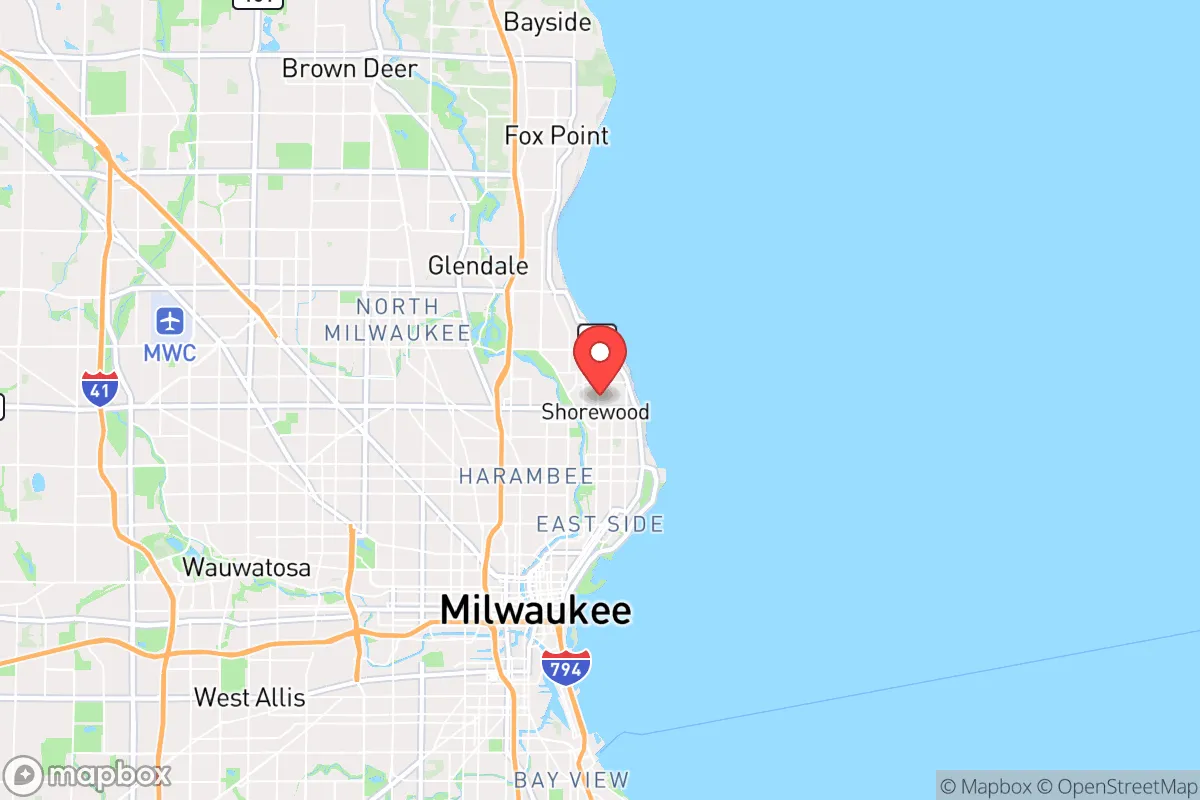
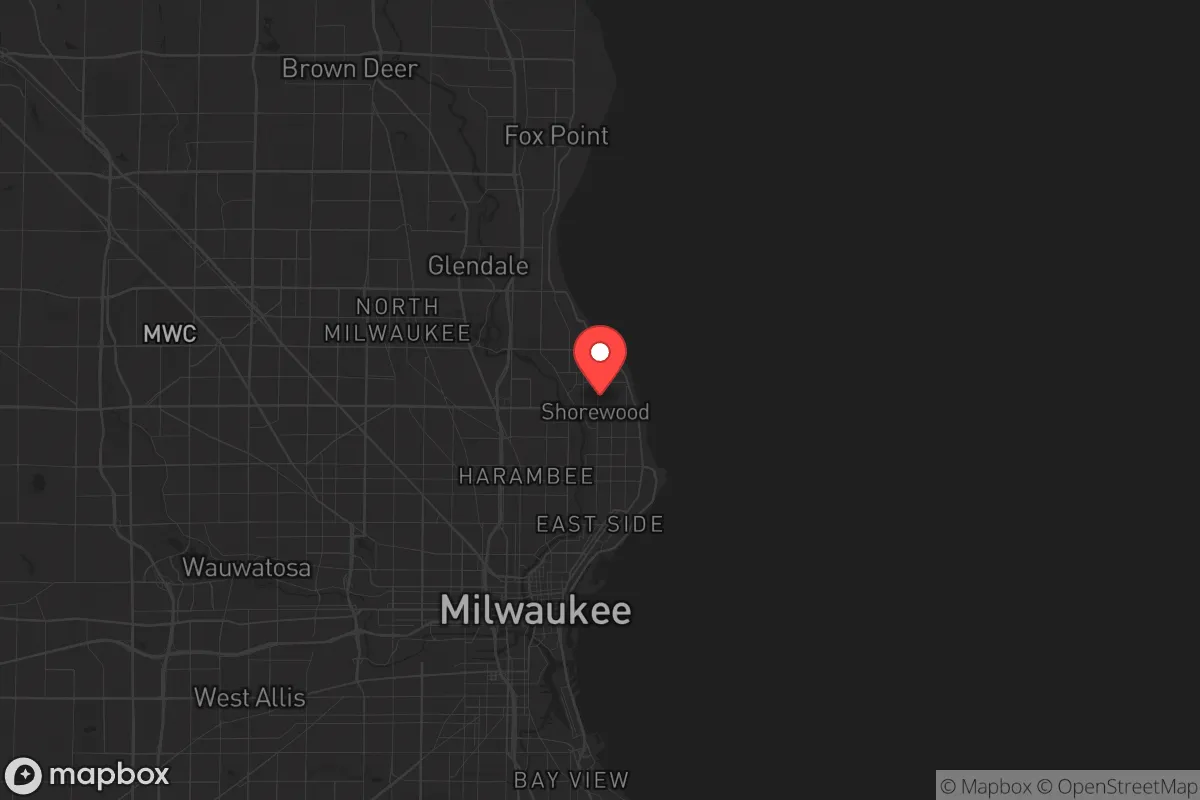
The most serious strategic drawback of Shorewood is its location within the Milwaukee metropolitan area. The village is roughly five miles north of downtown Milwaukee, placing it well within the blast radius of a nuclear strike on the city’s urban core or its industrial and transportation hubs. Milwaukee is a major Great Lakes port, a rail and interstate crossroads, and home to critical infrastructure including the Mitchell International Airport, the Port of Milwaukee, and multiple rail yards. In a conflict scenario, these are high-priority targets. Shorewood would also be exposed to fallout from strikes on Chicago, approximately 90 miles south, depending on wind patterns. Beyond nuclear threats, the area’s density—over 13,000 residents in roughly 1.6 square miles—means that any widespread disaster, whether natural or man-made, would strain local resources quickly. The village is surrounded on all sides by other dense suburbs and the city of Milwaukee, leaving few evacuation routes. Major highways include I-43 and I-94, which would likely become impassable during a mass evacuation. For a relocator prioritizing distance from strategic targets and population centers, Shorewood’s location is a clear liability.
Practical resilience for a relocator: food, water, energy, and defensibility
On the practical side, Shorewood offers some baseline resilience but requires significant preparation to be viable for a self-sufficiency-minded household. Lake Michigan is the primary water source, and the village draws its municipal supply from it. In a prolonged power outage, however, electric pumps would fail, making a personal backup plan—such as a hand pump, rainwater catchment, or stored water—essential. The lake itself is accessible via several public parks and beaches, but carrying water uphill from the shore is labor-intensive and would be difficult to secure in a crisis. Food resilience is limited: the village is fully built out with no agricultural land, and the surrounding region is dominated by suburban development. Local grocery stores would be depleted within days of a disruption. Community gardens and backyard growing space exist but are minimal given the small lot sizes typical of Shorewood’s older housing stock. Energy-wise, the grid is reliable under normal conditions but vulnerable to storm damage and cascading failures. Natural gas is common for heating, but a grid-down scenario would require alternative heat sources. Solar potential is moderate, though many homes have roof orientations and tree cover that limit generation. Defensibility is poor: the village’s grid street pattern, high housing density, and multiple access points make it difficult to secure a perimeter. Neighbors are close, and noise and light discipline would be challenging. For a relocator seeking a property that can be hardened or defended, Shorewood is not a natural fit. Community cohesion is a potential strength, however—the village has active neighborhood associations and a relatively engaged population, which could facilitate mutual aid in a localized emergency. But for a long-term, independent survival scenario, the area’s dependence on external supply chains and its lack of rural buffer are significant weaknesses.
The overall strategic picture for Shorewood is one of trade-offs. It offers excellent water access and a moderate climate, but its location within the Milwaukee metro area introduces severe risks from both natural and man-made disasters, particularly nuclear fallout. Practical resilience is possible with substantial preparation—stored supplies, alternative energy, and a water plan—but the village’s density and lack of defensible space make it a poor choice for those prioritizing security and self-sufficiency above all else. For a relocator who values community, lake access, and proximity to urban amenities, and who is willing to invest heavily in preparedness, Shorewood can work as a base. But for someone whose primary concern is strategic resilience in a worst-case scenario, the risks likely outweigh the benefits. A more rural location farther from Milwaukee and other major targets would offer a stronger foundation for long-term stability.

* Values derived from national, state, county, city and local statistics and may differ in a specific area. Last updated: 2026-10-15T19:34:51.000Z
Narrative content on this page is AI-generated and may contain mistakes. Verify any details that matter before acting on them.
ReloMaps may earn a commission from affiliate links at no extra cost to you.

