Photo: Wikipedia
Political ClimatePolitical Climate in Shipshewana, IN
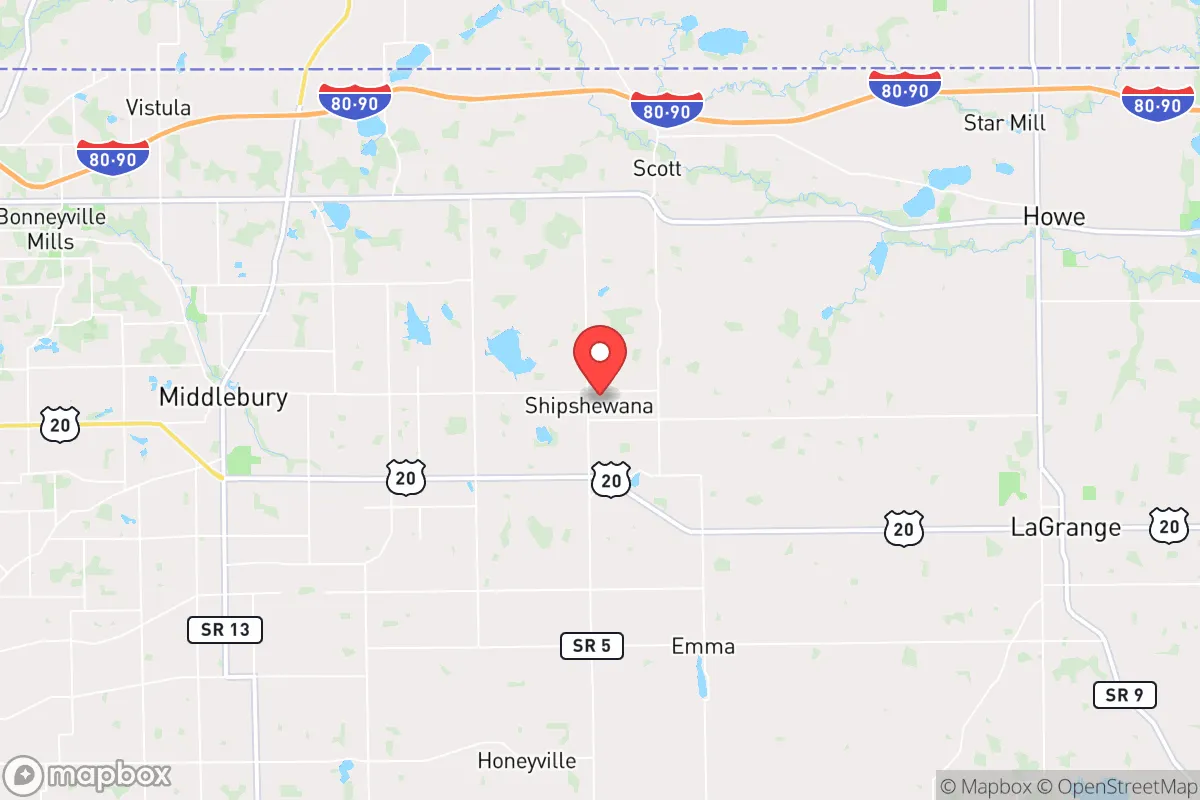
District shown is the primary district for this city’s centroid. Cities may span multiple districts.
Local Political AnalysisPolitical Analysis of Shipshewana, IN
Shipshewana sits in a political bubble that’s noticeably more conservative than the rest of Indiana. The town and its surrounding LaGrange County carry a Cook Partisan Voting Index of R+16, a full seven points redder than the state’s overall R+9 rating. That gap isn’t just a statistic—it reflects a deep, generational voting pattern driven by the area’s large Amish and Old Order Mennonite population, which turns out reliably for Republican candidates on issues of religious liberty, gun rights, and limited government. While Indiana as a whole has drifted slightly purple in suburban pockets around Indianapolis, Shipshewana has held its ground, and if anything, the rural-urban divide has hardened the local GOP advantage over the last decade.
How it compares
To understand Shipshewana’s politics, you have to look at the contrast with the rest of the state. Indiana’s R+9 PVI is driven by a mix of conservative rural counties and a few reliably Democratic urban cores like Indianapolis, Gary, and Bloomington. LaGrange County, by contrast, is one of the most reliably Republican counties in the state—often voting 75-80% for GOP candidates in statewide races. The nearest cities that break the mold are Goshen and Elkhart, about 20-30 minutes west, where a larger manufacturing workforce and a growing Hispanic population have made races more competitive. In 2020, Elkhart County went for Trump by a narrower margin than LaGrange, and Goshen’s city council has flipped between parties in recent cycles. Shipshewana itself is the epicenter of that rural conservatism—you’re more likely to hear policy talk centered on property taxes, school choice, and agricultural regulations than on urban transit or housing density.
What this means for residents
For conservative residents, the political climate in Shipshewana means their votes carry real weight in local primaries—the GOP nomination is often the de facto election. County commissioners, the sheriff, and school board seats are all decided in Republican primaries, so the real political debates happen in May, not November. For liberal residents, it means being a clear minority, but not an isolated one. Goshen and Middlebury offer a more mixed political environment, and the county’s Democratic Party, while small, is active and organizes around issues like healthcare access and public education funding. In practice, the area’s lean means local government tends to favor low taxes and minimal regulation—LaGrange County has one of the lowest property tax rates in northern Indiana—but it also means social services and public transit options are thinner than in more politically competitive areas.
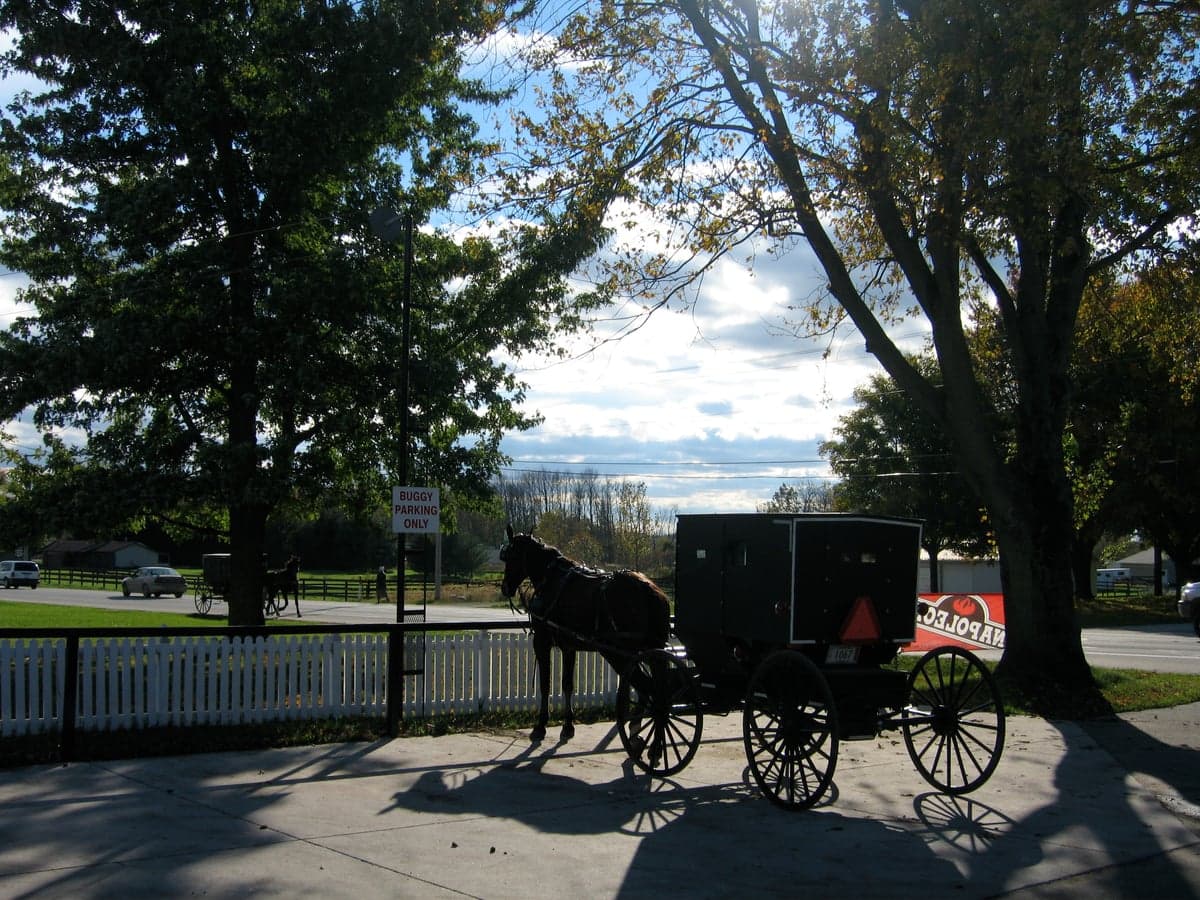
Culturally, Shipshewana’s politics are inseparable from its religious character. The Amish community doesn’t vote in large numbers, but their presence shapes the political conversation—zoning laws, horse-and-buggy traffic rules, and the balance between tourism and agricultural land use are perennial local issues. The broader non-Amish population tends to align with the national GOP platform, but with a distinctly local flavor: less focus on national culture war rhetoric, more on practical concerns like road maintenance, school funding, and keeping the county’s rural character intact. Looking ahead, the trajectory is stable. LaGrange County isn’t suburbanizing like Hamilton County, so the R+16 lean is likely to hold for the foreseeable future. But as Goshen and Elkhart continue to diversify, the political contrast between Shipshewana and its neighbors will only become more pronounced—a reminder that Indiana’s politics are far from monolithic.

State Political ClimatePolitical Climate in Indiana
State Political AnalysisPolitical Environment in the State
Indiana is a solidly Republican state with a Cook PVI of R+9, meaning it votes about nine points more Republican than the nation as a whole. The GOP has held the governor’s office for all but four of the last 20 years, and the state legislature has been under Republican supermajority control since 2010. Over the last decade-plus, the state has drifted rightward on cultural and fiscal issues even as its largest counties have become more Democratic, creating a sharp urban-rural split that defines nearly every election.
Urban vs. rural divide
The political map of Indiana is a tale of a few blue islands in a red sea. Marion County (Indianapolis) is the Democratic anchor, delivering roughly 60% of its vote to Democratic candidates in recent cycles, but it’s surrounded by a ring of deep-red suburban and exurban counties. Hamilton County, just north of Indy and home to Carmel, Fishers, and Noblesville, is the state’s wealthiest county and votes about 60-65% Republican — a classic affluent-suburb pattern that has held steady even as similar suburbs in other states have shifted left. Lake County in the northwest corner, part of the Chicago metro, is the other major Democratic stronghold, powered by union-heavy steel towns like Gary and Hammond. The rest of the state — the rural south, the agricultural west-central counties, and the small industrial cities of the east — votes overwhelmingly Republican. Fort Wayne (Allen County) and Evansville (Vanderburgh County) are reliably red, while Bloomington (Monroe County) and West Lafayette (Tippecanoe County) are the notable college-town exceptions, voting Democratic by comfortable margins. The 2024 presidential race saw Donald Trump carry the state by roughly 19 points, with rural turnout surges in counties like Kosciusko and Elkhart offsetting Democratic gains in the urban cores.
Policy environment
Indiana’s policy posture is unmistakably conservative on fiscal matters and increasingly assertive on cultural ones. The state has a flat income tax rate of 3.05% (down from 3.23% in 2023, with scheduled cuts bringing it to 2.9% by 2027), a 7% sales tax, and no inheritance or estate tax. Property taxes are capped by the state constitution at 1% of assessed value for homesteads, 2% for rental properties, and 3% for businesses — a major selling point for homeowners. The regulatory climate is business-friendly, with a right-to-work law on the books since 2012 and a tort reform regime that has kept lawsuit costs low. Education policy has moved decisively toward school choice: Indiana’s Choice Scholarship program is one of the largest private-school voucher programs in the nation, serving over 60,000 students, and the state also has a robust network of charter schools and public virtual schools. Healthcare is a mixed bag — the state did expand Medicaid under the Affordable Care Act in 2015, but it did so through a conservative “Healthy Indiana Plan” waiver that includes premiums and work requirements for some enrollees. Election laws are moderately restrictive: voter ID is required, early voting runs 28 days, and same-day registration is not allowed.
Recent policy direction
The last five years have seen Indiana’s legislature move aggressively on a broad front of liberty-related issues. On guns, Indiana became a constitutional carry state in 2022, eliminating the permit requirement for carrying a handgun in public. The same year, the legislature passed a “red flag” law repeal, replacing it with a narrower “extreme risk” order that requires a higher evidentiary bar. On education, Senate Enrolled Act 17 (2022) restricted how race and gender can be taught in K-12 classrooms, and House Enrolled Act 1449 (2023) created a parental bill of rights requiring schools to notify parents of curriculum changes and health services. On medical freedom, Indiana passed Senate Enrolled Act 8 (2023), one of the nation’s most restrictive abortion bans, prohibiting the procedure except in cases of rape, incest, or lethal fetal anomaly, with a near-total ban after 10 weeks. The state also enacted a gender-affirming care ban for minors in 2023. On privacy and surveillance, Indiana has been slower to act — there’s no comprehensive data privacy law yet, though a bill is pending. Property rights are strongly protected, with the state’s “right to farm” law shielding agricultural operations from nuisance lawsuits. On voting, the state has tightened absentee ballot rules and requires a photo ID for every ballot cast in person.
Civil unrest & political movements
Indiana’s political activism is quieter than in coastal states, but it has real flashpoints. The 2020 George Floyd protests in Indianapolis led to several nights of property damage and a heavy National Guard presence, and the city’s police department has been under a federal consent decree since 2022 over use-of-force practices. On the right, the Indiana Firearms Coalition is a well-organized force that has successfully pushed the constitutional carry and red flag repeal bills. Immigration politics are comparatively low-key — Indiana has no sanctuary cities, and Indianapolis passed an ordinance in 2020 prohibiting local police from asking about immigration status, but it was largely symbolic. The state has seen occasional nullification rhetoric from rural county commissioners, particularly around federal gun laws and COVID-era mandates, but no formal secession movement. Election integrity controversies have been minimal — Indiana’s voter ID law has been in place since 2005, and the 2020 and 2024 elections saw no major disputes. The most visible ongoing flashpoint is on college campuses: Indiana University in Bloomington has been a site of pro-Palestinian encampments and counter-protests, while Purdue in West Lafayette has seen smaller, more contained demonstrations.
Projection
Over the next five to ten years, Indiana’s political trajectory is likely to hold steady or shift slightly rightward, but with growing internal tension. The state’s population growth is concentrated in the Indianapolis suburbs — Hamilton County and Hendricks County are adding residents fast, and while they remain Republican, they’re trending toward the national suburban pattern of becoming more moderate. Meanwhile, rural counties are aging and shrinking but voting even more Republican, which keeps the overall balance stable. In-migration is modest — Indiana gains about 20,000 net new residents per year, mostly from Illinois and Michigan — and these newcomers tend to be conservative-leaning families seeking lower taxes and housing costs. The Republican supermajority is unlikely to be threatened in the next two cycles, but the internal GOP fight between the Chamber-of-Commerce wing and the more populist, culturally conservative wing will intensify. Expect continued movement on school choice expansion, further income tax cuts, and possibly a push for a constitutional amendment on school vouchers. The abortion ban will remain a live issue, with ongoing litigation and potential ballot initiatives in neighboring states putting pressure on the legislature to moderate. A new resident moving in now should expect a state that remains reliably red for the next decade, but with a growing suburban moderate bloc that could make the 2030s more competitive than the 2020s.
For a new resident, the bottom line is this: Indiana delivers what its political climate promises — low taxes, light regulation, strong gun rights, and a school choice system that gives parents real options. Conservative families will find a state where their values are reflected in law and where the political culture is pragmatic rather than theatrical. Liberal residents will find themselves in a clear minority, but not an oppressed one — Indianapolis, Bloomington, and West Lafayette offer blue enclaves with progressive institutions, and the state’s culture of neighborliness means politics rarely intrudes on daily life. The practical takeaway is that Indiana is a place where you can live your life largely free of political friction, but where the direction of state policy will continue to be set by rural and suburban conservatives for the foreseeable future.
* Values derived from national, state, county, city and local statistics and may differ in a specific area. Last updated: 2026-10-31T19:15:41.000Z
Narrative content on this page is AI-generated and may contain mistakes. Verify any details that matter before acting on them.
ReloMaps may earn a commission from affiliate links at no extra cost to you.

