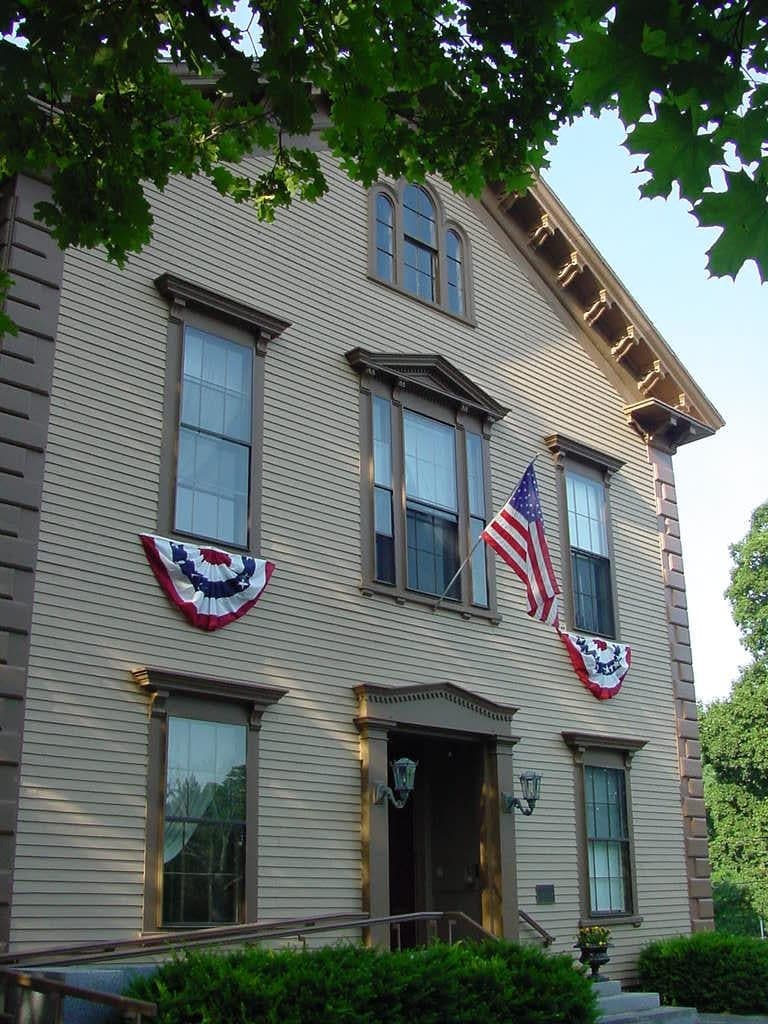
Photo: Wikipedia
Political ClimatePolitical Climate in Sherborn, MA
District shown is the primary district for this city’s centroid. Cities may span multiple districts.
Lean and PVI are calculated from Sherborn, MA’s own 2020 and 2024 presidential results, Cook-style. Sources: state election offices; VEST 2020 precinct results (CC BY 4.0).
Political rankings in Massachusetts
- Most Conservative Cities in Massachusetts
- Most Liberal Cities in Massachusetts
- Best Conservative-Leaning Towns in New England
- Best Conservative-Leaning Towns in the Northeast
- Safest Liberal-Leaning Towns on the East Coast
- Safest Conservative-Leaning Towns on the East Coast
- Most Affordable Liberal-Leaning Small Towns in the U.S.
- Safest Liberal-Leaning Cities in the U.S.
- Most Conservative Counties in Massachusetts
- Most Liberal Counties in Massachusetts
Local Political AnalysisPolitical Analysis of Sherborn, MA
Sherborn, Massachusetts, is a reliably Democratic town, but its politics are more moderate than the state's deep-blue reputation might suggest. With a Cook Partisan Voting Index (PVI) of D+11, Sherborn leans left, but it is noticeably less progressive than Massachusetts as a whole, which carries a D+15 PVI. This difference reflects Sherborn's character as a wealthy, semi-rural community where fiscal conservatism and environmental stewardship often coexist with socially liberal views, creating a political climate that is more pragmatic than ideological.
How it compares
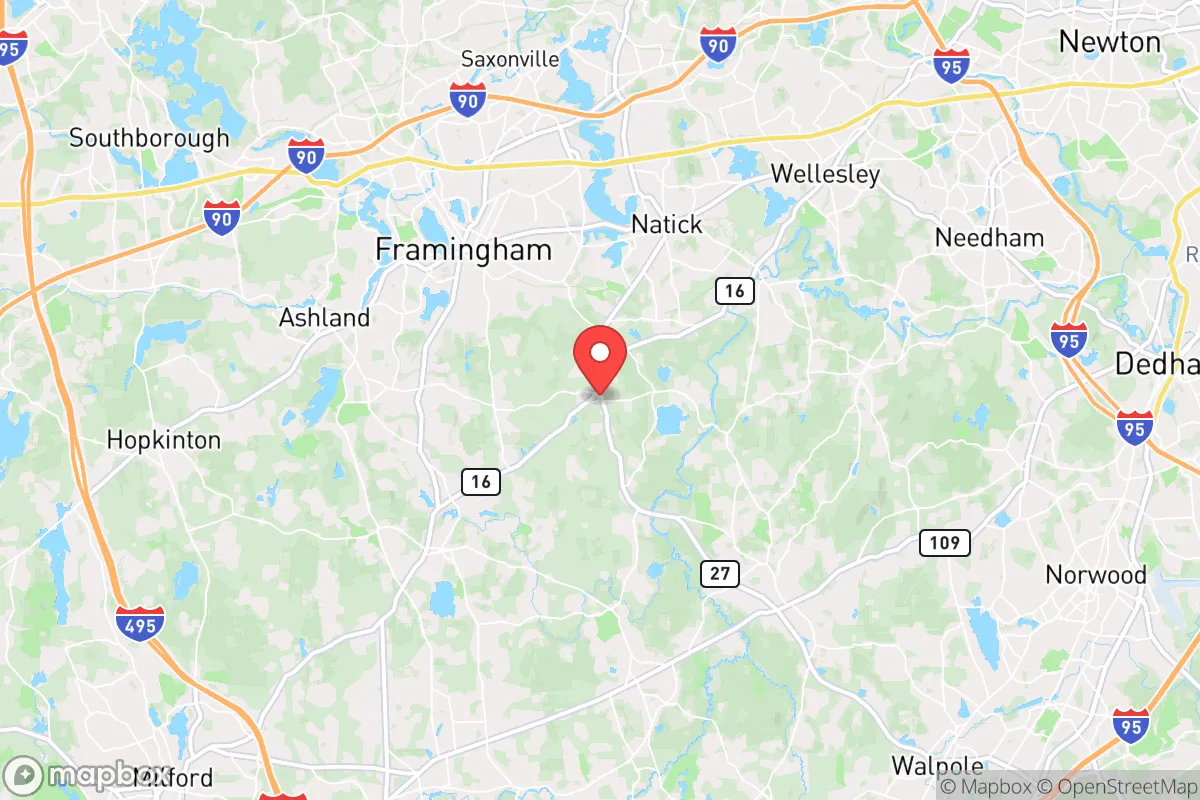
Sherborn's D+11 PVI places it squarely in the Democratic column, but it is a full four points more moderate than the state average. In practice, this means Sherborn often votes for Democratic candidates by comfortable margins, but not by the overwhelming landslides seen in neighboring communities like Natick (D+18) or Wellesley (D+16). The town's Republican voters, while a minority, are more visible and organized here than in many other MetroWest suburbs. For example, in the 2022 gubernatorial race, Democrat Maura Healey won Sherborn with about 60% of the vote, compared to her 64% statewide. This gap is consistent: Sherborn's Republican candidates for local and state offices regularly pull 35-40% of the vote, a share that would be unthinkable in Cambridge or Brookline. The nearby town of Dover, with a similar demographic profile, shows a nearly identical pattern, while Holliston to the west leans slightly more conservative, often voting within a few points of the state average.
What this means for residents
For liberal residents, Sherborn offers a comfortable environment where progressive values on social issues like marriage equality, abortion rights, and climate action are broadly shared. Town meetings routinely pass resolutions supporting renewable energy and conservation, and the local Democratic committee is active. However, the town's fiscal conservatism means that tax increases and large spending projects face genuine scrutiny, even from Democratic voters. For conservative residents, Sherborn is a place where their views are a minority but not a fringe. They can find like-minded neighbors, especially around issues of property rights, school choice, and local control. The town's Republican committee holds regular events, and conservative candidates for local office—like the Select Board or School Committee—can win if they focus on non-partisan issues like budget discipline or zoning. The key is that political disagreements here are usually civil and grounded in shared concerns about the town's character and finances, not national culture wars.
One cultural distinction that shapes Sherborn's politics is its strong tradition of town meeting governance. This direct democracy forces residents to engage with issues like school budgets, road repairs, and conservation land purchases in a concrete, non-partisan way. As a result, political identity here is often less about party labels and more about how a candidate or policy affects the town's rural feel, property values, and school system. The town's high property taxes—among the highest in the state—are a perennial topic, and both Democrats and Republicans frequently unite to oppose state mandates that drive up local costs. Looking ahead, Sherborn's political trajectory is likely to remain stable: it will continue to vote Democratic in national and state races, but its local politics will stay pragmatic and slightly more conservative than the state as a whole. The influx of new residents from Boston and Cambridge during the pandemic has nudged the town slightly leftward, but the pace of change is slow, and the town's independent streak endures.

State Political ClimatePolitical Climate in Massachusetts
State Political AnalysisPolitical Environment in the State
Massachusetts is one of the most reliably Democratic states in the country, with a Cook Partisan Voting Index of D+15, meaning it votes about 15 points more Democratic than the national average in presidential elections. The state hasn't voted for a Republican presidential candidate since Ronald Reagan in 1984, and the Democratic Party holds every statewide office and a supermajority in both legislative chambers. Over the last 10-20 years, the state has shifted further left, driven by the Boston metro area's explosive growth and the exodus of moderate Republicans from the suburbs, though a stubborn, culturally conservative minority holds firm in the central and western parts of the state.
Urban vs. rural divide
The political map of Massachusetts is a tale of two states. The eastern third, anchored by Boston, Cambridge, and Somerville, is the engine of the state's Democratic dominance. These cities vote 80-90% Democratic and are home to the university, tech, and healthcare sectors that drive the state's economy. The inner-ring suburbs like Newton and Brookline are similarly deep blue, though they've become more progressive on social issues over the past decade. The western part of the state, particularly the Berkshires and the Connecticut River Valley around Springfield and Northampton, is also reliably Democratic, but with a more populist, union-oriented flavor. The real Republican strongholds are the small towns and exurbs of central and southeastern Massachusetts. Places like Plymouth and Wrentham in the southeast, and Leominster and Fitchburg in the north-central region, often vote 55-60% Republican. The Cape and Islands (Barnstable, Nantucket) are swing areas, leaning slightly Democratic but with a strong independent streak. The rural western hill towns, like Blandford and Chester, are among the few places where a Republican can win a county-level race.
Policy environment
Massachusetts has a high-tax, high-service policy environment that is a core feature of its identity. The state has a flat income tax rate of 5%, but a 2022 ballot question added a 4% surtax on income over $1 million, making the top marginal rate 9%. Property taxes are moderate by national standards but high for the region, averaging about 1.1% of home value. Sales tax is 6.25%, with no local add-ons. The regulatory posture is among the most stringent in the country, particularly in environmental permitting, housing construction, and healthcare. The state has near-universal health insurance coverage through a 2006 law that served as a model for the Affordable Care Act. Education policy is centralized and well-funded: Massachusetts consistently ranks first in the nation for K-12 outcomes, but the state Board of Education has significant control over curriculum and standards. Election laws are among the most accessible in the country: no-excuse mail-in voting, same-day registration, and early voting are all permanent fixtures. The state also has a strong public records law and an independent ethics commission.
Recent policy direction
The last five years have seen a sharp acceleration of progressive policy. On gun and self-defense law, Massachusetts already had some of the strictest laws in the nation, but a 2024 law expanded the "red flag" order system, banned "ghost guns," and required microstamping for new handguns. The state also has a "may issue" concealed carry system, though a 2022 Supreme Court ruling (NYSRPA v. Bruen) has led to a more permissive issuance standard in practice. On parental and education rights, the state has moved in the opposite direction from many red states: a 2023 law prohibits school districts from notifying parents if a child changes their gender identity or pronouns, and the state Board of Education has mandated LGBTQ-inclusive curriculum. On speech and privacy, Massachusetts has a strong state-level shield law for journalists and a 2023 law restricting the use of facial recognition by police. On medical and bodily autonomy, the state has codified abortion rights into law (the 2020 ROE Act) and passed a 2023 law protecting gender-affirming care for minors from out-of-state legal challenges. On property rights, the state has a strong "right to farm" law, but local zoning boards have immense power to block development, leading to a severe housing shortage. On taxation, the 2022 millionaire's tax is the most significant recent change, and there is growing pressure for a graduated income tax. On voting and ballot access, the state has expanded mail-in voting permanently and passed a 2022 law requiring all jails and prisons to provide voting access to inmates.
Civil unrest & political movements
Massachusetts has a long history of organized political activism, but it's generally more institutional than confrontational. The most visible flashpoints in recent years have been around immigration and sanctuary policies. The state has a "Trust Act" (2017) that limits local police cooperation with federal immigration enforcement, and Boston is a self-declared "sanctuary city." This has led to periodic protests from both sides, particularly when the state has housed migrant families in hotels and motels. In 2023, the state declared a state of emergency over the influx of migrants, straining shelter resources. On the right, the "Massachusetts Fiscal Alliance" and local Republican committees organize around tax and spending issues, but they lack the mass mobilization seen in other states. There have been no significant secession or nullification movements. Election integrity controversies are minimal; the state's vote-by-mail system ran smoothly in 2020 and 2024, and there is broad bipartisan trust in the Secretary of State's office. The most notable protest in recent memory was the 2022-2023 "Right to Shelter" protests, where advocates clashed with the state over housing migrants in public spaces.
Projection
Over the next 5-10 years, Massachusetts will likely become even more Democratic, but with a growing internal tension between the progressive Boston metro and the rest of the state. The Boston area's economy continues to attract young, college-educated professionals from across the country and the world, who tend to vote Democratic. The state's population is aging, and the rural, Republican-leaning areas are shrinking. However, the housing crisis is pushing some families out of the state entirely, and the high cost of living is a major political issue. The most likely scenario is that the state's Democratic supermajority holds, but the party's internal divisions—between the "moderate" wing (Governor Maura Healey) and the "progressive" wing (the Boston City Council and state legislators from Cambridge)—will become more pronounced. A new resident moving in now should expect a state where the political culture is set by Boston, but where the cost of living and regulatory environment will continue to be the dominant practical concerns.
For a conservative-leaning relocator, the bottom line is this: Massachusetts is a state where your vote in a statewide election will almost certainly not change the outcome, but where you can find like-minded communities in specific towns and counties. The policy environment is unapologetically progressive on social issues, taxes, and regulation, but the state's strong economy, excellent schools, and high quality of life are real trade-offs. If you value low taxes, gun rights, or parental control over education, you will find Massachusetts a difficult place to live. If you prioritize world-class healthcare, top-tier public schools, and a stable, well-run government, the state delivers—but you'll pay for it, both in taxes and in the cost of housing. The key is to choose your town carefully: Plymouth or Wrentham will feel very different from Cambridge or Northampton.
* Values derived from national, state, county, city and local statistics and may differ in a specific area. Last updated: 2026-11-09T06:04:24.000Z
Narrative content on this page is AI-generated and may contain mistakes. Verify any details that matter before acting on them.
ReloMaps may earn a commission from affiliate links at no extra cost to you.

