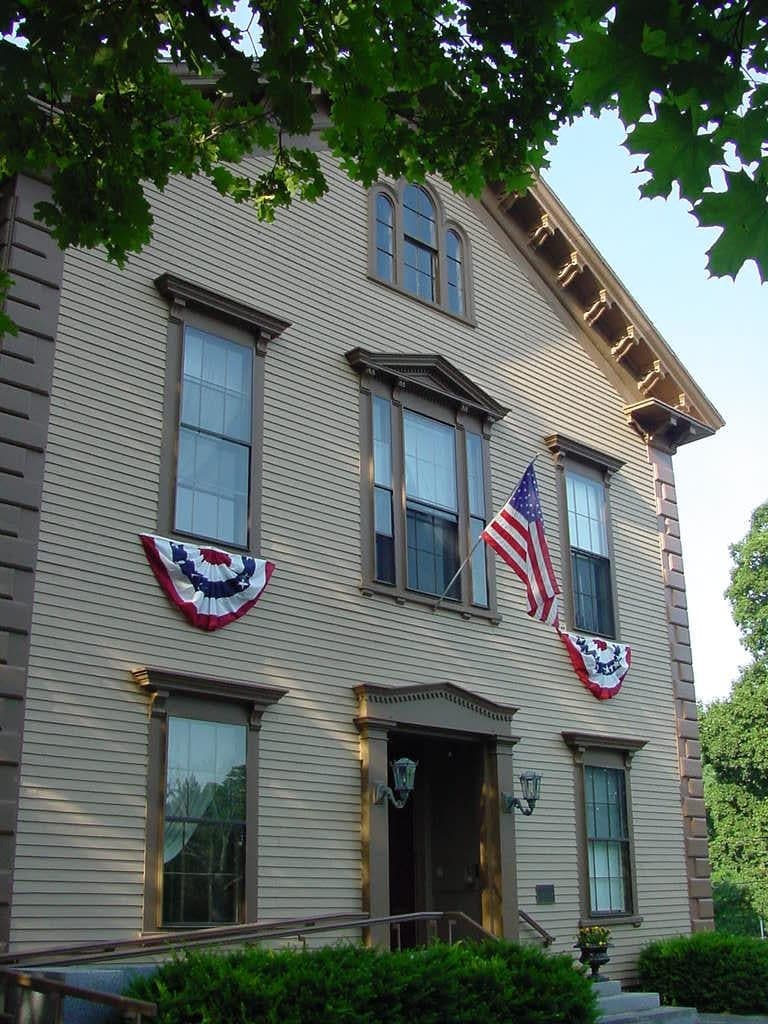
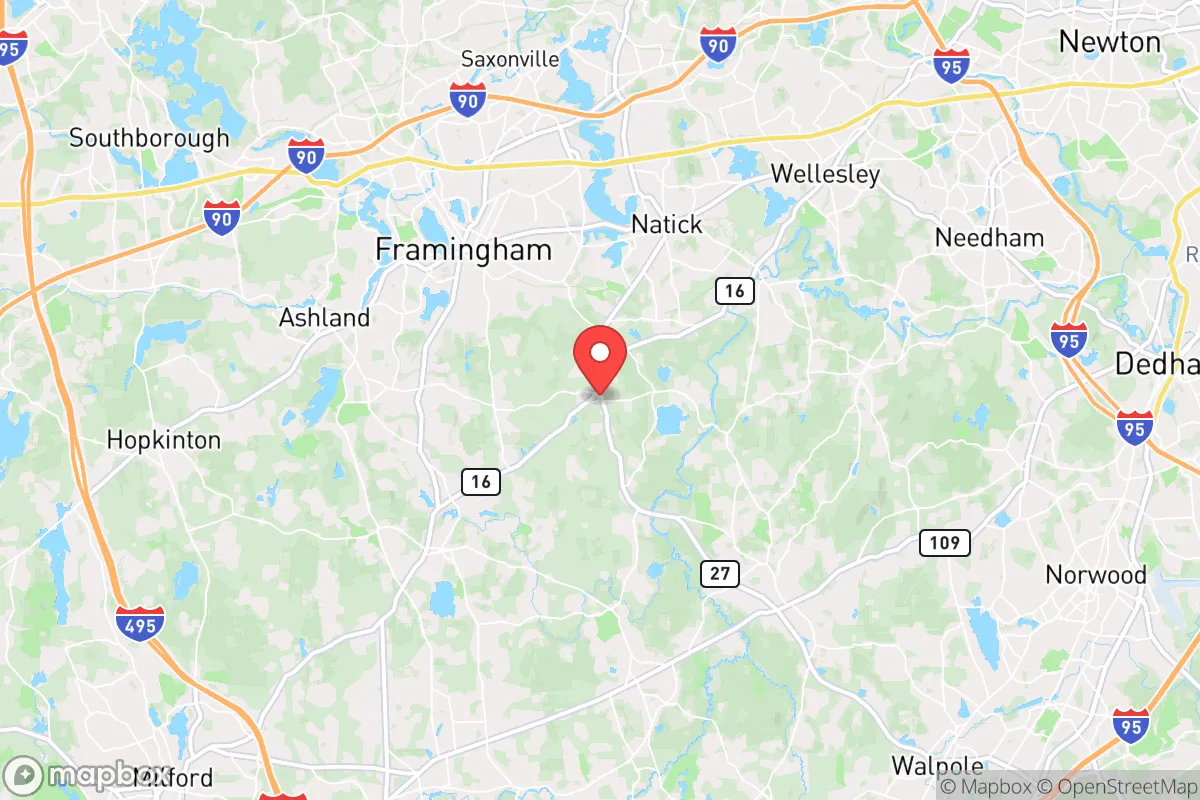
Photo: Wikipedia
Demographics of Sherborn, MA
Affluence Level in Sherborn, MA
A wealthy area with high-earning, well-educated households. Incomes, home values, and educational attainment meaningfully outpace national averages.
People of Sherborn, MA
Sherborn, Massachusetts, is a small, affluent town of 4,404 residents that has evolved from a quiet farming community into a sought-after suburban enclave for highly educated professionals. With 81.2% of adults holding a college degree and a foreign-born population of 6.7%, the town is notably homogeneous compared to nearby Metro West suburbs, yet it has seen modest diversification in recent decades. Its identity is defined by large-lot zoning, preserved open space, and a strong sense of local governance, attracting families who prioritize privacy, land, and top-rated schools over urban convenience.
How the city was settled and grew
Sherborn was first settled by English colonists in the 1650s, part of the Dedham grant, and incorporated as a separate town in 1674. The original population were Puritan farmers drawn by the fertile soils along the Charles River and the promise of religious self-governance. Early settlement clustered around what is now the Sherborn Center Historic District, where the town’s first meetinghouse, tavern, and blacksmith shop stood. During the 18th and 19th centuries, the town remained overwhelmingly rural and Yankee, with small-scale agriculture and a handful of gristmills and sawmills along the Stop River. The arrival of the railroad in the 1850s spurred a modest influx of Irish laborers, who settled in the Farm Pond area and worked on local farms and estates. By 1900, Sherborn’s population hovered around 1,000, and it remained a quiet, sparsely populated farming community through the mid-20th century, with little new development until the post-war era.
Modern era (post-1965)
The 1965 Immigration and Nationality Act had a minimal direct impact on Sherborn, as the town’s growth came primarily from domestic in-migration rather than foreign-born arrivals. The major shift began in the 1970s and 1980s, when professionals working in Boston and the Route 128 technology corridor discovered Sherborn’s large lots (minimum 2-acre zoning) and low property taxes. This wave of domestic migrants—mostly white, college-educated families—built homes in the Pine Hill and North Sherborn neighborhoods, areas that remain the most affluent and homogeneous parts of town today. The foreign-born population, at 6.7%, is modest but notable. East and Southeast Asian residents (5.1%) are the largest non-white group, with many families concentrated in the Chase Road and Lake Street corridors, drawn by the school system and proximity to biotech employers in Framingham and Natick. Indian-subcontinent residents (4.0%) form a smaller but growing community, often settling in newer subdivisions near the Dover line. The Hispanic (1.9%) and Black (0.5%) populations remain very small, reflecting Sherborn’s limited housing stock and high entry costs. The town’s racial composition—80.1% white—has shifted only gradually, with most diversification occurring since 2000.
The future
Sherborn’s population is projected to remain stable or grow very slowly, constrained by zoning that limits new construction and a lack of rental housing. The town is becoming slightly more diverse, driven by East/Southeast Asian and Indian-subcontinent families who are attracted to the school system and willing to pay a premium for large lots. These new residents are dispersing across the town rather than clustering in a single ethnic enclave, though the Pine Hill area remains overwhelmingly white. The Hispanic and Black populations are likely to remain below 3% combined for the foreseeable future, as Sherborn’s housing costs and lack of transit access limit appeal to lower-income households. The cultural identity is evolving from a traditional Yankee farming town to a professional-class bedroom community, but the pace of change is slow. The next 10-20 years will likely see continued modest diversification among the college-educated professional class, with the town’s character remaining defined by its rural zoning, high property values, and strong local schools.
For someone moving in now, Sherborn offers a stable, low-density, and highly educated community where change is gradual and deliberate. It is not a place of rapid demographic transformation, but rather a town where new residents—particularly those from East/Southeast Asian and Indian-subcontinent backgrounds—are quietly reshaping the population while preserving its essential character as a quiet, land-rich suburb for families who value space and privacy over diversity and convenience.

* Values derived from national, state, county, city and local statistics and may differ in a specific area. Last updated: 2026-11-09T06:04:24.000Z
Narrative content on this page is AI-generated and may contain mistakes. Verify any details that matter before acting on them.
ReloMaps may earn a commission from affiliate links at no extra cost to you.

