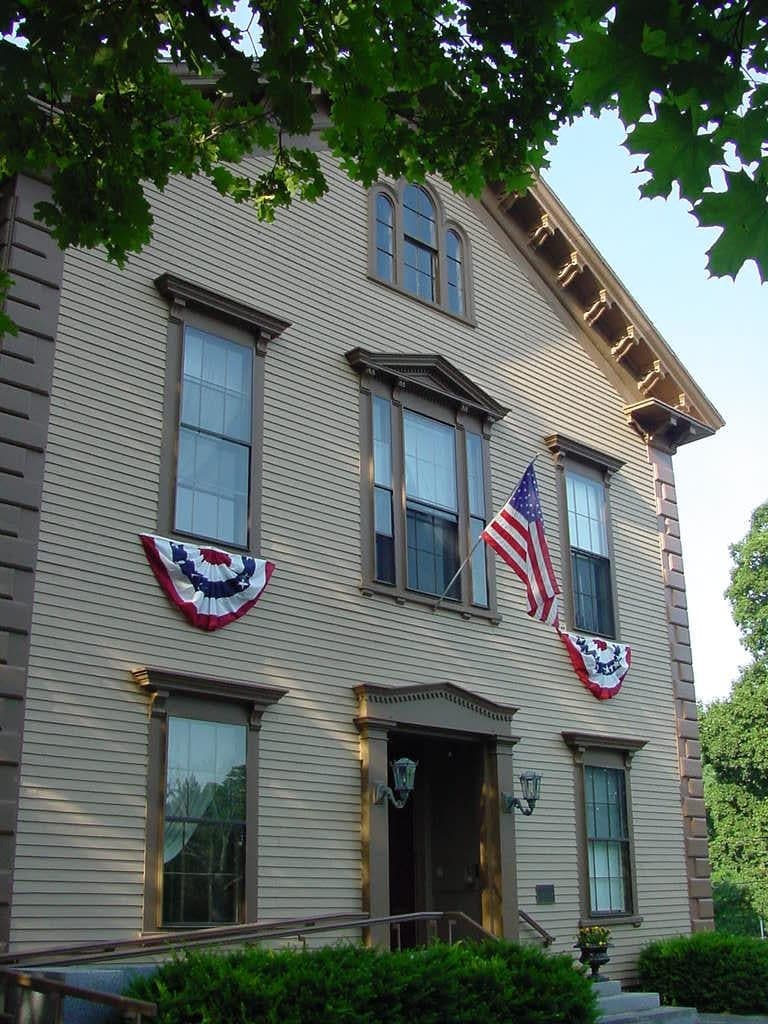
Photo: Wikipedia
Personal Sovereignty in Sherborn, MA
Viable for self-reliance. Generally workable, though some barriers may limit total independence.
What does Personal Sovereignty tell us?
Personal Sovereignty measures your capacity for self-reliance and independence with minimal government friction. Higher scores mean fewer barriers between you and the way you want to live... but it assumes you have the space you need and good neighbors.
What does this tell us?
Personal Sovereignty measures your capacity for self-reliance and independence with minimal government friction. Higher scores mean fewer barriers between you and the way you want to live... but it assumes you have the space you need and good neighbors.
State Policy
Energy independence: Importer (5% of energy produced in-state)
Personal Liberty
Homesteading

Personal Liberty Analysis
Sherborn, Massachusetts, presents a nuanced personal sovereignty environment that is best described as high in community autonomy but constrained by state-level mandates. While the town’s local governance is notably light-touch—with minimal zoning enforcement and a strong tradition of self-reliance—residents operate within Massachusetts’ broader regulatory framework, which imposes significant taxes, strict gun laws, and comprehensive state oversight on education and healthcare. For a conservative-leaning individual or family, Sherborn offers a unique trade-off: exceptional local freedom and privacy, paired with a high cost of compliance with state-level policies.
Tax burden and regulatory posture: How Massachusetts state policy shapes local autonomy
Massachusetts carries a heavy tax and regulatory burden that directly impacts Sherborn residents. The state’s income tax rate is a flat 5.0% (as of 2026), and its sales tax is 6.25%, both above national averages. Property taxes in Sherborn are substantial, with a 2025 rate of approximately $13.50 per $1,000 of assessed value, placing the town in the upper tier of Middlesex County. For a median home valued around $1.2 million, annual property taxes exceed $16,000. This is a direct cost of living in a town with excellent schools and low crime, but it represents a significant financial commitment for those prioritizing tax minimization.
Regulatory posture at the state level is interventionist. Massachusetts mandates strict building codes, energy efficiency standards (including the “stretch code” adopted by Sherborn), and environmental regulations that limit land use. However, Sherborn’s local government is notably hands-off. The town has no zoning board of appeals for most residential projects, and the Planning Board operates with a presumption of approval for standard home additions, fences, and sheds. This local deference to property rights is a key differentiator from neighboring towns like Wellesley or Needham, where permitting is more rigorous. For a homeowner seeking to modify their property without bureaucratic delays, Sherborn’s local posture is favorable, but state-level environmental and energy mandates still apply.
Self-defense and gun law specifics: Navigating Massachusetts’ strict firearms framework
Massachusetts has some of the most restrictive gun laws in the United States, and Sherborn residents must comply fully. The state requires a License to Carry (LTC) for both open and concealed carry, which is issued by the local police department. Sherborn’s police chief has historically been reasonable in issuing LTCs to qualified applicants, but the process involves a background check, fingerprinting, a firearms safety course, and a 90-day wait. The state bans “assault weapons” (as defined by Massachusetts law), limits magazine capacity to 10 rounds, and requires all firearm transfers to go through a licensed dealer with a background check.
Self-defense law in Massachusetts is not “stand your ground.” The state follows a “duty to retreat” standard, meaning a person must attempt to avoid a confrontation before using deadly force, unless they are in their own home (the “castle doctrine” applies). This is a critical distinction for those accustomed to more permissive self-defense laws in states like Texas or Florida. In practice, Sherborn’s low crime rate means most residents never face a self-defense scenario, but the legal framework is restrictive. For a gun owner, the key takeaway is that compliance is mandatory and non-negotiable; the town itself is not the obstacle, but the state’s laws are. Safe storage laws also require firearms to be locked in a secure container or with a trigger lock when not in use.
Self-reliance and homesteading viability: Lot sizes, zoning, and off-grid feasibility in Sherborn
Sherborn is one of the most viable towns in Greater Boston for self-reliance and homesteading. The town’s minimum lot size is 2 acres in most residential zones, with many properties on 3 to 5 acres. This provides ample space for gardens, small orchards, and livestock. Zoning allows for up to 6 chickens per lot without a permit, and larger livestock (goats, sheep, horses) are permitted on lots of 2 acres or more with a simple animal husbandry permit from the Board of Health. Beekeeping is also allowed with registration.
Off-grid feasibility is limited by state building codes. Massachusetts requires all new homes to be connected to the electrical grid, and solar panels must be grid-tied. However, Sherborn’s rural character means many homes already have private wells and septic systems, reducing dependence on municipal utilities. Rainwater collection is legal for non-potable uses, and composting toilets are permitted with a variance. The town has no municipal water or sewer service, so residents are responsible for their own water supply and waste treatment. This fosters a self-reliant mindset, but full off-grid living (no grid electricity, no state inspections) is not legally achievable. For a family wanting to grow food, keep animals, and reduce utility bills, Sherborn is excellent; for those seeking complete independence from state oversight, it is not.
Personal liberties: Parental rights, medical autonomy, speech, and property
Parental rights in Massachusetts are subject to state oversight. The state has mandatory vaccination requirements for school attendance (with medical and religious exemptions, but no philosophical exemption), and the Department of Children and Families (DCF) has broad authority to investigate reports of neglect or educational neglect. Homeschooling is legal and relatively straightforward: parents must submit an annual educational plan to the school district, which Sherborn’s school committee typically approves without issue. The town’s small, community-oriented school system (Sherborn Public Schools, K-8, with high school tuitioned to Dover-Sherborn Regional) is responsive to parental input, but state curriculum frameworks and standardized testing requirements still apply.
Medical autonomy is constrained by state law. Massachusetts has a mandatory health insurance requirement (the individual mandate), and the state’s Medicaid expansion means most medical decisions are mediated by insurance protocols. Alternative medicine (naturopathy, functional medicine) is legal but not covered by many plans. For those seeking medical freedom, the state’s regulatory environment is heavy, but Sherborn’s proximity to Boston provides access to world-class medical facilities for those who can afford out-of-network care.
Free speech and property rights are robust at the local level. Sherborn has no sign ordinances that restrict political or religious expression on private property, and the town’s small population means neighbors generally respect each other’s privacy. Property rights are strong in terms of use (you can build, garden, and keep animals), but the state’s estate tax (starting at $1 million) and conservation restrictions (many properties are in the Sudbury River watershed) can limit development and inheritance. For a family wanting to live quietly, express their values, and control their land, Sherborn is permissive; for those wanting to avoid state interference in medical or educational choices, the town’s location within Massachusetts is a limiting factor.
Overall, Sherborn offers a high degree of personal sovereignty relative to other Boston suburbs, particularly in terms of land use, privacy, and local governance. The town’s rural zoning, low crime, and hands-off local government create an environment where self-reliance is practical and respected. However, the state-level tax burden, restrictive gun laws, and mandatory health and education policies mean that Sherborn is not a libertarian haven. For a conservative-leaning individual or family who values community, space, and local control—and is willing to pay a premium in taxes and comply with state mandates—Sherborn is one of the best options in Massachusetts. For those seeking minimal government at all levels, states like New Hampshire or Texas would offer a more consistent sovereignty environment.

* Values derived from national, state, county, city and local statistics and may differ in a specific area. Last updated: 2026-11-09T06:04:24.000Z
Narrative content on this page is AI-generated and may contain mistakes. Verify any details that matter before acting on them.
ReloMaps may earn a commission from affiliate links at no extra cost to you.

