
Photo: Wikipedia
Political ClimatePolitical Climate in Shell Knob, MO
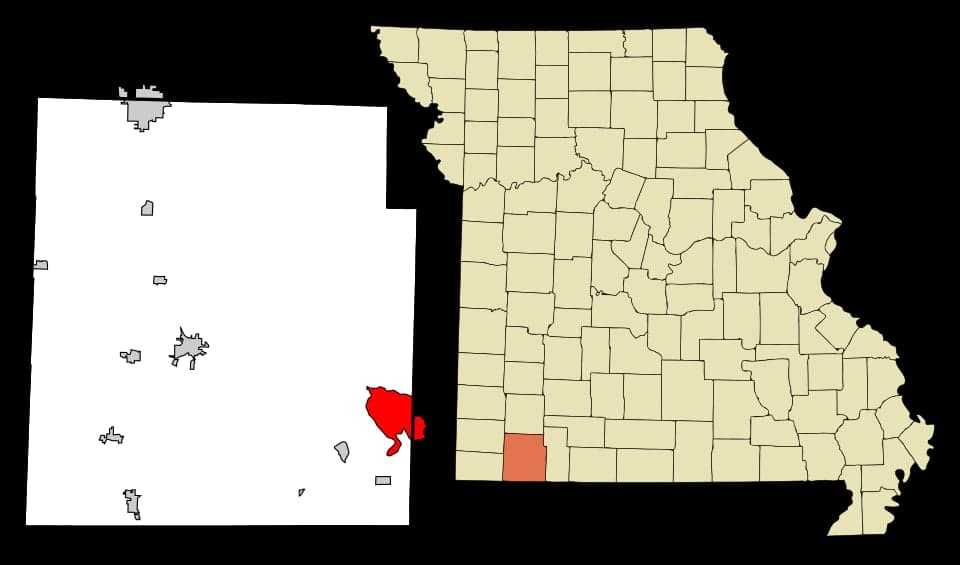
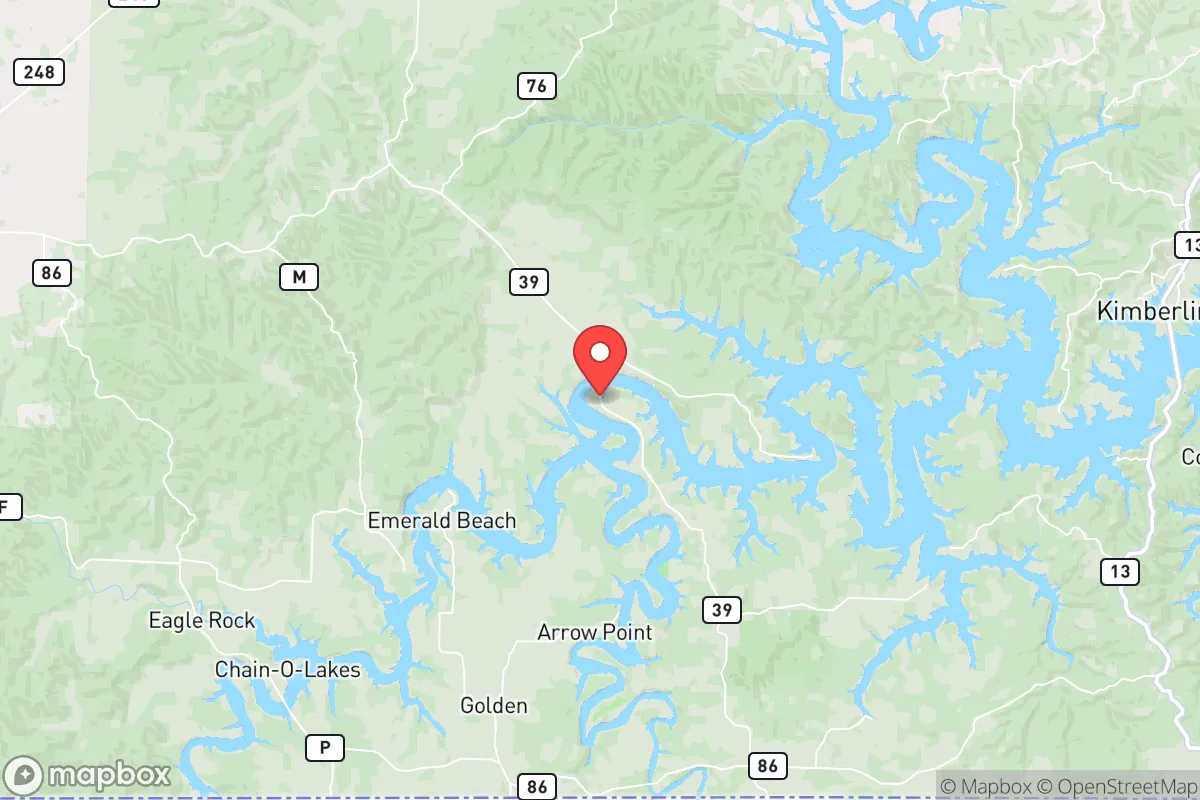
District shown is the primary district for this city’s centroid. Cities may span multiple districts.
Local Political AnalysisPolitical Analysis of Shell Knob, MO
Shell Knob sits in one of the most reliably Republican corners of Missouri, carrying a Cook PVI of R+21 — that’s a full 13 points more conservative than the state as a whole, which sits at R+8. This isn’t a recent shift; the area has been trending red for decades, and the only real question in most local elections is the margin, not the outcome. If you’re moving here from a purple or blue county, the political landscape will be immediately noticeable, but it’s also more layered than the raw numbers suggest.
How it compares
To put Shell Knob’s R+21 in context, it’s roughly on par with the deepest-red rural counties in the Ozarks, like nearby Stone and Barry counties, which routinely deliver 75-80% of the vote to Republican candidates. The contrast with Missouri’s overall R+8 is stark because the state’s lean is pulled toward the center by the St. Louis and Kansas City metros, plus college towns like Columbia. Within a 30-minute drive, you’ll find communities that feel politically different: Berryville and Eureka Springs in Arkansas are noticeably more moderate or even liberal-leaning, especially Eureka Springs, which has a visible LGBTQ+ community and a reputation as an arts enclave. Closer to home, Branson leans heavily conservative but is more tourism-driven and transient, while Cassville and Monett are more traditional, family-farm conservative. Shell Knob itself is a bit of a hybrid — a retirement and lake community where many residents moved from out of state, so you’ll meet plenty of folks who brought their politics with them from Chicago, Dallas, or Denver, though the overwhelming majority of those transplants lean right.
What this means for residents
For conservative residents, the practical reality is that local government, school boards, and county commissions are almost uniformly Republican, which means policy tends to align with small-government, low-tax, and Second Amendment priorities without much friction. For liberal or moderate residents, the experience is different: you’ll likely be in the minority, but not isolated — there are active Democratic and independent groups in the broader Barry-Stone county area, and the lake community’s seasonal population brings a wider range of viewpoints than the year-round census suggests. What matters more than party registration here is how you engage. Local issues — lake access, septic regulations, road maintenance, and school funding — are where decisions actually get made, and those are often less partisan than national politics. That said, national issues do filter down: expect to see plenty of Trump and conservative signage during election cycles, and local churches and veterans’ organizations are central social hubs where political talk is common but generally civil.
What this means for residents
One cultural distinction worth noting: Shell Knob’s politics are shaped heavily by its identity as a retirement and recreation destination, not a farming or manufacturing town. That means the local Republicanism tends to be more libertarian-leaning than the social-conservative strain you’d find deeper in the rural Ozarks — people here generally want to be left alone, value property rights, and are less interested in policing morality than in keeping taxes low and regulations light. The trajectory over the next decade is likely to hold steady or shift slightly further right, driven by continued in-migration of conservative retirees from red and purple states. For anyone considering a move, the honest take is this: if you’re conservative, you’ll feel at home; if you’re not, you can still build a good life here by focusing on the lake, the community, and the shared love of the outdoors — just know the political winds blow one way, and they’re not changing course anytime soon.

State Political ClimatePolitical Climate in Missouri
State Political AnalysisPolitical Environment in the State
Missouri has been a reliably Republican state for the past two decades, carrying a Cook Partisan Voting Index of R+8, but it wasn’t always this way. As recently as 2008, the state voted for a Democratic presidential candidate (Barack Obama), and it was a perennial bellwether for most of the 20th century. Today, the GOP holds a supermajority in both chambers of the state legislature, controls the governorship, and has won every presidential race here since 2000, with margins widening from a nail-biter in 2008 to double-digit blowouts in 2016 and 2020. The shift isn’t just about rural voters; it’s about the collapse of the old Democratic coalition in working-class areas like St. Louis County’s exurbs and the former lead-mining towns of the Ozarks, which have moved hard to the right over the last 15 years.
Urban vs. rural divide
The political map of Missouri is a tale of two metros and a whole lot of countryside. St. Louis City and its inner-ring suburbs in St. Louis County are the Democratic anchor, delivering margins of 70-80% for statewide Democrats, but the party’s strength stops abruptly at the county line. Kansas City, on the western edge, is the other blue island, with Jackson County (home to Kansas City proper) voting Democratic by similar margins, though the surrounding suburbs in Clay and Platte Counties have trended Republican over the last decade. The real story is the rural and exurban expanse between and around these metros: the I-70 corridor west of Columbia, the entire southern half of the state (the Ozarks), and the Bootheel are now solidly Republican, often by 70-80% margins. The most dramatic shift has been in the outer ring of St. Louis — places like St. Charles County, which was a swing area in the 1990s and now votes 65%+ Republican, and Jefferson County, which flipped from blue to deep red between 2008 and 2016. Springfield, the third-largest city, is the conservative heart of the state, surrounded by counties that routinely vote 80%+ Republican. Columbia, home to the University of Missouri, is the notable outlier — a blue dot in the middle of the state, but its influence is limited to Boone County.
Policy environment
Missouri’s policy environment is defined by low taxes, a right-to-work law (though it was repealed by referendum in 2018), and a constitutional amendment that caps property taxes for seniors. The state has no income tax on Social Security benefits, and the top marginal income tax rate was cut to 4.95% in 2023, with a path to further reductions. Sales taxes are on the higher side (state rate of 4.225%, plus local add-ons that can push it past 9% in some cities), and the state relies heavily on them. Education policy is a battleground: Missouri has a robust charter school presence in St. Louis and Kansas City, but the state legislature has been fighting over private school vouchers for years, with a modest ESA (education savings account) program passing in 2021 and expanding in 2023. Healthcare is a mixed bag — Missouri expanded Medicaid in 2021 via a ballot initiative (Amendment 2), which passed with 53% support despite strong legislative opposition, but the state still has some of the most restrictive abortion laws in the country, with a near-total ban in effect since 2022. Election laws have tightened: the state passed a voter ID requirement in 2022 and banned ballot drop boxes, though no-excuse absentee voting remains available.
Recent policy direction
The last three years have seen Missouri’s legislature push aggressively on cultural and liberty issues. The Second Amendment Preservation Act (SAPA), passed in 2021, purports to nullify federal gun laws within the state — a move that drew a federal lawsuit and has been partially struck down, but it signals the state’s posture on firearms. Missouri is a constitutional carry state (permitless carry since 2017), and the legislature has repeatedly rejected red flag laws. On education, the state passed the "Parents’ Bill of Rights" in 2022, requiring schools to notify parents of curriculum changes and prohibiting instruction on gender identity in grades K-3. In 2023, the legislature banned gender-affirming care for minors, overriding the governor’s veto. On the tax front, the state has been cutting income taxes annually since 2021, with a goal of phasing out the individual income tax entirely over the next decade. Property rights are strongly protected — Missouri has a right-to-farm constitutional amendment, and the legislature has repeatedly preempted local ordinances that regulate agriculture. On voting, the state has moved to require photo ID and has purged voter rolls more aggressively than most states, though same-day registration is still allowed.
Civil unrest & political movements
Missouri has been a flashpoint for national political movements, most notably in Ferguson (a suburb of St. Louis) in 2014, where the shooting of Michael Brown sparked weeks of protests and the rise of the Black Lives Matter movement. That event reshaped local politics — Ferguson’s city government was overhauled, and St. Louis County has since elected a Democratic county executive who has pushed for police reform. More recently, the state has seen organized opposition to COVID-19 mandates, with large protests at the state capitol in Jefferson City in 2021, and the legislature passed laws banning vaccine mandates for state employees and students. Immigration politics are less heated than in border states, but the legislature has passed bills requiring local law enforcement to cooperate with federal immigration authorities, and St. Louis has been a sanctuary city in practice, though not by ordinance. The state has seen periodic calls for secession from rural counties — in 2021, a handful of southern Missouri counties passed symbolic resolutions declaring themselves "Second Amendment sanctuaries" and threatening to secede if federal gun laws were enforced. Election integrity has been a live issue since 2020, with the GOP-led legislature passing stricter voter ID laws and banning private funding for election administration, which was a direct response to Zuckerberg-funded grants that went to St. Louis and Kansas City.
Projection
Over the next 5-10 years, Missouri is likely to stay solidly Republican, but the margins may narrow slightly as the St. Louis and Kansas City metros continue to grow. The rural population is aging and shrinking, while the suburbs are diversifying — St. Charles County, for example, is now 15% non-white, up from 8% a decade ago, and its Republican margin has shrunk from 30 points to 20 points. The state’s in-migration is coming disproportionately from Illinois, with many Chicago-area retirees and remote workers settling in the Lake of the Ozarks and the St. Louis exurbs — these newcomers tend to be fiscally conservative but socially moderate, which could soften the edges of the state’s culture war legislation. The income tax phase-out, if it continues, will make Missouri more attractive to high earners, but it will also strain state services, particularly in rural areas where hospitals are already closing. The most likely scenario is a state that remains R+8 to R+10 for the next decade, with the legislature continuing to pass culturally conservative laws, but with the possibility of a Democratic governor elected in a wave year (like 2024 or 2028) who would be forced to work with a veto-proof Republican legislature.
For a new resident, the bottom line is this: Missouri is a place where your politics will largely depend on your zip code. If you move to St. Louis City or Kansas City, you’ll be in a blue bubble with progressive policies on housing, policing, and public health. If you move to the suburbs or any of the rural areas, you’ll be in deep red territory where the culture wars are fought at the school board level and the county commission. The state government in Jefferson City will lean conservative regardless of where you live, so if you’re a conservative, you’ll find a welcoming policy environment — low taxes, strong gun rights, and parental control over education. If you’re a liberal, you’ll find the cities are protective of your rights, but you’ll be fighting the state legislature on almost every issue, from abortion to voting access. The practical takeaway: Missouri is a state where local elections matter more than almost anywhere else, and where the political climate you experience day-to-day is determined less by the statehouse and more by which county you call home.
* Values derived from national, state, county, city and local statistics and may differ in a specific area. Last updated: 2026-11-01T00:44:28.000Z
Narrative content on this page is AI-generated and may contain mistakes. Verify any details that matter before acting on them.
ReloMaps may earn a commission from affiliate links at no extra cost to you.

