Photo: Wikipedia
Demographics of Shell Knob, MO
Affluence Level in Shell Knob, MO
A middle-class area roughly in line with national averages across income, home values, education, and employment.
People of Shell Knob, MO
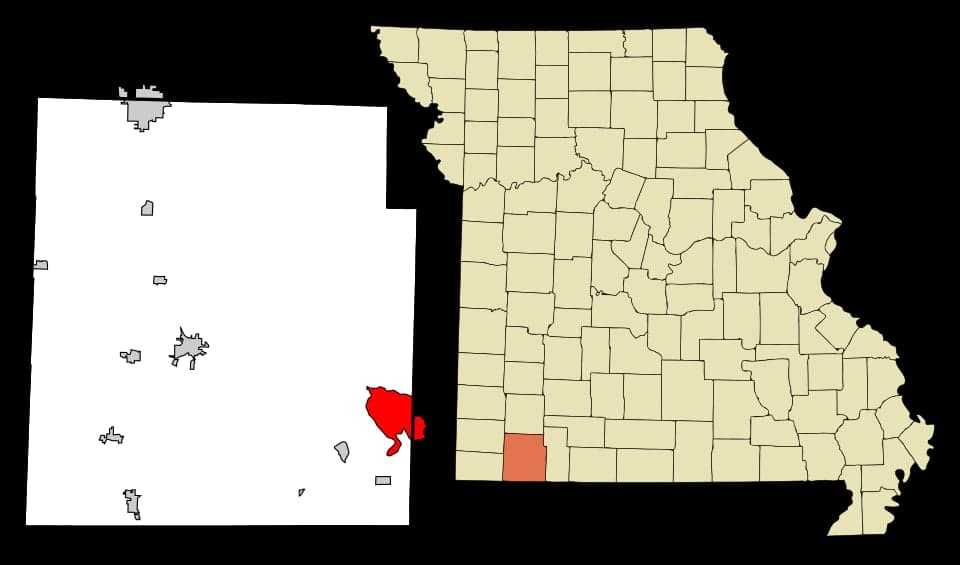
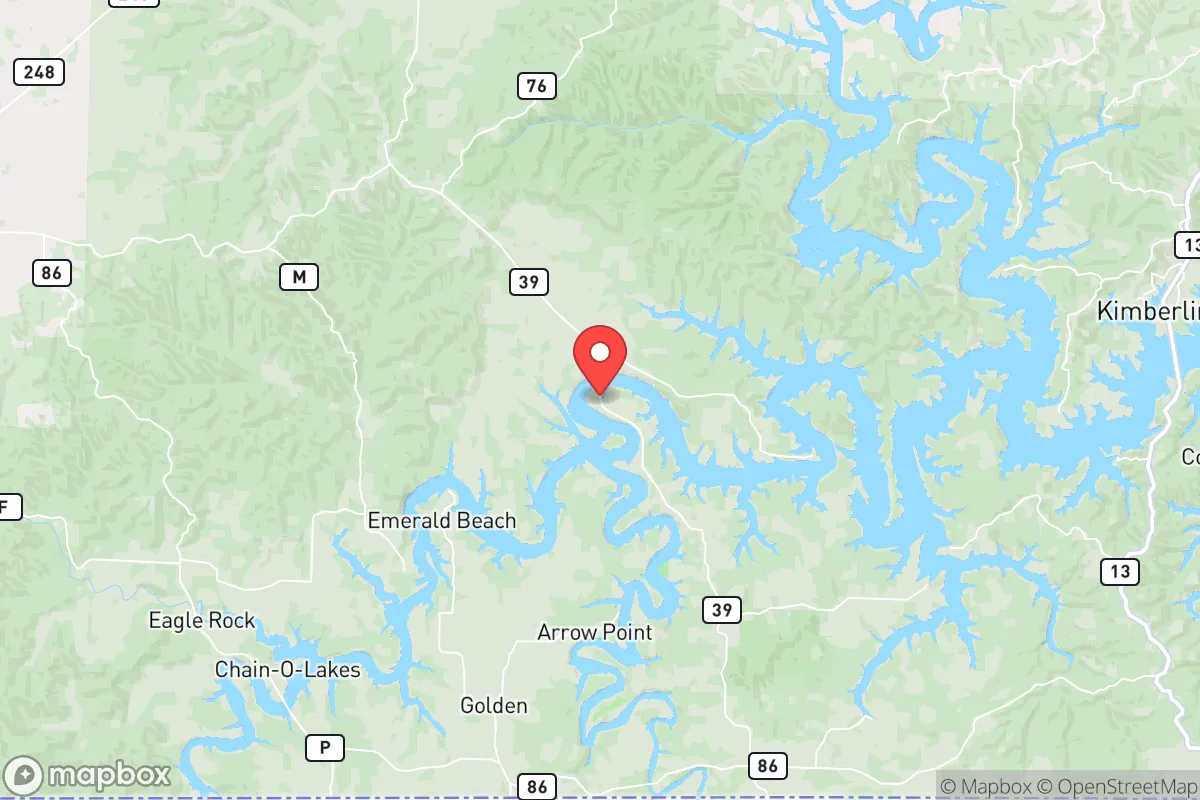
Shell Knob, Missouri, is a small lakeside community of 1,445 residents where the population is overwhelmingly white (74.5%) but includes a notable Hispanic minority of 14.4%, a figure roughly triple the statewide average. The town sits on the western shore of Table Rock Lake in Barry County, and its identity is defined less by density than by its role as a retirement and recreation destination. With a foreign-born share of just 1.0% and a college-educated rate of 20.2%, this is a working-class and retiree community shaped by lake access, not by immigration or a major university presence.
How the city was settled and grew
Shell Knob is a genuinely post-1900 community, with no colonial or 19th-century founding to speak of. The area remained sparsely settled Ozarks hill country until the U.S. Army Corps of Engineers completed Table Rock Dam in 1958, flooding the White River and creating Table Rock Lake. That single infrastructure project is the town's origin story: before the lake, Shell Knob was little more than a crossroads; after it, the shoreline became the primary asset. The original population wave was a mix of local Ozarks families who sold or traded farmland for lakefront property and the construction workers and dam employees who stayed on after completion. The earliest residential clusters formed along the original highway corridors, particularly around the intersection of Missouri Routes 39 and 76, where the town's small commercial core still sits. The first lakeside subdivisions, such as the lots along the western shore near the current Shell Knob Marina, were built in the 1960s as modest weekend cabins for families from Springfield and Joplin.
Modern era (post-1965)
The post-1965 period transformed Shell Knob from a fishing hamlet into a retirement and second-home destination. The 1965 Hart-Cellar Act had essentially no direct effect here — this is not an immigrant gateway — but the domestic migration it coincided with did. As interstate highways improved and Missouri's Ozarks gained a reputation for cheap land and low taxes, a steady stream of retirees from the Midwest and Plains states began buying lake lots. The 1970s and 1980s saw the development of the town's most recognizable subdivisions, including the large planned community of Thousand Hills and the gated lake-access neighborhoods along the eastern shore near the dam. These areas absorbed the bulk of the new arrivals, who were predominantly white, middle-class, and over 50. The Hispanic population, now 14.4%, is a more recent phenomenon, arriving largely in the 2000s and 2010s as labor demand grew in the region's construction, hospitality, and landscaping sectors tied to the lake economy. These families have concentrated in the older, less expensive housing stock near the town center and along Route 76 west of the marina, rather than in the newer gated communities. The Black population is 0.0%, and East/Southeast Asian communities are also 0.0%, making Shell Knob one of the least racially diverse places in a state that is already 82% white. The 1.0% Indian-subcontinent share is a small but distinct presence, likely tied to a handful of professional households working in healthcare or remote tech roles.
The future
Shell Knob's population is aging and slowly diversifying, though the pace of change is glacial. The retiree wave that built Thousand Hills and the eastern shore subdivisions is now in its final decades, and the town faces a demographic question: who replaces the generation that bought in the 1980s? The most likely answer is a mix of younger remote workers seeking lakefront affordability and a continued Hispanic influx drawn by service-sector jobs. The Hispanic share, already 14.4%, is the only segment showing meaningful growth, and it is dispersing beyond the older central neighborhoods into the more affordable lots on the town's western fringe. The white population is declining in absolute terms as the retiree cohort passes on or moves to higher-care facilities in nearby Cassville or Monett. Over the next 10–20 years, expect Shell Knob to become slightly younger, slightly more Hispanic, and more economically bifurcated: gated lakefront communities for affluent newcomers, and older inland neighborhoods absorbing working-class families. The town's cultural identity — anchored in fishing, boating, and conservative Ozarks values — is likely to persist, but the social texture will shift as the retiree generation thins.
For someone moving in now, Shell Knob is a place where the lake is the economy and the culture, but the demographic foundation is shifting. The gated communities offer a quiet, homogeneous retirement experience, while the town center and western routes are becoming more diverse and more working-class. The schools are small, the taxes are low, and the nearest hospital is a 30-minute drive. If you are looking for a low-cost lake town with a stable, aging population, Shell Knob fits; if you expect urban diversity or a young professional scene, it does not.

* Values derived from national, state, county, city and local statistics and may differ in a specific area. Last updated: 2026-11-01T00:44:28.000Z
Narrative content on this page is AI-generated and may contain mistakes. Verify any details that matter before acting on them.
ReloMaps may earn a commission from affiliate links at no extra cost to you.

