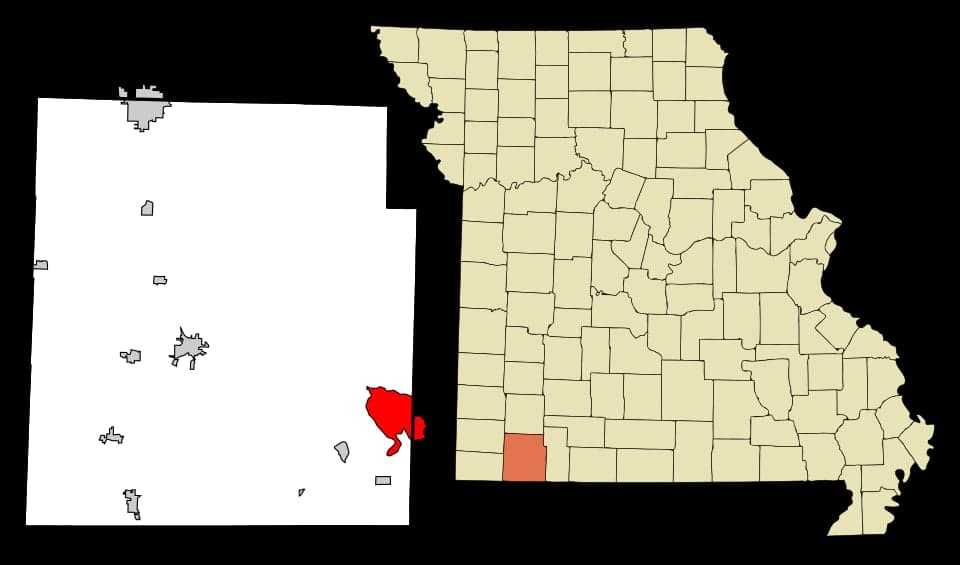
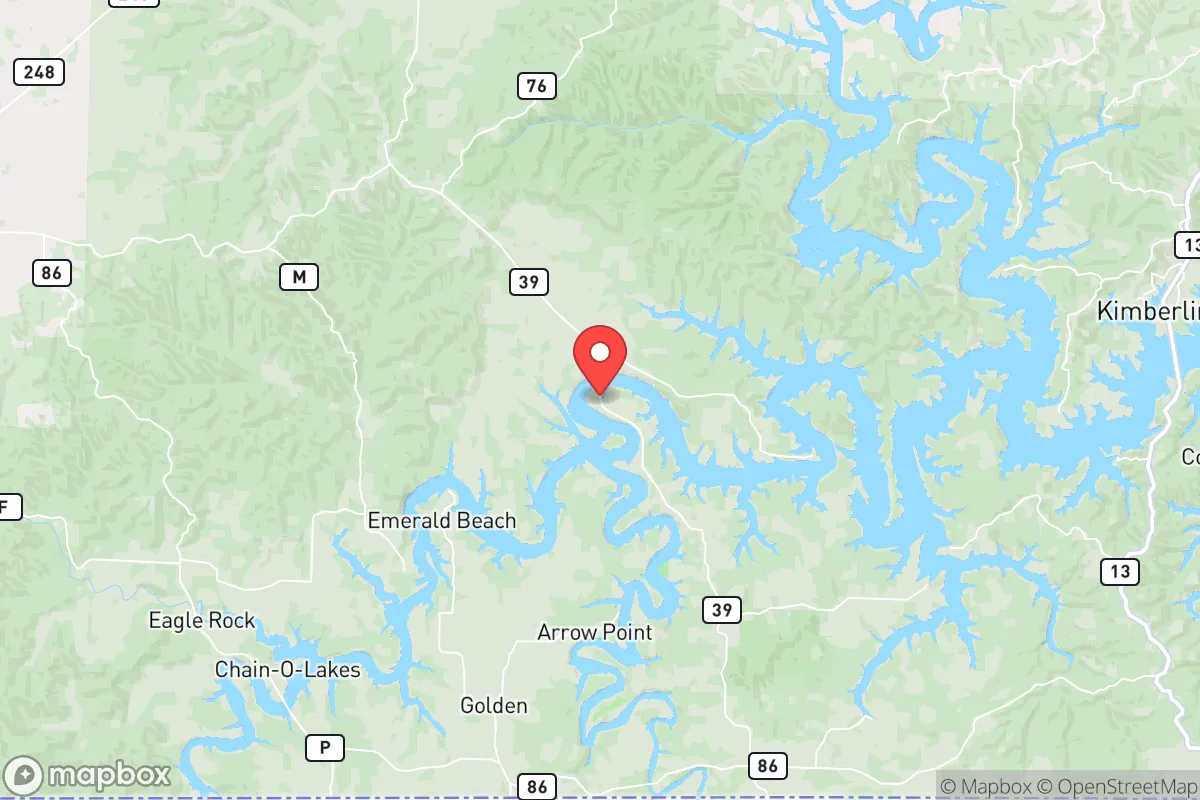
Photo: Wikipedia
Personal Sovereignty in Shell Knob, MO
Strong independent fundamentals that actively favor personal liberty and low regulation.
What does Personal Sovereignty tell us?
Personal Sovereignty measures your capacity for self-reliance and independence with minimal government friction. Higher scores mean fewer barriers between you and the way you want to live... but it assumes you have the space you need and good neighbors.
What does this tell us?
Personal Sovereignty measures your capacity for self-reliance and independence with minimal government friction. Higher scores mean fewer barriers between you and the way you want to live... but it assumes you have the space you need and good neighbors.
State Policy
Energy independence: Importer (14% of energy produced in-state)
Personal Liberty
Homesteading

Personal Liberty Analysis
Shell Knob, Missouri, sits in a part of the Ozarks where the regulatory footprint is genuinely light, and the state’s constitutional and statutory framework backs that up with real substance. For a single person or family weighing personal sovereignty, this is a place where the legal environment is designed to leave you alone unless you actively create a problem. The combination of a low tax ceiling, permissive self-defense law, and a county-level culture of self-reliance makes it one of the more autonomy-friendly corners of the Midwest, though it is not a lawless frontier—basic property rules and county zoning still apply.
How the tax burden and regulatory climate compare to neighboring states
Missouri’s tax structure is deliberately capped, and that cap is written into the state constitution. Article X, Section 18(b) limits the total state tax burden to 5.45% of personal income, a ceiling that has required voter approval to exceed since 1980 and has never been raised. For a household earning $75,000 annually, that translates to a theoretical maximum state tax obligation of roughly $4,087 before local levies—though actual effective rates run lower because the cap applies to aggregate revenue, not individual bills. There is no state estate tax, no inheritance tax, and no state-level tax on Social Security benefits, which matters for retirees who make up a significant share of Barry County’s population.
Property taxes in Shell Knob are among the lightest in the country. The effective rate in Barry County typically lands between 0.65% and 0.75% of assessed home value, compared to a national average near 1.1%. A $250,000 home here carries an annual bill of roughly $1,700, whereas the same house in Johnson County, Kansas, would run closer to $3,500. Sales tax is the one area where the burden creeps up—Missouri’s base rate is 4.225%, but Barry County and the Shell Knob area add local options that push the combined rate to around 8.1% to 8.6% depending on the exact address. That is a consumption tax, so it is avoidable to a degree by buying big-ticket items elsewhere or online.
Regulatory posture at the county level is hands-off. Barry County does not impose a county-wide building code on single-family residences in unincorporated areas, which includes most of Shell Knob. There is no county-wide zoning ordinance; land use is governed primarily by state nuisance law and septic system requirements from the Department of Health. The Missouri Department of Natural Resources does require a permit for any new septic system, and the county enforces a minimum lot size of one acre for a septic system in most unincorporated areas. That is the single most consequential regulation for anyone planning to build, and it is a modest one.
Self-defense law and gun rights specifics in Shell Knob
Missouri is a constitutional carry state, and that applies fully in Shell Knob. Since 2017, any person 19 or older who is legally allowed to possess a firearm may carry it openly or concealed without a permit. There is no duty to inform a law enforcement officer that you are carrying during a traffic stop, though it is a smart practice. The state also has a strong Castle Doctrine statute (RSMo 563.031) that presumes a reasonable fear of death or serious injury if an intruder unlawfully enters your home, vehicle, or occupied structure—meaning you are legally justified in using deadly force without a duty to retreat.
For those who want a permit anyway, Missouri issues concealed carry licenses that are recognized in roughly 35 other states via reciprocity. The permit requires an 8-hour training course and a background check, and Barry County’s sheriff’s office processes applications with a statutory turnaround of 30 days, though in practice it is often faster. Stand-your-ground protections apply statewide, so there is no legal obligation to retreat in any place you are lawfully present. Magazine capacity, firearm types, and ammunition are all unregulated at the state level; the only federal restrictions (NFA items like suppressors) apply, and those require a $200 tax stamp and ATF approval.
One practical note: Shell Knob is in Barry County, which is a strong Second Amendment jurisdiction. The sheriff’s office has publicly stated it does not enforce federal restrictions it considers unconstitutional, and the county commission passed a Second Amendment Preservation Ordinance in 2021. That ordinance carries no criminal penalty but signals enforcement priorities. For a resident, the practical effect is that local law enforcement is not looking for reasons to hassle legal gun owners.
Self-reliance and homesteading viability: lot sizes, zoning, and off-grid feasibility
Shell Knob’s geography is the real asset for homesteaders. The area is a mix of Table Rock Lake shoreline, oak-hickory forest, and rolling pasture, with most parcels ranging from 1 to 20 acres. Because there is no county zoning, you can keep livestock—chickens, goats, cattle—on a one-acre lot without a special use permit. The county does have a nuisance ordinance, so a commercial-scale hog operation on a small lot could draw complaints, but standard homestead animals are not an issue.
Off-grid living is legally straightforward but practically demanding. Missouri law does not require grid connection for a dwelling; the state building code, where it applies, does not mandate utility hookups. The key regulatory hurdle is the septic system, which requires a DNR permit and a percolation test. The soil in the Shell Knob area is rocky and clay-heavy in places, so perc tests can fail on some lots—buying land with an existing, permitted septic system is a meaningful advantage. Rainwater collection is legal and unregulated at the state level, and the county does not restrict it. Solar panels are permitted without any county-level approval; the only consideration is that the local electric cooperative, Ozarks Electric Cooperative, has net metering policies that are less generous than some states, capping system size at 100 kW and paying avoided-cost rates for excess generation.
Water access is the variable that separates viable homesteads from problem properties. Shell Knob has no municipal water system; residents rely on private wells or lake water. Well drilling in Barry County typically runs $15,000 to $25,000 for a 200- to 400-foot well, and yields vary significantly by elevation. Properties near Table Rock Lake may have access to the lake for irrigation, but potable water requires a well. Wood heat is common, and the county does not restrict timber harvesting on private land, so firewood is a practical and legal heating source.
Personal liberties: parental rights, medical autonomy, speech, and property
Missouri’s legal framework for parental rights is among the most explicit in the country. The Parental Rights in Education Act (RSMo 170.047) requires schools to notify parents of any medical or mental health services offered to students and mandates parental consent for any non-emergency health screening. The state also passed the Save Adolescents from Experimentation (SAFE) Act in 2023, which bans gender-transition procedures for minors and prohibits public school employees from encouraging students to withhold information from parents about gender identity. For families prioritizing parental authority, the statutory language is unambiguous: parents have a fundamental right to direct the upbringing, education, and health care of their children.
Medical autonomy for adults is a mixed picture. Missouri has no state-level vaccine mandate, and the state legislature passed a law in 2021 prohibiting vaccine passports and requiring employers to allow broad exemptions. However, Missouri is not a right-to-try state for all experimental treatments, and the state medical board retains disciplinary authority over physicians who deviate from standard protocols. The practical effect is that you have wide latitude to decline standard medical interventions, but you do not have a legal right to compel a doctor to prescribe off-label or experimental treatments. Health freedom is more about the absence of mandates than the presence of affirmative rights.
Speech and property rights are strongly protected. Missouri is a low-barrier state for defamation claims, meaning plaintiffs must prove actual malice only if they are public figures—private citizens have an easier path to damages. That cuts both ways: it protects your reputation but also means you should be careful about what you say publicly about neighbors. Property rights are reinforced by the state’s 2014 Right to Farm amendment, which elevates agricultural operations to a constitutional right and makes it very difficult for local ordinances to restrict farming practices. For a homesteader, that is a meaningful shield against future county-level restrictions on livestock or crop production.
Relative to other regions, Shell Knob offers a sovereignty profile that is genuinely above the national median. The tax ceiling is constitutional, the gun laws are permissive without being chaotic, and the absence of county zoning gives property owners latitude that is rare outside the rural West. The trade-offs are real: no municipal services means you are responsible for water, waste, and road maintenance, and the nearest hospital is 30 minutes away in Cassville. But for someone who defines freedom as the ability to live without asking permission, Shell Knob delivers that with fewer bureaucratic hurdles than almost any comparable lake community in the Midwest.

* Values derived from national, state, county, city and local statistics and may differ in a specific area. Last updated: 2026-11-01T00:44:28.000Z
Narrative content on this page is AI-generated and may contain mistakes. Verify any details that matter before acting on them.
ReloMaps may earn a commission from affiliate links at no extra cost to you.

