Photo: Wikipedia
Find The Best Places To Live
in Branson
PRO TIP! You can paste a Zillow or Redfin link to get info on that property.
What It's Like Living in Branson, MO
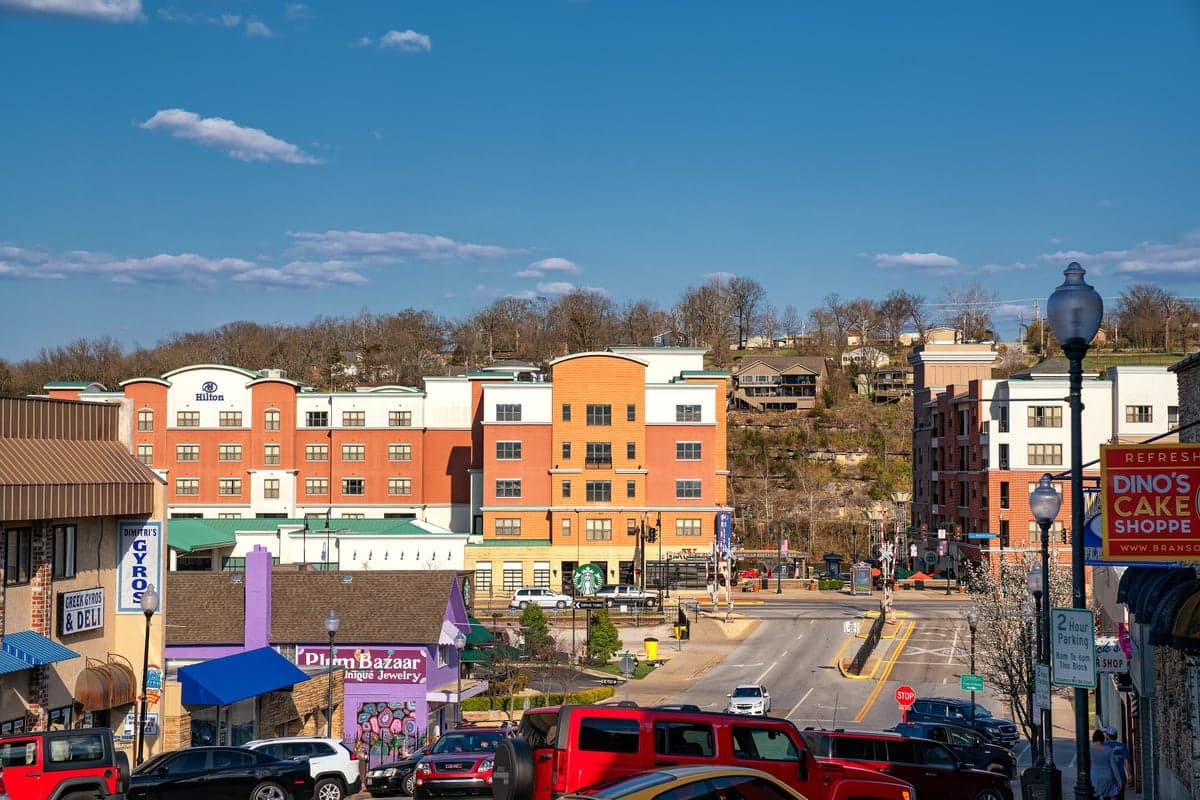
Branson feels like a place that decided decades ago what it wanted to be—a family-friendly live-music town surrounded by lakes and hills—and has stuck with it, for better and worse. The strip is a neon corridor of theaters and fudge shops, but five minutes off 76 Country Boulevard you hit quiet neighborhoods where people actually live year-round, not just during tourist season. It’s a town of roughly 12,760 residents that swells to tens of thousands on summer weekends, and that split identity defines almost everything about daily life here.
The Daily Rhythm: Tourist Town, Small-Town Bones
Most locals don’t spend their weekends at the shows. Instead, a typical Saturday means breakfast at BillyGail’s Café on the strip (get there before 8:30 or you’ll wait), then a trip to Walmart or Price Cutter for groceries, maybe a stop at Bass Pro Shops for fishing gear, and an afternoon on Table Rock Lake if the weather cooperates. The average commute is just under 18 minutes, so you’re never far from work or home. The median household income sits at $54,961, which stretches further here than in most places—the cost of living index is 85, a solid 15 points below the national average. That means a family earning the median can afford a modest home (median value $237,900) and still have room for a boat payment or season tickets to a show.
The kind of person who fits in here is someone who doesn’t mind that the town’s economy revolves around tourism. Many residents work in hospitality, retail, or the service industry, but there’s also a growing number of remote workers and retirees who came for the low taxes and the lake lifestyle. College Creek and Branson Creek are the newer subdivisions where professionals and families settle; older neighborhoods near downtown have more character but also more deferred maintenance. Schools—Branson High School and Branson Intermediate School—are community anchors, with Friday night football drawing crowds that rival some small college games.
Sports, Shows, and the Lake: What People Actually Do
High school sports are a big deal here. Branson High School’s football and basketball teams pack the gym, and the Pirates (that’s the mascot) have a loyal following that extends beyond parents. There’s no pro team within two hours, so the Springfield Cardinals (Double-A affiliate of the St. Louis Cardinals) are the closest thing to professional baseball, about 45 minutes north. But the real draw is the lake. Table Rock Lake and Lake Taneycomo are the region’s playgrounds—boating, fishing, swimming, and floating are year-round obsessions for anyone who owns a boat or knows someone who does.
Entertainment beyond the lake means shows. The Sight & Sound Theatre puts on massive biblical productions that draw bus tours from across the Midwest. The Clay Cooper Theatre and The Hughes Brothers Theatre offer variety shows heavy on country music, comedy, and gospel. For something less touristy, locals hit Black Oak Amphitheater for concerts or The Keeter Center at College of the Ozarks for dinner and a quieter evening. Festivals include Branson’s Adoration Parade at Christmas, Branson Arts Council events, and the Branson Craft Festival in spring. Restaurants like Danna’s BBQ & Burger Shop and Florentina’s Ristorante Italiano are local favorites that don’t feel like tourist traps.
Pros and Cons of Living Here
What longtime residents love: the low cost of living, the lack of state income tax (Missouri has none), the lake access, and the fact that you can still buy a decent three-bedroom home for under $250,000. The community is tight-knit in a way that’s rare in bigger cities—neighbors know each other, and the schools are small enough that teachers know every kid’s name. The pace of life is slow, and if you like outdoor recreation, you’ll never run out of places to explore.
What frustrates them: traffic on 76 during peak season is genuinely bad—locals avoid the strip from Memorial Day to Labor Day unless they have to. The violent crime rate is 417.8 per 100,000, which is higher than the national average, though most of that is concentrated in tourist-heavy areas and doesn’t affect residential neighborhoods much. Job options outside of tourism and healthcare are limited; the largest employers are Branson Landing, HCA Healthcare, and the school district. And while the median age is 38.2, the town skews older in the off-season—college-educated adults make up 29.4% of the population, which is below the national average, so intellectual or cultural events beyond the shows are sparse.
One quirk: locals call the strip “76” and treat it almost like a separate town. You’ll hear people say “I never go to 76” with the same pride as someone in a big city saying they never go downtown. The real Branson—the one where people live—is the winding roads off the main drag, the boat ramps, the high school football games, and the quiet neighborhoods where you can still hear the lake at night.

Similar towns to Branson
* Values derived from national, state, county, city and local statistics and may differ in a specific area. Last updated: 2026-10-21T02:43:55.000Z
Narrative content on this page is AI-generated and may contain mistakes. Verify any details that matter before acting on them.
ReloMaps may earn a commission from affiliate links at no extra cost to you.

