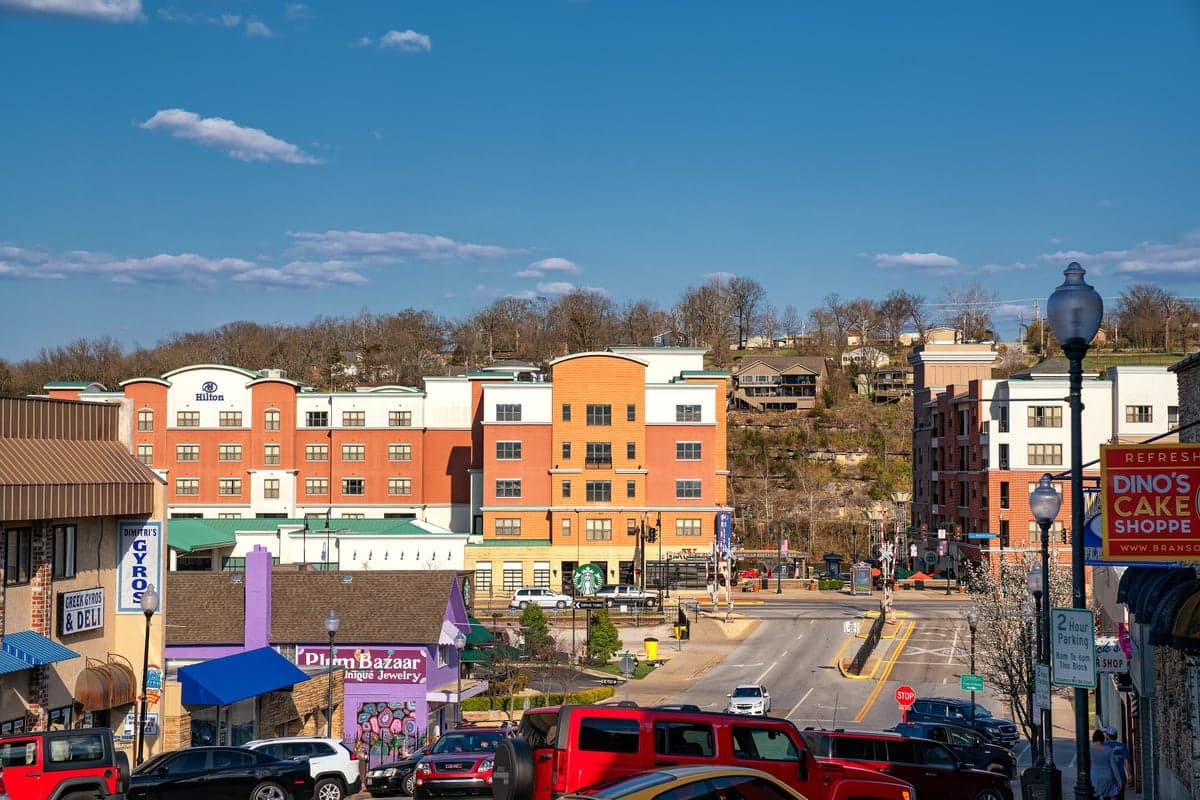
Photo: Wikipedia
Political ClimatePolitical Climate in Branson, MO
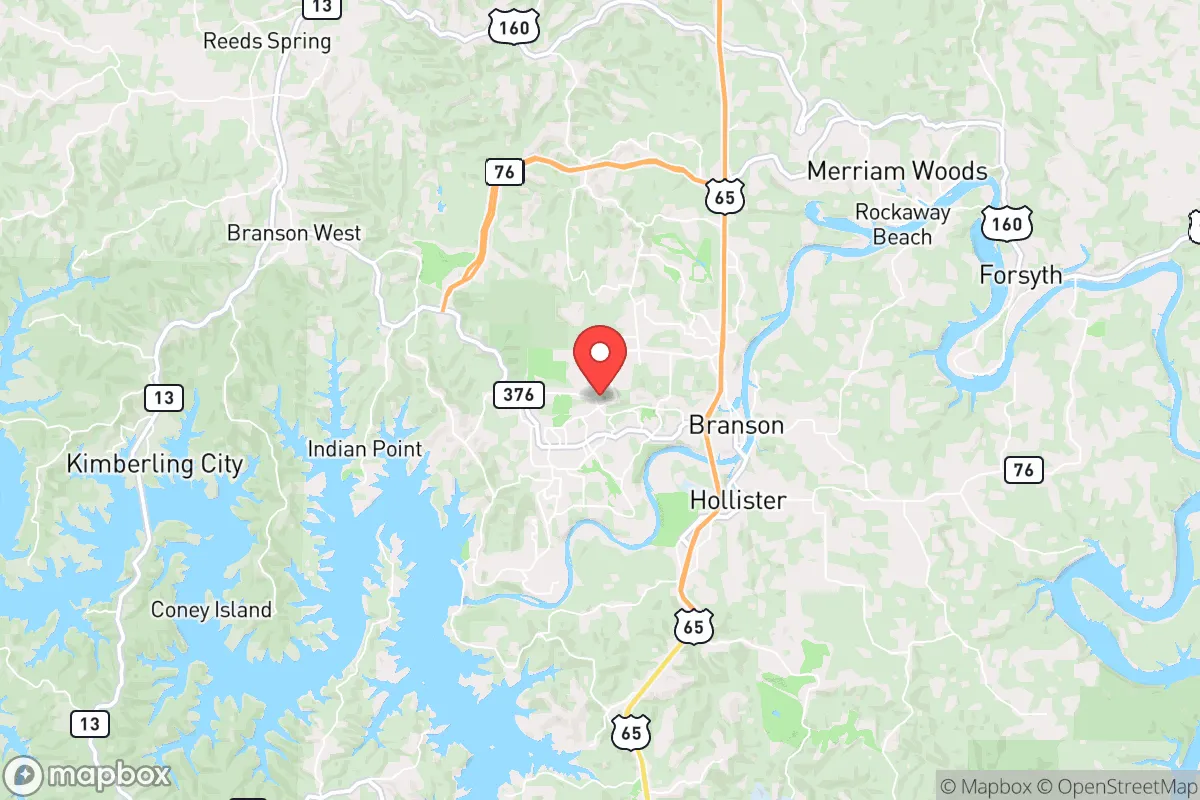
District shown is the primary district for this city’s centroid. Cities may span multiple districts.
Local Political AnalysisPolitical Analysis of Branson, MO
Branson is about as reliably red as it gets in Missouri, with a Cook Partisan Voting Index of R+21 that puts it deep in the conservative column. That’s more than double the statewide R+8 lean, and it’s not a fluke — this area has been trending rightward for decades, driven by a mix of longtime Ozarks families and a steady influx of retirees and second-home owners from more liberal states. If you’re looking at the political map, Branson sits in Taney County, which hasn’t voted for a Democratic presidential candidate since 1964, and the gap only widens with each cycle. The local vibe is less about fiery partisan battles and more about a quiet, lived-in conservatism that shapes everything from school board meetings to Sunday morning church parking lots.
How it compares
Compared to the rest of Missouri, Branson is a conservative outlier even within a state that’s already solidly red. The statewide R+8 PVI reflects a Missouri that still has competitive pockets — think St. Louis County (D+15) and Jackson County (D+9), which includes Kansas City. Branson’s R+21 puts it in the same neighborhood as the state’s most Republican corners, like Nodaway County (R+22) or the rural bootheel. But the contrast is sharper when you look at nearby towns: just 45 minutes north, Springfield leans R+12, still conservative but noticeably less so. Head east 90 minutes to West Plains (R+27) and you’re in even deeper red territory, while a two-hour drive south to Fayetteville, Arkansas (D+5) flips the script entirely. For a Branson resident, the political reality is that you’re surrounded by like-minded neighbors, but the state’s major cities and college towns feel like a different country — and that’s not necessarily a complaint around here.
What this means for residents
For conservative residents, Branson’s political climate means your values are the default — local government, school policy, and even the chamber of commerce tend to reflect a pro-business, limited-government, socially conservative outlook. You’ll find few obstacles to carrying a firearm, little debate over abortion restrictions, and a general expectation that public schools will emphasize patriotism and traditional family structures. For liberal residents, the reality is more isolating. There’s no active Democratic party presence to speak of, and progressive viewpoints are often met with polite silence or outright dismissal. That said, the area’s tourism economy means a certain tolerance for diversity — visitors from Chicago or Dallas bring different perspectives, and the service industry is used to serving all kinds. But if you’re a liberal looking to get involved politically, you’ll likely need to drive to Springfield or join a statewide online network to find your people.
One cultural distinction worth noting is how Branson’s political identity intersects with its role as a tourist destination. The city’s entertainment district — with its country music theaters, patriotic shows, and family-friendly attractions — actively markets a conservative, nostalgic vision of America. That’s not just a business model; it’s a reflection of the local ethos. You’ll see more “Support Our Troops” banners than campaign signs, and the biggest political fights tend to be over development and water rights rather than social issues, which are largely settled here. Looking ahead, the trajectory seems steady — Branson will likely stay R+21 or even nudge rightward as retirees continue arriving from blue states, bringing their conservative voting habits with them. For anyone moving here, the takeaway is simple: if you’re conservative, you’ll feel at home; if you’re not, you’ll need to find your community elsewhere in the region.

State Political ClimatePolitical Climate in Missouri
State Political AnalysisPolitical Environment in the State
Missouri is a solidly Republican state with a Cook PVI of R+8, but it’s not a monolith—it’s a state where the conservative lean is driven by a massive rural and exurban base, while two major metro areas, St. Louis and Kansas City, keep things competitive at the state level. Over the past 20 years, the state has shifted rightward in presidential races, with Democrats last winning it in 1996, but the real story is the growing chasm between its urban cores and everything else. For a conservative relocator, this means a state where your vote carries weight in statewide races, but local politics can vary wildly depending on whether you settle in a suburb like St. Charles or a city like Columbia.
Urban vs. rural divide
The political map of Missouri is a textbook case of the urban-rural split. The state’s two major metros—St. Louis and Kansas City—are deep blue islands in a red sea. St. Louis City and County, along with Jackson County (Kansas City), reliably deliver 60-70% of their votes to Democrats. Meanwhile, the rest of the state—from the Bootheel to the northern plains to the Ozarks—votes Republican by margins of 30-40 points. The suburbs tell a more nuanced story. St. Charles County, just west of St. Louis, has become a Republican stronghold, voting +25 R in 2024, while Johnson County in the Kansas City metro is a swing area that has trended left in recent cycles. Smaller metros like Springfield and Joplin are deeply conservative, while Columbia, home to the University of Missouri, is a liberal outlier in the middle of the state. The divide isn’t just cultural—it’s economic, with rural areas feeling left behind by the growth in the I-70 and I-44 corridors.
Policy environment
Missouri’s policy environment is broadly conservative, with a low-tax, low-regulation posture that appeals to many relocators. The state has a flat income tax rate of 4.8%, which is being phased down to 4.5% by 2027, and no estate tax. Property taxes are among the lowest in the nation, averaging about 0.9% of home value. The regulatory climate is business-friendly, with right-to-work laws (though repealed by referendum in 2018) and a strong tort reform record. On education, Missouri has a robust school choice landscape, including charter schools in St. Louis and Kansas City, and a growing number of private school scholarship programs. Healthcare policy is mixed: the state expanded Medicaid under the 2020 voter-approved Amendment 2, but the Republican legislature has consistently tried to restrict abortion access, leading to a near-total ban after the Dobbs decision. Election laws are moderately restrictive—voter ID is required, and early voting is limited to two weeks before Election Day, with no-excuse absentee voting available.
Recent policy direction
Missouri’s recent legislative sessions have been a flurry of conservative action, with a focus on gun rights, parental control, and cultural issues. In 2023, the state passed a permitless carry law, allowing any adult who can legally possess a firearm to carry it concealed without a permit. The Second Amendment Preservation Act, signed in 2021, purports to nullify federal gun laws, though it has been partially blocked by federal courts. On education, the state enacted a Parents’ Bill of Rights in 2022, requiring schools to notify parents about curriculum changes and allowing them to opt their children out of certain materials. Abortion is effectively banned after about 12 weeks, with no exceptions for rape or incest, though a 2024 ballot initiative to restore abortion access is pending. On privacy, Missouri passed a biometric data privacy law in 2023, but it’s weaker than Illinois’s. Property rights are strong, with no statewide rent control and a relatively straightforward eminent domain process. Tax policy has been trending downward, with the flat income tax rate set to drop further if revenue targets are met. Voting access remains a flashpoint: the state purged over 100,000 voters from the rolls in 2023 under a new list-maintenance law, drawing criticism from voting rights groups.
Civil unrest & political movements
Missouri has a history of civil unrest, most notably the 2014 Ferguson protests after the shooting of Michael Brown, which sparked a national movement. That legacy still resonates, with ongoing activism around police reform and racial justice in St. Louis. On the right, the state has seen a rise in Second Amendment sanctuary counties—over 80 of Missouri’s 114 counties have passed resolutions opposing federal gun laws. Immigration politics are less heated than in border states, but there’s a vocal anti-sanctuary movement, with a 2023 law banning sanctuary city policies and requiring local law enforcement to cooperate with ICE. Election integrity has been a major issue since 2020, with the Republican secretary of state pushing for stricter voter ID laws and conducting a controversial audit of St. Louis County’s election results. You’ll see “Stop the Steal” rallies in rural areas and “Black Lives Matter” protests in the cities, but the state hasn’t seen the kind of sustained political violence seen elsewhere. For a new resident, the most visible flashpoint is likely the ongoing debate over abortion, with dueling protests outside Planned Parenthood clinics in St. Louis and Kansas City.
Projection
Over the next 5-10 years, Missouri is likely to become more Republican at the state level, driven by continued out-migration from St. Louis and Kansas City to the suburbs and exurbs, and by in-migration of conservatives from blue states seeking lower taxes and a more traditional lifestyle. The rural population is aging and shrinking, but the suburbs are growing fast—places like Wentzville, O’Fallon, and Lee’s Summit are absorbing new arrivals who tend to vote Republican. The Democratic base is increasingly concentrated in the urban cores, which could lead to more extreme gerrymandering in the 2030 redistricting cycle. However, the state’s initiative petition process remains a wild card—voters have used it to expand Medicaid, legalize medical marijuana, and raise the minimum wage, often against the legislature’s wishes. A 2024 ballot measure on abortion could reshape the political landscape if it passes, potentially mobilizing suburban women and young voters. For a relocator, the bottom line is that Missouri will remain a reliably red state for statewide races, but local control will vary: you’ll find deep red policies in the exurbs and purple-to-blue governance in the cities.
For a conservative relocator, Missouri offers a policy environment that aligns with your values—low taxes, strong gun rights, and a legislature that’s actively pushing parental control and school choice. The trade-off is that you’ll be living in a state with stark cultural divides, where a 30-minute drive can take you from a liberal college town to a conservative farming community. If you’re looking for a place where your vote matters and the state government is on your side, Missouri is a solid bet. Just be prepared for the occasional culture war flare-up, and know that your experience will depend heavily on which corner of the state you choose to call home.
* Values derived from national, state, county, city and local statistics and may differ in a specific area. Last updated: 2026-10-21T02:43:55.000Z
Narrative content on this page is AI-generated and may contain mistakes. Verify any details that matter before acting on them.
ReloMaps may earn a commission from affiliate links at no extra cost to you.

