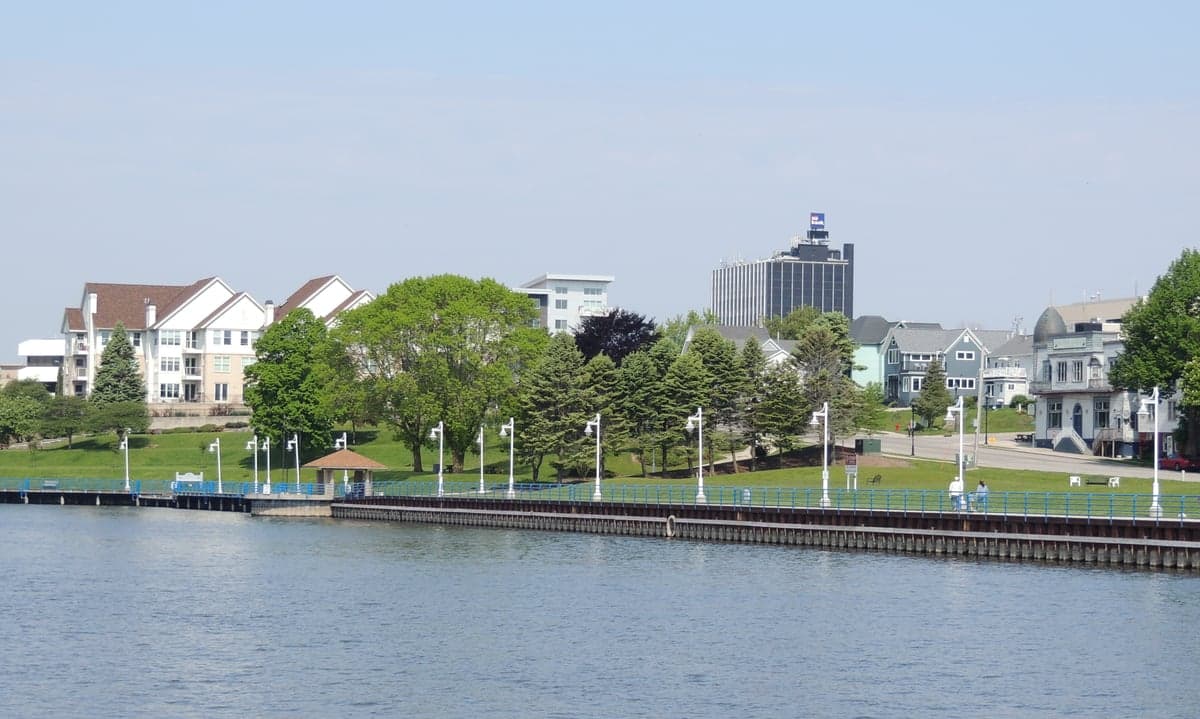
Photo: Wikipedia
Political ClimatePolitical Climate in Sheboygan, WI
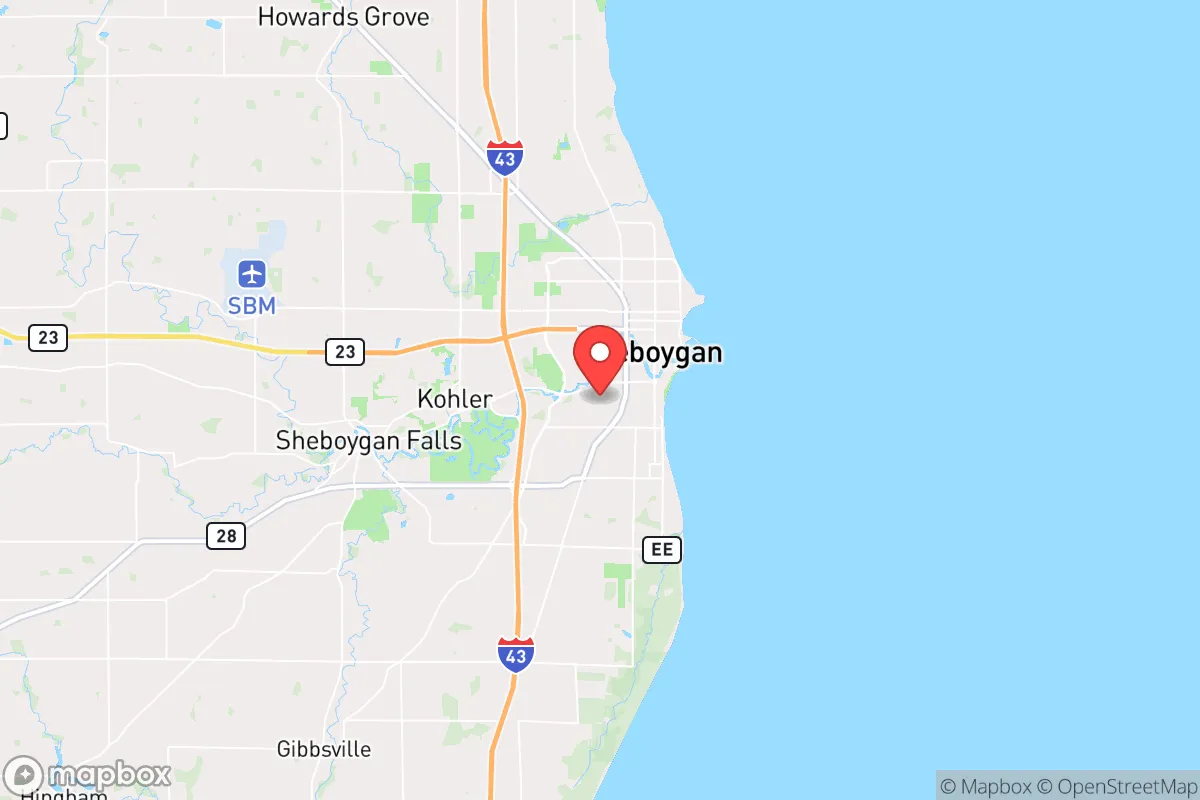
District shown is the primary district for this city’s centroid. Cities may span multiple districts.
Local Political AnalysisPolitical Analysis of Sheboygan, WI
Sheboygan has long been a reliably conservative area, and that hasn't changed much overall, but you can feel the ground shifting under your feet if you've lived here a while. The Cook PVI of R+8 tells you the math still favors the right, but the real story is in the margins and the cultural drift. We used to be a place where folks kept their heads down, worked hard, and didn't want the government poking into their business—that's still the majority view, but the progressive noise is getting louder, especially in the city proper.
How it compares
If you drive just a few miles north to Kohler or south to Cedar Grove, you're in solid, traditional conservative territory—places where the Second Amendment is a given and property rights are sacred. But Sheboygan itself is a different animal than it was twenty years ago. The city council has seen a slow creep of progressive priorities—things like symbolic resolutions on national issues and zoning changes that feel more like social engineering than practical governance. Compare that to Plymouth or Oostburg, where the local boards still focus on keeping taxes low and government small. The contrast is stark: in the county, you're still in R+8 country, but within the city limits, the margin has tightened noticeably in the last two cycles. It's not a blue wave, but it's a concerning trend for anyone who values limited government.
What this means for residents
For the average family here, the political climate means you have to be more vigilant about what your local officials are doing. The biggest red flag is the growing appetite for overreach—things like mask mandates that lasted longer than necessary, or talk of "equity" policies that sound a lot like picking winners and losers. Property taxes are already a burden, and every new progressive initiative comes with a price tag. The good news is that the county board and the sheriff's office remain solidly conservative, so there's a check on the worst impulses. But if you're a gun owner, a small business owner, or just someone who wants the government to leave you alone, you need to pay attention to school board and city council races. That's where the real battles are happening now.
One thing that sets Sheboygan apart from places like Madison or Milwaukee is that we still have a strong sense of community and a healthy skepticism of big government. You don't see the same level of activism or protest culture here, and most folks still believe in personal responsibility. But the cultural shift is real—the local paper and the school curriculum are both leaning more progressive, and that's a slow poison. The long-term trajectory depends on whether the silent majority stays engaged. If we let the progressive minority set the agenda, we'll lose what makes this area great: low crime, good schools that teach basics not ideology, and a government that stays out of your life. For now, it's still a good place to raise a family, but you have to keep one eye on the ballot box.

State Political ClimatePolitical Climate in Wisconsin
State Political AnalysisPolitical Environment in the State
Wisconsin has long been a classic swing state, but over the past decade it has hardened into a deeply polarized battleground where the rural-urban split defines everything. The state leans roughly 50-50 in statewide elections, with Republicans holding a structural advantage in the state legislature due to gerrymandered maps, while Democrats rely on Milwaukee and Madison to fuel their statewide hopes. Over the last 20 years, Wisconsin has shifted from a reliably purple state that voted for Democrats in presidential elections from 1988 to 2012 (except 2016) to one that narrowly backed Donald Trump in 2016 and 2020, then flipped back to Biden in 2024 by less than a point. The trajectory is one of tightening margins and increasing cultural warfare, with the state’s political identity now defined by who lives where and what they believe about government’s role in their lives.
Urban vs. rural divide
The political map of Wisconsin is a tale of two worlds. Milwaukee and Madison are the Democratic strongholds, with Dane County (Madison) delivering over 75% of its vote to Biden in 2024, while Milwaukee County gave him nearly 70%. These two metros alone account for roughly 30% of the state’s population and drive the entire Democratic coalition. In contrast, the rural and exurban counties that ring the state—places like Waukesha (west of Milwaukee), Washington, and Ozaukee—are among the most Republican in the nation, often voting 65-70% for Trump. The Fox Valley region, anchored by Appleton and Green Bay, has historically been more moderate but has shifted rightward as blue-collar manufacturing workers have soured on Democratic trade and cultural policies. The Northwoods counties—like Vilas, Oneida, and Sawyer—are heavily Republican, driven by retirees and second-home owners who value low taxes and gun rights. The divide is so stark that a drive from Madison to Waukesha feels like crossing a political border: you leave a city where pride flags fly on every corner and arrive in a suburb where “Let’s Go Brandon” flags still wave from pickup trucks.
Policy environment
Wisconsin’s policy environment is a mixed bag for conservatives. On the plus side, the state has a flat income tax rate of 4.4% (down from 7.65% a decade ago), and property taxes are relatively low compared to neighboring Illinois and Minnesota. The state is a right-to-work state, meaning you can’t be forced to join a union as a condition of employment, which has helped keep manufacturing competitive. However, the state’s regulatory posture is uneven: environmental regulations on farming and manufacturing are moderate, but the Department of Natural Resources has been a flashpoint for land-use disputes, especially around wetland permits and mining restrictions. Education policy is a bright spot for school choice advocates—Wisconsin has one of the oldest and most robust school voucher programs in the country, with the Wisconsin Parental Choice Program allowing families in Milwaukee, Racine, and the statewide program to use public funds for private or religious schools. Healthcare is a mixed bag: the state expanded Medicaid under Obamacare, which conservatives opposed, but private insurance markets remain relatively stable. Election laws have been a major battleground: after the 2020 election, the Republican-controlled legislature passed a series of voting restrictions, including stricter voter ID requirements, limits on absentee ballot drop boxes, and a ban on private funding for election administration. These changes have made Wisconsin’s elections more secure in the eyes of conservatives, but Democrats continue to challenge them in court.
Trajectory & freedom
On the freedom front, Wisconsin has seen both expansions and contractions over the past decade. The good news for conservatives: constitutional carry became law in 2021, meaning you can carry a concealed firearm without a permit—a major win for Second Amendment advocates. The state also passed a parental bill of rights in 2023, which requires schools to notify parents about curriculum changes and allows them to opt their children out of lessons on sexuality or gender identity. On the downside, the state’s COVID-era emergency powers were a flashpoint: Governor Tony Evers (D) issued a statewide mask mandate and business closures in 2020, which the conservative-controlled Supreme Court struck down in a landmark 4-3 ruling. That case, Wisconsin Legislature v. Palm, established that the governor cannot unilaterally extend emergency orders without legislative approval—a significant check on executive power. More recently, the state has seen a push for medical freedom legislation, including a bill that would ban vaccine mandates for private employers, though it has stalled in the legislature. Property rights are generally strong, with no statewide rent control and relatively low property taxes, but local zoning in liberal cities like Madison has become increasingly restrictive, with inclusionary zoning mandates that effectively raise housing costs. The trajectory is one of cultural war: the state’s conservative legislature keeps passing freedom-expanding bills, but the Democratic governor keeps vetoing them, leaving the state in a perpetual tug-of-war.
Civil unrest & political movements
Wisconsin has been a flashpoint for political unrest in recent years. The 2020 Kenosha riots after the shooting of Jacob Blake saw businesses burned, looting, and the killing of two protesters by Kyle Rittenhouse—a case that became a national symbol of self-defense and the breakdown of law and order. The Rittenhouse trial in Kenosha drew massive protests from both sides, with armed militia groups patrolling the streets and left-wing activists calling for his conviction. The state has also seen massive protests at the state capitol in Madison, including the 2011 Act 10 protests against union restrictions (which drew 100,000 people) and more recent rallies for and against abortion rights after the Dobbs decision. Immigration politics are less heated than in border states, but there is a growing tension in rural counties where meatpacking plants have hired large numbers of Hispanic workers, particularly in Beaver Dam and Green Bay. The state has no sanctuary city policies, but Milwaukee has a “welcoming city” ordinance that limits cooperation with federal immigration enforcement. Election integrity remains a raw nerve: the 2020 election saw Trump challenge the results in Wisconsin, leading to a partial recount in Dane and Milwaukee counties that actually widened Biden’s lead. Since then, the conservative legislature has passed numerous election integrity bills, but the governor has vetoed most of them, leaving the state’s election system in a state of perpetual controversy. A new resident would notice the political tension in everyday life: yard signs, bumper stickers, and even conversations at the grocery store can quickly turn into arguments about the 2020 election or the latest school board decision.
Projection
Looking ahead 5-10 years, Wisconsin is likely to remain a battleground, but the demographic trends favor the left. In-migration from Illinois is bringing more moderate-to-liberal voters to the southern counties, particularly around Kenosha and Racine, while the rural counties continue to lose population as young people move to cities. The Milwaukee suburbs like Waukesha and Washington are slowly diversifying, but they remain deeply Republican. The wild card is the Fox Valley: if the manufacturing economy continues to struggle with automation and trade policy, those blue-collar voters could either double down on Trump-style populism or drift back to Democrats if the party moderates on cultural issues. The state’s political geography is also being reshaped by the 2024 redistricting, which the state Supreme Court (now with a 4-3 liberal majority) ordered to be redrawn. The new maps, passed by the legislature in early 2025, are slightly fairer but still give Republicans a structural advantage. The biggest threat to conservative freedom in Wisconsin is the possibility of a Democratic trifecta—if the governor’s office and both legislative chambers flip, you could see a rapid expansion of government control: a state-run health insurance option, stricter gun laws, and a repeal of the school voucher program. For now, the state is gridlocked, which means freedom is preserved in some areas but constantly under threat. A new resident moving in should expect to live in a state where every election feels like a knife fight, and where your political views will determine which county you feel comfortable living in.
For a conservative considering relocation, Wisconsin offers a mixed bag: low taxes, strong gun rights, and school choice in the suburbs, but a constant political war with a liberal governor and a growing urban population that wants to expand government control. If you’re looking for a place where your values are reflected in state policy, you’ll want to stick to the Waukesha County suburbs or the Fox Valley. If you’re willing to fight for your freedoms every election cycle, Wisconsin is your arena. Just don’t expect peace and quiet—the political temperature here runs hot, and it’s not cooling down anytime soon.
* Values derived from national, state, county, city and local statistics and may differ in a specific area. Last updated: 2026-04-21T10:33:21.000Z
Narrative content on this page is AI-generated and may contain mistakes. Verify any details that matter before acting on them.
ReloMaps may earn a commission from affiliate links at no extra cost to you.

