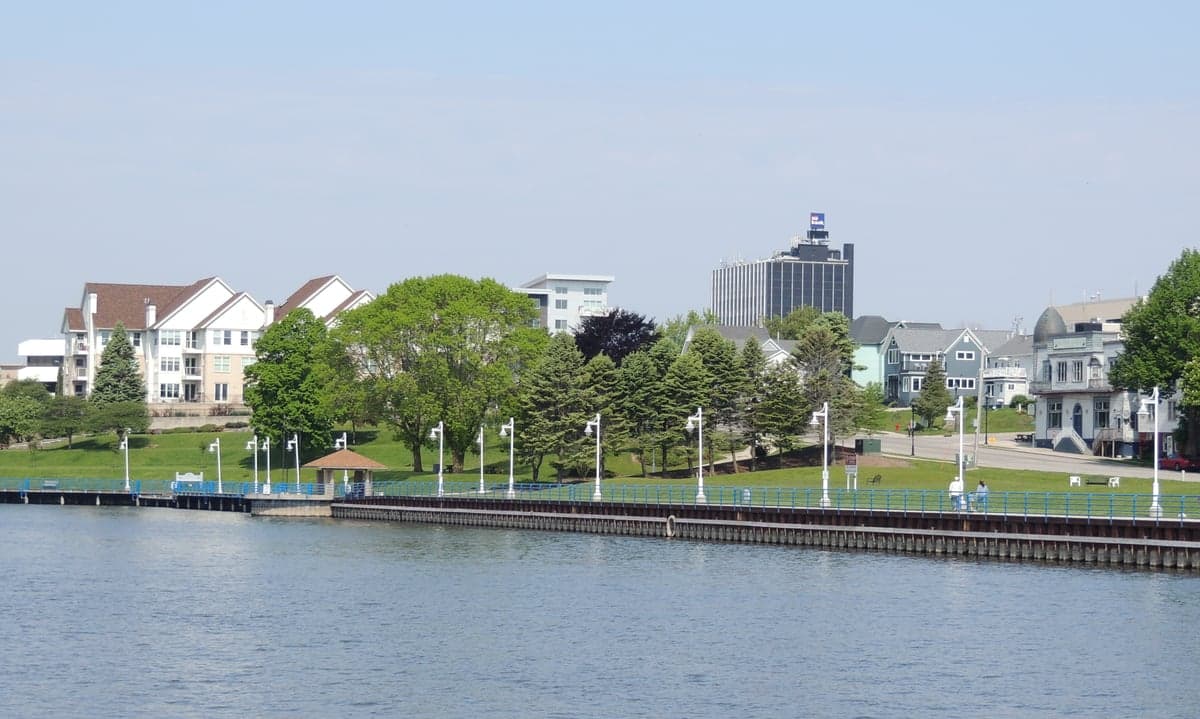
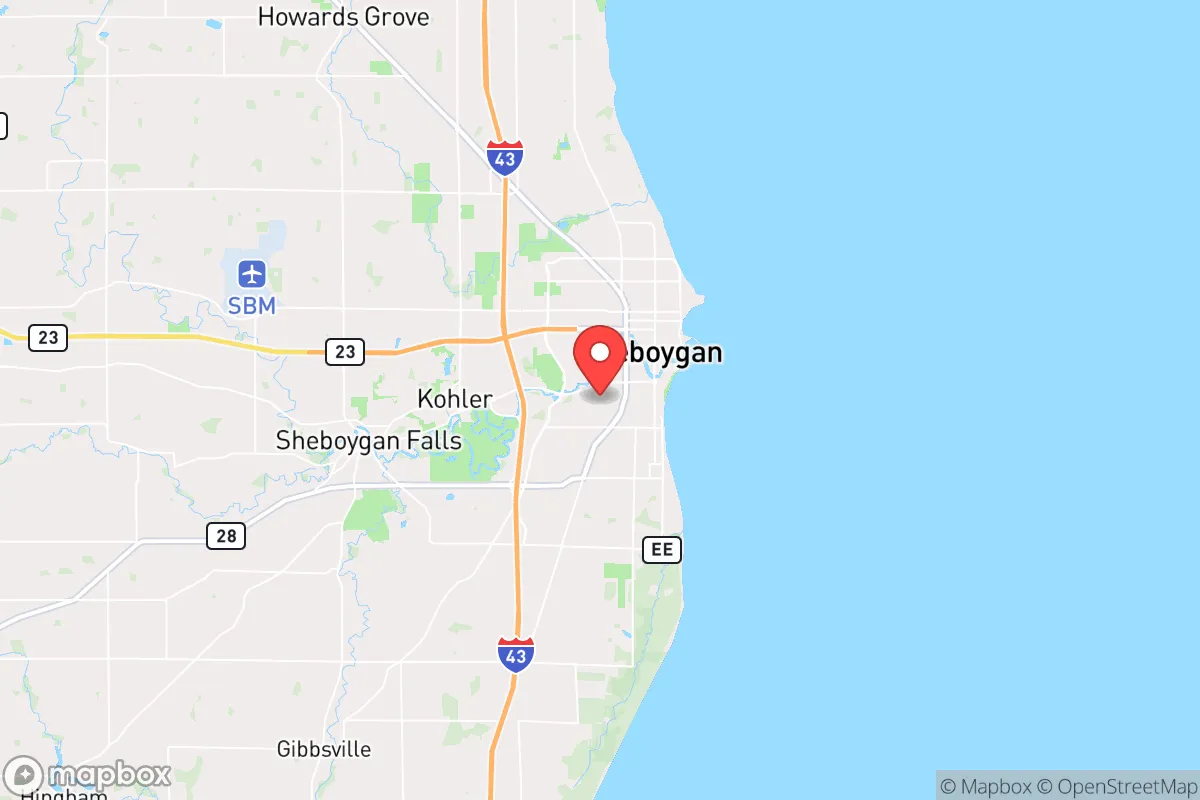
Photo: Wikipedia
Demographics of Sheboygan, WI
Affluence Level in Sheboygan, WI
A middle-class area roughly in line with national averages across income, home values, education, and employment.
People of Sheboygan, WI
The people of Sheboygan, Wisconsin, today number 49,812, forming a dense, historically rooted community on the Lake Michigan shore. The city is notably diverse for a Midwestern industrial hub, with a white population of 67.9%, a significant East and Southeast Asian community at 11.8%, and a Hispanic population of 12.6%. Its identity is shaped by a strong German and Dutch heritage, a working-class industrial backbone, and a growing multicultural fabric that distinguishes it from many smaller Wisconsin cities.
How the city was settled and grew
Sheboygan’s settlement began in the 1830s, driven by its natural harbor and the promise of fertile farmland. The first major wave of European settlers were German immigrants, who arrived in large numbers from the 1840s through the 1880s, drawn by land availability and the burgeoning lake shipping industry. They established the city’s core in the Historic Southside neighborhood, building the brick homes and churches that still define the area. A second distinct wave brought Dutch immigrants in the 1850s and 1860s, who settled primarily in the Northside and Franklin Park neighborhoods, founding the First Reformed Church and establishing a strong agricultural and dairy presence. By the early 20th century, the city’s economy was anchored by furniture manufacturing, leather tanning, and the Kohler Company (founded just west of the city in 1873), which drew additional German, Irish, and Polish laborers. These groups concentrated in working-class districts like East Side and West Side, creating a dense, walkable city of distinct ethnic parishes and social clubs. The city’s population peaked at over 50,000 in the 1960s, reflecting the stability of its manufacturing base.
Modern era (post-1965)
After the 1965 Immigration and Nationality Act, Sheboygan’s demographic profile began to shift. The most notable change was the arrival of East and Southeast Asian communities, particularly Hmong refugees from Laos beginning in the late 1970s and 1980s, resettled through church and nonprofit sponsorships. They concentrated in the Southside and Franklin Park neighborhoods, where affordable housing and proximity to manufacturing jobs at Kohler, Bemis, and other factories provided a foothold. Today, the Asian population stands at 11.8%, one of the highest shares for a city of its size in the Midwest. The Hispanic population, now 12.6%, grew steadily from the 1990s onward, driven by Mexican and Central American immigrants drawn to the same industrial and service-sector jobs. They settled in the West Side and Southside areas, often in multi-generational households. The Black population, at 3.3%, is smaller but has a longer history, with families arriving during the Great Migration and later through job recruitment. The Indian subcontinent population remains minimal at 0.3%. Suburbanization has been modest; the city’s population has held relatively steady since 2000, with some white families moving to surrounding towns like Kohler and Sheboygan Falls, while the city itself has become more diverse. The college-educated share is 23.4%, below the national average, reflecting the city’s blue-collar character.
The future
Sheboygan’s population is heading toward continued diversification, but at a moderate pace. The white population, while still the majority, is aging and slowly declining as younger families move to suburbs or out of the area. The Hispanic and East/Southeast Asian communities are younger and growing through both natural increase and continued immigration, though the pace of new arrivals has slowed since the 2000s. The city is not tribalizing into rigid enclaves; instead, neighborhoods like the Southside and West Side are becoming more mixed, with second-generation Hmong and Hispanic residents moving into previously white-dominated areas. The biggest demographic question is whether the city can attract and retain young professionals and families to offset the aging white population. The industrial base remains strong but is automating, and the city’s low college attainment rate may limit in-migration of knowledge workers. Over the next 10–20 years, Sheboygan is likely to become a more multiethnic, working-class city with a stable population, but without the explosive growth seen in larger metros.
For someone moving in now, Sheboygan offers a dense, affordable, and increasingly diverse community with a strong sense of place. It is a city where German and Dutch roots run deep, but where Hmong and Hispanic families are reshaping the cultural landscape. The bottom line: Sheboygan is a stable, blue-collar city in demographic transition—less homogeneous than its reputation suggests, and more welcoming to newcomers than many Midwestern towns of its size.

* Values derived from national, state, county, city and local statistics and may differ in a specific area. Last updated: 2026-04-21T10:33:21.000Z
Narrative content on this page is AI-generated and may contain mistakes. Verify any details that matter before acting on them.
ReloMaps may earn a commission from affiliate links at no extra cost to you.

