Photo: Wikipedia
Political ClimatePolitical Climate in Seymour, TX
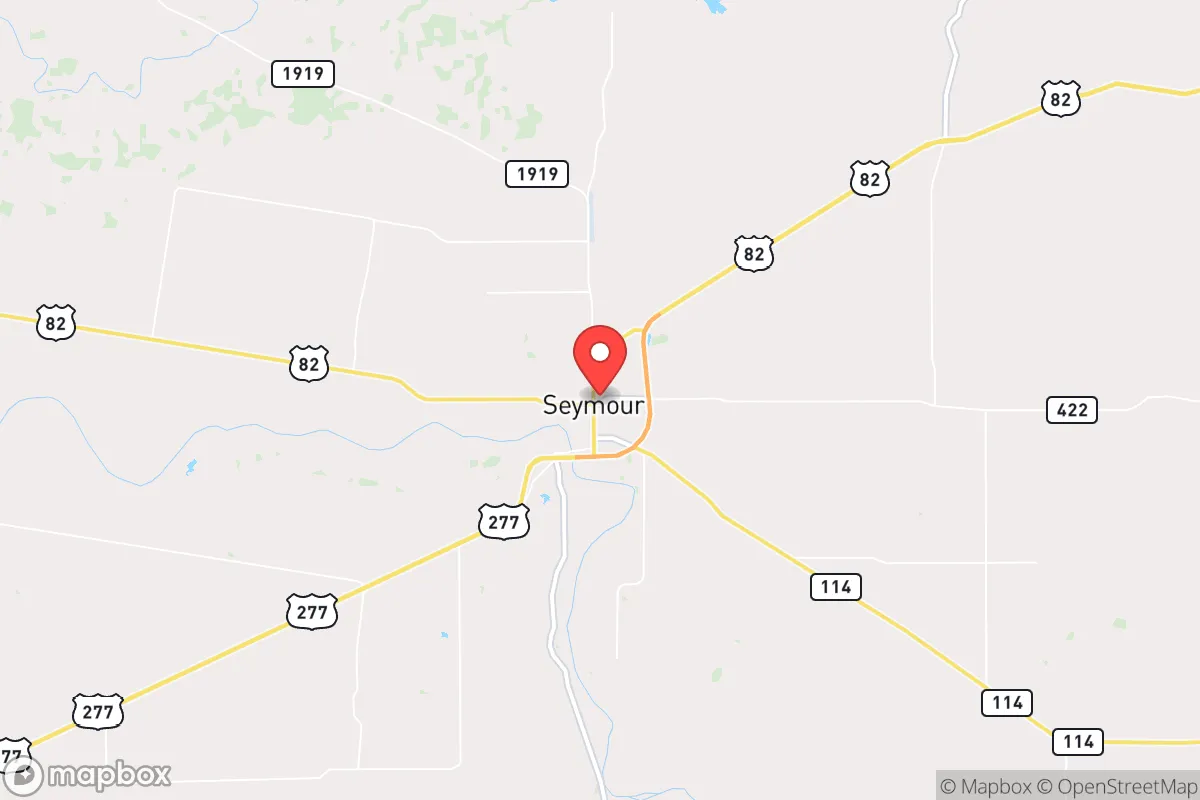
District shown is the primary district for this city’s centroid. Cities may span multiple districts.
Local Political AnalysisPolitical Analysis of Seymour, TX
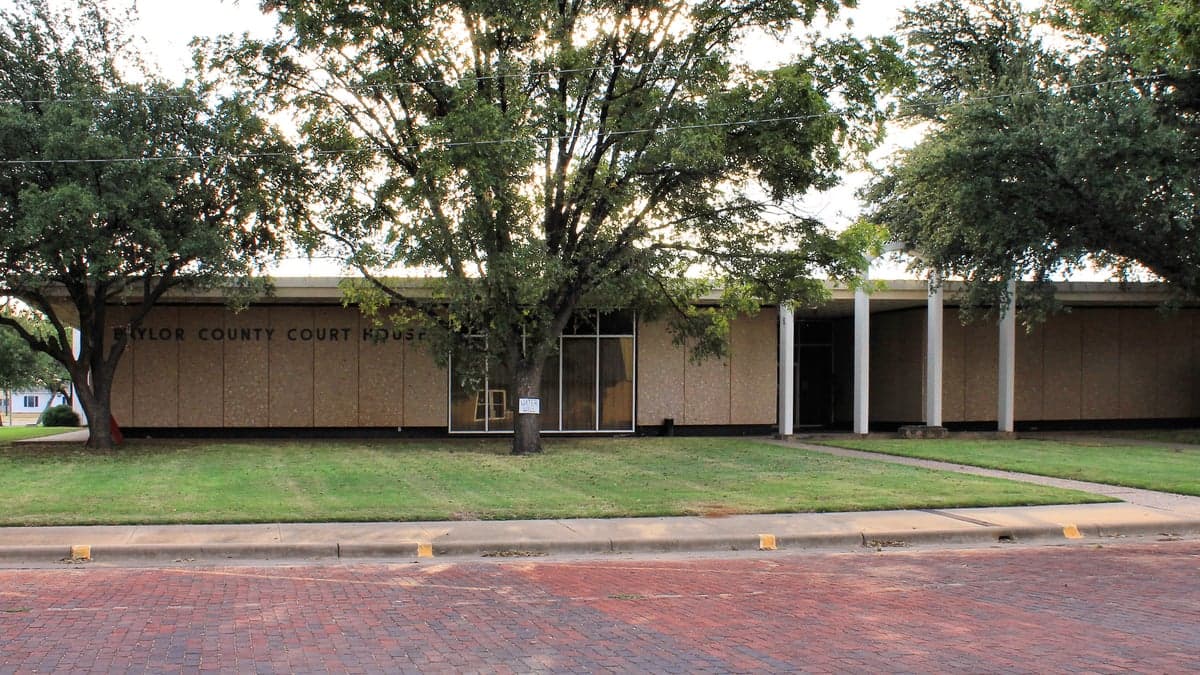
Seymour, Texas, is about as reliably Republican as a place can get in the Lone Star State. The area carries a Cook Partisan Voting Index (PVI) of R+24, which means the district votes about 24 points more Republican than the national average. That puts Seymour squarely in the same political lane as the deepest red counties in the state, and it’s not a recent development—this part of Baylor County has been voting that way for generations, with the margins only getting wider in the last couple of cycles.
How it compares
When you stack Seymour against the rest of Texas, the comparison is stark but not surprising. Texas as a whole is a Republican state, but it’s nowhere near as uniformly red as Seymour’s corner of the map. The state’s big metros—Dallas, Houston, Austin, San Antonio—have been trending bluer for years, and the 2024 election showed that trend continuing in the suburbs. But Seymour isn’t a suburb of anything. It’s a small agricultural town about 60 miles north of Abilene, and it votes more like the Panhandle than the I-35 corridor. If you drive east toward Wichita Falls or south toward Brownwood, you’ll find similar conservative territory. The real contrast is if you head to Austin or even Denton, where the politics are a completely different animal. In Seymour, you’re looking at a place where the local Democratic Party is practically nonexistent, and the primary election in March is usually the one that decides who actually runs the county.
What this means for residents
For conservative residents, the political reality here is pretty comfortable. You’re in the majority, and it shows in everything from the local school board meetings to the county commissioners’ court. The Republican primary is where the real decisions get made, and whoever wins that is almost guaranteed to take the general election in November. For liberal residents, it’s a different story. You’re not going to find much of a support network, and you’ll likely keep your politics to yourself in public. That said, nobody’s knocking on doors to run you out of town—it’s more of a quiet, live-and-let-live situation as long as you don’t make a fuss. The practical effect is that local policy tends to be heavily focused on agriculture, oil and gas, and keeping taxes low, with less attention paid to the kind of urban issues that dominate state politics in Houston or Dallas.
One thing that’s changed over the years is the intensity. Back in the 90s and early 2000s, there were still a handful of conservative Democrats around here who could win a county office. Those days are long gone. The last decade has seen the area shift even further right, driven by the same rural-versus-urban dynamic that’s reshaping the whole country. You’ll see more Trump flags and fewer contested races than you did twenty years ago. Looking ahead, it’s hard to see that changing much. The population is stable, the economy is tied to the land, and the young people who leave for college often come back with the same values they left with. Seymour is what it is, and for the folks who live here, that’s mostly a good thing.

State Political ClimatePolitical Climate in Texas
State Political AnalysisPolitical Environment in the State
Texas is a solidly Republican state at the statewide level, but the last 15 years have turned it into one of the most dynamic and closely-watched political battlegrounds in the country. The GOP holds every statewide office and both chambers of the Legislature, but the margin of victory has shrunk dramatically — Donald Trump won the state by 9 points in 2016, 5.6 points in 2020, and 13.7 points in 2024, a swing that reflects both a national realignment and explosive demographic change. The dominant coalition is a mix of rural and suburban conservatives, evangelical Protestants, and a growing base of Hispanic voters in the Rio Grande Valley who have shifted right, while the opposition is anchored in the state’s major metros — Austin, Houston, Dallas, and San Antonio — plus the fast-growing suburbs that surround them.
Urban vs. rural divide
The political map of Texas is a tale of two geographies. The rural west, the Panhandle, and most of East Texas are deeply Republican — counties like Lubbock County, Midland County, and rural Hill Country precincts routinely vote 70-80% GOP. The urban cores are the Democratic engine: Harris County (Houston) and Dallas County are the two most populous Democratic counties in the state, and Travis County (Austin) is the most liberal major county in Texas, voting over 70% Democratic in recent cycles. Bexar County (San Antonio) and El Paso County are also reliably blue, with El Paso being the state’s most Democratic large county due to its heavily Hispanic, working-class electorate.
The real action is in the suburbs and exurbs. Collin County (north of Dallas) and Fort Bend County (southwest of Houston) were once Republican strongholds but have become competitive — Fort Bend flipped to Biden in 2020 and has a majority-minority population that leans Democratic. Meanwhile, the Rio Grande Valley — Cameron, Hidalgo, and Starr counties — has been the biggest political story of the decade. These historically Democratic, heavily Hispanic counties swung hard toward Trump in 2020 and again in 2024, with Starr County flipping outright. That shift has scrambled the old assumption that demographic growth automatically favors Democrats.
Policy environment
Texas has no state income tax, which is the single biggest policy draw for relocators, and it funds its government through a combination of property taxes, sales taxes, and oil-and-gas severance taxes. The property tax burden is high by national standards — the average effective rate is around 1.6% — but the Legislature has passed repeated rounds of compression and appraisal caps to slow the growth. The regulatory posture is famously light: no state-level occupational licensing for many trades, a right-to-work law that limits union power, and a business-friendly tort system that caps non-economic damages in medical malpractice cases. Education policy is dominated by the school choice debate — the 2025 legislative session passed a universal education savings account program, making Texas one of the largest states to adopt school vouchers. Healthcare is a mixed bag: the state has the highest uninsured rate in the country (around 17%), has not expanded Medicaid, and has some of the most restrictive abortion laws in the nation. Election laws require a photo ID to vote, limit mail-in ballot eligibility to those 65 and older or with a disability, and ban county officials from sending unsolicited mail-in ballot applications.
Recent policy direction
The last five years have pushed Texas decisively in a conservative direction on nearly every front. On guns, Texas became a constitutional carry state in 2021, allowing permitless carry of handguns for adults 21 and over. On abortion, the 2021 Heartbeat Act (SB 8) banned the procedure after roughly six weeks, and the 2023 trigger law (HB 1280) made it a felony with near-total prohibition. On education, the 2023 session passed HB 900, which requires age-appropriate content ratings for library books and restricts sexually explicit materials in schools, and the 2025 session passed the universal school choice program. On speech and privacy, the state passed HB 20 in 2023, which prohibits social media platforms from censoring users based on political viewpoint — a law currently tied up in litigation. On property rights, Texas has no statewide zoning law, and the 2023 session passed SB 2038, which limits municipalities’ ability to ban gas-powered appliances and restricts local tree ordinances. On voting, the 2021 SB 1 tightened ballot security measures, including new ID requirements for mail-in ballots and bans on drive-through and 24-hour voting. On immigration, the state has taken an aggressive posture — Operation Lone Star, launched in 2021, has deployed thousands of National Guard troops to the border, and SB 4 (2023) made illegal entry a state crime, though it is currently blocked by federal courts.
Civil unrest & political movements
Texas has seen its share of political flashpoints. The 2020 George Floyd protests in Austin and Houston were large and occasionally violent, prompting a backlash that helped fuel the 2021 Republican legislative agenda. The abortion ban triggered ongoing protests at the Capitol and a wave of litigation, but also energized the state’s pro-life movement. Immigration is the most visible daily flashpoint: border communities like Eagle Pass and McAllen have been at the center of the national debate, with the state’s buoys and razor wire in the Rio Grande drawing federal lawsuits. There is a small but vocal secessionist movement — the Texas Nationalist Movement — but it has no serious political traction. Election integrity remains a live controversy: the 2020 and 2022 cycles saw Republican county officials in places like Harris County challenge vote counts, and the 2024 cycle brought a wave of poll watcher disputes. A new resident will notice the political intensity most in the sheer volume of campaign signage, the ubiquity of political bumper stickers, and the fact that local news leads with politics more than almost anything else.
Projection
Over the next 5-10 years, Texas is likely to remain Republican at the statewide level, but the margin will stay volatile. The suburbs of Dallas, Houston, and Austin are still growing faster than the rural areas, which should help Democrats in legislative races, but the Hispanic shift to the right — especially in the Valley and along the border — could offset those gains. The state’s population is projected to grow by another 5-7 million people by 2035, with most of that growth in the I-35 corridor from San Antonio to Dallas. That corridor is politically mixed: Bexar County is blue, Travis County is deep blue, but the exurbs in between — places like Georgetown, New Braunfels, and Kyle — are trending Republican. The school choice law and the property tax cuts are likely to be expanded, and the state will probably continue its fight with the federal government over immigration and border enforcement. A new resident moving in now should expect a state that is culturally conservative, fiscally restrained, and increasingly assertive about its own authority — but also one where the political ground is shifting under everyone’s feet.
For a new resident, the bottom line is that Texas rewards people who know what they want. If you’re conservative, you’ll find a state that has delivered on guns, taxes, school choice, and border enforcement, and you’ll be in the majority in most places outside the big cities. If you’re liberal, you’ll find vibrant, protected communities in Austin, Houston, and Dallas, but you’ll also face a state government that is actively working against your preferences on abortion, voting, and education. The practical takeaway: choose your city carefully, because the difference between living in Austin and living in Lubbock is the difference between two different countries — same state, same laws, but wildly different daily realities.
* Values derived from national, state, county, city and local statistics and may differ in a specific area. Last updated: 2026-10-21T11:20:26.000Z
Narrative content on this page is AI-generated and may contain mistakes. Verify any details that matter before acting on them.
ReloMaps may earn a commission from affiliate links at no extra cost to you.

